Silver Necklace Women Choker Guide: Alloys, Gauges, and Fit
An expert technical guide to the silver necklace women choker. Explore alloy grades, wire gauges, clasp mechanics, and precise anatomical sizing.

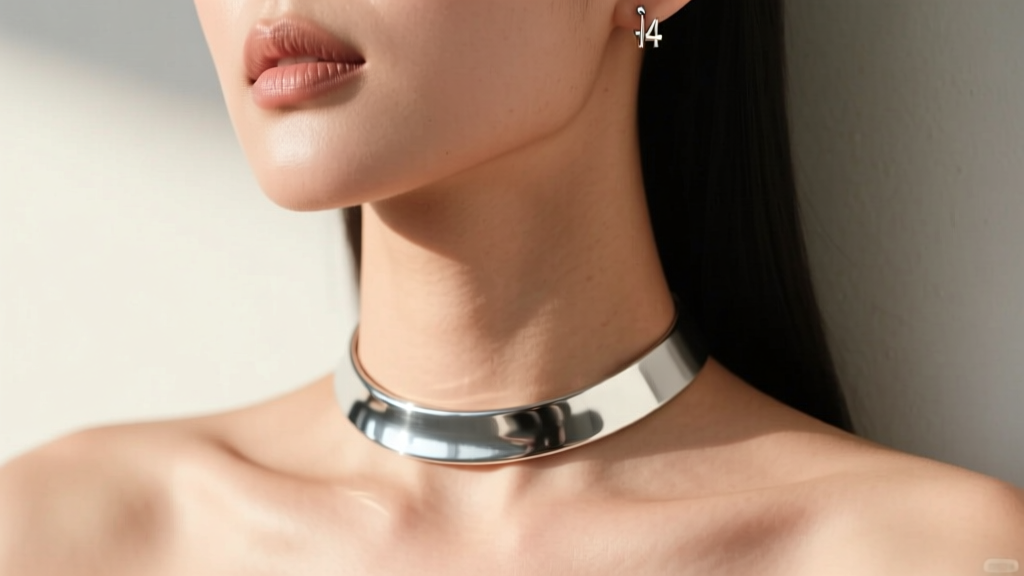
The Metallurgy of Silver Chokers: 925 vs. Argentium vs. Britannia
When engineering a high-quality silver necklace, women choker silhouettes demand rigorous technical standards. Unlike long pendant chains that hang freely, a choker wraps tightly around the neck, subjecting the metal to constant lateral tension, friction, and exposure to skin oils and cosmetics. Pure silver (999 fine) is far too malleable for this application; it will warp and stretch under the mechanical stress of daily wear. Therefore, alloying is mandatory. According to The Silver Institute, the specific ratio of silver to alloying metals dictates the piece's structural integrity and tarnish resistance.
The industry standard is Sterling 925, comprising 92.5% silver and 7.5% copper. While copper provides necessary tensile strength, it is also the primary culprit behind tarnish. Copper reacts with atmospheric sulfur dioxide and moisture to form copper sulfate and silver sulfide, resulting in the familiar black patina. For chokers, which sit against the pulse points where heat and perspiration are highest, standard sterling requires frequent polishing or protective plating.
To solve this, modern metallurgy introduced Argentium silver (typically 935 or 960 grade). By replacing a portion of the copper with germanium, Argentium forms a transparent, self-healing germanium dioxide layer on the surface. This barrier drastically slows sulfur bonding, making it an exceptional choice for high-polish chokers that require minimal maintenance. Conversely, Britannia silver (95.8% silver, 4.2% copper) is softer and highly ductile. While poor for fine chain links, it is the premier choice for solid, hammered, or forged collar-style chokers where malleability during the manufacturing process is required.
| Alloy Grade | Composition | Tarnish Resistance | Ideal Choker Application |
|---|---|---|---|
| Sterling 925 | 92.5% Ag, 7.5% Cu | Low (Requires Rhodium/E-coat) | Standard Cable, Box, and Rolo Chains |
| Argentium 935 | 93.5% Ag, Copper, Germanium | High (Self-healing oxide layer) | High-Polish Solid Bands & Wire Chokers |
| Britannia 958 | 95.8% Ag, 4.2% Cu | Medium | Hammered, Forged, and Sculpted Collars |
Gauge, Weight, and Drape: Engineering the Perfect Choker
The wire gauge—measured in American Wire Gauge (AWG) or millimeters—determines the choker's drape, weight, and resistance to kinking. A common failure point in mass-market jewelry is the use of 18-gauge (1.02mm) or 20-gauge (0.81mm) wire for close-fitting necklaces. At these thicknesses, the lateral torque applied when the wearer turns their head can easily distort the links, leading to permanent kinks or structural failure at the solder points.
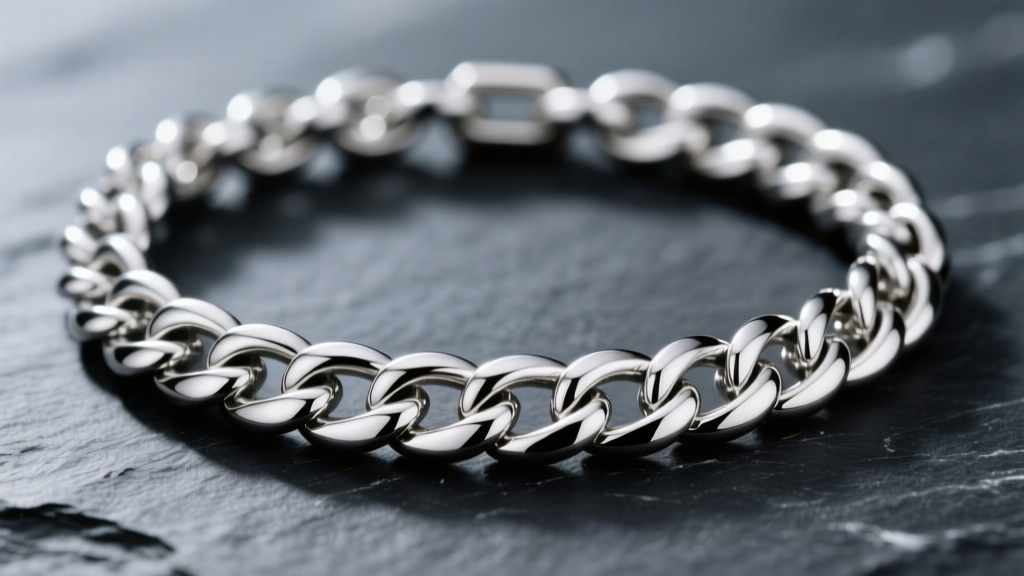
For a durable, premium choker, the minimum threshold is 16-gauge (1.29mm) for lightweight, flexible chains like the box or cable. However, for heavy, interlocking styles such as the Cuban or Curb link, a 12-gauge (2.05mm) to 10-gauge (2.58mm) wire is optimal. This thickness provides the necessary mass to ensure the links lay flat against the clavicle without flipping over, a common annoyance with underweight chains. Furthermore, the Federal Trade Commission Jewelry Guides mandate accurate stamping and quality standards, ensuring that the structural claims of the gauge match the actual metallurgical output.
Link Geometry and Tensile Stress
- Box Chains: Excellent for 14-16 gauge. The square, interlocking geometry distributes tension evenly, but if a link bends past 45 degrees, it is nearly impossible to repair without replacing the entire section.
- Rolo Chains: Ideal for 12-14 gauge. The alternating circular links offer high flexibility and a fluid drape, making them highly resistant to kinking under neck movement.
- Wheat (Spiga) Chains: Best in 16-18 gauge. The woven, figure-eight structure provides immense tensile strength but lacks the fluid drape required for a comfortable, tight-fitting choker.
Precision Sizing: Calculating the Ideal Choker Drop
The anatomy of the neck requires precise sizing calculations. A true choker should sit at the base of the neck, resting just above the clavicle and below the thyroid cartilage. If the measurement is too tight, it will migrate upward, choking the wearer and causing skin irritation; if too loose, it will slide down into the hollow of the throat, losing its structural silhouette.
To calculate the exact manufacturing length, use the following formula: Base Neck Circumference + 0.75 inches (for rigid or semi-rigid bands) or + 1.5 inches (for fluid chain links). For example, a wearer with a 13-inch neck circumference requires a 13.75-inch solid silver collar, but a 14.5-inch Cuban link choker to accommodate the thickness of the links and the natural drape. It is also critical to account for the clasp length; a bulky toggle clasp can add up to 0.5 inches to the total wearable length, which must be factored into the chain's cut.
Clasp Mechanics and Hardware Fail Points
The clasp is the most frequent point of mechanical failure on any necklace, but on a choker, the stress is amplified due to the constant tension of the close fit. Understanding clasp mechanics is essential for both designers and consumers.
Spring Ring Clasps: These rely on a tiny internal steel spring. They are highly susceptible to fatigue and failure, especially when exposed to the moisture and cosmetics present on the neck. They are not recommended for premium chokers.
Lobster Claw Clasps: A significant upgrade over spring rings, utilizing a heavier trigger mechanism. However, the lever can catch on hair or clothing. For chokers, a swivel lobster clasp is preferred, as it rotates 360 degrees, preventing the chain from twisting and torquing the jump ring.
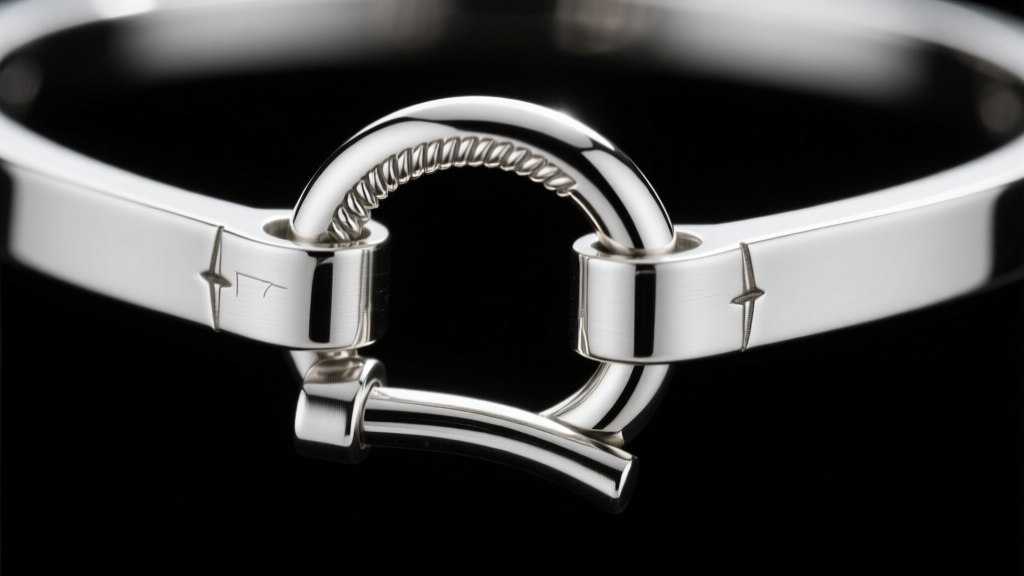
Toggle Clasps: The superior choice for heavy-gauge chokers. The T-bar distributes tension evenly across the ring, and the mechanism is entirely mechanical, meaning there are no internal springs to fail. Additionally, toggles can be fastened at the front or side of the neck, serving as a deliberate design element rather than a hidden utility.
Regardless of the clasp type, the jump rings connecting the clasp to the chain must be soldered closed. Open jump rings will inevitably pull apart under the lateral tension of a choker, resulting in the loss of the piece.
Advanced Tarnish Mitigation and Surface Treatments
Because chokers sit in the 'high-heat, high-moisture' zone of the body, surface treatments are often necessary to preserve the luster of sterling silver. According to the Gemological Institute of America (GIA), rhodium plating is the traditional method for preventing tarnish. Rhodium, a platinum-group metal, provides a brilliant, white-metal finish that is impervious to oxidation.
However, standard rhodium plating (typically 5 to 10 micro-inches thick) will wear through quickly on the back of a choker due to friction against the skin. For high-wear chokers, a 'heavy flash' of 40 to 50 micro-inches is required. Alternatively, modern manufacturers are increasingly utilizing e-coating (electrophoretic deposition). This process applies a microscopic, transparent polymeric resin layer over the bare silver. Unlike rhodium, which alters the color of the silver to a slightly darker, steel-like hue, e-coating preserves the natural, bright white luster of the silver while providing a robust barrier against sulfur and moisture. For the purist who prefers bare metal, storing the choker in an airtight environment with activated charcoal or 3M anti-tarnish strips when not in use remains the most effective, non-invasive preservation strategy.


