Beginner Guide to the Gold Hoop Necklace: Styles & Fit
Discover everything about the gold hoop necklace. Learn the differences between torcs, collars, and pendants, plus karat guides and styling tips.


What Exactly Is a Gold Hoop Necklace?
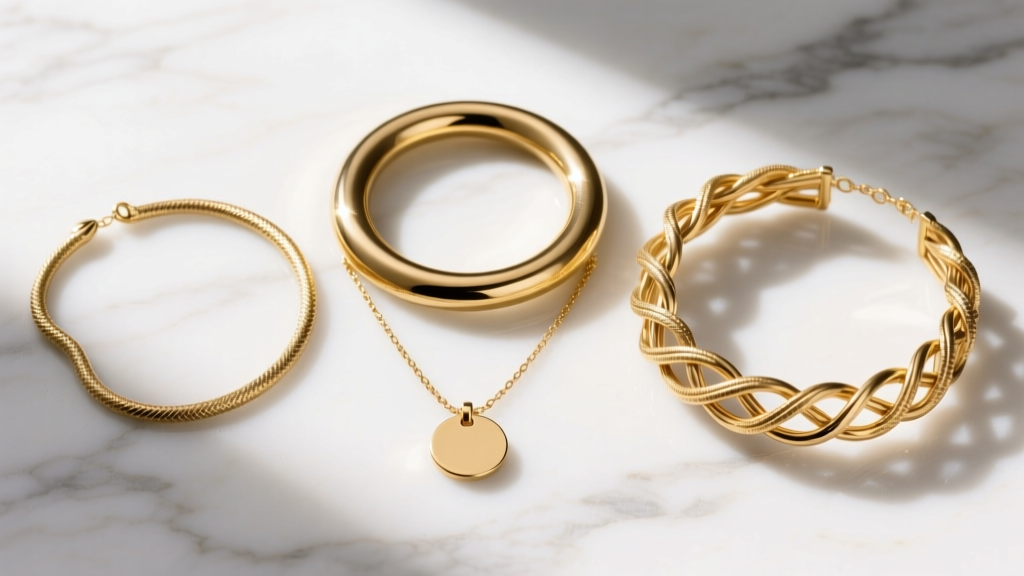
When beginners enter the fine jewelry market, the term "gold hoop necklace" can cause immediate confusion. Unlike hoop earrings, which have a universally understood shape, a hoop necklace generally refers to one of two distinctly different styles. The first is the rigid torc or collar—a continuous, unbroken ring of gold that sits flush against the collarbone. The second is a hoop pendant necklace, which features a circular, hoop-shaped charm suspended from a traditional link or snake chain.
While both styles share a geometric, minimalist aesthetic, their construction, pricing, and fitting requirements are vastly different. For the purpose of this guide, we will focus heavily on the rigid gold hoop collar (the torc), as it represents a more significant investment and requires specific technical knowledge to purchase correctly. Understanding the metallurgy and mechanics of these pieces is the difference between buying a lifelong staple and a bent, unwearable wire.
Solid Tubing vs. Woven Wire: Understanding Construction
Not all rigid gold hoops are created equal. The structural integrity of your necklace depends entirely on how the gold is formed. There are two primary manufacturing methods used for rigid hoop collars:
- Solid Gold Tubing: This method involves extruding gold into a hollow or semi-solid tube. It offers a sleek, modern, and highly reflective surface. However, because it is rigid, it must feature a mechanical hinge and clasp to allow you to open it and place it around your neck. If a solid tubing hoop lacks a hinge, it is a manufacturing defect; you will not be able to fit it over your head without permanently bending the gold.
- Woven or Twisted Wire: These hoops are crafted by tightly weaving or twisting multiple thin strands of gold wire into a single, flexible rope. The major advantage of woven wire hoops is their flexibility. They can easily bend to slip over the head and then spring back into their perfect circular shape. They often require no clasp at all, slipping on and off seamlessly.
For beginners, a woven wire hoop is generally the safest and most forgiving entry point, while solid tubing offers a more premium, architectural look that requires precise sizing.
Decoding Gold Purity: 10K, 14K, and 18K for Rigid Hoops
Pure 24-karat gold is far too soft to be used in rigid jewelry; it would bend under the weight of its own clasp. Therefore, gold is alloyed with metals like copper, zinc, and silver to increase its tensile strength. According to the Gemological Institute of America (GIA), the karatage you choose directly impacts the durability, color, and price of your gold hoop necklace.
| Karatage | Gold Content | Vickers Hardness (Approx.) | Best Use Case |
|---|---|---|---|
| 10K Gold | 41.7% | 130-140 HV | Budget-friendly, highly durable, but lacks rich yellow color. |
| 14K Gold | 58.3% | 120-130 HV | The industry standard. Perfect balance of rich color and structural rigidity for solid tubing hoops. |
| 18K Gold | 75.0% | 100-115 HV | Luxurious, deep yellow hue. Softer; requires thicker gauge tubing to prevent warping. |
Expert Tip: If you are purchasing an 18K solid tubing hoop, ensure the diameter of the tube is at least 3mm to 4mm. Anything thinner in 18K gold risks permanent deformation when you open and close the clasp repeatedly.
The Mechanics of the Clasp: Hinges and Latches
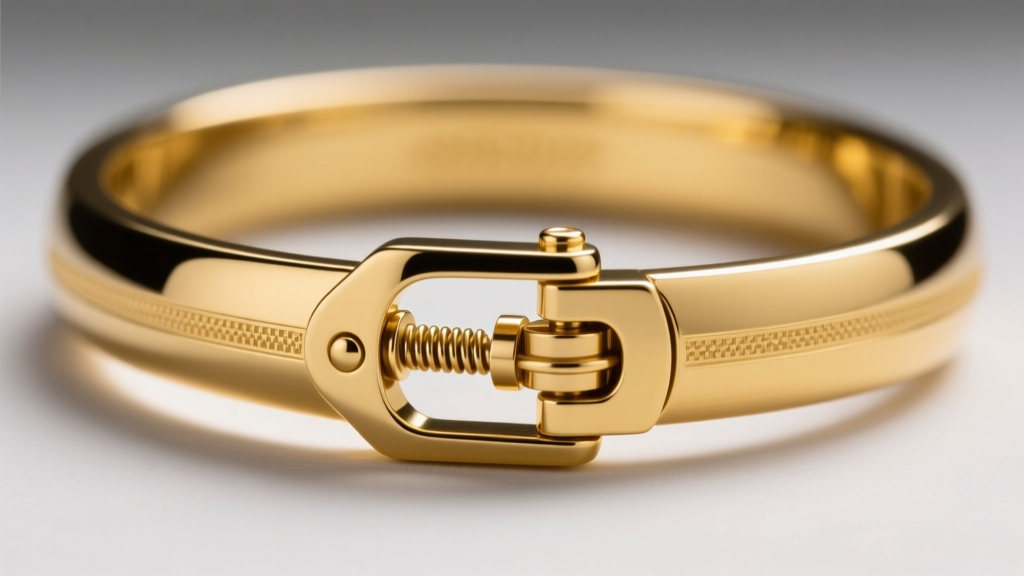
Because a rigid gold hoop cannot stretch, the clasp is the most critical mechanical component of the necklace. A failed clasp means a lost piece of jewelry. When shopping, look for these specific clasp mechanisms:
- The Bayonet Clasp: This is the gold standard for rigid torcs. One side of the hinge features a small metal pin that slides into a hollow tube on the other side, secured by a tiny spring-loaded push-button. It is virtually invisible when closed and highly secure.
- The Hinge and Latch (Tongue and Groove):strong> Common in vintage or lighter-weight hoops, this features a V-shaped wire latch that snaps into a corresponding groove. While secure, the thin wire latch can bend over time if forced.
- Magnetic Closures: Often found in modern, lightweight designs. While easy to use, strong magnetic fields or accidental tugs can compromise the hold. Avoid magnetic clasps for heavy, solid gold tubing.
How to Measure and Fit a Rigid Gold Hoop Collar
Sizing a rigid hoop is entirely different from sizing a chain necklace. A chain drapes and adjusts; a rigid hoop sits exactly where its diameter dictates. To find your perfect fit, you need a flexible sewing measuring tape or a piece of non-stretch string.
Wrap the string around your neck exactly where you want the hoop to sit. For a classic choker-style torc that rests on the lower neck, measure snugly. For a collar that rests on the collarbones, measure lower. Once you have your circumference measurement, apply the following formula:
- Snug Choker Fit: Add 0.75 to 1 inch to your neck measurement.
- Standard Collar Fit: Add 1.5 to 2 inches to your neck measurement.
- Relaxed Drape: Add 3 to 4 inches (Note: If you add more than 3 inches, the rigid hoop may slide off your shoulders when you lean forward).
Always check the internal diameter listed by the jeweler, not just the "small/medium/large" sizing, as shoulder width varies drastically between individuals.
Styling Your Gold Hoop Necklace for Everyday Wear
The geometric purity of a gold hoop necklace makes it a masterclass in minimalist styling. However, because the piece itself is so structurally dominant, the neckline of your clothing must be chosen carefully to avoid visual clutter.
- The Off-The-Shoulder / Boat Neck: This is the ultimate pairing. A rigid gold torc resting directly on the bare skin of the collarbone, framed by a wide neckline, creates an elegant, unbroken horizontal line.
- The Deep V-Neck: A hoop pendant on a 20-inch snake chain works beautifully here, drawing the eye downward and elongating the neck. Avoid rigid choker-style torcs with deep V-necks, as the contrasting geometry can look disjointed.
- The Crew Neck / Turtleneck: A thick, 18K woven wire hoop worn over a black turtleneck provides a striking, high-contrast architectural look that is perfect for autumn and winter wardrobes.
Maintenance: Keeping Your Gold Hoop Tarnish-Free
While pure gold does not tarnish, the alloy metals (copper and zinc) in 10K and 14K gold can react with environmental sulfur and chlorine, leading to dullness or surface discoloration. The Jewelers of America recommends a gentle, non-abrasive approach to cleaning rigid hoops.
Because solid tubing hoops have a highly polished, mirror-like finish, using harsh brushing or abrasive polishing cloths will create micro-scratches that cloud the metal over time. Instead, soak the necklace in a solution of warm water and a few drops of mild, phosphate-free dish soap for 15 minutes. Use a baby-hair brush to gently clean the hinge and clasp mechanisms where skin oils and lotions accumulate. Rinse thoroughly with distilled water and dry immediately with a microfiber cloth to prevent water spots.
Crucial Warning: Never wear a rigid gold hoop necklace in a chlorinated pool or hot tub. Chlorine aggressively attacks the copper and zinc alloys in gold, causing a phenomenon called "stress corrosion cracking," which can cause the metal to literally snap at the hinge point.
Final Thoughts for First-Time Buyers
Investing in a gold hoop necklace is a commitment to minimalist, architectural elegance. If you are buying your very first piece, prioritize a 14K solid tubing torc with a secure bayonet clasp. It offers the best intersection of durability, classic color, and mechanical safety. Always measure your neck with a string before ordering, and remember that the beauty of a rigid hoop lies in its precise, tailored fit against the collarbone. With proper care and mindful styling, this geometric staple will remain a cornerstone of your jewelry collection for decades.


