The Ultimate Guitar Pick Case Necklace Guide: Materials & Mechanics
Explore the technical design of a guitar pick case necklace. Learn about material grades, closure mechanisms, and chain gauges for musicians.

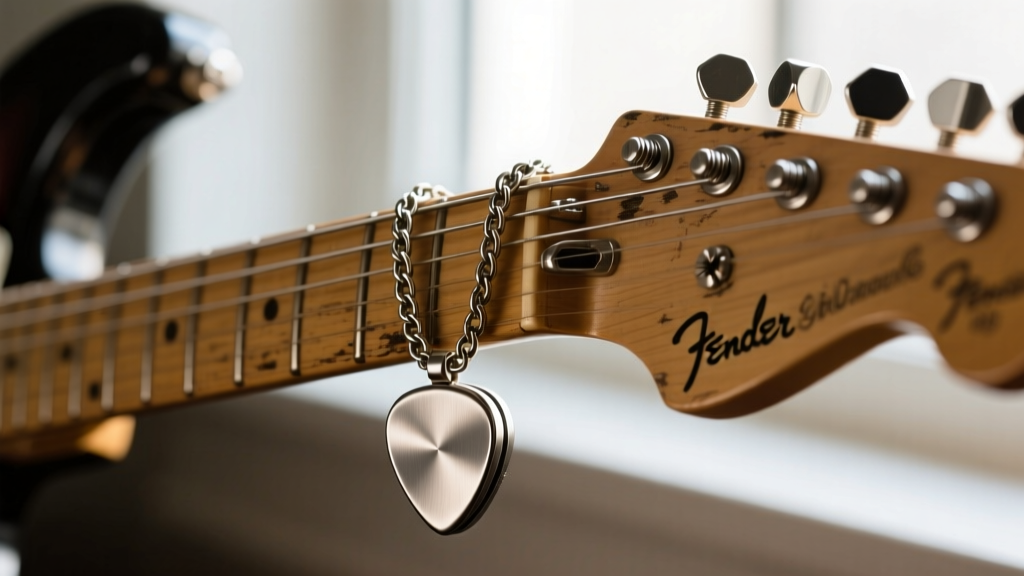
For the working guitarist, losing a pick mid-solo or fumbling through pockets during a high-energy set is a cardinal sin. The evolution of stage accessories has brought us the guitar pick case necklace—a functional piece of jewelry that merges metallurgical engineering with musical necessity. However, not all pick holders are created equal. A poorly designed pendant will rattle, corrode from stage sweat, or snap its chain under dynamic movement. In this 2026 deep dive, we examine the precise tolerances, material grades, and mechanical closures that separate premium, gig-ready pick case necklaces from cheap novelty trinkets.
Dimensional Tolerances and Internal Clearance
The primary failure point of a subpar guitar pick case necklace is improper internal geometry. To engineer a reliable capsule, one must account for the exact dimensions of standard plectrums. According to Fender's Gear Guide, the ubiquitous 351 pick shape measures approximately 30mm in width and 26mm in height. However, thickness varies wildly, from 0.46mm (thin celluloid) to over 3.0mm (ultra-heavy polycarbonate or brass).
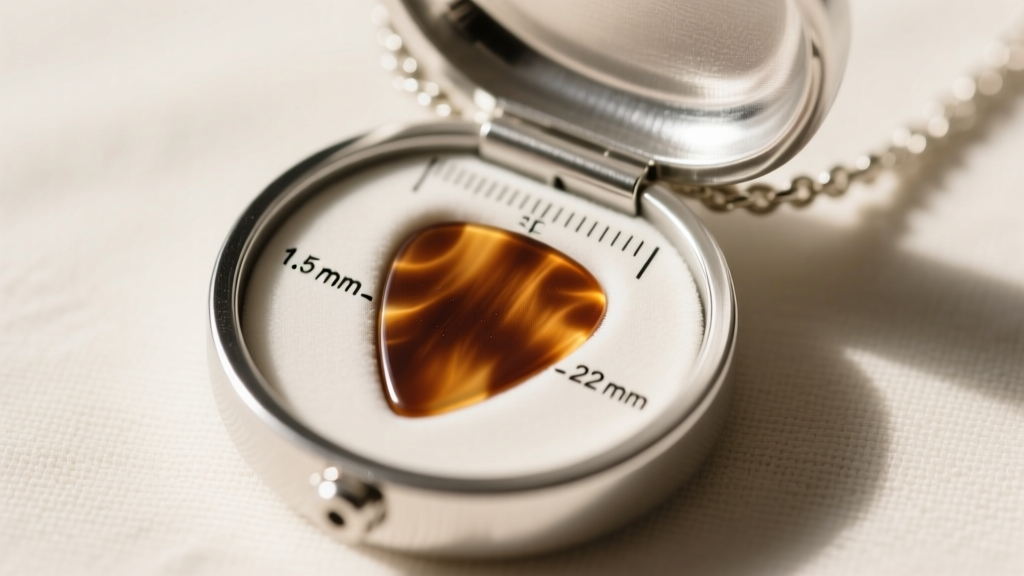
A premium case must feature an internal cavity clearance of at least 32mm x 28mm x 8mm. This 2mm lateral tolerance prevents the pick from jamming against the inner walls when the musician is trying to extract it with sweaty fingers. Furthermore, the interior floor should be slightly concave or feature a micro-textured finish to prevent the pick from sitting perfectly flat, which can create a vacuum seal and make removal frustratingly difficult.
Accommodating Non-Standard Shapes
- Jazz III Profiles: Smaller teardrop picks (approx. 25mm x 19mm) require a secondary internal silicone bumper to prevent excessive rattling.
- Grip-Textured Picks: Picks with raised silicone or cork grips add up to 1.5mm of localized thickness, demanding a wider internal diameter.
- Custom Metal Picks: Brass or copper picks are heavy and can scratch the interior casing; a PVD (Physical Vapor Deposition) coated interior is recommended to prevent abrasive wear.
Metallurgy and Material Grades for Stage Wear
Stage environments are hostile to jewelry. High humidity, UV exposure, and the highly saline, acidic nature of human sweat will rapidly degrade inferior metals. When selecting or commissioning a custom piece, understanding the specific alloy grades is critical. The Ganoksin Jewelry Metals Guide outlines how different alloys react to environmental stressors.
| Material Grade | Density (g/cm³) | Avg. Pendant Weight | Sweat & Tarnish Resistance | Estimated Price Range |
|---|---|---|---|---|
| 316L Surgical Steel | 8.00 | 28g - 35g | High (Passivation Layer) | $45 - $85 |
| 925 Sterling Silver | 10.49 | 38g - 48g | Low (Requires Rhodium Plating) | $120 - $220 |
| Grade 5 Titanium (Ti-6Al-4V) | 4.43 | 16g - 22g | Absolute (Biocompatible) | $150 - $300 |
| Solid Brass (Uncoated) | 8.50 | 30g - 40g | None (Patina Develops) | $30 - $60 |
For touring musicians, Grade 5 Titanium is the undisputed champion. It offers an exceptional strength-to-weight ratio, meaning the necklace won't cause neck fatigue during a three-hour set, and it is entirely immune to galvanic corrosion from sweat. If you prefer the prestige of 925 Sterling Silver, ensure the piece is treated with a 0.5-micron rhodium flash to prevent silver sulfide tarnishing under hot stage lights.
Closure Mechanics: Securing the Payload
The closure mechanism dictates both the security of the pick and the speed of access. There are three primary engineering approaches utilized in high-end guitar pick case necklaces today.
1. Threaded Caps with O-Ring Seals
The most secure method involves a precision-machined threaded cap. However, metal-on-metal threading can seize when exposed to dried sweat and microscopic stage dust. Premium manufacturers incorporate a hidden NBR (Nitrile Butadiene Rubber) O-ring with a Shore 70A durometer. This specific hardness provides a waterproof seal against liquid sweat without creating so much friction that the cap becomes impossible to unscrew mid-song. The threads should be cut at a 60-degree metric pitch for smooth, cross-thread-free operation.
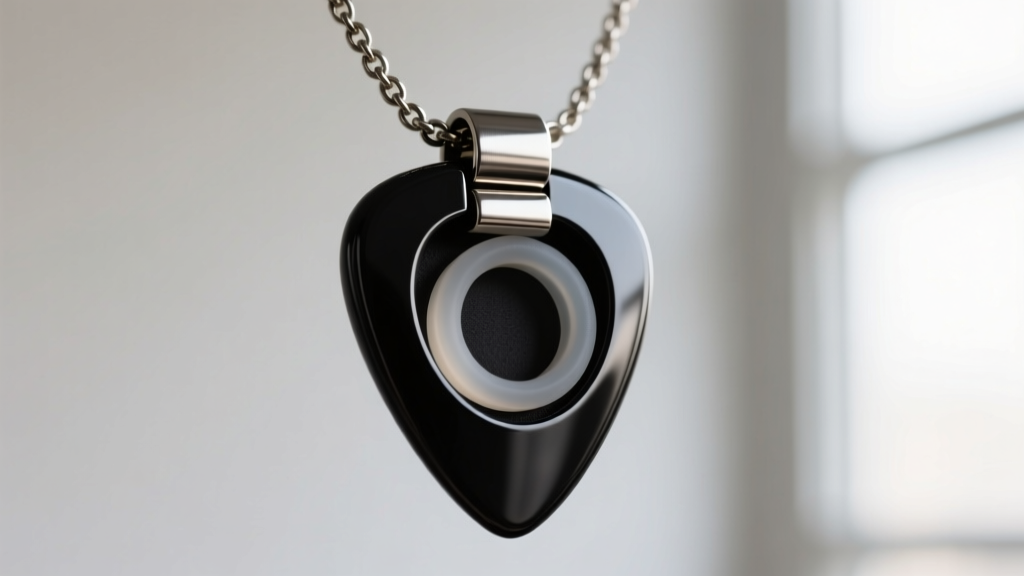
2. Neodymium Magnetic Friction Fits
For rapid deployment, some modern cases utilize N52-grade neodymium magnets embedded in the cap and body. This allows for a one-handed 'pop' to open the case. To prevent accidental opening when the pendant swings against the guitarist's body, the magnetic shear force must be calibrated to roughly 4-5 lbs of resistance, paired with a mechanical detent or physical lip to absorb lateral shock.
"A magnetic pick case is only as good as its lateral shock resistance. If it relies solely on magnetic pull without a physical guide pin, a hard strum against the chest will pop the cap and send your only pick flying into the crowd." — Custom Stage Jewelry Fabricator, 2025 NAMM Show.
Ergonomics and Stage Accessibility
A guitar pick case necklace must be operable under extreme physical duress. When a guitarist breaks a string or drops a pick mid-set, their fine motor skills are compromised by adrenaline and sweat. The exterior of the cap must feature aggressive knurling. A diamond-pattern knurl with a 1.2mm pitch provides the necessary tactile grip for slick fingers. Furthermore, the overall silhouette should avoid sharp edges or protruding bails that could catch on a guitar strap, a microphone cable, or the instrument's finish.
Chain Selection: Matching Gauge to Dynamic Load
The pendant is only half the equation. A solid steel or titanium pick case can easily weigh between 20 and 45 grams. When subjected to the dynamic load of headbanging, jumping, or rapid stage movement, the effective kinetic force on the chain can momentarily spike to over 150 grams of tensile stress. According to Sweetwater's accessory breakdowns, musicians often overlook the hardware connecting their gear.
Recommended Chain Specifications
- Wheat (Spiga) Chain: Minimum 2.5mm width. The interlocking woven links distribute kinetic stress evenly, making it highly resistant to snapping under sudden jerks.
- Curb Chain: Minimum 3.0mm width. Offers a rugged, masculine aesthetic that pairs well with steel cases, but the flattened links can pull chest hair if not properly polished.
- Box Chain: Minimum 2.0mm width. While visually appealing, box chains are prone to kinking and structural failure at the solder points when subjected to heavy, swinging pendants.
Always inspect the jump ring connecting the chain to the pendant bail. It should be soldered shut or feature a heavy-duty locking mechanism. A standard open jump ring will inevitably pull apart under the pendulum effect of a heavy pick case.
Maintenance and Gig-Proofing Your Accessory
To ensure your guitar pick case necklace survives years of touring, implement a basic maintenance routine. After every gig, wipe the exterior and the threading with a microfiber cloth dampened with isopropyl alcohol to dissolve saline sweat deposits. If your case utilizes an O-ring, remove it once every six months, clean the groove with a cotton swab, and apply a microscopic dab of food-grade silicone grease to maintain the rubber's elasticity and prevent it from drying out and cracking under hot stage lights.
Ultimately, investing in a precision-machined guitar pick case necklace is an investment in your performance. By prioritizing Grade 5 titanium or passivated 316L steel, demanding proper internal tolerances, and selecting a heavy-gauge wheat chain, you ensure that your essential tools are always exactly where you need them to be—right over your heart, ready for the next downstroke.


