Natural Pearls Necklace Guide: Material Properties & Value
Discover the unique material properties of a natural pearls necklace. Learn how to grade nacre, luster, and distinguish natural from cultured.

The Gemological Divide: Natural vs. Cultured
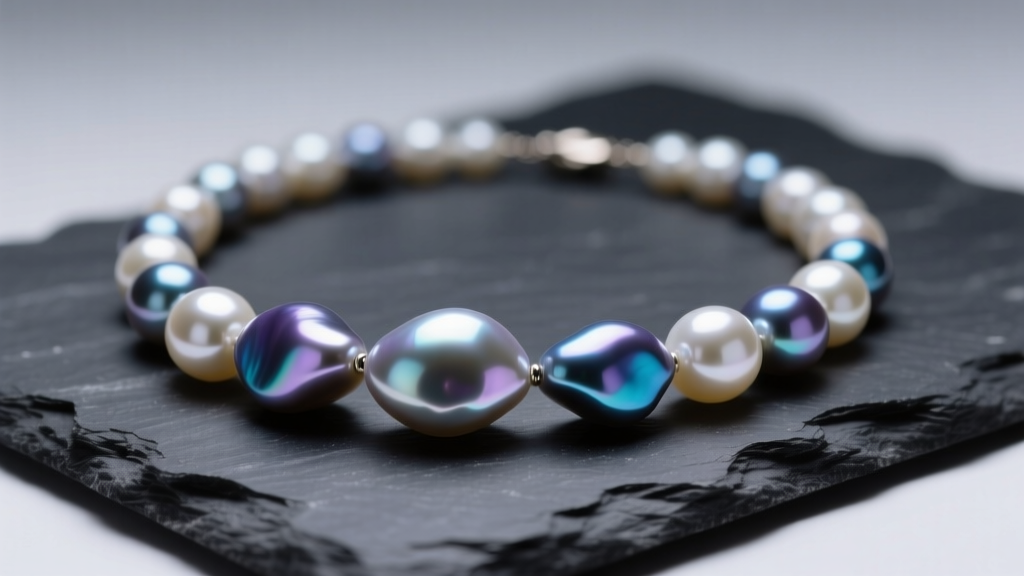
In the modern jewelry market, the term 'pearl' is frequently applied to both natural and cultured varieties, but from a strict gemological perspective, the material properties and formation processes are vastly different. A true natural pearls necklace is composed entirely of gems formed without any human intervention. Historically, before Kokichi Mikimoto perfected the cultured pearl technique in the early 20th century, every pearl on the market was natural, harvested by divers who opened thousands of oysters to find a single gem-quality specimen.
Materially, a natural pearl is typically solid nacre throughout, or features a microscopic hollow cavity where a microscopic irritant once resided. In contrast, a cultured saltwater pearl contains a large, manufactured mother-of-pearl bead nucleus surrounded by a relatively thin layer of nacre (usually 0.5mm to 2.0mm). Because of this structural difference, authenticating a natural pearls necklace requires advanced X-radiography or endoscopy to examine the internal core. According to the Gemological Institute of America (GIA), visual inspection alone is entirely insufficient to separate high-quality natural pearls from thick-nacred cultured specimens.
Chemical Composition and Nacre Architecture
The material resilience and optical magic of a natural pearls necklace stem from its unique organic-inorganic composite structure. Pearls are not minerals; they are organic gemstones. Their chemical composition is remarkably consistent across origins:
- Calcium Carbonate (CaCO3): 82% to 86%, primarily in the orthorhombic crystal form known as aragonite.
- Conchiolin: 10% to 14%, an organic, keratin-like protein that acts as the biological glue.
- Water: 2% to 4%, trapped within the microscopic layers of the nacre.
This creates a 'brick-and-mortar' microstructure. The aragonite platelets act as microscopic bricks (measuring only a few micrometers across), while the conchiolin protein acts as the flexible mortar. This architecture is the reason pearls possess a relatively low Mohs hardness of 2.5 to 3.0 (making them easily scratched by quartz dust), yet exhibit remarkable toughness and resistance to chipping compared to other crystalline gemstones of similar hardness.
Optical Properties: Luster, Orient, and Overtone
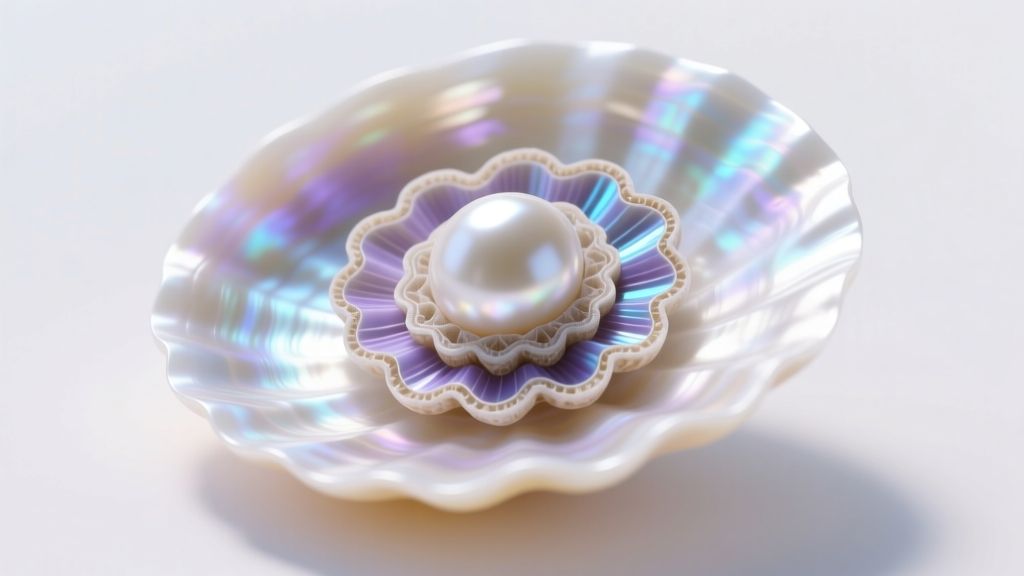
The value of a natural pearls necklace is heavily dictated by its optical properties, which are direct results of the nacre's physical thickness and the regularity of the aragonite crystallization. The Swiss Gemmological Institute (SSEF) emphasizes that the interplay of light with these microscopic layers creates three distinct visual phenomena:
| Optical Property | Material Cause | Visual Impact on Natural Pearls |
|---|---|---|
| Luster | Surface reflection and shallow subsurface scattering. | The sharpness and intensity of light reflected. High-luster natural pearls have a tight, mirror-like gleam due to densely packed, uniform aragonite platelets. |
| Orient | Light diffraction and interference through overlapping aragonite layers. | The iridescent, rainbow-like play of colors that appears to shimmer just below the surface. Rare in cultured pearls, but common in fine natural specimens. |
| Overtone | Selective light absorption by trace elements and conchiolin pigments. | A secondary color (e.g., rose, green, or silver) that floats over the primary body color, adding depth and complexity to the strand. |
When evaluating a vintage or antique natural pearls necklace, gemologists look specifically for 'deep orient.' Because natural pearls grow incredibly slowly over many years or decades, their aragonite layers are exceptionally thin and numerous, creating a complex optical depth that modern, fast-grown cultured pearls struggle to replicate.
Historical Provenance and Material Variations
The physical characteristics of the pearls in a strand are deeply tied to their biological origin. Unlike the modern cultured market, which is dominated by a few specific oyster species, natural pearls were harvested from diverse mollusks globally, resulting in distinct material signatures.
Persian Gulf (Pinctada radiata)
The most historically significant source for natural saltwater pearls. Gulf pearls are typically small (2mm to 7mm) but are prized for their exceptional luster and warm, creamy body colors with subtle rose or green overtones. Their nacre is incredibly dense due to the high salinity and temperature of the Gulf waters.
Mississippi and Tennessee Rivers (Amblema plicata)
Natural freshwater pearls from North American rivers present entirely different material properties. Lacking the spherical bead nucleus of their saltwater counterparts, natural freshwater pearls are almost entirely solid nacre but frequently form in baroque, irregular shapes. They often exhibit a slightly lower, more satiny luster and range in color from chalky white to soft peach and lavender.
Vulnerabilities and Advanced Preservation
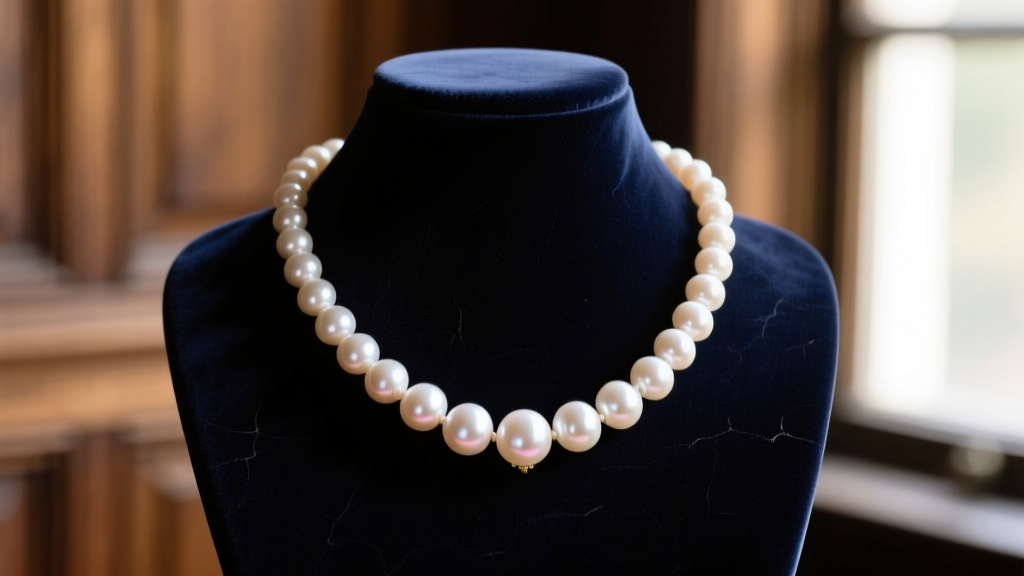
Because a natural pearls necklace is an organic composite, it is highly susceptible to environmental degradation. The 2% to 4% water content trapped within the nacre is critical to the gem's structural integrity. If stored in overly dry environments (below 30% relative humidity) or exposed to prolonged heat, the water evaporates, leading to 'crazing'—a network of fine, irreversible surface cracks that destroy both the value and the luster of the pearl.
Furthermore, the calcium carbonate structure is highly reactive to acids. The GIA Care and Cleaning Guide warns that everyday substances with a pH below 5.5—including human sweat, vinegar, citrus juices, and many commercial perfumes—will actively dissolve the aragonite surface, leaving the pearl dull and pitted. To preserve a natural pearls necklace:
- Hydration: Store in a soft cloth pouch (never airtight plastic, which traps ethylene gas and degrades conchiolin) in an environment with 40% to 50% ambient humidity.
- Chemical Avoidance: Always apply cosmetics, hairspray, and perfume at least 15 minutes before putting on the necklace.
- Restringing: The silk thread used in fine pearl necklaces stretches and degrades. Have the strand professionally knotted with French wire ends every 18 to 24 months if worn regularly to prevent catastrophic string failure.
Authentication Protocols and Market Realities
Purchasing a natural pearls necklace is an exercise in high-stakes gemological verification. The market is flooded with vintage cultured strands misidentified as natural. True natural pearls require documentation from top-tier laboratories like the GIA or SSEF, which utilize X-ray microradiography to map the internal structure. If the X-ray reveals a large, dense, spherical center with a distinct boundary line, the pearl is bead-nucleated and therefore cultured. If it shows concentric rings extending to a microscopic, irregular center, it is natural.
Financially, the material rarity dictates the price. While a high-quality, matched strand of Akoya cultured pearls might retail between $2,000 and $10,000, a historically provenanced, perfectly matched natural pearls necklace of similar size and luster routinely commands $100,000 to well over $1,000,000 at major auction houses. The premium is not merely for the beauty, but for the statistical miracle of the material's formation in the wild.


