White Flower Necklace Trends: 2026 Style & Pairing Guide
Discover how to style the white flower necklace in 2026. Explore material trends, layering techniques, and neckline pairings for this romantic staple.

The Resurgence of Botanical Jewelry in 2026
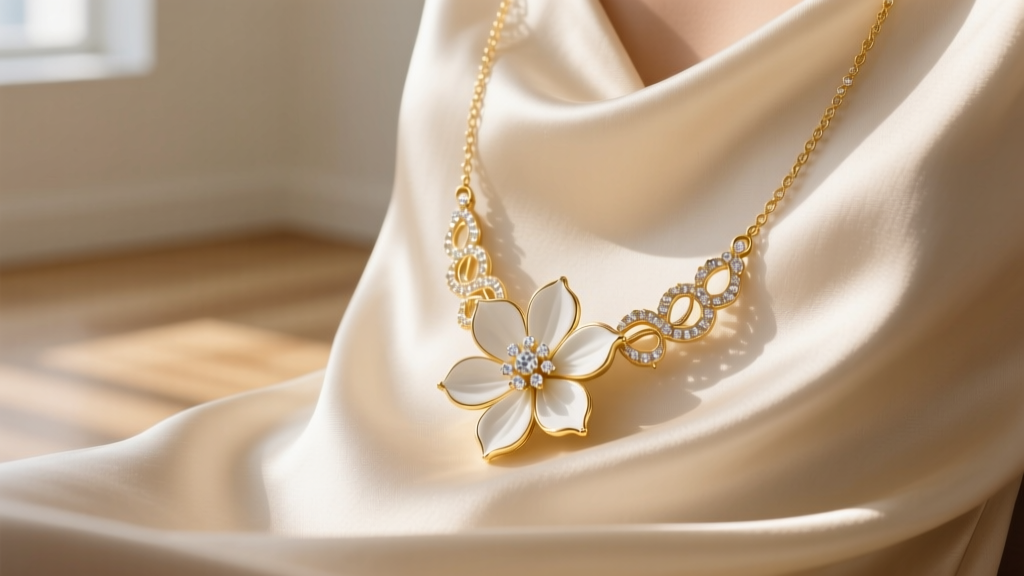
The jewelry landscape of 2026 has decisively pivoted away from the stark, ultra-minimalist geometries that dominated the early 2020s. In its place, a movement dubbed "Romantic Realism" has taken hold, characterized by tactile, nature-inspired motifs that evoke a sense of nostalgia and organic beauty. At the absolute epicenter of this shift is the white flower necklace. No longer relegated to vintage costume jewelry or childhood accessories, the white floral pendant has been reimagined by contemporary jewelers using high-end materials, precision stone-setting, and sophisticated proportions.
Whether rendered as a delicate micro-daisy on a whisper-thin chain or a bold, carved camellia that commands the collarbone, the white flower necklace offers a versatile softness that contrasts beautifully with modern wardrobe staples. But as with any major trend, the market is currently flooded with varying degrees of quality. Understanding the material science, structural integrity, and styling frameworks behind these pieces is essential for making an informed investment that will outlast the fleeting nature of seasonal fashion.
Material Breakdown: Enamel, Resin, and Carved Shell
The visual impact of a white flower necklace relies entirely on the medium used to create its petals. In 2026, three primary materials dominate the luxury and demi-fine markets: vitreous enamel, cold enamel (epoxy resin), and carved mother-of-pearl. Each possesses distinct physical properties that dictate its longevity, price point, and care requirements.
Vitreous enamel is the hallmark of true luxury floral jewelry. Created by fusing powdered glass to a metal substrate at temperatures exceeding 1400°F, vitreous enamel yields a brilliant, scratch-resistant white finish that will never yellow or degrade over time. According to material historians, this technique has been used since antiquity, and modern vitreous enamel remains the gold standard for heirloom-quality color. Conversely, cold enamel is essentially a hardened epoxy resin. While it offers a similar glossy white appearance at a fraction of the cost (typically $45 to $120 for gold vermeil pieces), it is susceptible to micro-scratches, UV yellowing, and chipping upon impact.
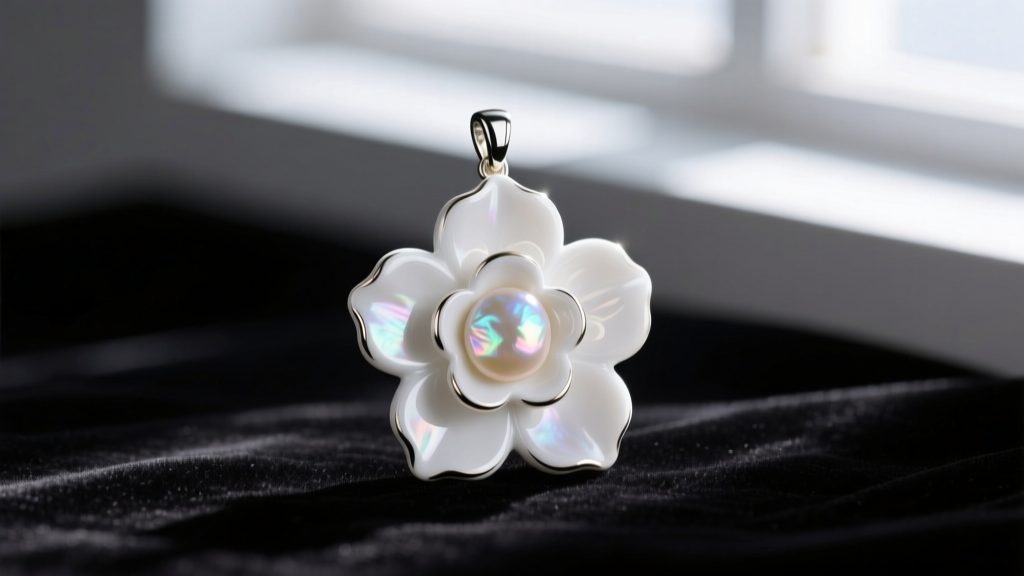
For those seeking organic iridescence, carved mother-of-pearl is the premier choice. The Gemological Institute of America (GIA) notes that the thickness and quality of nacre directly influence the depth of a shell's luster. High-grade white shell pendants are often hand-carved from the thick lips of the Pinctada maxima oyster, yielding petals with a translucent, milky depth that synthetic materials simply cannot replicate.
| Material | Durability & Scratch Resistance | Average Price Range (Demi-Fine) | Best For |
|---|---|---|---|
| Vitreous Enamel | Exceptional (Glass-hard) | $250 - $800+ | Heirloom pieces, daily wear |
| Cold Enamel (Resin) | Moderate (Prone to micro-scratches) | $45 - $150 | Trend-driven styling, occasional wear |
| Carved Mother-of-Pearl | Low-Moderate (Can chip or crack) | $180 - $600 | Organic aesthetics, evening wear |
| White Ceramic | High (Scratch-proof, but brittle) | $300 - $1,200 | Modern, architectural floral designs |
Sizing and Proportions: Choosing the Right Bloom
The success of a white flower necklace hinges on the relationship between the pendant's diameter and the chain's gauge. A common styling error is pairing a heavy, oversized floral pendant with a chain too thin to support it, leading to premature stretching of the metal links and a clasp that constantly flips to the front of the neck.
Micro-Florals (6mm - 10mm)
These diminutive blooms are designed for subtle, everyday elegance. They require delicate chains, typically ranging from 0.8mm to 1.0mm in thickness. A 0.9mm cable chain or a 1.0mm herringbone chain provides the perfect visual weight. Ensure the jump ring connecting the pendant to the chain is soldered and no thicker than 3mm, allowing it to glide freely without catching.
Midi-Blooms (12mm - 18mm)
The most versatile size category, midi-blooms sit perfectly at the hollow of the throat on a 16-inch chain. To support a solid gold or enamel pendant of this size (which can weigh between 3 to 6 grams), opt for a 1.2mm to 1.5mm rope or box chain. These chain styles offer superior tensile strength compared to standard cable chains and add a subtle textural contrast to the smooth petals of the flower.
Statement Camellias (25mm+)
Large-scale floral pendants are inherently bold and require substantial structural support. A chain gauge of 1.8mm to 2.5mm is mandatory. Furthermore, the bail (the loop that attaches the pendant to the chain) must be reinforced. Look for pendants with a hidden, integrated bail or a heavy-duty 5mm soldered jump ring to prevent the pendant from warping under its own weight.
Neckline Pairings and Layering Frameworks
Styling a white flower necklace requires an understanding of negative space and geometric contrast. The pristine white hue of the pendant acts as a natural focal point, meaning the surrounding garment must frame it without competing for attention.
- The Sweetheart Neckline: This romantic neckline mimics the curves of a bustier and pairs flawlessly with a 14-inch to 15-inch white flower choker. The pendant should rest exactly one inch above the apex of the neckline. Avoid long, dangling chains here, as they will bisect the sweetheart curve and create visual clutter.
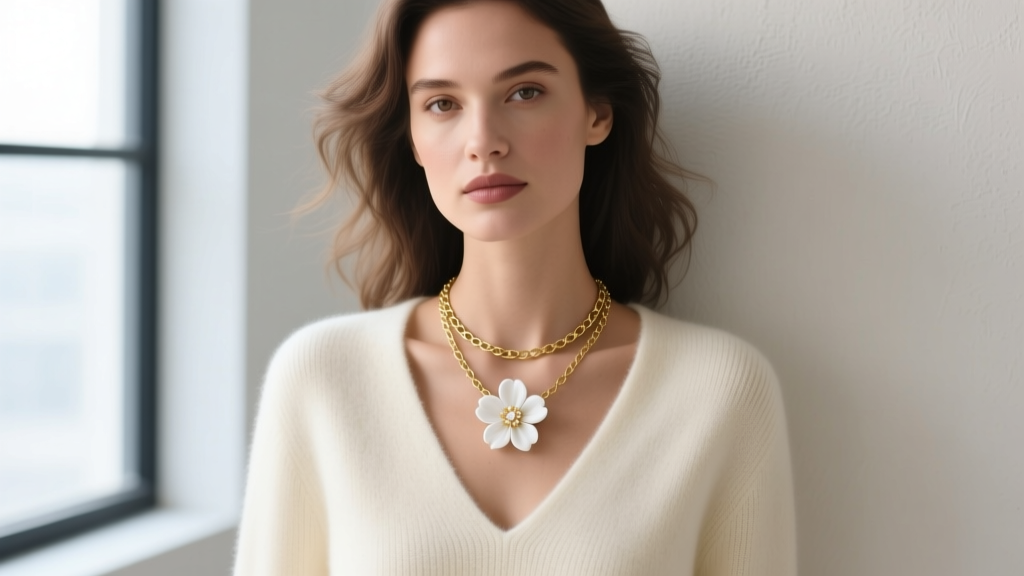
- The Deep V-Neck: A deep plunge requires a pendant that follows the vertical trajectory of the garment. An 18-inch to 20-inch chain with a 15mm midi-bloom draws the eye downward, elongating the neck. This is the ideal canvas for layering: start with a 16-inch 1.2mm gold snake chain, followed by the 18-inch white flower pendant, and finish with a 20-inch chain featuring a tiny, bezel-set diamond solitaire.
- The Crew Neck or Turtleneck: When working with high, closed necklines, contrast is key. Layer a 14-inch white gold herringbone chain tightly against the collar, and let a 16-inch yellow gold chain with a white enamel daisy pendant rest over the fabric. The mix of metal tones (white gold and yellow gold) against the stark white of the flower and the dark fabric of a turtleneck creates a highly sophisticated, editorial look.
Care and Maintenance for White Floral Pendants
White jewelry is unforgiving when it comes to dirt, oils, and tarnish. Maintaining the pristine finish of your white flower necklace requires a strict, material-specific cleaning protocol. The most critical rule? Never place an enameled or shell-based floral pendant in an ultrasonic cleaner. The high-frequency vibrations will shatter vitreous enamel and cause microscopic fractures in carved mother-of-pearl.
For routine cleaning, prepare a lukewarm bath of distilled water and a single drop of pH-neutral dish soap. Submerge the necklace for no more than three minutes. Use a baby-soft toothbrush to gently sweep away sebum and lotion residue from the crevices between the petals and the back of the setting. Rinse thoroughly with distilled water—tap water contains minerals that can leave a cloudy film on white enamel—and pat dry with a lint-free microfiber cloth.
Storage is equally critical. White enamel and shell are highly susceptible to color transfer and scratching. Store your white flower necklace in an individual, anti-tarnish flannel pouch. Never toss it into a communal jewelry box where diamond-accented pieces can easily scratch the surface of cold enamel or the nacre of a shell pendant.
Final Thoughts on the Botanical Shift
The white flower necklace of 2026 is far more than a fleeting seasonal accessory; it is a testament to the jewelry industry's return to craftsmanship and romantic storytelling. By prioritizing high-integrity materials like vitreous enamel and thick-nacre mother-of-pearl, and by paying close attention to chain gauges and neckline geometry, you can integrate this beautiful motif into your permanent collection. Whether worn as a solitary micro-daisy or layered into a complex botanical garden of gold and diamonds, the white floral pendant remains a timeless emblem of organic elegance.


