How to Secure a Charm on a Necklace: Hardware & Gauge Guide
Master the mechanics of securing a charm on a necklace. Expert guide to jump rings, gauge sizing, metallurgy, and preventing hardware failure.

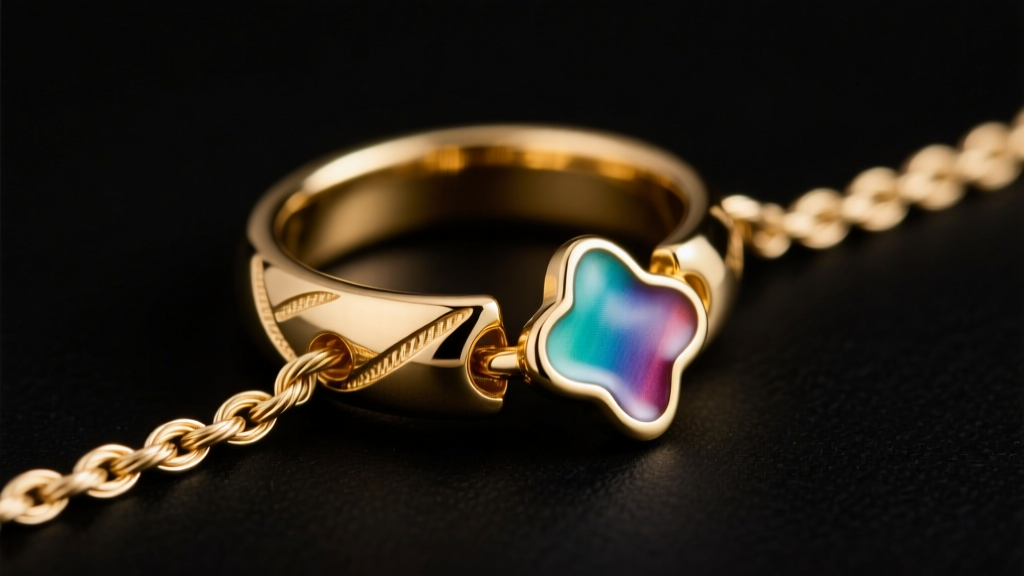
When integrating a charm on a necklace, the aesthetic appeal is only as enduring as the mechanical hardware securing it. Every year, jewelers and consumers alike lose hundreds of dollars in precious metal and gemstone charms due to preventable hardware failures. The intersection of metallurgy, wire gauge physics, and kinetic wear dictates whether your charm stays securely on its chain or drops into the abyss. As we navigate the jewelry landscape in 2026, advancements in laser welding and alloy tempering have changed best practices. This expert deep dive dissects the technical specifications required to properly mount and secure a charm, ensuring lifelong durability.
The Metallurgy of Charm Hardware
The first variable in securing a charm on a necklace is the base metal of the findings. Hardware must possess adequate Vickers hardness (HV) to resist deformation under the kinetic load of a swinging charm. According to metallurgical data from the Gemological Institute of America (GIA), the alloy composition directly impacts the yield strength of your findings.
- 14k Gold Alloys: With a Vickers hardness of approximately 130 HV (depending on the copper/silver ratio), 14k gold offers superior tensile strength compared to higher karats. It is the optimal choice for jump rings and split rings bearing medium-to-heavy charms.
- 18k Gold Alloys: Softer at roughly 115 HV, 18k gold is more prone to 'ovalization'—a failure mode where a round jump ring stretches into an oval shape under stress, compromising the closure gap. If using 18k hardware, you must increase the wire gauge by at least one step to compensate for the lower yield strength.
- Sterling Silver (925): Annealed sterling silver sits at a mere 65 HV, making it highly susceptible to work-hardening and subsequent brittle snapping. Always specify 'hard' or 'spring-hard' tempered sterling silver (up to 140 HV) for charm hardware.
- Galvanic Corrosion: Never mix a base-metal charm (like brass or copper) with precious metal hardware. The presence of skin oils and ambient moisture creates an electrolytic cell, leading to rapid galvanic corrosion that will eat through thin jump rings.
Attachment Findings: Jump Rings, Split Rings, and Bails
Selecting the correct finding is critical. The choice depends on the charm's weight, the bail hole diameter, and the desired kinetic movement. Technical specifications from Rio Grande, a premier jewelry manufacturing supplier, dictate that the tensile yield of a finding must exceed the maximum kinetic force generated by the charm's mass during sudden stops.
| Finding Type | Wire Gauge (AWG) | Tensile Yield | Best Charm Weight | Primary Failure Mode |
|---|---|---|---|---|
| Soldered Jump Ring | 18-20 AWG | High | Up to 25g | Chain wear at the solder joint |
| Unsoldered Jump Ring | 16-18 AWG | Low/Medium | Up to 10g | Lateral gap separation (pull-apart) |
| Double-Loop Split Ring | 18 AWG | Very High | Up to 40g | Metal fatigue from prying open |
| Pinch Bail | N/A (Sheet Metal) | Medium | Up to 15g | Prong tension loss / snapping |
| Glue-On Bail | N/A (Cast) | Low | Up to 5g | Cyanoacrylate degradation via UV/oils |
Gauge Sizing and Chain Compatibility
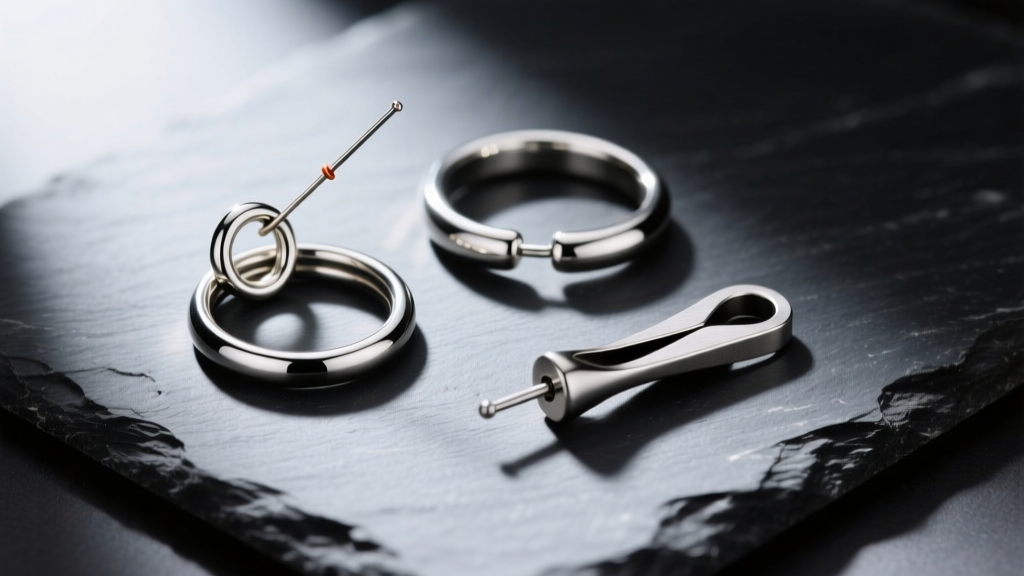
Understanding the American Wire Gauge (AWG) system is non-negotiable for jewelry engineering. Counterintuitively, a lower AWG number indicates a thicker, stronger wire. When attaching a charm on a necklace, you face a classic mechanical bottleneck: the finding must be thin enough to pass through the charm's bail hole, but thick enough to support the charm's mass without deforming.
According to manufacturing standards from Stuller, the most common point of failure in charm necklaces is not the chain snapping, but the unsoldered jump ring pulling apart under lateral kinetic stress.
For a standard 5mm bail hole, you typically have room for a 5mm or 6mm Outer Diameter (OD) jump ring. If the charm weighs more than 12 grams, a 20-gauge (0.81mm) wire will eventually ovalize and fail. You must step up to an 18-gauge (1.02mm) or 16-gauge (1.29mm) wire. If the bail hole is too small to accommodate an 18-gauge ring, the correct engineering solution is to carefully drill or file the bail hole larger, rather than compromising the structural integrity of the finding.
Mechanical Failure Points and Troubleshooting
Even with the correct metal and gauge, improper handling during assembly will guarantee failure. The most frequent error is the 'pull-apart' method of opening a jump ring. Prying the ends of a jump ring outward stretches the metal, altering its circular geometry and weakening the molecular lattice at the stress points.

The Twist Protocol: Always use two pairs of flat-nose pliers. Grip the jump ring on either side of the split. Twist one hand toward you and the other away from you. This lateral twisting motion preserves the ring's perfect circle. When closing, twist back until you hear a faint 'click' or feel the ends bind slightly, ensuring the ends overlap with zero gap. If a gap remains, the chain will eventually slip through, or the charm will catch on fabrics and pull the ring open.
Advanced Solutions: Laser Welding and Soldering
For high-value charms, especially those featuring pavé diamonds or heat-sensitive enamel, traditional torch soldering is a liability. The thermal shock can fracture inclusions or melt vitreous enamel. In 2026, desktop laser welding has become the industry standard for securing a charm on a necklace permanently.
- Pulse Arc Welding: Uses a concentrated electrical spark to fuse the jump ring gap without transferring heat to the adjacent charm. Ideal for silver and gold alloys.
- Laser Welding: Employs a focused light beam to melt a microscopic filler wire into the jump ring seam. This creates a tensile strength that often exceeds the surrounding wire itself.
- Fluxless Soldering: For heat-tolerant cast charms, using a medium-temperature hard solder (flowing at roughly 1450°F) ensures a permanent, gap-free seal that will outlast the chain itself.
By respecting the physics of wire gauges, selecting the appropriate metallurgical hardness, and employing proper mechanical assembly techniques, you transform a fragile accessory into a resilient, heirloom-grade piece of jewelry.


