Vintage Art Deco Necklace Buying Guide: Authenticity & Value
Master the vintage art deco necklace market with our buying guide. Learn to authenticate clasps, materials, and hallmarks before you invest.

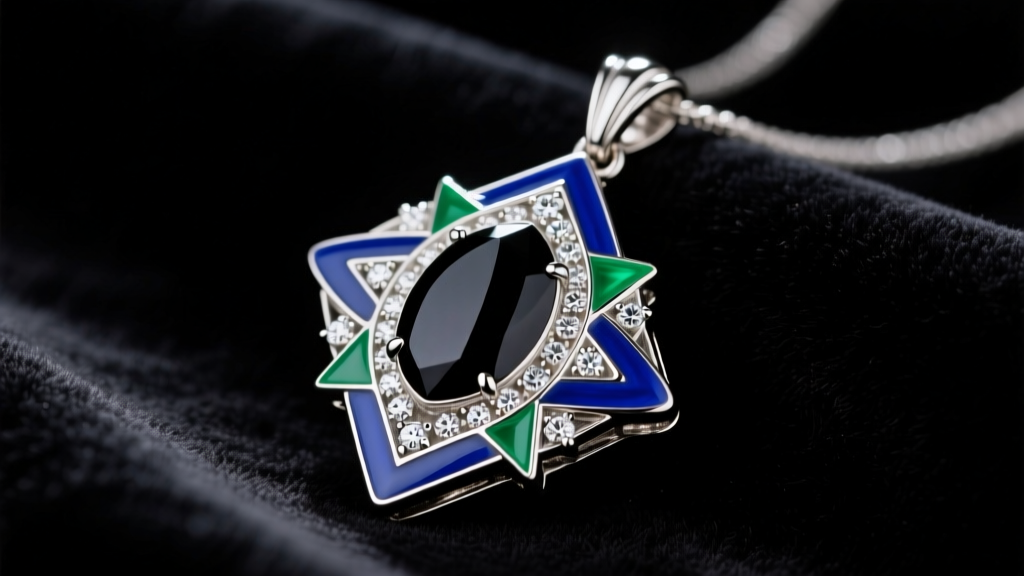
The shift from the flowing, botanical motifs of the Edwardian era to the stark, geometric precision of the 1920s and 1930s birthed one of the most highly collectible categories in antique jewelry. Today, the market for a genuine vintage art deco necklace is saturated with high-quality 1980s reproductions and modern pastiches. For serious collectors and style-conscious buyers, distinguishing an authentic 1925 original from a 1985 replica requires more than a casual glance; it demands an understanding of period-specific metallurgy, lapidary techniques, and mechanical hardware.
This comprehensive buying guide bypasses the romanticized flapper-era fluff to deliver actionable, forensic-level advice on authenticating, evaluating, and pricing vintage Art Deco necklaces in the current 2026 market.
The Architectural Shift: Defining True Deco
True Art Deco jewelry (roughly 1920 to 1935) was heavily influenced by Cubism, the Bauhaus movement, and the 1922 discovery of Tutankhamun’s tomb, which sparked a massive Egyptian Revival trend. When examining a potential purchase, look for high-contrast color blocking (onyx against diamond, coral against jade) and rigid symmetry. According to the Lang Antiques University, authentic Deco pieces prioritize architectural structure over organic flow. If the pendant features sweeping, asymmetrical garlands or floral sprays, you are likely looking at an Edwardian piece, a Retro (1940s) piece, or a modern reproduction that conflates historical eras.
Material Forensics: Beyond the Glitz
The interwar period was a time of rapid material innovation. While high-end pieces relied on platinum and diamonds, the burgeoning middle-class market embraced new synthetics and semi-precious stones. Understanding these materials is critical for authentication.
| Material | Era Peak | Authentication & Testing Protocol |
|---|---|---|
| Bakelite | Early 1930s | Apply Simichrome polish with a Q-tip; genuine Bakelite yields a bright yellow residue. Avoid the destructive hot pin test. |
| Marcasite (Pyrite) | 1920s-1930s | Inspect under a 10x loupe. Authentic pieces feature individually prong-set stones. Glued-in clusters indicate post-1970s reproduction. |
| Platinum | 1920s | Non-magnetic, exceptionally dense. Look for the French "dog head" hallmark or stamped "PT". Often backed with 18k gold for skin comfort. |
| Guilloché Enamel | 1920s | Translucent enamel fired over engine-turned metal. Should feel glassy and show precise geometric wave patterns beneath the surface. |
The Bakelite vs. Celluloid Dilemma
Many sellers mislabel early plastics. Celluloid, which predates Bakelite, is highly flammable and prone to severe cracking and a vinegar-like off-gassing odor as it degrades. Bakelite (polyoxybenzylmethylenglycolanhydride) is heavier, denser, and will emit a distinct formaldehyde smell when rubbed vigorously with your thumb until warm. If a seller claims a 1920s Bakelite necklace but the material feels lightweight and seams are visibly molded rather than carved, walk away.
Clasp Mechanics and Construction Tell-Tales
The hardware on a vintage art deco necklace is often the most reliable indicator of its age, as modern manufacturers rarely bother to replicate obsolete clasp mechanisms.
- The Trombone Clasp: Predominantly used in European Deco jewelry, this mechanism features a tube that pushes into a cylindrical barrel and locks via a push-pull release. If the tube is soldered with modern laser precision rather than slightly uneven torch soldering, suspect a replica.
- The C-Clasp: A simple curved hook with no safety catch. While used heavily in the 1910s and 1920s, by the late 1930s, it was largely replaced by the safety clasp. Finding a C-clasp on a heavy, gemstone-laden Deco pendant is a strong indicator of pre-1930 origin.
- Early Box Clasp with Figure-8 Safety: Look for a stamped box clasp accompanied by a single, thick wire figure-8 safety catch. Modern reproductions usually feature double figure-8 safeties or integrated tongue-and-groove mechanisms with side-release buttons.
Gemstone Cuts: The Devil in the Facets
The GIA Gem Encyclopedia notes that the transition in diamond cutting during the 1920s is a vital dating tool. A genuine vintage art deco necklace will almost never feature modern Round Brilliant cuts. Instead, look for Old European Cuts (characterized by a high crown, small table, and a visible, flat culet) or early Transitional Cuts.
Furthermore, high-end Deco pieces frequently utilize calibré-cut gemstones (rubies, sapphires, or onyx). These stones were custom-cut by lapidaries to fit perfectly into geometric channels without any visible gaps. If you see standard-sized, mass-produced stones forced into a channel with excessive prong manipulation or epoxy, the piece has either been heavily altered or is a modern fabrication.
2026 Market Valuation Tiers
Pricing for authentic Deco necklaces has stabilized but remains highly stratified based on provenance, materials, and condition. Use this framework to evaluate market listings:
Entry-Level Collectible ($300 – $1,200)
This tier is dominated by unsigned silver or white-gold-filled pieces featuring marcasite, carved jade, or black enamel. You will often find sterling silver sautoirs (long flapper necklaces) and lavaliere pendants here. Expect minor enamel wear and replaced jump rings, which are acceptable at this price point.
Mid-Tier Investment ($2,500 – $12,000)
Here you enter the realm of solid 18k white gold and platinum, featuring Old European cut diamonds, calibré-cut sapphires, and natural pearls. Pieces may be unsigned but will bear French or British import hallmarks. The craftsmanship will feature intricate millegrain edging and pierced openwork (filigree) that is structurally sound.
High Jewelry & Signed Masterpieces ($25,000 – $250,000+)
Reserved for documented pieces by Cartier, Van Cleef & Arpels, Boucheron, or Lacloche Frères. These necklaces feature flawless guilloché enamel, natural Burmese rubies, and Kashmir sapphires. Provenance papers and original signed boxes are mandatory to justify the premium.
Condition Reports: What to Walk Away From
Antique jewelry inherently carries the scars of a century of wear, but certain flaws destroy both the aesthetic and financial value of a vintage art deco necklace.
Expert Rule of Thumb: Never purchase a high-end Deco enamel piece if the guilloché is chipped down to the base metal. Enamel restoration on engine-turned surfaces is nearly impossible to execute invisibly and will permanently cap the resale value at a fraction of its intact market price.
Acceptable Wear vs. Dealbreakers
- Acceptable: Minor thinning of the rhodium plating on white gold; slight softening of the millegrain edges on the back of the pendant; a professionally replaced silk string on a jade bead necklace.
- Dealbreakers: Lead-based solder repairs on platinum (which causes structural brittleness); modern laser-welded patches visible under a loupe; replaced synthetic stones in a piece sold as "all-original"; or severe crushing of hollow geometric link chains.
When investing in a vintage art deco necklace, always demand high-resolution macro photography of the clasps, the stone girdles, and the interior hallmarks. In a market flooded with nostalgic reproductions, your 10x triplet loupe and knowledge of period metallurgy are your ultimate safeguards.


