How to Clean and Fix a Tarnished Necklace Rose Pendant
Learn how to troubleshoot, clean, and repair a tarnished or chipped necklace rose pendant with expert jewelry care and metalworking tips.

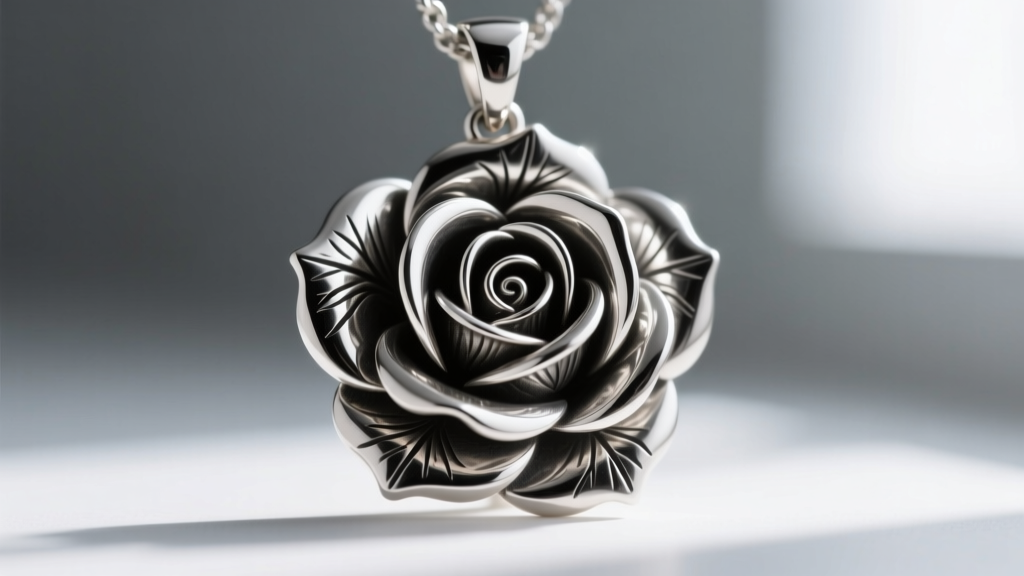
The Delicate Dilemma of Rose Jewelry
The intricate folds of a necklace rose pendant make it a timeless symbol of romance, but those same overlapping petals create a nightmare for jewelry maintenance. Moisture, cosmetic chemicals, and ambient sulfur become trapped in the deep metallic crevices, leading to rapid tarnishing, enamel degradation, and structural failure at the bail. Whether you own a sterling silver sculpted rose, a gold vermeil piece with guilloché enamel, or a preserved organic rose dipped in 24-karat gold, troubleshooting these specific failure modes requires a targeted approach. In this guide, we break down the exact metallurgical and structural issues plaguing rose pendants and provide professional-grade solutions to restore them.
Identifying Your Rose Pendant Material
Before applying any cleaning solution or attempting a repair, you must accurately identify the base material and surface treatment. Misidentifying a gold vermeil piece as solid gold will result in the abrasive removal of the gold layer, exposing the silver beneath. According to the Federal Trade Commission Jewelry Guides, vermeil must consist of a sterling silver base coated with at least 2.5 microns of gold. Applying harsh silver dips to vermeil will strip this layer instantly.
| Material Type | Common Failure Modes | Cleaning Safety |
|---|---|---|
| Solid Sterling Silver (925) | Silver sulfide tarnish in crevices, scratching on high-relief petals. | Safe for chemical dips, polishing cloths, and ultrasonic cleaners. |
| Gold Vermeil (Over 925) | Gold wear on petal edges, base metal oxidation if scratched. | NO ultrasonic. Mild soap only. No abrasive pastes. |
| Enamel over Brass/Copper | Chipping, cracking, verdigris (green corrosion) under enamel. | NO chemical dips. Dry polishing only. Avoid moisture. |
| Preserved Real Rose (24k Dipped) | Organic core flaking, stem snapping, gold leaf peeling. | NO liquids. Dry microfiber dusting only. |
Troubleshooting Tarnish in Delicate Petal Crevices
When a sterling silver necklace rose pendant turns black in the recessed areas, you are looking at silver sulfide (Ag2S) buildup. Traditional polishing cloths cannot reach into the deep, overlapping folds of the rose petals without risking damage to the high-relief edges. Furthermore, using a commercial liquid silver dip will strip away any intentional antiquing (oxidized patina) the jeweler applied to give the rose depth and contrast.
The Electrochemical Reduction Method
For solid sterling silver roses without gemstones or enamel, the safest and most effective way to remove deep crevice tarnish is through electrochemical reduction. This process reverses the chemical reaction, converting silver sulfide back into silver without removing any base metal.
- Line a glass bowl with aluminum foil (shiny side up).
- Place your silver rose pendant directly on the foil.
- Add 1 tablespoon of baking soda and 1 teaspoon of sea salt.
- Pour boiling water over the pendant until fully submerged.
- Wait 3 to 5 minutes. The sulfur will transfer from the silver to the aluminum foil.
- Remove with wooden tongs, rinse in distilled water, and dry immediately with a microfiber cloth.
Cleaning Gold Vermeil Roses
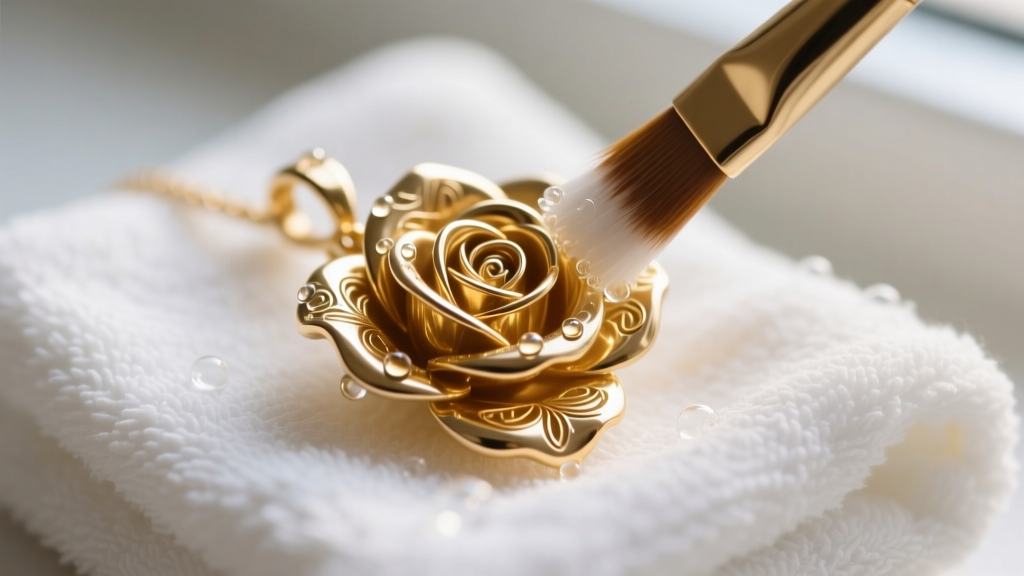
If your pendant is gold vermeil, electrochemical methods and baking soda pastes are strictly prohibited, as they will degrade the 2.5-micron gold layer. Instead, use a solution of warm distilled water and a few drops of pH-neutral dish soap (like Dawn). Submerge the pendant for exactly 60 seconds, then use a soft-bristled baby toothbrush to gently agitate the soap into the petal folds. Rinse with distilled water and pat dry. Never rub vermeil vigorously; let the soap do the chemical lifting.
Fixing Enamel Chips and Color Fading
Many high-end rose pendants utilize guilloché enamel—a technique where translucent glass enamel is fired over an engraved metal base to mimic the delicate veins of a rose petal. If you drop the pendant, the vitreous glass enamel can chip, exposing the raw metal beneath. According to the Gemological Institute of America (GIA), vitreous enamel requires extreme thermal shock to fuse, meaning a chipped enamel rose cannot be easily 'melted' back together at home.
'Never attempt to superglue an enamel chip on a guilloché rose pendant. Cyanoacrylate adhesives cure with a cloudy, white residue that will permanently ruin the translucent optical effect of the surrounding glass enamel.' — Master Bench Jeweler
The UV Resin Repair Protocol
For a seamless, non-destructive repair, professional jewelers use UV-curing jewelry resin mixed with alcohol inks. 1. Clean the chipped area with 99% isopropyl alcohol to remove skin oils. 2. Mix a drop of optically clear UV resin with a microscopic amount of alcohol ink to match the exact hue of the rose petal (usually a translucent crimson or blush pink). 3. Use a fine-tipped needle to drop the resin into the chip, relying on capillary action to fill the void. 4. Cure under a 36W UV lamp for 60 seconds. 5. Wet-sand the cured resin flush with the surrounding enamel using 3000-grit to 8000-grit micro-mesh pads, finishing with a cerium oxide polish.
Bail and Chain Connection Failures
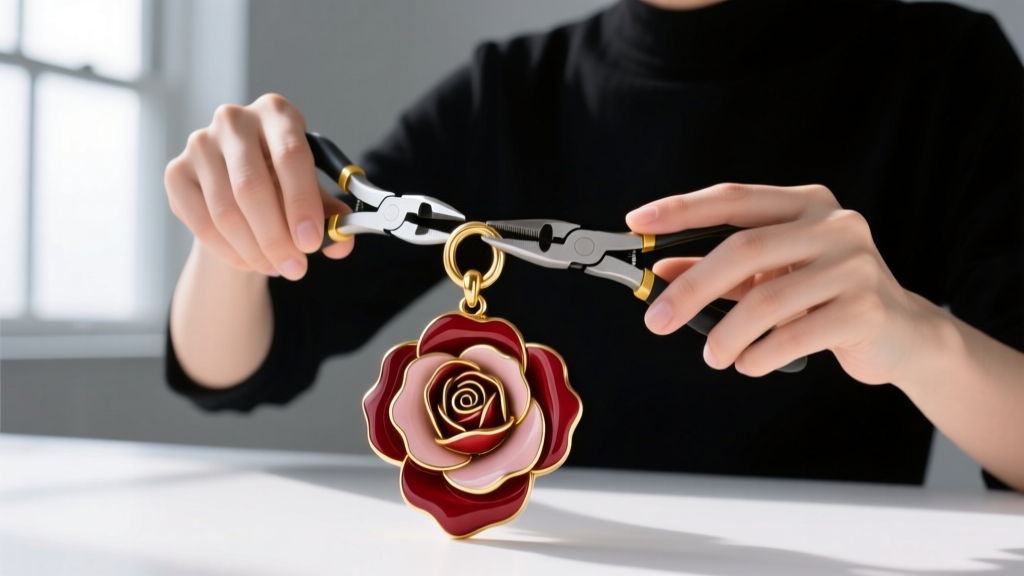
The most common structural failure point on a necklace rose pendant is the jump ring connecting the pendant bail to the chain. Rose pendants are inherently top-heavy and asymmetrical. When worn, the pendant swings and pulls laterally against the jump ring. If the manufacturer used a standard 22-gauge (0.6mm) dead-soft jump ring, the metal will slowly fatigue and pull apart, resulting in a lost pendant.
Upgrading the Jump Ring Gauge
To permanently solve this issue, you must replace the factory jump ring with a heavier, hard-tempered alternative.
- Weight under 10 grams: Upgrade to an 18-gauge (1.0mm) hard-temper jump ring.
- Weight over 10 grams: Upgrade to a 16-gauge (1.3mm) hard-temper jump ring, or ideally, have a jeweler solder the jump ring completely closed.
Troubleshooting Preserved 24k Gold Dipped Roses
Preserved real rose pendants are created by electroplating a lacquered organic rose in copper, followed by a thick layer of 24-karat gold. The primary failure mode here is environmental: high humidity causes the organic core to expand, while the rigid metal shell does not. This differential expansion causes the gold leaf to flake or the stem to snap at the bail.
To troubleshoot and prevent this, store preserved rose pendants in an airtight acrylic display case or a sealed jewelry box containing rechargeable silica gel desiccant packets. Maintain the ambient relative humidity below 45%. If the stem begins to bend, do not attempt to bend it back; the internal copper armature has likely fractured, and the piece requires professional epoxy stabilization at the stem joint.
Preventative Maintenance and Storage
The ultimate solution to rose pendant degradation is proper storage. Because the overlapping petals trap ambient air, storing the piece in an open jewelry box guarantees oxidation. Always place your necklace rose pendant in an anti-tarnish ziplock bag (such as Pacific Silvercloth) alongside a 3M anti-tarnish strip. The strip absorbs airborne sulfur and hydrogen sulfide, effectively neutralizing the environment inside the bag and keeping the intricate metallic folds of your rose pendant pristine for decades.


