How to Restore and Repair a Faded Turquoise Shell Necklace
Learn how to troubleshoot, clean, and restring a faded turquoise shell necklace. Expert tips on restoring porous stones and delicate shells.

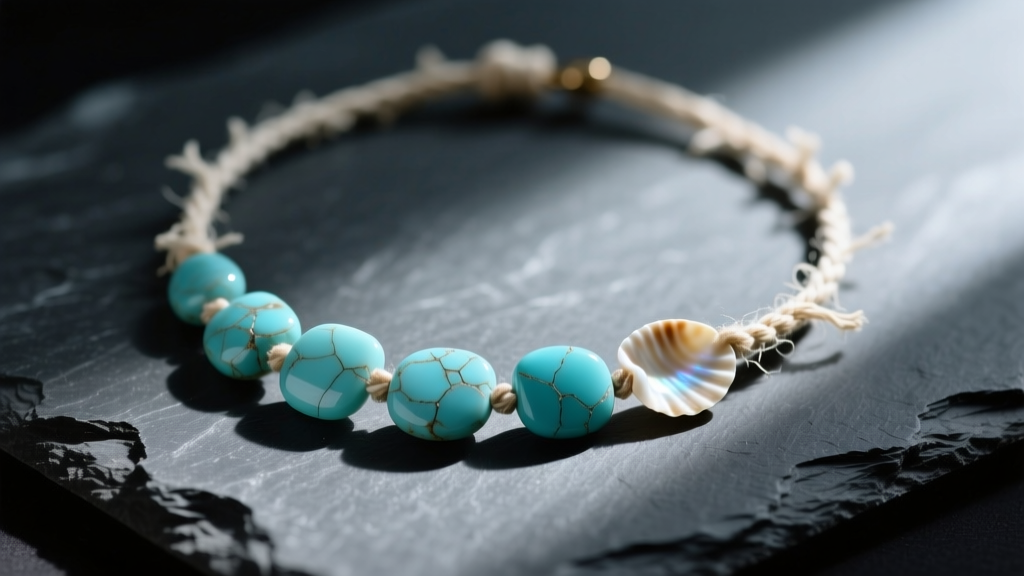
A turquoise shell necklace is a staple of bohemian and Southwestern jewelry, but it is also one of the most chemically volatile combinations in a jewelry box. When the vibrant, sky-blue hues of your favorite piece begin to fade, turn greenish-brown, or when the delicate shell inlays lose their iridescent luster, it is rarely a simple case of surface dirt. It is a material science issue.
As of 2026, the market is saturated with everything from natural, untreated Persian turquoise to block-dyed howlite and stabilized composites. Combined with organic calcium carbonate shells, the cleaning and restoration protocols are fraught with hazards. Using the wrong ultrasonic frequency or a standard commercial jewelry dip can permanently etch the shell and fracture the stone matrix. This comprehensive troubleshooting guide will help you diagnose, clean, and structurally repair your turquoise shell necklace without causing irreversible damage.
The Anatomy of a Turquoise Shell Necklace Failure
To troubleshoot a damaged necklace, you must first understand the inherent weaknesses of its primary components. According to the Gemological Institute of America (GIA), natural turquoise is a porous, hydrous phosphate of copper and aluminum. It ranks between 5 and 6 on the Mohs hardness scale, but its porosity makes it act like a sponge. It readily absorbs sebum, lotions, perfumes, and sweat.
Shell, on the other hand, is primarily composed of calcium carbonate. It ranks much lower on the Mohs scale (2.5 to 3) and is highly reactive to acids. The lactic acid naturally present in human sweat, as well as the citric and alcohol bases in perfumes, will slowly etch the surface of the shell, leaving it dull, chalky, and prone to delamination. When these two vastly different materials are strung together—often on organic silk thread that degrades when exposed to moisture and skin oils—the entire structural integrity of the necklace is compromised over time.
Troubleshooting Guide: Identifying Your Necklace's Issues
Before attempting any restoration, you must accurately diagnose the failure mode. Use the diagnostic table below to identify what is happening to your specific turquoise shell necklace.
| Symptom | Material Affected | Root Cause | Triage Action |
|---|---|---|---|
| Stones turning dark green or brown | Natural Turquoise | Absorption of skin oils, sweat, and copper oxidation | Gentle dry polishing; accept patina or seek professional re-stabilization |
| Chalky, dull, or pitted shell inlays | Organic Shell | Acid etching from perfume, sweat, or harsh chemicals | Stop chemical exposure; buff with micro-abrasive jeweler's cloth |
| Dye transferring to skin or clothing | Dyed Howlite/Magnesite | Fake 'turquoise' bleeding due to solvent or sweat exposure | Isolate piece; wipe with damp cloth; seal with jewelry-safe lacquer |
| Necklace stretching or sagging | Stringing Material | Silk thread rotting from moisture and skin acidity | Immediate restringing required; do not wear until repaired |
| Black smudges around bead holes | Turquoise & Silver | Silver sulfide tarnish transferring to porous stone edges | Clean silver findings separately; use a dry cotton swab on bead holes |
Step-by-Step Restoration: Cleaning Without Damaging
The most common mistake owners make is submerging a turquoise shell necklace in water or using ultrasonic cleaners. Ultrasonic waves create microscopic cavitation bubbles that can easily shatter brittle shell inlays and drive moisture deep into the untreated turquoise matrix, causing internal cracking.
The Safe Cleaning Protocol
To safely remove surface grime and oils without altering the stone's color or etching the shell, follow this precise methodology:
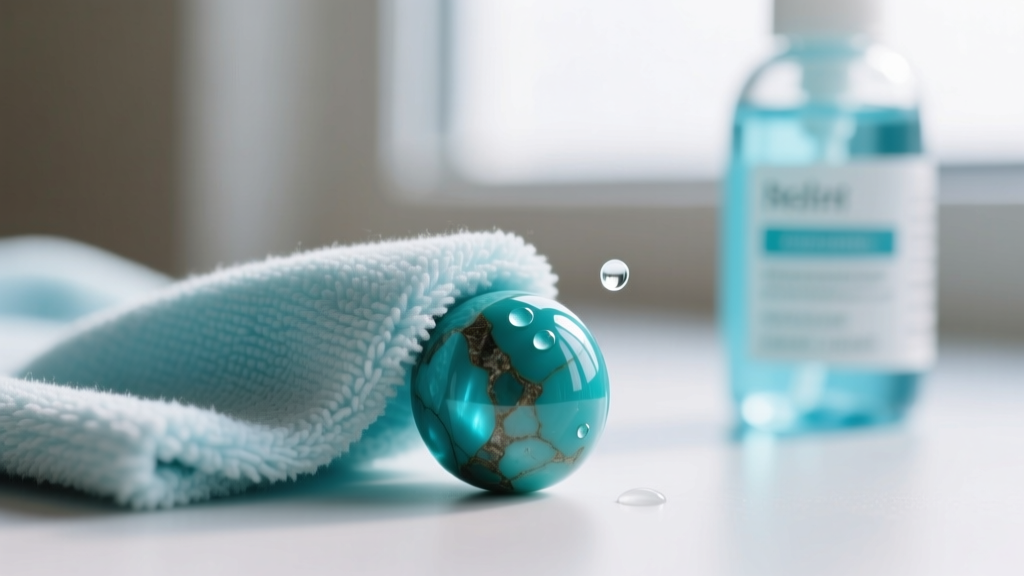
- Step 1: Dampen a lint-free microfiber cloth with distilled water. Never use tap water, as the chlorine and trace minerals can react with the copper in the turquoise.
- Step 2: Apply a single drop of pH-neutral, fragrance-free dish soap (pH 7.0) to the damp cloth, working it into a mild lather.
- Step 3: Gently wipe each turquoise bead and shell segment individually. Do not scrub. Apply minimal pressure to avoid scratching the shell.
- Step 4: Immediately dry the beads with a second, completely dry microfiber cloth. Do not allow water to pool around the drill holes or metal clasps.
The Danger of Chemical Cleaners
Never use commercial silver dips, ammonia, baking soda pastes, or vinegar on a turquoise shell necklace. The American Gem Society explicitly warns against using harsh chemicals on porous gemstones and organic materials. Ammonia will strip the natural waxes from the turquoise, leaving it brittle, while any acidic compound will instantly dissolve the calcium carbonate in the shell, causing permanent pitting.
Stabilized vs. Natural: The Acetone Test
If your turquoise shell necklace is losing color unevenly, or if you suspect the stones are dyed howlite masquerading as turquoise, you need to verify the material. In 2026, advanced stabilization techniques use clear epoxy resins that are nearly impossible to detect with the naked eye. However, cheap surface dyes will bleed.
To test your stones, dip a cotton swab in pure acetone (nail polish remover) and rub it vigorously on an inconspicuous area, such as the back of a bead or near the drill hole. If blue dye transfers to the swab, your stones are dyed and not natural turquoise. If the swab remains clean, the stone is either natural or properly stabilized with a deep-penetrating resin. Note: Never use acetone near the shell components, as it can dry out and crack organic materials.
Restringing and Hardware Upgrades
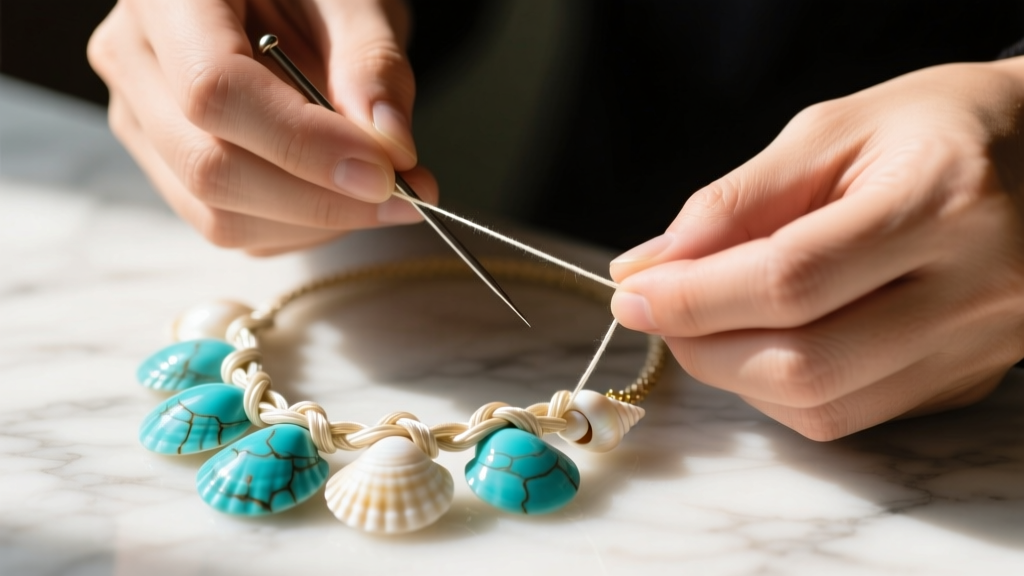
A turquoise shell necklace is only as strong as its stringing material. Historically, these necklaces were strung on silk or cotton thread, which stretches, rots, and snaps when exposed to the acidity of human sweat. If your necklace feels stiff, looks frayed near the clasp, or has visible gaps between the beads, it requires immediate restringing.
Choosing the Right Stringing Material
When upgrading your necklace, abandon traditional silk in favor of modern, high-tensile alternatives that resist moisture and stretching:
- Soft Flex Wire (0.018-inch diameter): Made of 49-strand stainless steel coated in nylon, this is the gold standard for heavy turquoise and shell beads. It drapes like silk but will not stretch or rot.
- Griffin Silk Thread (Size #3 or #4): If you insist on traditional knotting between beads to prevent them from rubbing together, use high-grade German silk. You must knot between every single bead to prevent total loss if the thread snaps.
- French Wire (Bullion): Always use sterling silver or gold-filled French wire coils at the ends of the necklace where the thread loops through the metal clasp. This prevents the metal from sawing through the stringing material over time.
Long-Term Preservation Protocols
Once your turquoise shell necklace has been cleaned and structurally repaired, implementing a strict preservation protocol will extend its lifespan by decades.
The Golden Rule of Organic Jewelry: Turquoise and shell should always be the 'last on, first off' items in your wardrobe. Apply all perfumes, hairsprays, and lotions at least 15 minutes before putting on your necklace to allow the alcohol and solvents to fully evaporate.
Store the necklace flat in a climate-controlled environment. Hanging heavy turquoise beads on a jewelry tree puts uneven stress on the stringing material and can cause the drill holes to chip. Keep the piece in an anti-tarnish flannel pouch, separate from harder gemstones like diamonds or sapphires, which will easily scratch the soft shell inlays during storage. By respecting the unique chemical properties of these ancient materials, your turquoise shell necklace will retain its vibrant, earth-born beauty for generations.


