Troubleshooting a Stuck Lock Chain Necklace: Expert Fixes
Is your lock chain necklace stuck or broken? Learn expert troubleshooting steps to fix jammed clasps, repair links, and restore your jewelry.

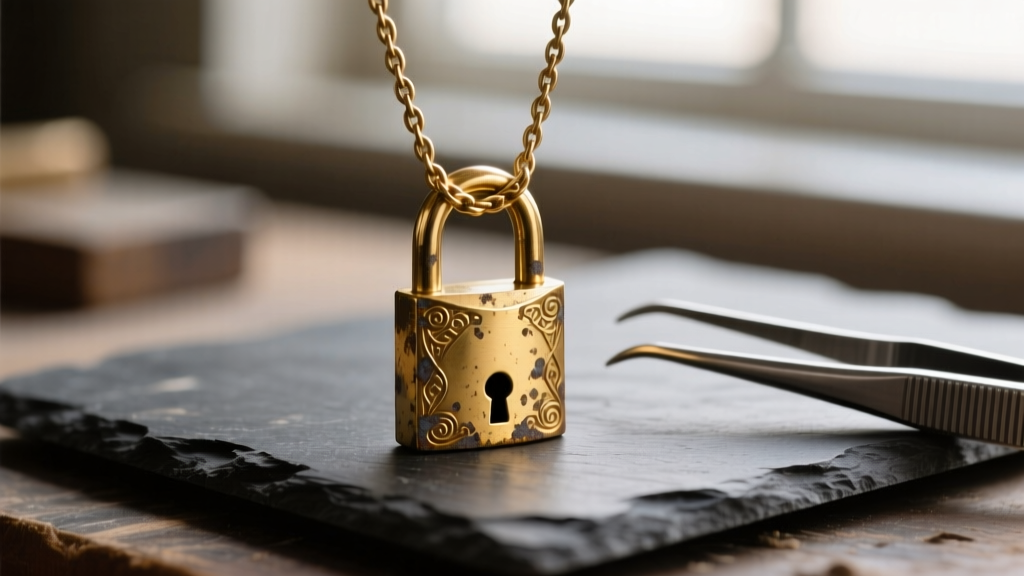
The Anatomy of a Lock Chain Necklace and Common Failure Points
A lock chain necklace is a striking jewelry staple, blending industrial hardware motifs with fine metals. Whether you are wearing a heavy sterling silver padlock pendant on a thick curb chain or a delicate 14k gold chain featuring an integrated locking clasp, the mechanical nature of these pieces introduces unique vulnerabilities. Unlike standard jewelry that relies on static castings, lock necklaces feature moving parts: internal springs, sliding latches, and hinged barrels.
When troubleshooting a malfunctioning lock chain necklace, it is crucial to understand the metallurgy at play. The outer casing of a padlock clasp is typically crafted from 925 sterling silver or 14k/18k gold. However, the internal spring mechanism is almost always made of hardened spring steel. This creates a galvanic couple. When exposed to the chlorides in human sweat or the sulfur in the air, the dissimilar metals can trigger localized galvanic corrosion, effectively fusing the steel spring to the precious metal casing. Recognizing this interaction is the first step in professional-grade jewelry repair.
Troubleshooting a Jammed Locking Clasp or Padlock Pendant
A jammed lock is the most frequent complaint among collectors of vintage and contemporary lock chain necklaces. The latch refuses to slide, or the tiny keyhole mechanism becomes completely seized. Before you apply brute force—which will inevitably snap the hardened steel spring—follow this systematic diagnostic approach.
Step 1: Clearing Debris from the Keyhole or Clasp
Lint, dead skin cells, and cosmetic residues frequently compact inside the blind holes of a padlock clasp. Do not use water or liquid solvents to flush the mechanism, as trapped moisture will cause the internal steel spring to rust and expand, permanently locking the piece. Instead, use a can of compressed air with a precision straw attachment to blast out particulate matter. For stubborn compaction, use a 0.3mm brass needle (brass is softer than steel and gold, preventing scratches) to gently dislodge debris from the sliding tracks.
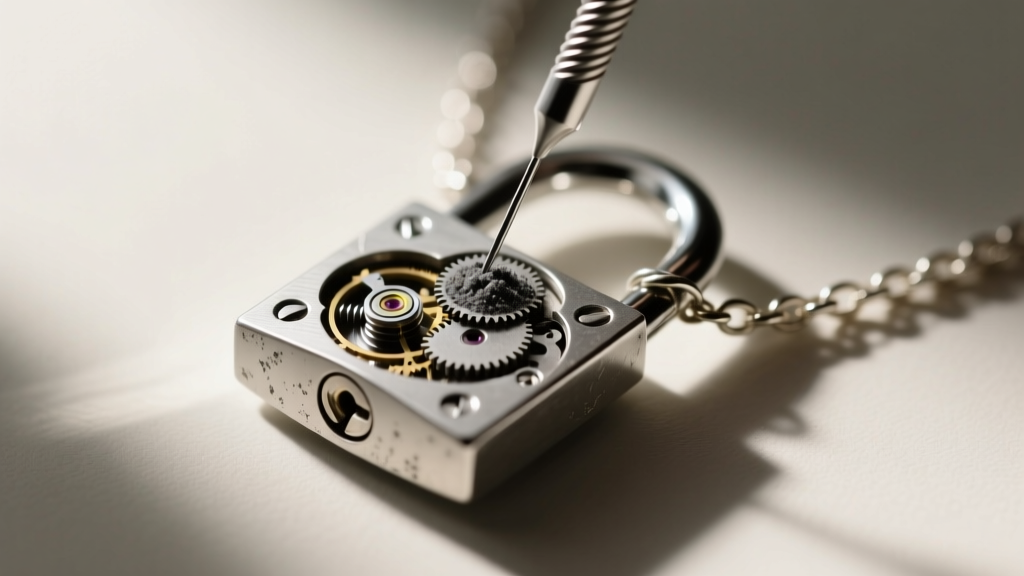
Step 2: Lubricating the Internal Spring Mechanism
Never use standard WD-40 or petroleum-based oils on fine jewelry. These oils attract microscopic dust, creating an abrasive sludge that accelerates wear on the internal tracks. According to the Gemological Institute of America (GIA), jewelry mechanisms require dry or synthetic lubricants. Apply a minuscule amount of graphite powder or molybdenum disulfide using a fine needle directly into the seam of the sliding latch. Work the latch back and forth gently to distribute the dry lubricant. If the lock remains seized, the issue is likely galvanic corrosion, requiring a professional jeweler's ultrasonic and chemical descaling treatment.
Fixing Chain Link Separation Near the Lock Hardware
The lock pendant or locking clasp is usually the heaviest component of the necklace. This concentrates kinetic stress on the single jump ring connecting the lock to the chain. Over time, the repetitive friction of the heavy lock swinging against the jump ring causes the wire to thin and eventually snap. Troubleshooting this requires an understanding of wire gauges and work-hardening.
Gauge Sizing and Soldering Protocols
A common mistake in amateur repair is replacing a broken jump ring with one of the exact same wire thickness as the chain links. Because the jump ring bears the entire dynamic load of the lock pendant, it must be thicker. Furthermore, open jump rings should be avoided entirely for heavy lock pendants; they will inevitably pull apart. You must use a soldered jump ring or a split ring.
| Chain Type & Thickness | Recommended Jump Ring Wire Gauge | Soldering Required? | Best For Lock Weights |
|---|---|---|---|
| Cable Chain (1.5mm) | 18-Gauge (1.0mm wire) | Yes, laser or torch | Under 8 grams |
| Rope Chain (2.5mm) | 16-Gauge (1.3mm wire) | Highly Recommended | 8 to 15 grams |
| Curb Chain (4.0mm) | 14-Gauge (1.6mm wire) | Mandatory | Over 15 grams |
As noted by technical resources from Rio Grande, a leading jewelry supply authority, work-hardening your jump rings by twisting them slightly before soldering increases their tensile strength, preventing the heavy lock pendant from warping the connection point over time.
Tackling Tarnish and Corrosion Inside the Lock Mechanism
Sterling silver lock chain necklaces are highly susceptible to silver sulfide tarnish, which presents as a black, crusty buildup. When this tarnish forms inside the intricate crevices of a keyhole or along the sliding tracks of a padlock clasp, it acts like cement, freezing the moving parts.
The Ultrasonic Cleaner Warning
While ultrasonic cleaners are excellent for removing tarnish from static jewelry, they are incredibly dangerous for lock necklaces. The high-frequency cavitation bubbles can shatter brittle, hardened steel springs. Furthermore, if the lock pendant features a hollow barrel or a deep, blind keyhole, the liquid can become trapped inside. Once trapped, it is nearly impossible to dry completely, guaranteeing internal rust.
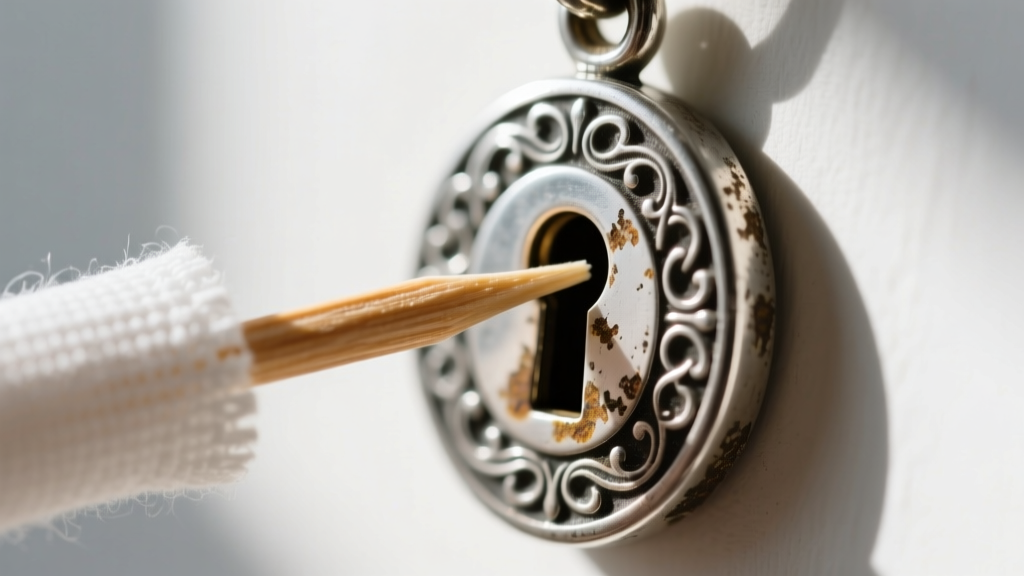
The Dry Polishing Method
To safely remove tarnish from the moving parts of a lock chain necklace without introducing moisture, use a mechanical dry-polishing technique. Wrap a microfiber silver polishing cloth tightly around the tip of a wooden toothpick. The wood provides enough rigidity to apply pressure, while the cloth prevents scratching the precious metal. Gently work the wrapped toothpick into the keyhole and along the sliding seams to physically abrade the silver sulfide layer. Follow up with a blast of compressed air to remove the dislodged tarnish dust.
When to Seek Professional Jeweler Intervention
While routine maintenance and minor troubleshooting can be performed at home, certain failure modes require specialized bench equipment. You should immediately stop attempting to fix your lock chain necklace and consult a professional if you encounter the following scenarios:
- Stripped Internal Threads: If the lock mechanism screws together and the threads strip, a jeweler must re-tap the threads using specialized micro-drills.
- Fractured Spring Steel: If you hear a distinct 'snap' inside the padlock clasp and the latch becomes entirely loose, the internal spring has broken. Replacing this requires custom-fabricating a micro-spring and laser welding the casing shut.
- Severe Galvanic Pitting: If the gold or silver casing shows deep, dark pitting near the steel hinge, the structural integrity of the metal is compromised and requires laser deposition to rebuild the lost material.
"A lock chain necklace is as much a mechanical device as it is an adornment. Treat the internal mechanisms with the same respect you would a fine Swiss watch movement, and prioritize dry lubricants and structural gauge upgrades to ensure longevity."
By understanding the specific metallurgical and mechanical challenges inherent to lock hardware, you can effectively troubleshoot, maintain, and preserve your necklace for decades of daily wear.


