Troubleshooting Your Menorah Necklace: Tarnish, Chains & Repairs
Troubleshoot common menorah necklace issues. Learn how to fix tarnished silver, prevent chain tangling, and repair delicate Judaica pendants.

The Structural Vulnerabilities of Judaica Jewelry
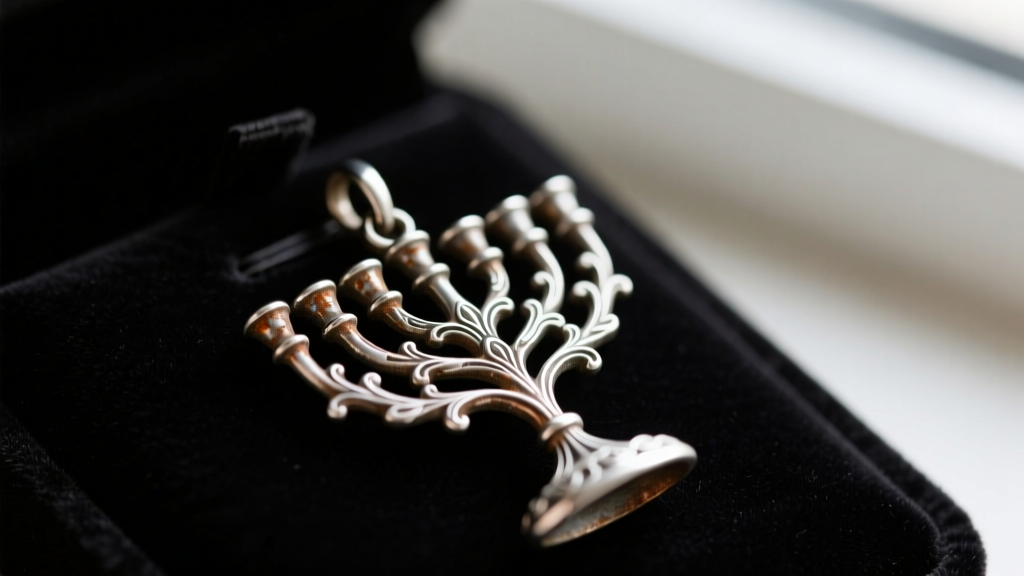
A menorah necklace is more than just an accessory; it is a profound symbol of faith, history, and resilience. However, from a purely structural and metallurgical standpoint, the intricate design of a menorah—whether it is the seven-branch Temple menorah or the nine-branch Hanukkiah—presents unique challenges for daily wear. The extended horizontal branches create multiple snag points, while the wide center of gravity places lateral torque on the chain and bail. When you combine these physical vulnerabilities with the chemical realities of silver and gold alloys, it becomes clear why so many cherished Judaica pendants end up tangled, tarnished, or broken in a jewelry box.
This comprehensive troubleshooting guide dives deep into the specific failure modes of the menorah necklace. We will cover the exact chemistry of silver tarnish, the physics of chain gauge selection, and professional bench-jeweler techniques for restoring damaged enamel and loose bails.
Troubleshooting Tarnish on Silver and Vermeil Menorahs
The vast majority of high-quality silver Judaica jewelry is crafted from 925 sterling silver. According to the Gemological Institute of America (GIA), sterling silver is an alloy composed of 92.5% pure silver and 7.5% copper. It is this copper content that makes the metal durable enough for casting delicate menorah branches, but it is also the copper that reacts with sulfur in the air to form silver sulfide (Ag2S)—the dark, tarnished layer that ruins the pendant's shine.
The Baking Soda Myth vs. Professional Polishing
Many well-meaning online guides suggest boiling your tarnished silver menorah necklace in a bath of aluminum foil, baking soda, and salt. While this electrochemical reaction does reverse silver sulfide back into silver, it is highly abrasive on a microscopic level and will completely strip any protective rhodium plating applied by the manufacturer. Furthermore, if your menorah features oxidized (blackened) recesses designed to highlight the intricate branch details, the aluminum bath will erase this intentional contrast, leaving the piece looking flat and washed out.
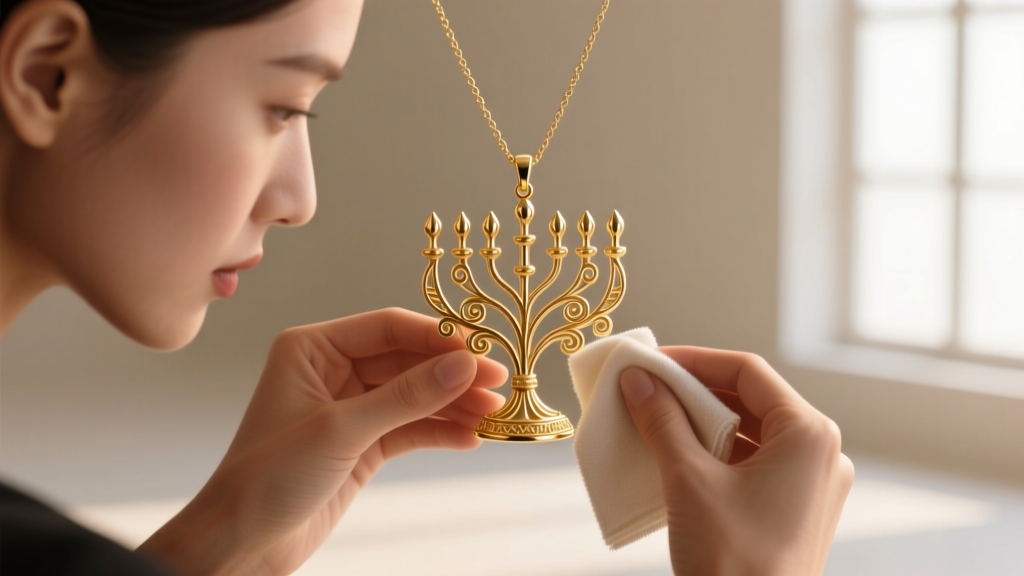
The Expert Solution: For routine maintenance, use a treated jeweler's cloth impregnated with micro-abrasives and anti-tarnish agents (such as a Sunshine cloth). Gently buff the raised edges of the menorah branches while avoiding the darkened crevices. If your menorah necklace is gold vermeil (a thick layer of 14k or 18k gold over sterling silver), never use liquid silver dips or abrasive pastes, as they will wear through the gold layer (which must be at least 2.5 microns thick to qualify as vermeil) and expose the silver base beneath.
Chain Selection: Preventing Breakage and Tangling
A standard Hanukkiah pendant spans 20mm to 35mm horizontally. This wide profile means the pendant does not simply hang straight down; it shifts laterally against the chest, twisting the chain. If you pair a wide menorah pendant with a delicate 0.5mm or 0.6mm cable chain, the lateral torque will eventually work-harden the metal links, causing them to snap at the clasp or the bail.
Additionally, the bail (the loop connecting the pendant to the chain) on many menorah necklaces is concealed or integrated into the central stem (the Shamash). If the inner diameter of the bail is only 3mm, you physically cannot thread a thick chain through it, forcing the wearer to use a flimsy chain that is prone to breaking.
Chain Gauge and Style Matrix
To solve the torque and breakage issue, you must match the chain's structural integrity to the pendant's weight and width. Below is a data matrix for pairing chains with a standard 5-gram to 12-gram menorah pendant.
| Chain Style | Recommended Thickness | Gauge Equivalent | Max Pendant Weight | Tangle & Torque Risk |
|---|---|---|---|---|
| Box Chain | 1.0mm - 1.2mm | 18 - 16 Gauge | 15 grams | Very Low (Lies flat, resists twisting) |
| Rolo Chain | 1.5mm | 14 Gauge | 25+ grams | Low (Heavy duty, excellent for wide pendants) |
| Cable Chain | 0.8mm | 20 Gauge | 4 grams | High (Prone to kinking under lateral torque) |
| Wheat Chain | 1.2mm | 18 Gauge | 12 grams | Medium (Braided structure can catch on intricate branches) |
Troubleshooting Tip: If your menorah pendant has a very small bail but requires a heavier chain, take the piece to a bench jeweler to have a standard 4mm or 5mm sterling silver jump ring soldered to the top of the pendant. This acts as an adapter, allowing you to use a sturdy 1.2mm box chain without forcing it through a tiny opening.
Fixing Enamel and Stone Loss on Judaica Pendants
Many modern menorah necklace designs incorporate cold enamel (epoxy resin) in shades of sapphire blue or pearl white to represent the Israeli flag or the flames of the candles. Over time, exposure to hand sanitizers, perfumes, and body heat can cause this cold enamel to shrink, crack, or pop out of its metal bezel entirely.
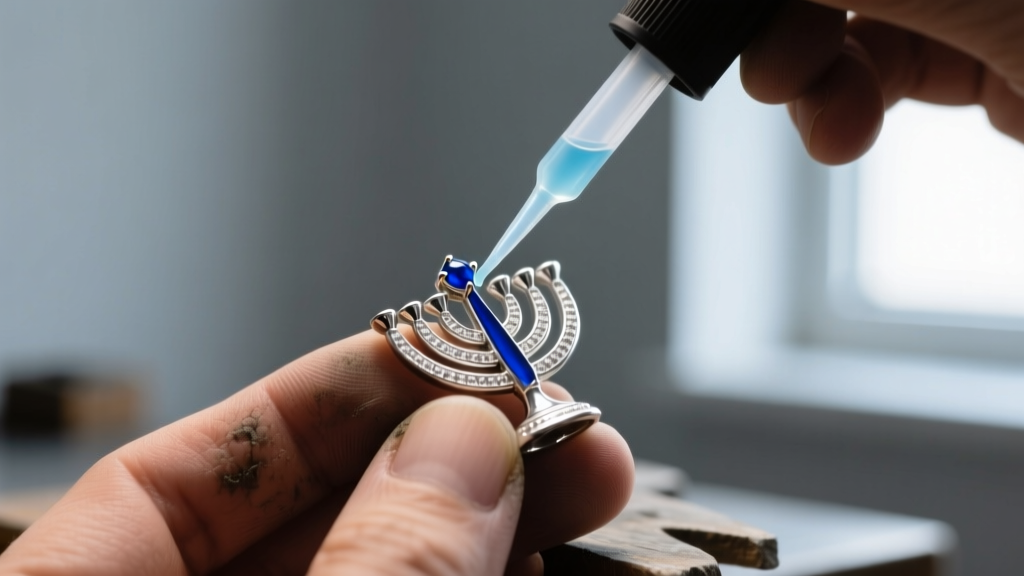
Do not attempt to reattach loose enamel pieces with standard cyanoacrylate (Super Glue). Cyanoacrylate dries brittle, yellows over time, and emits fumes that can permanently cloud any gemstones (like cubic zirconia or sapphires) set near the enamel. Instead, source a high-quality, two-part jewelry epoxy or a UV-curing optical resin. According to technical guidelines from Rio Grande Jewelry Supply, UV resins offer superior clarity and can be cured in seconds using a 365nm UV flashlight, allowing you to precisely secure a 1mm enamel chip without the adhesive bleeding over the edges of the silver menorah branches.
Bench Jeweler Insight: If the enamel is entirely lost and the metal cavity is scratched, lightly sand the inside of the bezel with 600-grit wet/dry sandpaper before applying new resin. A perfectly smooth metal surface offers zero mechanical grip for the resin, guaranteeing it will pop out again within a week.
Sourcing Authentic Hallmarks: Avoiding Alloy Fakes
When replacing a broken chain or purchasing a vintage menorah necklace, verifying the metal grade is critical. Cheap zinc alloys or 'Tibetan silver' (which contains zero actual silver and is primarily copper, nickel, and zinc) will not only tarnish irreparably but can also cause severe contact dermatitis.
- 925 or .925: The universal stamp for sterling silver. Look for this on the back of the menorah pendant or on the tiny tag near the chain clasp.
- 14K, 18K, or 585/750: Indicates solid gold. If the piece is vermeil, it may only bear the 925 stamp, but reputable brands will also include a maker's mark.
- The 'Magnet Test' Fallacy: Do not rely solely on a magnet to test your silver menorah necklace. While pure silver and gold are non-magnetic, the spring inside the lobster clasp of your chain is made of steel and will attract a magnet, leading to false panic. Always test the metal of the pendant itself, away from the clasp.
Daily Maintenance and Storage Checklist
Preventing damage to your menorah necklace is vastly superior to repairing it. Because the branches of the menorah are prone to catching on wool sweaters, scarves, and even long hair, always put your necklace on after applying cosmetics, perfumes, and hairspray, and take it off before changing clothes.
When storing the piece, never toss it loosely into a jewelry box where it can become entangled with other chains. Store the menorah necklace in an airtight polyethylene ziplock bag alongside a 3M anti-tarnish strip. These strips contain activated carbon and silver salts that absorb atmospheric sulfur, effectively pausing the chemical clock and keeping your 925 silver branches gleaming for up to a year without requiring any polishing.


