The Average Necklace Length for a Woman: An Expert Sizing Guide
Discover the average necklace length for a woman based on anatomy, neckline pairings, and pendant weights. Expert sizing data and fit troubleshooting.


When shopping for fine jewelry, the most common question we encounter is regarding standard sizing. Statistically, the average necklace length for a woman is widely cited as 18 inches (45 cm). However, treating this single measurement as a universal rule is a critical mistake that leads to poor fit, uncomfortable wear, and distorted pendant presentation. As jewelry design and manufacturing have evolved, the industry has shifted toward a more nuanced understanding of how chain length interacts with individual anatomy, garment necklines, and the physical weight of pendants.
In this expert deep dive, we move beyond basic sizing charts to explore the biomechanics of necklace drape, the metallurgical realities of chain gauge under load, and the precise technical adjustments required to achieve a flawless custom fit.
The Anatomy of Necklace Sizing: Beyond the Standard 18-Inch
The 18-inch standard originates from mid-20th-century manufacturing norms, designed to fit the statistical mean of female neck circumferences, which typically range between 12.5 and 14 inches. An 18-inch chain on a 13-inch neck provides a 5-inch total drop (2.5 inches down the front of the neck). This places the resting point precisely at or just below the collarbone, universally known as the "Princess" length.
However, torso length and shoulder slope drastically alter where that same 18-inch chain lands. A woman with a longer neck or a more prominent bust will find that an 18-inch chain sits higher, sometimes uncomfortably close to the base of the throat, effectively functioning as a choker. Conversely, on a petite frame with a shorter torso, that same chain may dip into the cleavage line. According to Blue Nile's comprehensive necklace length guide, understanding your specific anatomical drop zone is far more important than adhering to an arbitrary industry average.
Standard Lengths vs. Anatomical Drop Zones
To accurately select a length, you must map the chain to the body's topographical landmarks. Below is a technical breakdown of standard lengths and their corresponding anatomical rest points.
| Length (Inches / cm) | Industry Name | Anatomical Drop Zone | Optimal Pendant Weight |
|---|---|---|---|
| 14" - 16" (35-40 cm) | Collar / Choker | Base of neck / Clavicle | Under 2 grams (or none) |
| 18" (45 cm) | Princess | Collarbone / Upper chest | 2 to 5 grams |
| 20" - 22" (50-55 cm) | Matinee | Upper bust / Sternum | 5 to 12 grams |
| 24" - 30" (60-76 cm) | Opera / Rope | Mid-bust / Solar plexus | 10+ grams (heavy statement) |
How Pendant Weight and Chain Gauge Alter the Effective Length
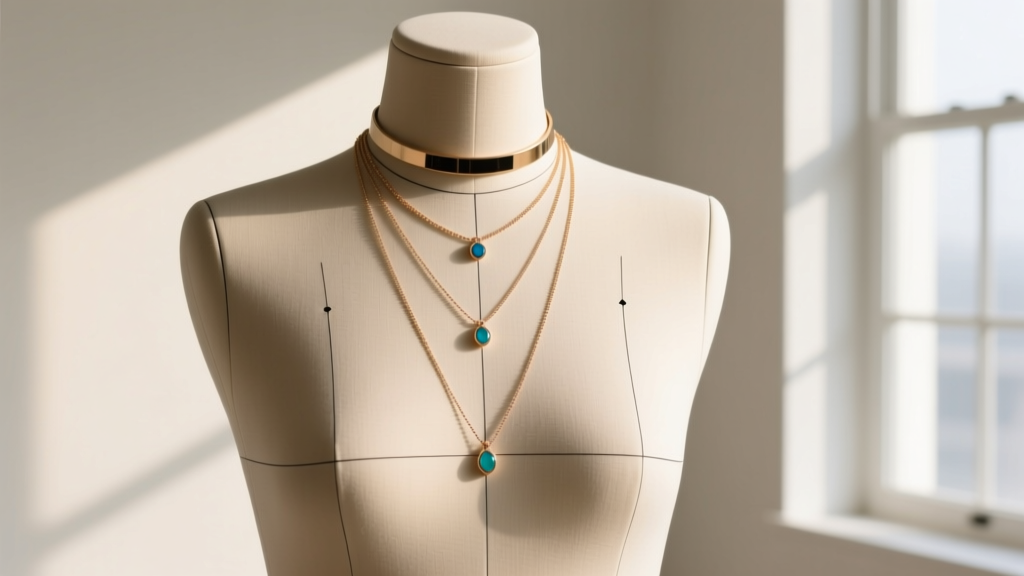
One of the most overlooked variables in necklace sizing is the physics of pendant weight. The average necklace length for a woman is measured when the chain is laid flat. Once a pendant is introduced, gravity alters the drape, creating a V-shape distortion that effectively lengthens the visual drop.
The Gauge-to-Weight Ratio
Chain gauge (thickness) dictates how much a necklace will stretch and pull under a pendant's weight. A delicate 1.0mm cable chain paired with a 6-gram gemstone pendant will pull tightly against the back of the neck, forcing the pendant to drop significantly lower than an 18-inch resting point. This not only ruins the intended silhouette but also accelerates metal fatigue at the solder points of the links.
- Under 3 grams: Safe for 1.0mm to 1.5mm chains (Cable, Curb, or Box styles).
- 3 to 8 grams: Requires a 1.8mm to 2.5mm chain. Wheat and Rope chains are highly recommended here due to their multi-directional link structure, which distributes lateral tension better than flat links.
- Over 8 grams: Demands a 3.0mm+ heavy gauge chain with reinforced jump rings (minimum 20-gauge wire thickness) to prevent the clasp from slipping to the front of the neck.
Furthermore, the bail (the loop connecting the pendant to the chain) adds hidden length. A standard 5x8mm bail adds negligible drop, but a large 15x20mm decorative bail can push an 18-inch chain into the visual territory of a 20-inch chain. Always measure from the top of the bail, not just the chain links, when calculating your final drop zone.
Neckline Pairing Matrix: Matching Drop Length to Garment Cut
A technically perfect necklace will still look disproportionate if it clashes with the garment's neckline. Expert styling requires matching the chain's geometric drape to the negative space of the clothing.
The Crew Neck and Boat Neck (High Necklines)
High, horizontal necklines truncate the visual length of the neck. To counteract this, avoid the 18-inch average. Instead, opt for a 14-inch choker that sits entirely above the fabric line, or plunge to a 24-inch Matinee length that rests completely below the hem of the collar. An 18-inch chain will simply get swallowed by the fabric edge, creating a cluttered visual intersection.
The V-Neck and Scoop Neck (Open Necklines)
These necklines create natural negative space that frames the décolletage. The 18-inch Princess length is the undisputed champion here, as it perfectly mirrors the V-shape of the garment. For deeper scoop necks, a 20-inch chain with a 1.5mm gauge provides a delicate border that follows the curve of the neckline without overlapping the fabric hem.
Pro-Tip from the Bench: When wearing a V-neck with a pendant, ensure the pendant's bottom edge sits at least half an inch above the V-neck's lowest point. Overlapping the pendant with the garment's seam creates visual friction and diminishes the impact of the jewelry.
Troubleshooting Fit: Clasp Extenders and Custom Sizing
Even when you know the exact average necklace length for a woman that suits your frame, off-the-rack jewelry rarely fits perfectly out of the box. Manufacturing tolerances and individual daily fluctuations (such as swelling or layering over winter garments) require mechanical adjustments.
The Mechanics of Extender Chains
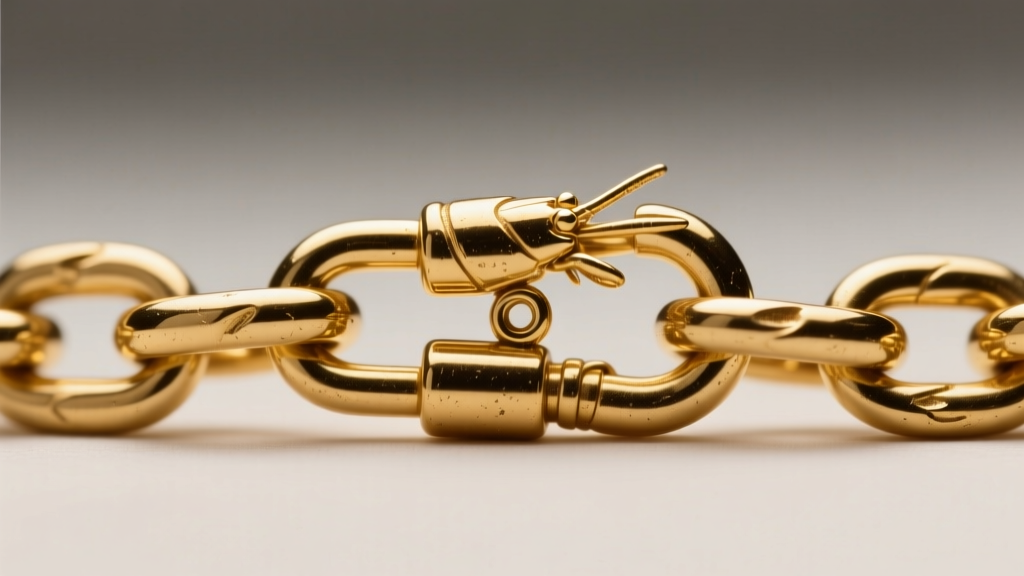
Most commercial fine jewelry includes a standard 2-inch extender chain. However, the hardware used to attach it often compromises the piece. According to technical standards from Rio Grande jewelry supply, the connection points (jump rings) on mass-market extenders are frequently left unsoldered to save production costs. This creates a failure point where the extender can pull apart under the weight of a heavy pendant.
If you are adding a custom extender to a piece that will hold more than 4 grams of weight, insist on soldered jump rings or a continuous box-chain extender that integrates directly into the main clasp mechanism.
Clasp Selection and Neck Tension
The type of clasp affects how the necklace sits on the neck. Spring ring clasps (typically 4mm or 5mm) are lightweight and ideal for chains under 2.0mm. However, their internal spring mechanism is prone to failure under lateral tension. If your 18-inch chain feels tight, the lateral pull on a small spring ring will eventually warp the internal coil. For any chain that sits snugly against the neck, upgrading to a 9mm or 12mm lobster clasp is mandatory. Lobster clasps feature a solid cast body and a heavier internal spring, capable of withstanding the continuous outward tension of a closely fitted necklace without degrading over time.
Conclusion: Dialing in Your Exact Measurement
While the statistical average necklace length for a woman remains 18 inches, true expertise lies in recognizing this number as a starting point, not a destination. By calculating your specific neck circumference, factoring in the exact gram weight of your chosen pendant, and selecting a chain gauge that prevents V-shape distortion, you can engineer a fit that is both physically comfortable and visually impeccable. Always measure with a flexible jeweler's tape, simulate the pendant drop with a piece of string, and never underestimate the structural importance of a properly soldered clasp assembly. For further technical data on metal durability and gemstone settings, consult the Gemological Institute of America (GIA) research archives.


