Gold M Necklace Value: Plated vs Solid Gold in 2026
Discover the true value of a gold M necklace in 2026. We compare plated, vermeil, and solid 14k gold initial pendants to help you budget wisely.

The Anatomy of a Gold M Necklace: What Are You Paying For?
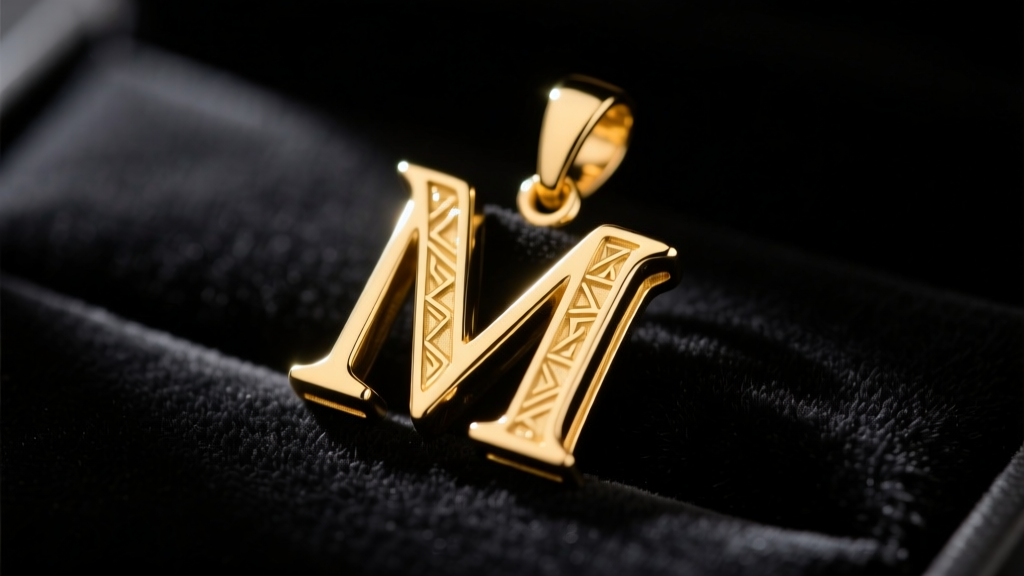
When shopping for personalized jewelry, the initial pendant remains a dominant trend. However, the specific geometry of the letter 'M' presents unique structural and financial considerations that buyers often overlook. Unlike a simple 'I' or 'C', the letter 'M' features a wide footprint, three vertical pillars, and two diagonal valleys. This increased surface area means a solid gold M necklace will inherently require more raw material, directly impacting its melt value and retail price. In 2026, with precious metal markets experiencing continued volatility, understanding the true value of your jewelry is no longer optional—it is essential for smart budgeting.
Assessing the value of a gold M necklace requires looking past the carat stamp. You must evaluate the manufacturing technique, the structural integrity of the bail (the loop that connects the pendant to the chain), and the longevity of the gold finish. A budget-friendly plated piece might look identical to a solid 14k gold pendant on a screen, but their lifespans and intrinsic values are worlds apart. This guide breaks down the exact material grades, pricing tiers, and structural details you need to know before investing in an 'M' initial necklace.
Material Breakdown: Plated, Vermeil, and Solid Gold
The most significant driver of price in any gold M necklace is the base material. The Federal Trade Commission (FTC) strictly regulates jewelry terminology, yet marketing jargon often obscures the reality of what you are buying. According to the FTC Jewelry Guides, terms like 'gold filled' and 'gold plated' have specific micron-thickness requirements that dictate how long the piece will survive daily wear.
| Material Type | Core Metal | Gold Layer Thickness | Expected Lifespan | 2026 Price Range |
|---|---|---|---|---|
| Flash Plated | Brass or Copper | Less than 0.175 microns | 3 - 6 months | $15 - $35 |
| Gold Vermeil | Sterling Silver (925) | Minimum 2.5 microns | 1 - 3 years | $60 - $120 |
| Solid 10k Gold | Gold Alloy (41.7%) | Solid throughout | Lifetime | $140 - $220 |
| Solid 14k Gold | Gold Alloy (58.3%) | Solid throughout | Lifetime / Heirloom | $250 - $450 |
| Solid 18k Gold | Gold Alloy (75.0%) | Solid throughout | Lifetime / Heirloom | $400 - $750+ |
For a piece meant to be worn daily, solid 14k gold offers the optimal balance of durability and value. The 'M' shape is prone to catching on sweater threads and hair; 14k gold's alloyed metals (like copper and zinc) provide the tensile strength needed to prevent the pendant's 'legs' from bending, a common failure mode in softer 18k or 22k gold initial pendants.
Manufacturing Methods: Stamped vs. Cast Pendants
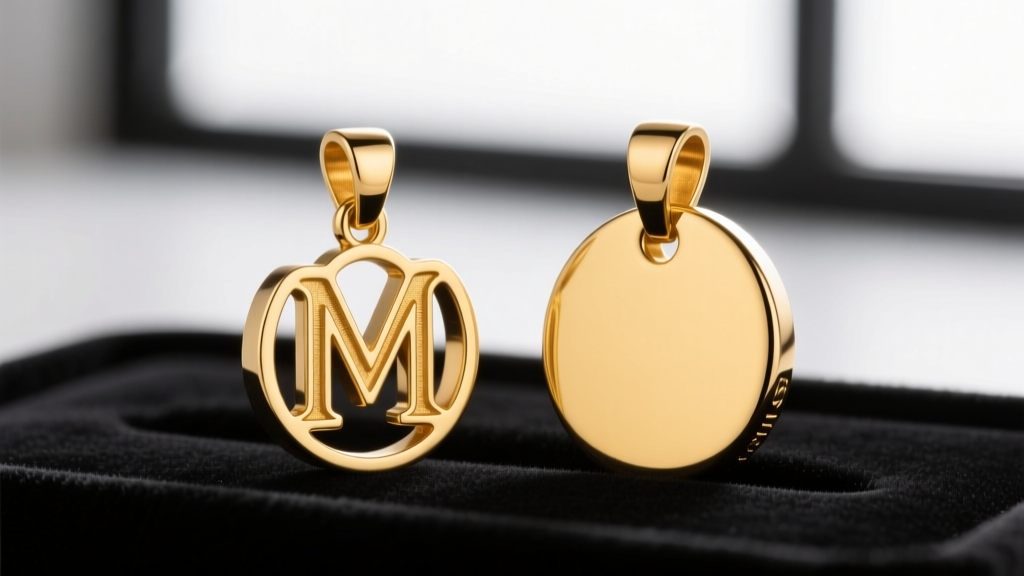
Two gold M necklaces can both be stamped '14k', yet one might cost $150 while the other costs $400. The discrepancy lies in the manufacturing method. Understanding this difference is the hallmark of an informed buyer.
Die-Striking (Stamped) Pendants
Die-struck pendants are created by stamping a sheet of gold with a high-pressure hydraulic press. This process compresses the metal molecules, making the pendant incredibly hard and durable despite being lightweight. However, because they are stamped from flat sheets, die-struck 'M' pendants are often hollowed out on the back to save on gold weight. While this lowers the upfront cost, hollow pendants are notoriously difficult to repair if they become dented or crushed.
Lost-Wax Casting (Solid Pendants)
Casting involves carving a 3D wax model of the letter 'M', encasing it in investment plaster, and pouring molten gold into the void. Cast pendants are solid, heavy, and possess a premium, three-dimensional bevel on the edges. According to the Gemological Institute of America (GIA), the alloy mix used in casting must be carefully controlled to prevent porosity (tiny air bubbles). A high-quality cast 'M' pendant will feel substantial on the chest and can be easily polished, buffed, and repaired by any bench jeweler for decades to come.
The Hidden Cost: Chain Weight and Bail Integrity
A common budgeting mistake is spending 90% of the budget on a heavy, solid gold 'M' pendant and pairing it with a flimsy, mass-produced chain. The letter 'M' is wider and heavier than most other initials, creating a pendulum effect that puts immense stress on the chain and the bail.
The Bail: Avoid pendants where the bail is simply a thin loop of wire pinched around the top center pillar of the 'M'. Over time, the friction will wear through the gold. Look for an integrated bail (cast as one continuous piece with the pendant) or a laser-welded jump ring.
The Chain: For a standard 15mm to 20mm 'M' pendant, your chain should be at least 1.2mm to 1.5mm thick. A 14k gold box chain or a sturdy rope chain provides the necessary tensile strength. Pairing a heavy 'M' pendant with a delicate 0.8mm cable chain is a guaranteed recipe for a snapped necklace and a lost pendant.
2026 Market Pricing Tiers for Gold M Necklaces
To accurately assess if you are getting a fair deal, you must understand the current market tiers. With gold spot prices hovering above $2,100 per troy ounce in early 2026, the 'melt value' (the raw value of the gold content) sets a hard floor on pricing. A solid 14k gold 'M' pendant weighing 2.5 grams contains roughly 1.45 grams of pure gold, yielding a melt value of approximately $105. Retail markups for labor, design, and brand prestige will dictate the final price.
- The Fast-Fashion Tier ($20 - $50): Brass base with flash plating. The 'M' is usually flat and sharp-edged. Acceptable for temporary trends, but will tarnish and turn skin green within months.
- The Mid-Tier Vermeil ($75 - $130): Sterling silver base with heavy 2.5-micron 14k or 18k gold plating. Excellent for buyers who want the look of solid gold without the 2026 spot-price premium. Requires careful maintenance to avoid wearing through the gold layer.
- The Investment Tier ($250 - $500): Solid 14k gold, cast or die-struck. This is the sweet spot for value. You are paying for lifetime durability, hypoallergenic properties, and intrinsic metal value that can be liquidated if necessary.
- The Luxury Designer Tier ($800 - $1,500+): Solid 18k gold, often featuring diamond accents on the 'M' or proprietary designer branding. Here, you are paying for the brand equity and craftsmanship, not just the gold weight.
How to Verify Authenticity and Value
When purchasing a solid gold M necklace, especially from secondary markets or independent online jewelers, verification is critical. Always look for a clear hallmark. In the US, a '14k' or '585' stamp is standard, often accompanied by a maker's mark.
If you are buying a vintage 'M' pendant, be wary of wear on the high points of the letter. If the 'M' is gold-filled or heavily plated, the friction from clothing will eventually expose the base metal at the edges and the bail. A professional jeweler can perform an XRF (X-ray Fluorescence) test, which uses radiation to determine the exact elemental composition of the pendant without scratching or damaging it. This is the gold standard for verifying that your 14k 'M' pendant isn't just a thick layer of gold over a tungsten or brass core.
Final Verdict: Which Gold M Necklace Should You Buy?
The true value of a gold M necklace depends entirely on your intended use. If you are buying a piece for a teenager or for seasonal layering, a high-quality gold vermeil 'M' pendant on a sterling silver chain offers the best aesthetic-to-budget ratio. However, if this necklace is meant to be a daily signature piece, an anniversary gift, or an heirloom, bypass the plated options entirely. Invest in a solid 14k gold cast 'M' pendant, pair it with a robust 1.5mm box chain, and ensure the bail is securely welded. By understanding the geometry, weight, and manufacturing behind the letter 'M', you can confidently navigate the 2026 jewelry market and secure a piece that retains both its beauty and its financial value.


