Material Guide to Choosing a Flower Necklace From Hawaii
Compare koa wood, mother of pearl, and precious metals to choose the perfect flower necklace from Hawaii for tropical climates and daily wear.

The Evolution of the Hawaiian Floral Pendant
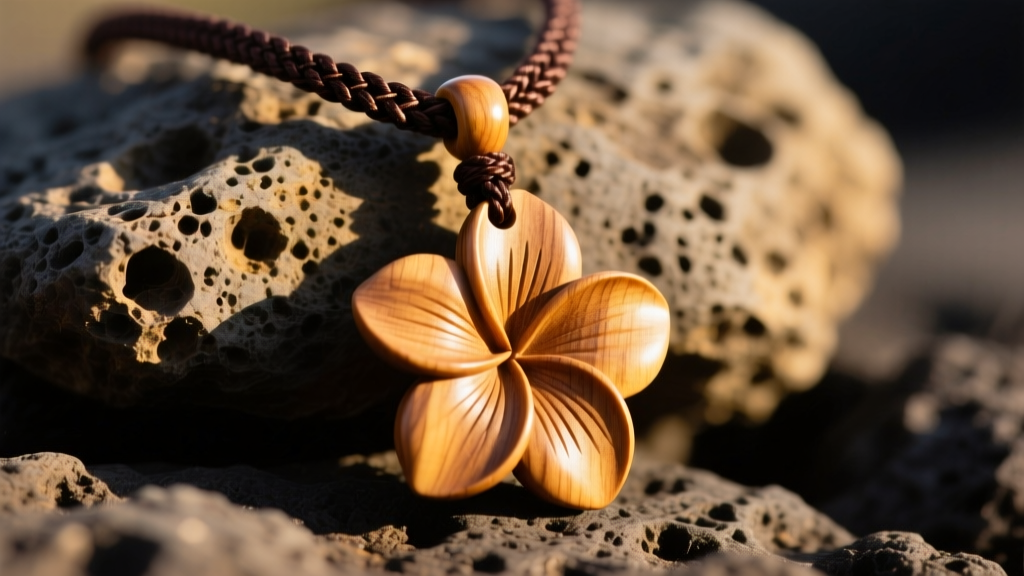
When travelers and jewelry enthusiasts seek a flower necklace from Hawaii, they are often drawn to the rich cultural symbolism of the islands' endemic flora. The plumeria (melia) represents positivity and new beginnings, the hibiscus signifies delicate beauty, and the orchid embodies luxury and strength. However, transitioning these organic, ephemeral blooms into permanent, wearable fine jewelry requires a deep understanding of material science—especially when the jewelry will be exposed to high-humidity, salt-air environments.
Unlike standard fashion jewelry, a tropical-ready floral pendant must withstand ambient moisture levels that frequently exceed 80%, intense UV radiation, and the corrosive nature of ocean spray. In this comprehensive guide, we break down the metallurgical and botanical properties of the most popular materials used in Hawaiian floral jewelry, helping you make an informed, durable investment.
Material Breakdown: What Makes a Tropical-Ready Necklace?
Koa Wood: The Traditional Botanical Choice
Endemic to the Hawaiian islands, Acacia koa is a highly prized hardwood renowned for its deep, rich grain and chatoyancy (a cat's-eye optical effect) when finished properly. According to The Wood Database, Koa boasts a Janka hardness of 1,170 lbf, making it dense enough to hold intricate floral carvings without splintering.
However, wood is inherently hygroscopic. A raw koa plumeria pendant will absorb ambient moisture, leading to swelling, warping, and eventual cracking when moved between air-conditioned interiors and humid exteriors. To prevent this, master carvers must seal the wood with multiple coats of marine-grade spar varnish or a penetrating tung oil finish. When purchasing a koa flower necklace, always verify the sealing method; UV-cured polyurethane offers the highest resistance to both moisture and sun damage.
Mother of Pearl & Crushed Coral Inlays
Mother of Pearl (MOP), harvested from the inner nacre of mollusks like the black-lipped oyster (Pinctada margaritifera), is a staple in Hawaiian heirloom jewelry. The iridescent layers of aragonite (calcium carbonate) provide a stunning, oceanic backdrop for gold hibiscus or orchid motifs.
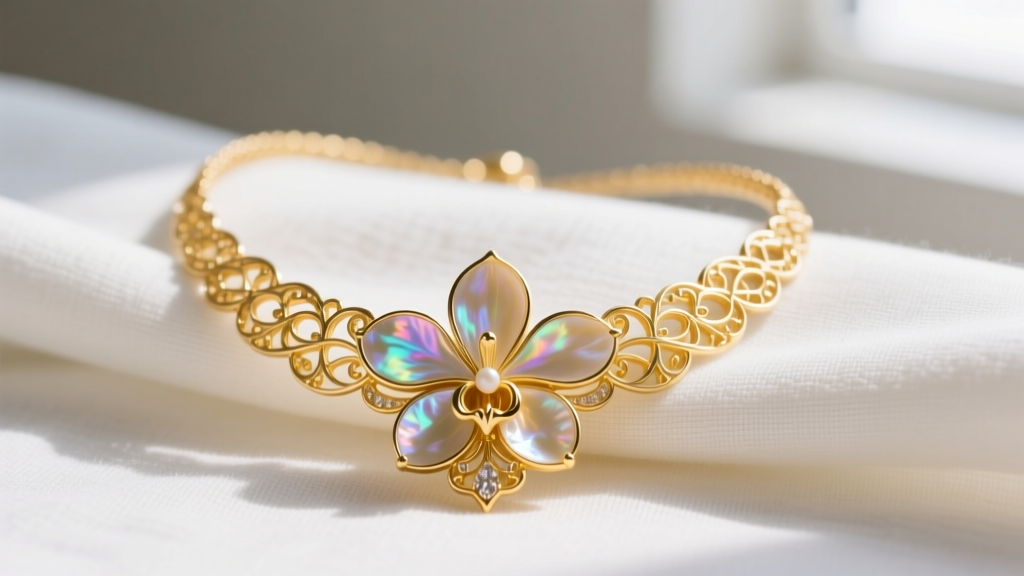
From a gemological perspective, MOP ranks between 2.5 and 4.5 on the Mohs hardness scale, as noted by the GIA Gem Encyclopedia. This relative softness makes it highly susceptible to scratching and chemical etching. Human sweat, which typically has a pH between 4.0 and 6.0, can slowly dissolve the nacre layers over time, dulling the iridescence. If you opt for a MOP-inlaid flower necklace, it must be removed before swimming in chlorinated pools or engaging in high-exertion activities in the tropical heat.
Precious Metals: 14k Gold vs. Sterling Silver
For the metal components of your floral pendant, the alloy composition dictates its survival in island climates. Pure 24k gold is too soft for intricate floral prongs and bezels, making 14k gold (58.5% pure gold alloyed with copper, silver, and zinc) the industry standard. The alloying metals provide the necessary tensile strength while maintaining excellent resistance to oxidation and saltwater corrosion.
Sterling silver (92.5% silver, 7.5% copper), while beautiful and more affordable, presents a significant challenge in Hawaii. The copper content readily reacts with sulfur in the air and salt in the ocean breeze, forming copper chloride and silver sulfide—commonly known as tarnish. If you prefer the bright white look of silver for your flower necklace from Hawaii, ensure the piece has been treated with an anti-tarnish e-coating or flashed with a thick layer of rhodium to create an impermeable barrier against the elements.
Comparative Data: Durability, Price, and Climate Resistance
To help you weigh your options, we have compiled a technical comparison of the primary materials used in Hawaiian floral pendants. This data reflects average market conditions and material properties relevant to tropical wear.
| Material | Hardness (Mohs/Janka) | Humidity & Salt Tolerance | Maintenance Level | Avg. Price Range (USD) |
|---|---|---|---|---|
| Sealed Koa Wood | 1,170 lbf (Janka) | Moderate (Requires intact seal) | Medium (Annual oiling) | $45 - $180 |
| Mother of Pearl | 2.5 - 4.5 (Mohs) | Low (Vulnerable to acid/salt) | High (Frequent gentle wiping) | $120 - $450 |
| 14k Yellow Gold | 2.5 - 3.0 (Mohs) | Excellent (Highly inert) | Low (Occasional polishing) | $350 - $1,200+ |
| Rhodium-Plated Silver | 2.5 (Mohs) | High (While plating lasts) | Medium (Re-plating every 2 yrs) | $85 - $250 |
Chain Selection for Island Environments
The pendant is only half the equation; the chain suspending your floral motif must also survive the tropics. A common mistake is pairing a high-quality 14k gold plumeria pendant with a gold-plated brass or copper-core chain. In high-salinity environments, the zinc and copper in the base metal will undergo dezincification and galvanic corrosion, leading to green skin discoloration and structural failure of the links.
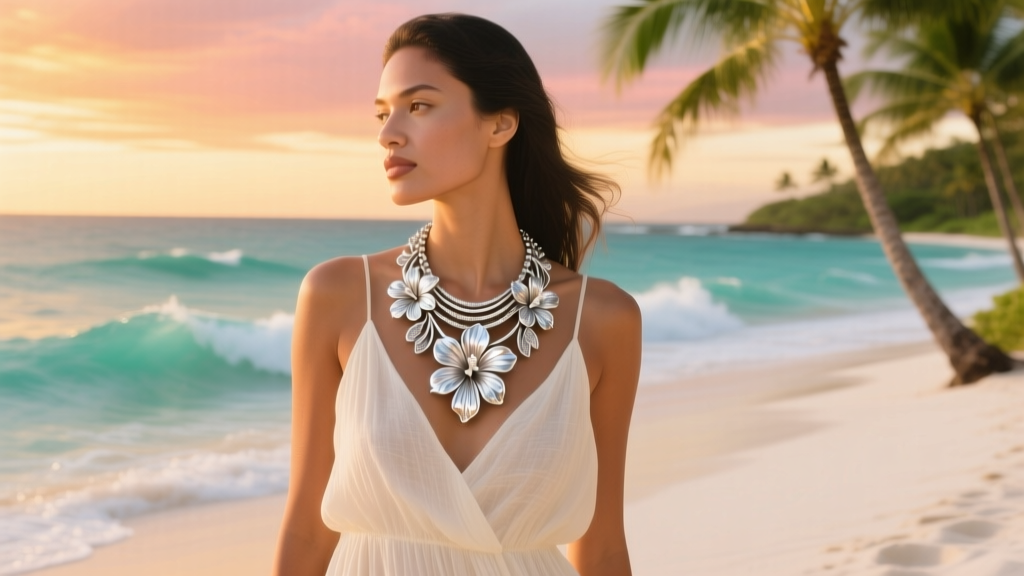
For a durable, worry-free setup, opt for a solid 14k gold rope chain (1.5mm to 2.0mm thickness) or a 316L marine-grade surgical stainless steel chain. The molybdenum added to 316L steel specifically prevents pitting and crevice corrosion from chlorides, making it an exceptional, budget-friendly alternative to solid gold for beach-side wear. Avoid box chains, as the sharp interior edges can trap fine volcanic sand and sea salt, accelerating wear on the chain's structural joints.
Care and Maintenance in High-Humidity Climates
Even the most resilient materials require specific care routines when subjected to the rigors of island life. Follow this actionable maintenance framework to preserve your jewelry:
- The 'Last On, First Off' Rule: Always put your necklace on after applying sunscreen, insect repellent, and perfumes. The chemical solvents in these products can strip the protective oils from koa wood and degrade the rhodium plating on silver.
- Freshwater Rinsing: After a day at the beach, rinse your pendant and chain under cool, fresh tap water to remove microscopic salt crystals. Salt acts as an abrasive and an electrolyte, accelerating galvanic corrosion where different metals meet (such as the jump ring and the pendant bail).
- Ultrasonic Warning: Never use ultrasonic cleaners on Mother of Pearl, crushed coral, or wood inlays. The high-frequency cavitation bubbles can easily fracture the delicate nacre layers or force moisture into the microscopic pores of the wood.
Final Verdict: Which Material Suits Your Lifestyle?
Choosing the right flower necklace from Hawaii ultimately depends on your daily environment and maintenance willingness. If you seek an authentic, culturally grounded piece and don't mind an annual re-oiling routine, a sealed Koa wood plumeria offers unmatched warmth and island heritage. For those who want a luxurious, heirloom-quality piece that can be worn in the ocean without a second thought, a solid 14k gold hibiscus or orchid is the undisputed champion of durability. Conversely, if you prefer the bright, oceanic flash of Mother of Pearl, reserve it for evening wear and dry-climate outings to protect its delicate aragonite structure. By matching the material properties to your lifestyle, your Hawaiian floral pendant will remain as vibrant as the islands themselves for decades to come.


