The Dangling Necklace Trend: 2026 Style & Layering Guide
Explore 2026 dangling necklace trends, from kinetic gemstone pendants to asymmetrical layering. Master lengths, weights, and neckline pairings.


The Architecture of the Modern Dangling Necklace
As we navigate the 2026 jewelry landscape, the dangling necklace has transcended its traditional role as a simple pendant on a chain. Today, it is recognized as a piece of kinetic sculpture. Driven by a consumer desire for movement, light refraction, and tactile interaction, modern dangling silhouettes are dominating both haute joaillerie runways and everyday street style. According to Vogue Trend Forecasting, the shift towards articulated jewelry reflects a broader cultural pivot towards dynamic, expressive accessories that react to the wearer's body mechanics.
Unlike static pendants that lay flat against the sternum, a true dangling necklace features a drop element suspended by a bail, jump ring, or articulated hinge. This allows the pendant to swing, rotate, and catch light from multiple angles. However, this kinetic freedom introduces unique structural challenges. The torque generated by a swinging 15-gram pendant can easily distort soft metals, snap delicate chains, and cause severe bail fatigue. Mastering the style requires a deep understanding of weight distribution, chain gauges, and material tensile strength.
Anatomy and Structural Integrity
The most common failure mode in dangling jewelry is bail wear. When a heavy pendant swings, the bail rubs continuously against the interior of the chain links. If the chain is made of a harder metal (like stainless steel or platinum) and the bail is a softer, high-karat gold (like 22k or 24k), the friction acts like a saw, eventually cutting through the bail. To prevent this, 2026's premier jewelers are utilizing 14k or 18k gold for high-friction components, or reinforcing the bail with a platinum sleeve.
Chain Gauges and Weight Distribution
Matching the chain gauge to the pendant's weight is non-negotiable. A delicate 0.8mm cable chain will kink and snap under the dynamic load of a heavy geometric dangle. Here is the technical framework for selecting the right foundation:
- Lightweight Dangles (1g - 5g): 0.8mm to 1.0mm cable or rolo chains. Ideal for delicate briolette gemstone drops.
- Mid-Weight Dangles (6g - 15g): 1.2mm to 1.5mm box or wheat chains. The interlocking links resist kinking and provide a smooth surface that minimizes bail friction.
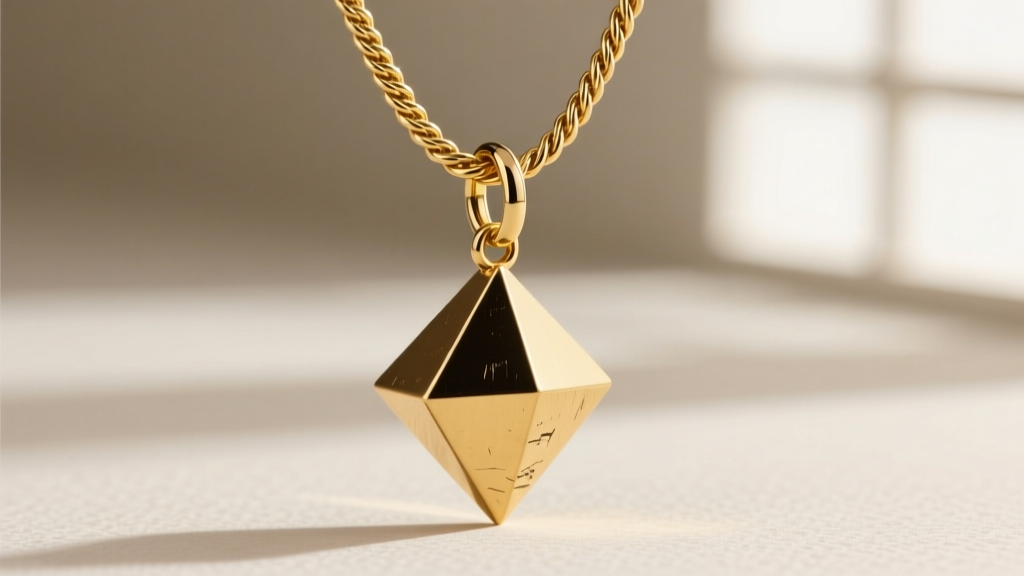
- Heavy Kinetic Pendants (16g+): 1.5mm to 2.0mm rope chains or reinforced Figaro chains. These require a minimum 5mm soldered jump ring at the clasp and pendant connection points to prevent accidental unhooking during movement.
Material Grades for Articulated Joints
The Gemological Institute of America (GIA) frequently highlights how gemstone articulation impacts light performance. When a dangling necklace features a pivoting gemstone, the joint material must withstand immense repetitive stress. Below is a comparison of the top materials used in 2026 for kinetic jewelry frameworks:
| Material | Tensile Strength | Tarnish Resistance | Ideal Application | Price Range (per gram) |
|---|---|---|---|---|
| 18k Yellow Gold | Moderate | High | Luxury articulated hinges, premium bails | $45 - $65 |
| Platinum 950 | Very High | Very High | Micro-pavé dangling settings, high-friction jump rings | $30 - $45 |
| Argentium Silver | Low-Moderate | High (Germanium alloy) | Entry-level kinetic pendants, lightweight dangles | $1.50 - $3.00 |
| Grade 5 Titanium | Extreme | Extreme | Avant-garde structural dangles, tension settings | $0.50 - $2.00 |
Neckline Pairing Matrix for Dangling Pendants
The visual impact of a dangling necklace is entirely dependent on how it interacts with the wearer's neckline and the garment's geometry. A poorly matched drop length will either disappear into fabric or clash with the collarbone. Use this matrix to ensure optimal visual balance:
- The Deep V-Neck: Requires a 20-inch to 24-inch drop. The dangling element should terminate exactly one inch above the apex of the V-neckline. This elongates the torso and creates a continuous vertical line. Opt for linear, teardrop, or marquise-cut dangling pendants.
- The Boatneck (Bateau): Demands a dramatic 28-inch to 32-inch opera-length dangle. Because the neckline cuts horizontally across the collarbones, a long, heavy pendant breaks up the horizontal block of fabric, drawing the eye downward. Asymmetrical lariats are highly recommended here.
- The Square Neckline: Pairs best with an 18-inch princess-length chain featuring a rigid, geometric dangling pendant (such as a square or hexagon). The pendant should sit just inside the square frame of the neckline, echoing the garment's structured angles.
- The Crew Neck: The most challenging canvas. Avoid standard dangling pendants, as they will tangle with the ribbed collar. Instead, opt for a 16-inch choker with a micro-dangle, or push the dangle down to a 36-inch rope length that rests entirely on the torso.
Advanced Layering: Anchoring the Dangle
Layering a dangling necklace with other chains is a hallmark of 2026 styling, but it introduces the persistent issue of tangling. The kinetic movement of the dangle acts like a whisk, wrapping adjacent chains around the primary pendant. To achieve a curated, intentional look without the frustration of constant detangling, you must employ the Length Differential Rule.
The golden rule of layering is to maintain a minimum two-inch gap between the terminating points of each chain. For example, if your base chain is a 16-inch choker, your mid-layer should be 18 inches, and your dangling necklace must be at least 22 inches. This ensures the swinging pendant operates in an empty spatial zone, completely clear of the higher chains.

For those who prefer a clustered look where the chains hang closer together, hardware solutions are mandatory. Utilize a spacer bar clasp or a multi-strand detangler at the nape of the neck. These devices lock the chains into parallel tracks at the back, preventing them from twisting around each other before they even reach the front of the chest. Additionally, choosing a box chain for the dangling layer and a smooth snake chain for the upper layers drastically reduces the microscopic friction points that cause chains to knot together.
"The secret to a flawless layered dangling necklace isn't just about aesthetics; it's about engineering the negative space. If the pendant doesn't have a clear swing radius, the entire look collapses into visual clutter." — Elara Vance, Senior Jewelry Stylist
Maintenance and Tangling Prevention
Because dangling necklaces are inherently mobile, they are prone to accumulating environmental debris in their moving parts. Articulated hinges and micro-jump rings can trap lotions, perfumes, and skin oils, leading to stiffness and eventual corrosion. To maintain the fluid movement of your kinetic pendants, a strict maintenance protocol is required.
First, never store a dangling necklace in a communal jewelry box. The swinging pendant will inevitably hook onto the links of nearby chains. Always hang the necklace vertically on a padded jewelry stand or lay it completely flat in a dedicated, velvet-lined compartment. If the pendant features an articulated gemstone drop (like a briolette suspended by a micro-loop), use a soft-bristled brush and a mild, ammonia-free jewelry cleaner to gently clear the pivot point every three months. By respecting the mechanical nature of the dangling necklace, you ensure it remains a dynamic, light-catching centerpiece in your collection for decades to come.


