How to Authenticate and Repair a Vintage Hawaiian Necklace
Learn how to authenticate, clean, and repair vintage Hawaiian necklace heirlooms. Expert troubleshooting for enamel, tarnish, and Koa wood.

The Anatomy of a True Hawaiian Heirloom Necklace
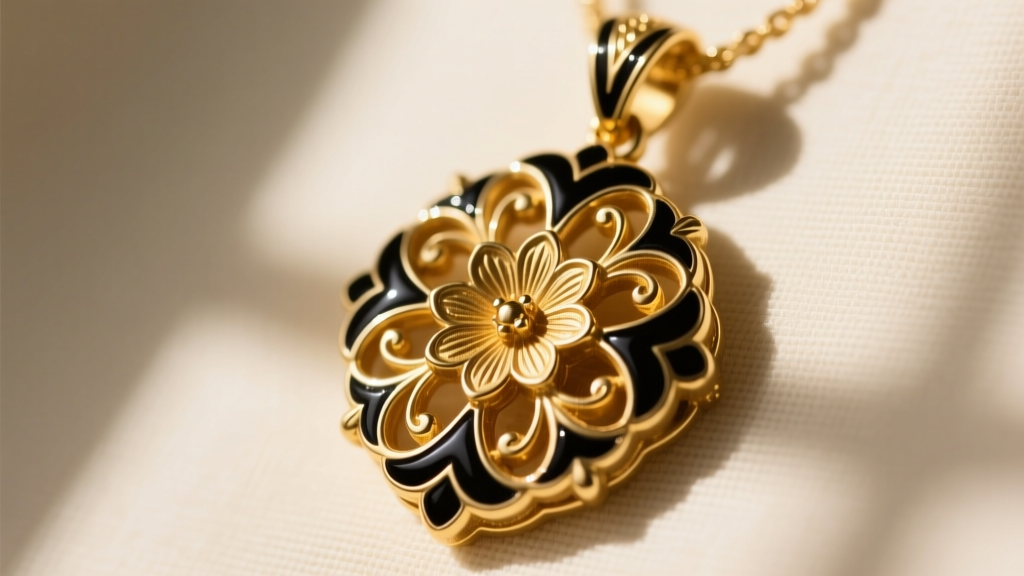
The tradition of Hawaiian heirloom jewelry dates back to the late 19th century, heavily influenced by the mourning jewelry worn after the death of Prince Albert, but uniquely adapted by Queen Liliʻuokalani and the Hawaiian royal court. Today, a vintage Hawaiian necklace—often featuring a heavy gold pendant with black enamel scrollwork or intricate Koa wood beadwork—is a highly sought-after collector's item and a cherished family heirloom. However, because of their unique material composition and the tropical environments they are often worn in, these pieces present specific structural and cosmetic challenges.
Authentic vintage pieces are typically crafted in solid 14k yellow gold or feature a heavy gold electroplate over a sterling silver base. The black lettering and floral motifs are traditionally filled with vitreous enamel, a glass-like substance fired at extreme temperatures. Mass-produced tourist replicas, conversely, rely on base metals and cold epoxy resins. Understanding the metallurgy and material science behind your jewelry is the first step in effective troubleshooting and repair.
Troubleshooting Enamel Loss: Vitreous vs. Epoxy
The most common complaint with vintage Hawaiian pendants is the degradation of the black fill material. To properly repair the piece, you must first identify whether the original fill was vitreous enamel or a synthetic epoxy.
Identifying the Fill Material
Vitreous enamel is essentially powdered glass fused to metal at approximately 1400°F (760°C). It is hard, glossy, and impervious to most chemicals. Epoxy resin, used in cheaper or mid-century tourist pieces, cures at room temperature. Over decades, epoxy oxidizes, turning from deep black to a sickly yellowish-brown, and becomes brittle or sticky.
- The Visual Test: Vitreous enamel sits perfectly flush or slightly recessed with a glass-like luster. Epoxy often shrinks over time, pulling away from the gold walls and showing microscopic cracking (crazing).
- The Thermal Test: A master jeweler will use a heated needle (around 300°F) applied to an inconspicuous area. Vitreous enamel will not react; epoxy will soften, emit a chemical odor, or melt.
Repairing Chipped or Yellowed Fill
If your vintage Hawaiian necklace features failing epoxy, a bench jeweler must mechanically route out the degraded resin using a high-speed micro-motor and carbide burrs. The channel is then cleaned with a mild solvent. For solid 14k gold pieces, the pendant can be sent to a specialized enamelist to be kiln-fired with true vitreous enamel. If the piece is gold-plated silver, kiln-firing will destroy the plating; in this case, the jeweler will fill the channels with a high-grade, UV-stable cold enamel (a specialized jeweler's epoxy) that mimics the depth of glass without requiring heat.
Authentication Matrix: Spotting the Fakes
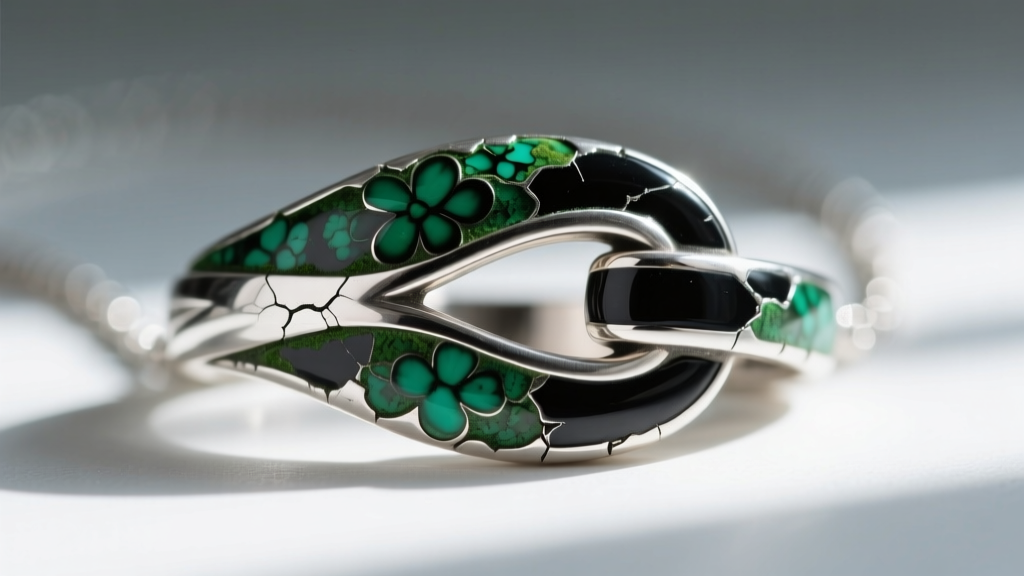
Before investing time and money into restoring a Hawaiian necklace, you must verify its authenticity. The secondary market is flooded with modern replicas stamped with misleading hallmarks. According to the Federal Trade Commission Jewelry Guides, gold plating and karatage must be accurately disclosed, but vintage pieces often bear worn or counterfeit stamps.
| Feature | Authentic Vintage Heirloom | Mass-Produced Tourist Replica |
|---|---|---|
| Base Metal | Solid 14k Gold (585) or Heavy Gold over Sterling | Brass, Copper, or Nickel Silver (Alpaca) |
| Black Fill | Kiln-fired Vitreous Enamel | Cold Epoxy Resin or Black Paint |
| Weight & Drape | Heavy, substantial pendant; thick rope or box chain | Lightweight, hollow-feeling; thin, easily kinked chains |
| Hallmarks | Maker's mark (e.g., 'H', 'Maile'), '14K', or 'Sterling' | Unstamped, or generic '14K HGE' (Heavy Gold Electroplate) on brass |
| Market Value | $800 - $4,500+ depending on weight and era | $30 - $120 retail |
Combating Tropical Tarnish and Galvanic Corrosion
Hawaii's climate is characterized by high humidity and salt-laden trade winds. This environment is notoriously hostile to jewelry, particularly for Hawaiian necklaces crafted with a sterling silver base and gold plating. When the gold plating wears thin at the high-friction points (like the bail and clasp), the underlying silver is exposed to sulfur and salt, leading to rapid tarnishing and galvanic corrosion.
The Danger of Commercial Silver Dips
Never use commercial liquid silver dips (such as Tarn-X) on a gold-over-silver Hawaiian pendant. These dips contain thiourea and strong acids that will instantly strip the microscopic gold plating and etch the vitreous enamel, leaving it permanently cloudy. Furthermore, the Gemological Institute of America (GIA) notes that harsh chemical baths can weaken the structural integrity of soldered joints in vintage chains.
The Safe Galvanic Cleaning Method
To safely remove heavy silver sulfide tarnish from the exposed silver crevices without harming the gold or enamel, use a galvanic reduction bath:
- Line a glass bowl with heavy-duty aluminum foil (shiny side up).
- Place the necklace in the bowl, ensuring the tarnished silver touches the foil.
- Boil distilled water and add 1 tablespoon of baking soda and 1 teaspoon of non-iodized salt per cup of water.
- Pour the solution over the necklace. The electrochemical reaction will transfer the sulfur from the silver to the aluminum foil, lifting the tarnish in seconds without abrasion.
- Rinse thoroughly in distilled water and dry immediately with a microfiber cloth.
Restoring Endemic Koa Wood and Puka Shell Strands
Not all Hawaiian necklaces are metal. Strands of Acacia koa wood and genuine puka shells are iconic. Koa is an endemic hardwood prized for its deep, iridescent chatoyancy. However, when a vintage Koa wood necklace is taken from the humid Hawaiian islands to a dry, climate-controlled mainland environment, the wood rapidly loses its internal moisture.
Troubleshooting Koa Wood Cracking
If your Koa beads are developing micro-fractures or looking dull and gray, the cellular structure is desiccated. Do not use olive oil or vegetable oils, which will eventually turn rancid and emit a foul odor. Instead, massage the beads with food-grade mineral oil or a specialized microcrystalline Renaissance Wax. Allow the oil to penetrate for 24 hours, then buff with a soft cotton cloth. This stabilizes the wood grain and restores the natural 3D chatoyancy.
Restringing Vintage Puka and Koa
Vintage puka and Koa necklaces were often strung on natural cotton or early nylon threads that degrade and snap over time. If your necklace feels stiff or you notice fraying near the clasp, it requires immediate restringing. A professional jeweler will use a heavy-duty, UV-resistant synthetic bead thread (like WildFire or PowerPro) and incorporate French wire (gimp) at the clasp loops to prevent the thread from sawing against the metal findings.
When to Seek a Master Bench Jeweler
While home maintenance can address surface tarnish and wood desiccation, structural failures require professional intervention. If the bail (the loop connecting the pendant to the chain) is severely worn, or if the vintage spring-ring clasp is failing to close, these are critical failure points that risk the loss of the heirloom.
Seek out a credentialed professional. Organizations like Jewelers of America maintain directories of certified bench jewelers who possess the specialized laser-welding equipment necessary to repair vintage gold chains without melting the adjacent black enamel or damaging the antique patina. Laser welding uses a highly focused beam to fuse metal at a microscopic level, keeping the heat-affected zone under 1 millimeter—crucial for preserving the integrity of a historic Hawaiian necklace.


