How to Style, Tie, and Layer a Baroque Pearl Lariat Necklace
Master the art of the baroque pearl lariat necklace. Learn step-by-step tying techniques, neckline matching, and expert layering tips.

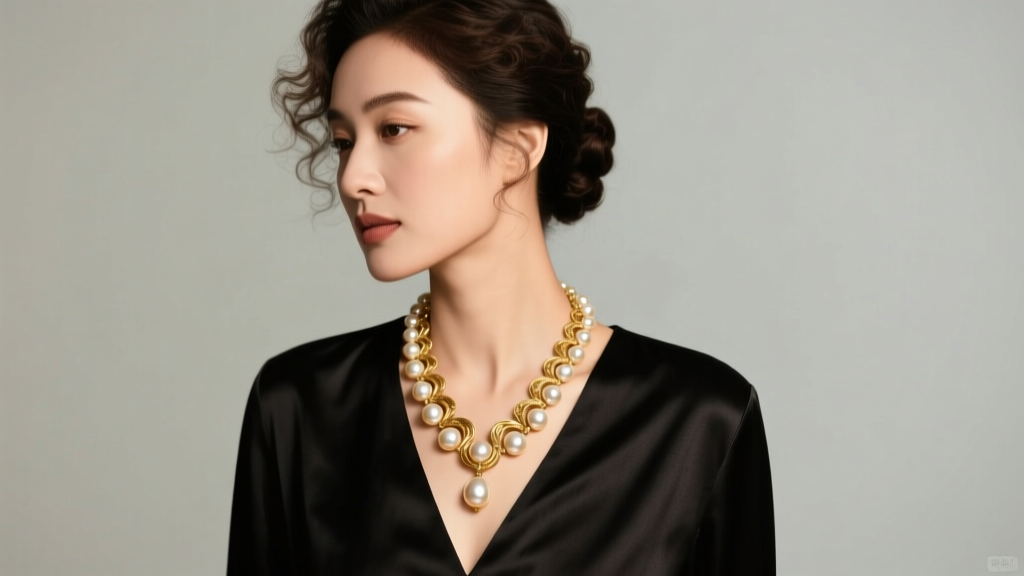
The baroque pearl lariat necklace is a masterclass in versatile, effortless elegance. Unlike traditional clasped necklaces, a lariat relies on gravity, friction, and strategic draping to create its silhouette. The organic, asymmetrical shapes of baroque pearls—ranging from elongated drops to heavily ridged ovals—add a modern, avant-garde edge to this classic jewelry format. However, styling a lariat requires more than simply tossing it around your neck. Without the right techniques, you risk damaging the delicate nacre or creating a tangled, unbalanced mess.
In this comprehensive guide, we will break down the anatomy of a high-quality lariat, provide step-by-step tying methods for different necklines, and share expert layering frameworks to elevate your jewelry styling in 2026 and beyond.
The Anatomy of a Baroque Pearl Lariat
Before manipulating your jewelry, it is crucial to understand its structural vulnerabilities. A lariat necklace typically consists of a long strand (usually 30 to 45 inches) that either passes through a fixed ring, slides through a silicone-lined toggle, or features a completely open-ended design.
Pearl Grading and Nacre Thickness
Baroque pearls are valued for their unique, non-spherical shapes. According to the Gemological Institute of America (GIA), the value of a baroque pearl is heavily dependent on its luster, surface quality, and nacre thickness. For a lariat necklace, which experiences frequent handling and friction, you must seek out pearls with a nacre thickness of at least 0.8mm. Thin-nacre pearls (common in low-grade freshwater batches) will peel or crack when subjected to the mechanical stress of sliding through a metal chain loop.
The Hardware: Chains vs. Silk Cords
The strand material dictates how the necklace behaves.
- 14k or 18k Gold Chains: Offer a luxurious drape but can act like a microscopic saw against the pearl's drill hole if not fitted with a protective silicone or Teflon guard inside the pearl.
- Silk or Nylon Cords: Provide a softer, more bohemian look. They are gentler on the nacre but can stretch or fray over time if exposed to moisture and skin oils.
Expert Warning: Never pull a metal chain rapidly through a pearl's drill hole. This "slide-ring friction" is the number one cause of enlarged drill holes and eventual pearl splitting in lariat designs.

Step-by-Step: 4 Ways to Tie and Drape Your Lariat
The beauty of a 36-inch to 42-inch baroque pearl lariat lies in its transformability. Here are four distinct ways to style it, depending on your outfit and occasion.
1. The Classic Y-Drop (Best for V-Necks)
- Drape the necklace evenly around your neck so both ends hang parallel.
- Cross the right strand over the left at your sternum.
- If your lariat features a sliding ring or toggle, thread the left end through it.
- Pull the left end down gently to create a "Y" shape. Adjust the ring so it sits exactly two inches below the collarbone.
- Allow the baroque pearl drops to hang asymmetrically at the bottom for a modern, unstructured finish.
2. The Asymmetrical Loop (Best for Crew Necks)
- Wrap the entire lariat around your neck once, bringing both ends to one side (e.g., over your left shoulder).
- Tie a loose, single overhand knot with the two ends about four inches from the tips.
- Let the knot rest on your collarbone while the baroque pearl ends dangle down your shoulder.
- This creates a chic, off-center focal point that breaks up the symmetry of a standard crew-neck t-shirt or sweater.
3. The Double-Wrap Choker (Best for Off-the-Shoulder)
- Hold the center of the lariat at the nape of your neck.
- Bring both ends to the front and cross them.
- Wrap the ends back around to the nape of your neck and tie a secure but gentle knot (or use the clasp if provided).
- Adjust the front crossover so it sits flat against your skin. This mimics a thick, multi-strand choker while utilizing the full length of the baroque pearls.
4. The Over-the-Shoulder Drape (Best for Backless or Deep-V Gowns)
- Place the center of the necklace at the base of your throat.
- Instead of bringing the ends to the front, drape them entirely over your shoulders so they hang down your back.
- Use a tiny drop of jewelry wax or a hidden silicone strap to secure the front center point, preventing it from sliding backward.
Matching Necklines to Lariat Drops: A Visual Framework
Pairing the correct lariat drop length with your neckline is essential for maintaining visual proportion. Use this decision matrix to avoid awkward jewelry-to-fabric collisions.
| Neckline Type | Recommended Lariat Style | Ideal Drop Length | Styling Note |
|---|---|---|---|
| Deep V-Neck | Classic Y-Drop | 4 to 6 inches | The metal chain should run parallel to the fabric's V-line, ending just above the hem. |
| Crew / Scoop | Asymmetrical Loop | Side-draped | Avoid center drops, which will clash with the curved hem of the neckline. |
| Turtleneck | Long Single Drape | 8 to 12 inches | Do not tie knots. Let the full 40+ inch length hang straight down to elongate the torso. |
| Off-the-Shoulder | Double-Wrap Choker | N/A (Wrapped) | Keeps the jewelry on the skin rather than tangling with the garment's structural folds. |
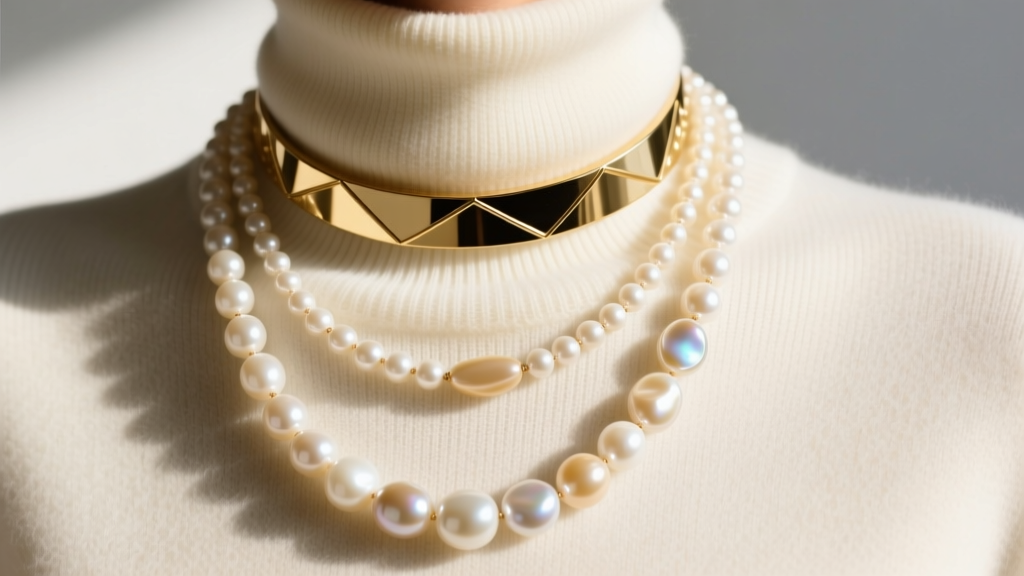
Advanced Layering: The Rule of Thirds
Layering a baroque pearl lariat requires strict adherence to spatial distribution. Because baroque pearls are visually "heavy" and textured, crowding them with other pendants creates a cluttered, chaotic look. Follow the Rule of Thirds for a balanced stack:
- Layer 1 (The Anchor): A 14-inch to 16-inch solid gold or silver herringbone choker. This sits tight against the collarbone and provides a metallic baseline.
- Layer 2 (The Bridge): An 18-inch to 20-inch delicate cable chain featuring a single, small geometric charm (like a tiny gold cylinder or a solitary diamond solitaire).
- Layer 3 (The Statement): Your 36-inch+ baroque pearl lariat, worn in the Classic Y-Drop or Long Single Drape.
Pro Tip: Never layer a lariat with another lariat or a necklace that features a heavy, swinging pendant. The kinetic movement of two heavy elements will result in constant tangling and potential scratching of the pearl's nacre against harder gemstones or metal charms.
Care and Maintenance: Preventing Nacre Degradation
Baroque pearls are organic gems, primarily composed of calcium carbonate and conchiolin. They are highly susceptible to chemical and mechanical damage. The Jewelers of America emphasizes that pearls should be the "last thing you put on and the first thing you take off."
Critical Care Rules for Lariats
- Never Use Ultrasonic Cleaners: The high-frequency vibrations will shatter the internal structure of a baroque pearl and strip its luster instantly.
- Avoid Silk Cord Moisture: If your lariat is strung on silk, do not wear it in the shower or while swimming. Wet silk stretches and can rot from the inside out due to trapped skin oils.
- Chemical Exposure: Hairspray, perfume, and acidic skin pH can etch the surface of the pearl, leaving dull, chalky spots. Always apply cosmetics at least 10 minutes before putting on your lariat.
- Storage: Store the lariat flat or hung on a wide, padded jewelry hanger. Never toss it into a jewelry box where harder stones (like diamonds or sapphires) can scratch the relatively soft 2.5-3.0 Mohs scale surface of the pearl.
Final Thoughts on Investment and Pricing
When shopping for a baroque pearl lariat necklace, expect a wide variance in pricing based on the pearl origin and hardware. High-quality freshwater Edison baroque lariats (11-14mm) set on 14k gold-filled chains typically range from $60 to $150. Conversely, saltwater Tahitian baroques with deep peacock overtones, strung on solid 18k gold chains with diamond-accented slide rings, will command anywhere from $800 to over $2,500.
By understanding the mechanics of the drape, respecting the fragility of the nacre, and applying structured layering techniques, your baroque pearl lariat will remain a dynamic, show-stopping centerpiece in your wardrobe for decades.


