Hammered Metal Necklace Trends 2026: Artisanal Textures & Styling
Discover 2026 hammered metal necklace trends. Explore artisanal textures, alloy grades, layering techniques, and how to spot genuine handcrafted quality.

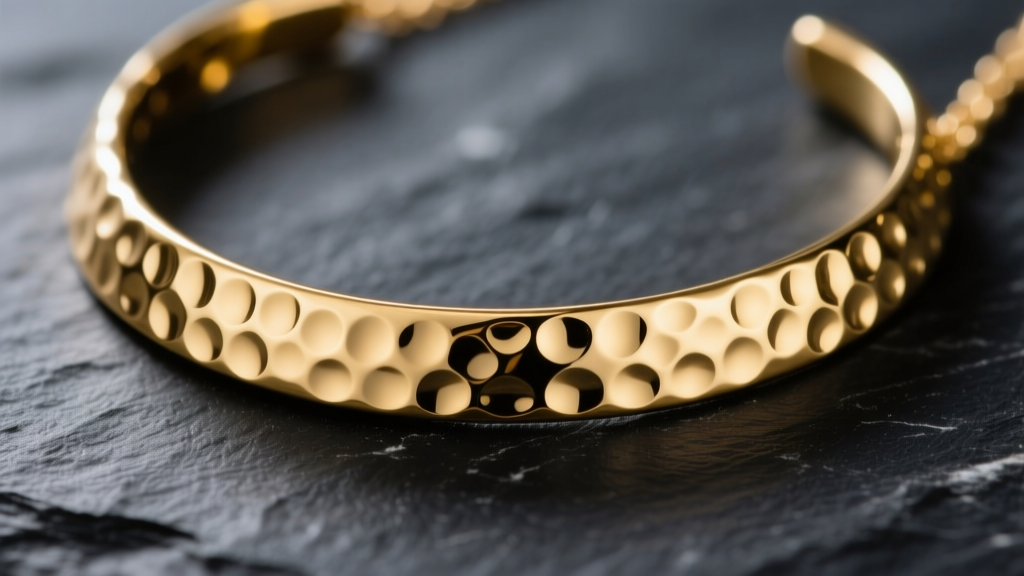
The jewelry landscape of 2026 has decisively pivoted away from the hyper-polished, mass-produced aesthetics of the early 2020s. At the forefront of this shift is the hammered metal necklace, a category that has evolved from a staple of rustic bohemian festival wear into a cornerstone of architectural, high-end artisanal styling. Today's discerning collectors and style curators are seeking out the wabi-sabi philosophy in their adornments—celebrating the organic imperfections, light-catching facets, and tactile depth that only a jeweler's hammer can impart. But as demand surges, so does the market saturation of machine-stamped imitations. This comprehensive guide breaks down the metallurgy, trend forecasting, and styling frameworks you need to navigate the hammered metal necklace market this year.
The 2026 Shift: From Rustic Boho to Architectural Wabi-Sabi
In previous years, hammered textures were largely associated with crude, heavy-gauge cuffs and unrefined, overly rustic pendants. The 2026 trend cycle, however, champions 'architectural wabi-sabi.' Artisans are utilizing specialized planishing and cross-peen hammers to create deliberate, rhythmic textures on delicate, low-profile chains and geometric pendants. The focus is on how light interacts with the micro-facets of the metal. A well-executed hammered surface acts as a diffuse reflector, giving solid gold and sterling silver a soft, liquid luminescence that polished surfaces simply cannot replicate. According to trend forecasts from National Jeweler, consumer preference for tactile, hand-finished metals has grown by over 34% year-over-year, driven by a desire for jewelry that feels inherently human and bespoke in an increasingly digital world.
Metallurgy and Material Grades: The Science of the Strike
To truly appreciate a hammered metal necklace, one must understand the metallurgical impact of the hammer strike. Hand-hammering is not merely a surface treatment; it fundamentally alters the crystal lattice structure of the alloy through a process known as strain hardening, or work-hardening. When a jeweler strikes 14k yellow gold (which sits at roughly 120 on the Vickers Hardness scale in its annealed state), the metal becomes denser, harder, and more resistant to scratching. However, it also becomes brittle. To prevent the chain links or pendant from cracking, the artisan must periodically 'anneal' the metal—heating it to a specific temperature to relax the crystalline structure before resuming work. This cycle of striking and annealing is what gives a genuine hand-forged necklace its superior structural integrity and distinct acoustic 'ring' when tapped.
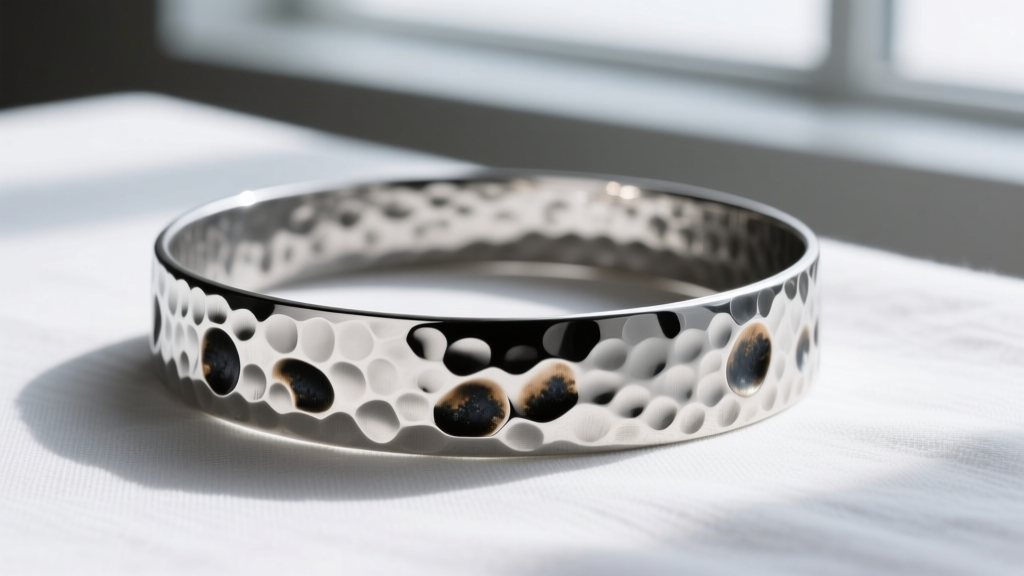
Material grade is equally critical. In 2026, recycled 14k gold and ethically sourced 925 sterling silver dominate the artisanal space. For silver pieces, the hammered texture is frequently paired with intentional oxidation. By applying liver of sulfur to the sterling silver, the dark patina settles deep into the hammer dimples, creating a striking, high-contrast topography that highlights the artisan's strike patterns. Conversely, buyers should be highly skeptical of heavily hammered 'gold-filled' or 'gold-plated' pieces. The mechanical force of a heavy hammer strike can easily compromise the thin outer layer of gold-filled wire, leading to premature flaking and exposing the brass core beneath.
Authentic Hand-Forged vs. Machine-Stamped: A Buyer's Matrix
As the hammered metal necklace trend has peaked, fast-fashion manufacturers have flooded the market with machine-stamped alternatives. These are produced using hydraulic presses and textured steel dies, stamping out hundreds of identical 'hammered' links per minute. While visually similar at a glance, they lack the structural and aesthetic nuances of hand-forged pieces. Use the following matrix to evaluate your next purchase:
| Feature | Hand-Forged Artisan | Machine-Stamped Mass Market |
|---|---|---|
| Dimple Topography | Asymmetrical, varying depths, organic flow | Uniform depth, repeating geometric grid |
| Edge Finish | Slightly softened, hand-filed edges | Sharp, often rigid or uniformly tumbled |
| Work-Hardening | High (annealed and struck repeatedly) | Low (stamped once in a soft annealed state) |
| Tactile Feel | Substantial, dense, rigid drape | Lightweight, overly flexible, hollow drape |
| Price Range (18-inch) | $180 - $850+ (Solid Gold/Silver) | $25 - $90 (Plated or thin-gauge silver) |
When inspecting a piece, look closely at the links near the clasp. Machine-stamped chains often feature uniform, perfectly centered dimples, whereas a hand-hammered chain will show slight variations in strike angle, reflecting the natural pivot of the jeweler's wrist. The Gemological Institute of America (GIA) frequently notes that microscopic examination of metal grain flow can definitively prove hand-forging versus hydraulic stamping, a testament to the deep physical changes wrought by the artisan's hammer.
Advanced Layering: Integrating Hammered Textures
The key to styling a hammered metal necklace in 2026 lies in textural juxtaposition. Layering multiple hammered chains of the same gauge and metal color results in a chaotic, visually heavy look that overwhelms the neckline. Instead, employ the 'Anchor and Accent' framework. Begin with an 18-inch smooth, high-polish chain—such as a 1.5mm box chain or a sleek snake chain—as your foundational anchor. This provides a reflective baseline. Next, introduce your 16-inch hammered metal necklace, ideally a 2.5mm cable or rope chain. The smooth chain acts as a mirror, while the hammered chain acts as a prism, creating a sophisticated interplay of light.
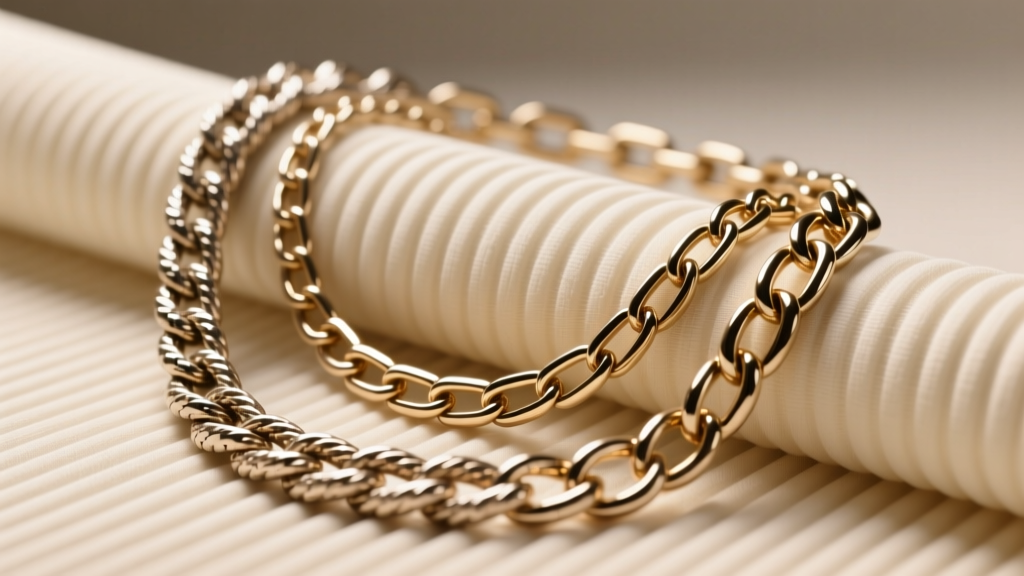
Pay strict attention to clasp hardware and weight distribution. A heavy, hand-forged hammered pendant will easily pull a delicate chain backward, causing the clasp to migrate to the front of the neck. To counteract this, opt for chains that feature a counterweight tag near the lobster clasp, or upgrade to a heavier, custom-cast toggle clasp at the rear. Furthermore, when mixing metals—a major trend for 2026—pair a warm, hammered 14k yellow gold choker with a cool, oxidized sterling silver matinee-length chain to bridge the gap between vintage warmth and modern industrialism.
Care and Patina Management for Textured Alloys
Maintaining a hammered metal necklace requires a departure from standard jewelry care routines. The very dimples that give the piece its character are also traps for skin oils, lotions, and environmental dust. Never use an ultrasonic cleaner on an oxidized hammered silver necklace. The high-frequency cavitation bubbles will aggressively strip the intentional liver of sulfur patina from the deepest crevices, leaving you with a flat, uniformly bright silver piece that has lost its three-dimensional contrast. Instead, clean textured metals using a soft horsehair detailing brush dipped in a mild solution of warm water and phosphate-free dish soap. Gently agitate the bristles into the dimples, rinse thoroughly, and dry immediately with a microfiber cloth to prevent water spotting. For solid gold hammered pieces that have lost their luster, use a high-quality jeweler's polishing cloth, but avoid abrasive pastes that can accumulate in the texture and dry into a chalky white residue.


