Emerald Green Gold Necklace: A Material & Alloy Guide
Discover how to choose the perfect emerald green gold necklace. Compare natural vs. lab stones, gold karats, and simulant alternatives for daily wear.

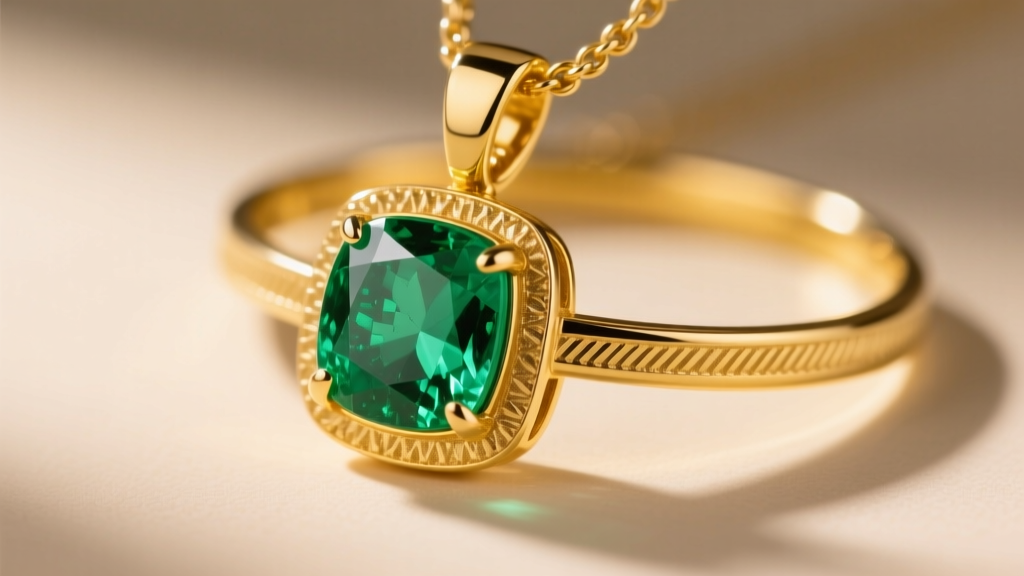
The Anatomy of an Emerald Green Gold Necklace
When curating a fine jewelry collection, few pieces command attention quite like an emerald green gold necklace. The juxtaposition of deep, verdant green against the warm luster of gold creates a timeless aesthetic that transcends seasonal trends. However, as we navigate the 2026 fine jewelry market, the term 'emerald green' encompasses a vast spectrum of gemological and metallurgical realities. From natural Colombian stones with their signature 'jardin' inclusions to advanced hydrothermal lab-created alternatives, the material properties of your chosen gemstone will dictate its durability, care requirements, and long-term value.
Selecting the right necklace requires looking beyond the surface color. It demands a rigorous understanding of gemstone toughness, refractive indices, and the specific gold alloys used to secure them. This comprehensive material guide breaks down the exact properties you need to consider before investing in your next heirloom pendant.
Decoding the 'Emerald Green' Stone: Natural vs. Lab vs. Simulants
The phrase 'emerald green' is often used as a color descriptor rather than a strict mineralogical classification. To make an informed purchase, you must understand the distinct material differences between true emeralds, their lab-grown counterparts, and visual simulants.
Natural Colombian & Zambian Emeralds
Natural emeralds are a variety of the mineral beryl, colored by trace amounts of chromium and vanadium. According to the Gemological Institute of America (GIA), emeralds rank between 7.5 and 8 on the Mohs scale of hardness. However, hardness (resistance to scratching) should not be confused with toughness (resistance to breaking). Natural emeralds inherently possess poor toughness due to their heavily included nature. These internal fractures and inclusions, romantically termed 'jardin,' make the stones highly susceptible to chipping from minor impacts or thermal shock. Furthermore, nearly all natural emeralds are treated with cedar oil or modern polymer resins to mask fractures and improve clarity.
Lab-Created Hydrothermal Emeralds
Lab-grown emeralds share the exact same chemical composition (Be3Al2(SiO3)6) and crystal structure as their natural counterparts. Created via hydrothermal or flux-grown methods, these stones offer a vivid, saturated green without the structural compromises of natural inclusions. Because they lack the 'jardin' that weakens natural stones, lab-created emeralds possess significantly higher toughness, making them far more suitable for daily-wear pendants. They are also untreated, meaning you never have to worry about oil leaching out over time.
The Simulant Alternatives: Tsavorite & Chrome Diopside
If you desire the emerald green aesthetic but require different material properties, simulants offer compelling alternatives. Tsavorite garnet provides a brilliant, highly refractive green without the need for any clarity treatments. It is exceptionally tough and lacks the cleavage planes that make emeralds brittle. Conversely, chrome diopside offers a deep, rich green at a fraction of the cost, but its Mohs hardness of 5.5 to 6.5 makes it highly prone to scratching and abrasion, relegating it to occasional-wear jewelry.
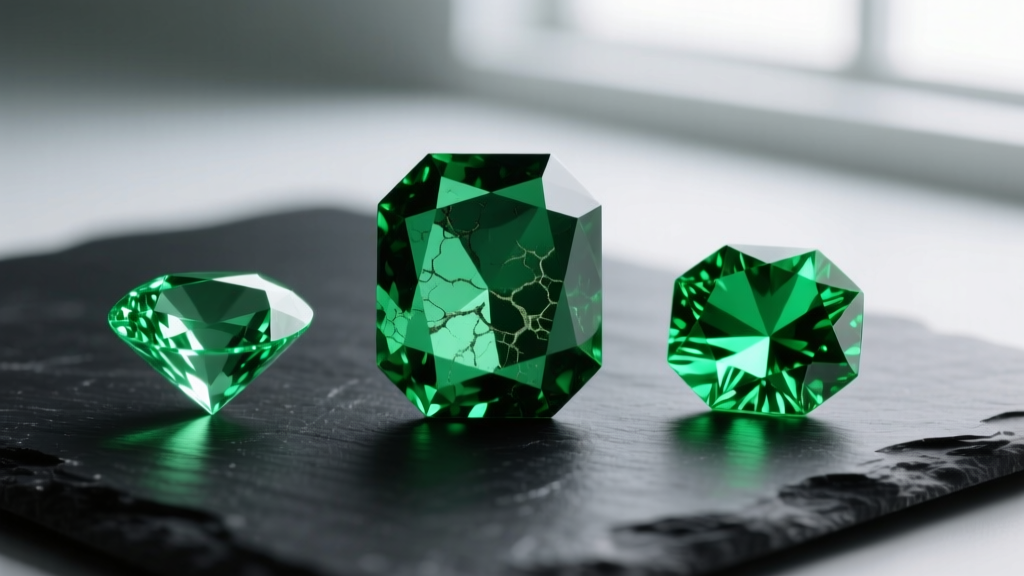
Material Comparison Chart: Green Gemstones
Use the following data table to compare the physical and optical properties of the most common green gemstones used in gold necklaces.
| Material | Mohs Hardness | Toughness | Refractive Index | Treatment Required | Avg. Price per Carat (2026) |
|---|---|---|---|---|---|
| Natural Emerald | 7.5 - 8.0 | Poor | 1.57 - 1.58 | Yes (Oil/Resin) | $3,000 - $10,000+ |
| Lab-Created Emerald | 7.5 - 8.0 | Good | 1.57 - 1.58 | No | $300 - $600 |
| Tsavorite Garnet | 7.0 - 7.5 | Excellent | 1.74 | No | $800 - $2,500 |
| Chrome Diopside | 5.5 - 6.5 | Fair | 1.67 - 1.70 | No | $50 - $150 |
Gold Alloys: Selecting the Right Metal Matrix
The 'gold' in your emerald green gold necklace is never pure 24-karat gold, which is far too malleable to securely hold a brittle gemstone. Understanding the metallurgical properties of gold alloys is critical for both the aesthetic and structural integrity of your pendant.
14K vs. 18K Yellow Gold
18-karat gold consists of 75% pure gold and 25% alloy metals (typically copper and silver). It offers a rich, buttery yellow hue that beautifully complements the cool tones of a Zambian emerald. However, its higher gold content makes it softer. For a heavy emerald pendant, 14-karat gold (58.5% pure gold) is often the superior engineering choice. The higher concentration of alloy metals increases the tensile strength and yield strength of the metal, ensuring that the prongs or bezel walls maintain their grip on the stone over decades of wear without bending or warping.
The Impact of White and Rose Gold
White gold is alloyed with nickel, palladium, or manganese and plated with rhodium to achieve a stark, silvery-white finish. This high-contrast metal matrix makes the green of an emerald appear significantly more vivid and icy, particularly with Colombian stones that possess a slight bluish undertone. Rose gold, alloyed with a high percentage of copper, creates a warm, vintage aesthetic. While visually striking, copper-heavy alloys can sometimes react with the skin's pH levels or the chemical residues of lotions, requiring more frequent polishing to maintain the luster of the setting.
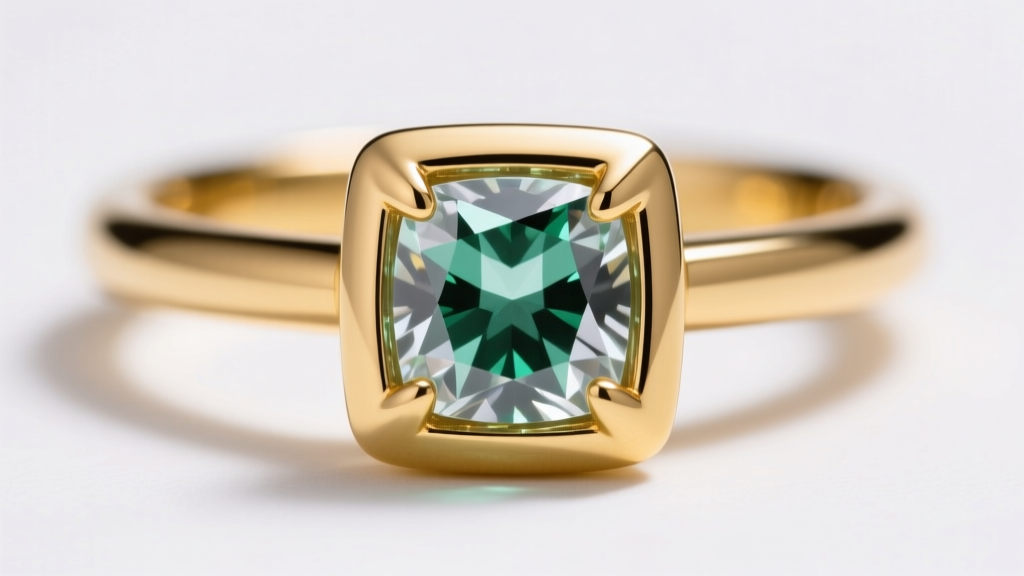
Setting Styles & Durability Considerations
Because natural emeralds are notoriously brittle, the setting style of your necklace is not merely a design choice; it is a protective necessity. The traditional 'emerald cut' (a rectangular step cut with truncated corners) was specifically developed to reduce the risk of chipping at the stone's most vulnerable points.
For daily wear, a full or partial bezel setting is highly recommended. A bezel encircles the girdle of the stone with a continuous ribbon of gold, protecting the edges from lateral impacts. If you prefer the classic prong setting, ensure the jeweler uses V-prongs at the corners of an emerald-cut stone. According to Gem-A (The Gemmological Association of Great Britain), exposing the sharp corners of a heavily included beryl crystal to direct impact is the leading cause of catastrophic stone failure in vintage and contemporary jewelry alike.
Care and Maintenance Protocols
The material properties of your emerald green gold necklace dictate strict care protocols. Natural emeralds treated with cedar oil must never be placed in an ultrasonic cleaner or exposed to steam. The high-frequency vibrations can exacerbate internal fractures, while the heat and harsh chemicals will strip the oil, leaving the stone looking cloudy, white, and heavily fractured.
Instead, clean your necklace using a soft, untreated microfiber cloth and a mild solution of lukewarm water and dish soap. Gently brush the back of the setting with a baby-hair toothbrush to remove skin oils and lotion buildup that can dull the stone's brilliance. If your natural emerald begins to look dry or opaque over the years, a professional jeweler can safely re-oil the stone to restore its optical clarity. Lab-created emeralds and tsavorites, lacking these surface-reaching fractures, are far more resilient and can tolerate standard commercial jewelry cleaning solutions.
Final Verdict: Building Your Heirloom
Choosing the ideal emerald green gold necklace requires balancing your desire for natural rarity with the practical realities of material science. If your priority is an untouched, structurally sound gemstone for everyday wear, a hydrothermal lab-created emerald set in a 14K yellow gold bezel offers unmatched durability and vibrant color. If you are a purist seeking the romantic allure of natural inclusions, opt for a well-oiled Colombian emerald in a protective 18K gold setting, and commit to the meticulous care required to preserve its verdant legacy for generations to come.


