How to Tell If Necklace Is Real Gold: Expert Value Guide
Learn how to tell if necklace is real gold with expert testing methods, hallmark decoding, and market value assessments to protect your jewelry budget.

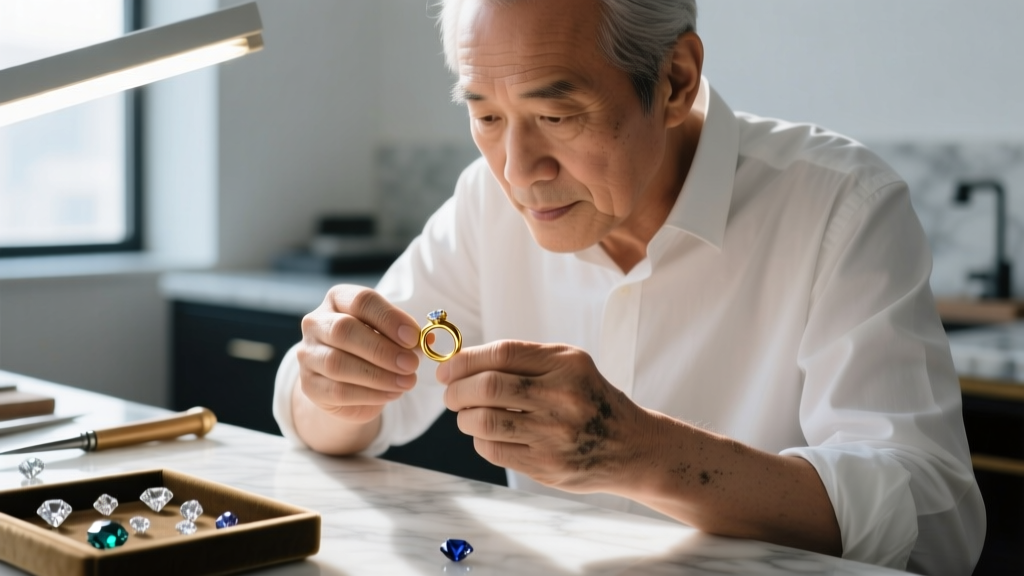
When investing in fine jewelry, understanding how to tell if necklace is real gold is the most critical step in protecting your budget. The secondary market, online auction sites, and even some unverified boutique retailers are flooded with high-quality gold-plated and gold-filled pieces that can easily deceive an untrained eye. A counterfeit necklace doesn't just represent a loss of aesthetic value; it is a direct financial hit. This comprehensive guide breaks down the exact methodologies, from visual inspections to density calculations, that professional jewelers and savvy buyers use to authenticate gold necklaces and assess their true market value.
The Financial Stakes of Gold Verification
Gold has long been considered a safe-haven asset, but its high market price makes it a prime target for counterfeiting. In recent years, manufacturing techniques for gold-plated tungsten and brass alloys have become incredibly sophisticated. A heavy, thick-plated chain can mimic the exact weight and color of solid 14k or 18k gold, tricking buyers who rely solely on the "heft" test. If you are purchasing a vintage pendant or a heavy Cuban link chain from a private seller, failing to verify the gold content can result in paying thousands of dollars for a piece of base metal. Authentication is not just about peace of mind; it is the foundation of accurate jewelry appraisal and smart budget management.
Decoding Hallmarks and Purity Stamps
The first step in any assessment is examining the hallmark. According to the Federal Trade Commission (FTC) Jewelry Guides, manufacturers must accurately stamp the karatage of gold jewelry sold in the United States. However, because stamps can be easily forged or added to plated pieces later, a hallmark is a starting point, not a guarantee of authenticity.
| Karat | Common Stamp | Purity % | Alloy Composition | Market Value Profile |
|---|---|---|---|---|
| 24k | 24k, 999 | 99.9% | Pure Gold | Highest melt value; too soft for durable chains |
| 18k | 18k, 750 | 75.0% | 25% Silver/Copper | Premium retail; rich yellow hue; high intrinsic value |
| 14k | 14k, 585 | 58.3% | 41.7% Alloy Mix | Industry standard; best balance of durability and value |
| 10k | 10k, 417 | 41.7% | 58.3% Alloy Mix | Budget-friendly; highly durable; lower resale premium |
At-Home Testing Methods: What Works and What Doesn't
While professional equipment provides the only 100% definitive answer, several at-home tests can help you quickly identify obvious fakes before committing to a purchase.
The Magnet Test (and its Limitations)
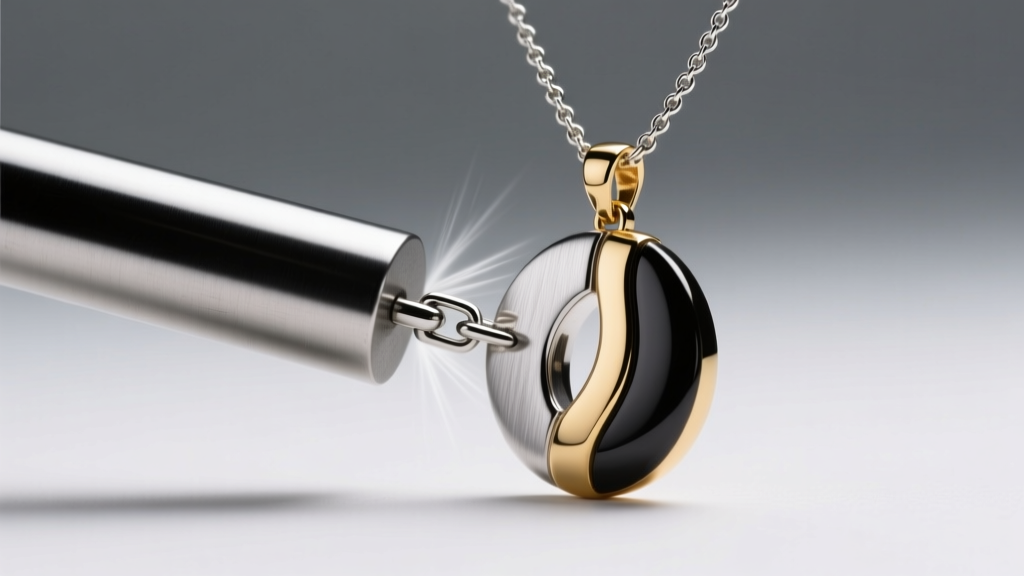
Gold is a diamagnetic metal, meaning it is not attracted to magnets. Using a strong neodymium magnet, hold the piece close to the chain. If the necklace aggressively snaps to the magnet, it contains ferrous metals like iron or steel and is definitively not solid gold. Crucial Caveat: The internal springs inside lobster clasps and spring rings are almost always made of steel to maintain tension. Therefore, a real gold chain will often have a magnetic clasp. Test the links and the pendant, not just the closure mechanism.
The Ceramic Streak Test
This test is highly effective but destructive, so it should only be used on inconspicuous areas of a piece you already own. Drag the edge of the necklace across an unglazed ceramic plate. Real gold will leave a distinct, shimmering golden streak. Conversely, pyrite (fool's gold) or gold-plated brass will leave a harsh black or dark green streak. Because this method scratches the metal, it is generally discouraged for high-polish or delicate pendant necklaces.
Specific Gravity (Density) Test
For a non-destructive, highly accurate at-home assessment, the specific gravity test is the gold standard. You will need a digital pocket scale, a cup of water, and a piece of string. First, weigh your necklace in grams while completely dry. Next, place the cup of water on the scale and tare it to zero. Suspend the necklace in the water using the string, ensuring it is fully submerged but not touching the bottom or sides of the cup. Record this submerged weight. Finally, divide the dry weight by the submerged weight. Pure 24k gold has a specific gravity of 19.3 g/cm³, while 14k gold typically ranges between 13.0 and 14.0 g/cm³. If your calculation yields a number around 8.0 or 9.0, the piece is likely solid brass or copper plated with gold.
Professional Appraisal: When to Pay for Verification
If you are evaluating a high-value investment piece, such as a heavy vintage locket or a thick iced-out chain, skip the at-home tests and consult a professional. The Gemological Institute of America (GIA) and certified appraisers utilize advanced technology to verify elemental composition without damaging the jewelry.
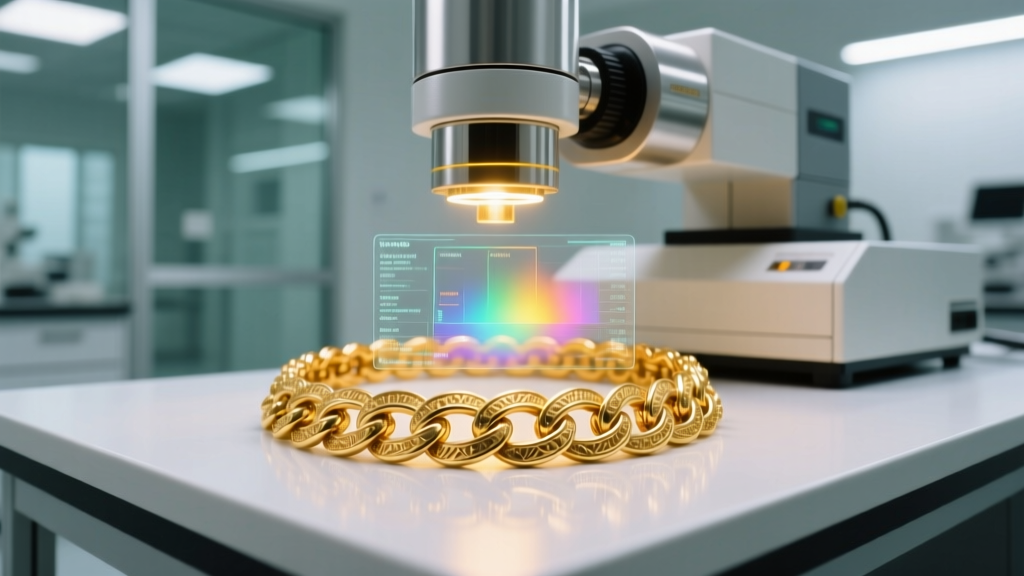
- XRF Spectrometry: X-ray Fluorescence (XRF) machines shoot X-rays into the metal and measure the fluorescent X-rays emitted back. This provides an exact, down-to-the-decimal breakdown of the elemental makeup (e.g., 58.4% gold, 20% silver, 21.6% copper) in seconds.
- Ultrasonic Thickness Testing: To ensure a piece isn't a thick gold shell wrapped around a tungsten core, professionals use ultrasonic waves to measure the consistency of the metal's density throughout the entire thickness of the chain links.
- Acid Testing: Jewelers will make a tiny scratch on a testing stone and apply varying strengths of nitric acid. The color reaction indicates the karatage. This is less common today due to the availability of XRF, but remains a reliable, low-cost backup.
Budgeting for Gold Necklaces: Avoiding Overpayment
Knowing how to tell if necklace is real gold is only half the battle; understanding its financial worth is the other. The intrinsic value of a gold chain is its "melt value." To calculate this, weigh the necklace in grams, multiply by its purity percentage (e.g., 0.583 for 14k), and then multiply by the current spot price of gold per gram, which you can track via resources like Kitco.
In the current market, with gold prices remaining historically high, paying more than 15% to 20% above the melt value for a basic, unbranded rope, box, or curb chain is generally a poor financial decision. Retail markups should be reserved for specific value-adds. Designer pieces from heritage brands, antique Edwardian pendants, or necklaces featuring intricate hand-engraved craftsmanship command a higher retail premium, often ranging from 100% to 300% above the raw gold value. Always separate the value of the metal from the value of the artistry when assessing your budget.
Conclusion
Authenticating a gold necklace requires a systematic approach. Start by examining the hallmarks, proceed to non-destructive physical tests like the magnet and specific gravity checks, and rely on XRF spectrometry for high-stakes purchases. By combining these verification methods with a clear understanding of melt value versus retail markup, you can confidently navigate the jewelry market, ensuring that every dollar of your budget is invested in genuine, lasting value.


