How to Style and Restore a Yellow Gold Heart Pendant Necklace
Master the art of styling and maintaining your yellow gold heart pendant necklace. Learn karat differences, chain pairing, and expert cleaning steps.

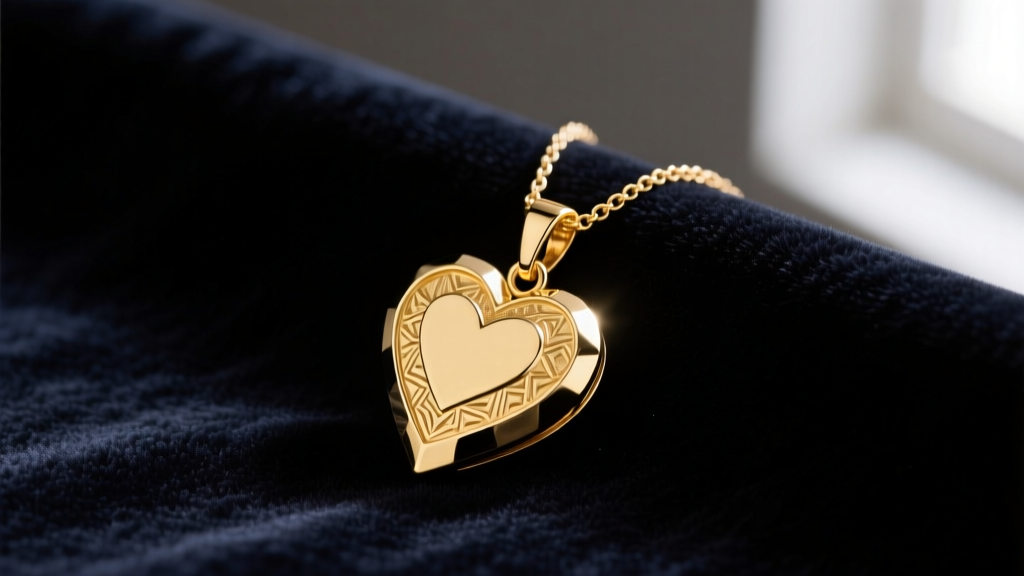
The yellow gold heart pendant necklace is more than a fleeting trend; it is a heritage piece that bridges vintage romance and modern minimalism. Whether you have inherited a heavy 22k Victorian heart locket or recently invested in a sleek 14k solid gold silhouette, understanding the metallurgy and mechanics of your jewelry is essential for longevity. In 2026, the shift toward sustainable, 'buy-it-for-life' fine jewelry means that proper care, precise layering, and technical maintenance are more important than ever. This step-by-step guide will walk you through selecting the right karat, matching chain gauges to pendant bails, and executing a professional-grade cleaning routine at home.
Step 1: Decoding Karat Weight and Metallurgy for Daily Wear
Before you style or clean your necklace, you must identify its karat weight, as this dictates its durability, color depth, and cleaning requirements. Pure gold (24k) is too malleable for daily wear, so it is alloyed with metals like copper, silver, and zinc. The copper content is what gives yellow gold its warm, distinct hue.
- 14k Yellow Gold (58.5% Pure Gold): With a Vickers Hardness (HV) of approximately 120-140, 14k gold is the industry standard for everyday pendants. The higher alloy content makes it highly resistant to bending, denting, and scratching. It has a slightly paler yellow tone but is ideal for active lifestyles.
- 18k Yellow Gold (75% Pure Gold): Offering a richer, deeper yellow color, 18k gold sits at roughly 90-110 HV. It is softer and more prone to micro-scratches (patina) over time. It requires more careful handling during layering to prevent friction damage against harder chains.
- 22k Yellow Gold (91.6% Pure Gold): Reserved mostly for vintage or high-karat artisan pieces, 22k gold is exceptionally soft. Pendants of this karat should be worn on lightweight, smooth chains to prevent the bail from wearing down.
According to the Gemological Institute of America (GIA), understanding your gold's alloy composition is the first step in preventing accidental chemical damage, as higher copper alloys can react differently to harsh environmental pollutants.
Step 2: Matching Chain Gauge and Style to the Pendant Bail
The most common point of failure for a yellow gold heart pendant necklace is the bail—the loop that connects the pendant to the chain. Forcing a thick chain through a small bail creates friction that will eventually sand through the gold, leading to a lost pendant. Always measure the bail's Inner Diameter (ID) before purchasing a replacement chain.
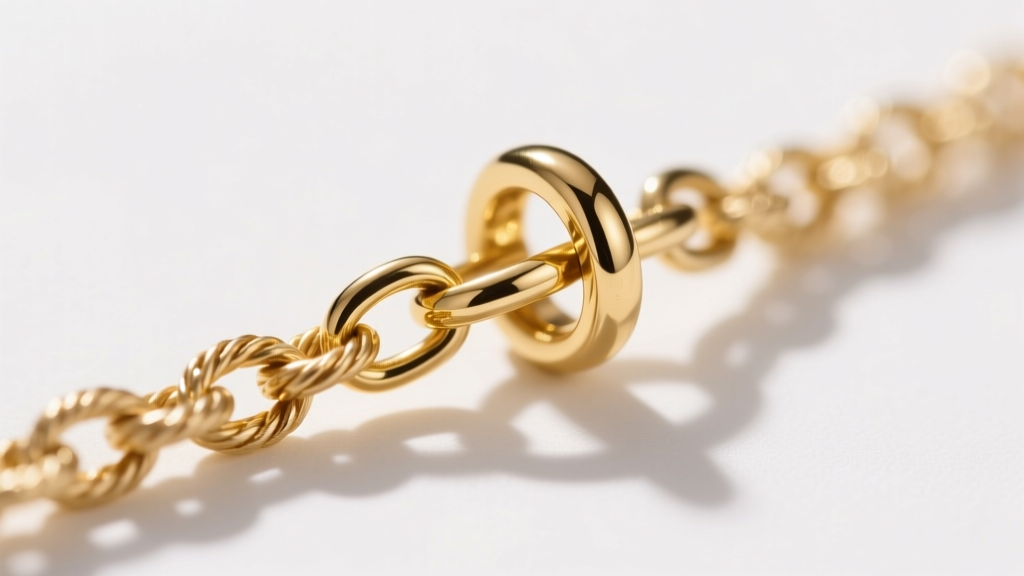
| Bail Inner Diameter (ID) | Recommended Chain Width | Best Chain Styles | Clasp Recommendation |
|---|---|---|---|
| 2.0mm - 3.0mm | 0.8mm - 1.5mm | Cable, Box, Fine Rope | Spring Ring (5mm) |
| 3.5mm - 5.0mm | 1.8mm - 2.5mm | Rope, Curb, Wheat | Small Lobster Claw (10mm) |
| 6.0mm+ | 3.0mm - 4.5mm | Cuban Link, Figaro, Mariner | Large Lobster Claw (15mm+) |
Pro Tip: If your heart pendant has a soldered, closed bail (a solid loop with no hinge or clasp), you must thread the chain through the bail before closing the chain's clasp. Never use pliers to pry open a soldered gold bail, as this will compromise the structural integrity of the solder joint.
Step 3: Precision Layering for Various Necklines
Layering a yellow gold heart pendant necklace requires an understanding of spatial distribution. The 'Cascade Rule' dictates that each subsequent layer should drop exactly 1.5 to 2 inches below the previous one to prevent tangling and ensure each piece is visible.
The 3-Piece Cascade Framework
- The Anchor (14" - 16"): Start with a simple 14k gold choker or a delicate 1mm box chain sitting at the collarbone. This frames the face and provides a visual baseline.
- The Focal Point (18"): This is where your yellow gold heart pendant necklace sits. An 18-inch chain places the heart directly on the sternum, making it the undeniable centerpiece. Ensure the pendant itself is no wider than 15mm to maintain elegance.
- The Terminator (20" - 22"): Finish with a longer, textured chain (like a 2.5mm rope chain) or a secondary pendant, such as a minimalist gold bar or a small coin. This draws the eye downward and elongates the neck.
"When layering yellow gold, mix chain textures rather than mixing metal colors. Pairing a smooth box chain with a twisted rope chain in the exact same karat weight creates depth without visual clutter." — Master Jeweler Bench Note, 2025
Step 4: The 5-Step Ultrasonic and Polish Cleaning Routine
Over time, lotions, sebum, and environmental dust accumulate behind the heart pendant and within the chain links, dulling the gold's natural reflectivity. While professional ultrasonic cleaners are effective, they can loosen micro-pave stones if your heart pendant features diamond accents. For solid gold pieces, a manual deep-clean is safer and highly effective.
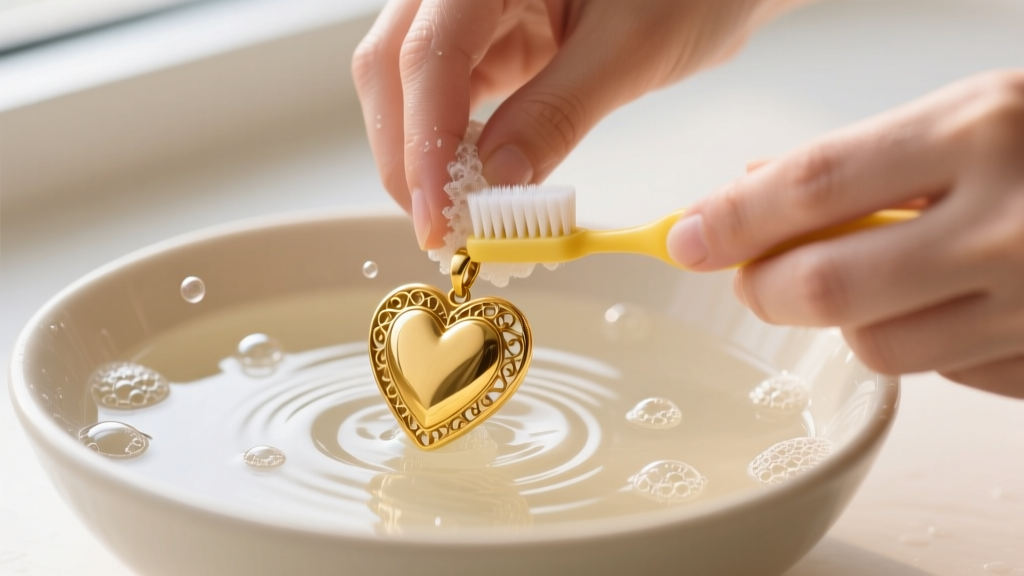
Follow this exact protocol recommended by Jewelers of America for restoring your gold's luster:
- The Degreasing Soak: Fill a ceramic bowl (never metal, to avoid scratching) with warm water and three drops of a mild, phosphate-free dish soap (like Dawn). Submerge the necklace for exactly 15 minutes to break down lipid bonds.
- Micro-Agitation: Using a brand-new, ultra-soft baby toothbrush (bristle diameter under 0.1mm), gently brush the back of the heart pendant and the clasp mechanism. Brush in the direction of the chain links to avoid snagging.
- The Distilled Rinse: Rinse the necklace under lukewarm distilled water. Tap water contains calcium and magnesium, which will leave microscopic hard-water spots on high-karat gold, creating a cloudy appearance.
- Moisture Extraction: Pat the chain dry with a lint-free microfiber cloth. Do not rub vigorously. Allow the pendant to air dry completely in a low-humidity room before storing.
- Final Buffing: Use a treated, anti-tarnish jeweler's polishing cloth to gently buff the face of the heart pendant. This deposits a microscopic protective layer that delays future oxidation and fingerprints.
Final Thoughts on Preservation
A yellow gold heart pendant necklace is an enduring symbol of affection and personal style, but its longevity relies entirely on the wearer's technical knowledge. By respecting the Vickers hardness of your specific karat weight, ensuring mathematical compatibility between your chain gauge and pendant bail, and adhering to a strict, chemical-free cleaning regimen, your necklace will maintain its structural integrity and brilliant luster for generations to come.


