Celine ID Necklace Troubleshooting: Fakes, Tarnish & Repairs
Troubleshoot your Celine ID necklace with our expert guide. Learn to spot fakes, fix tarnished brass, and repair sticky clasps easily.

The 2026 Landscape of the Celine ID Necklace
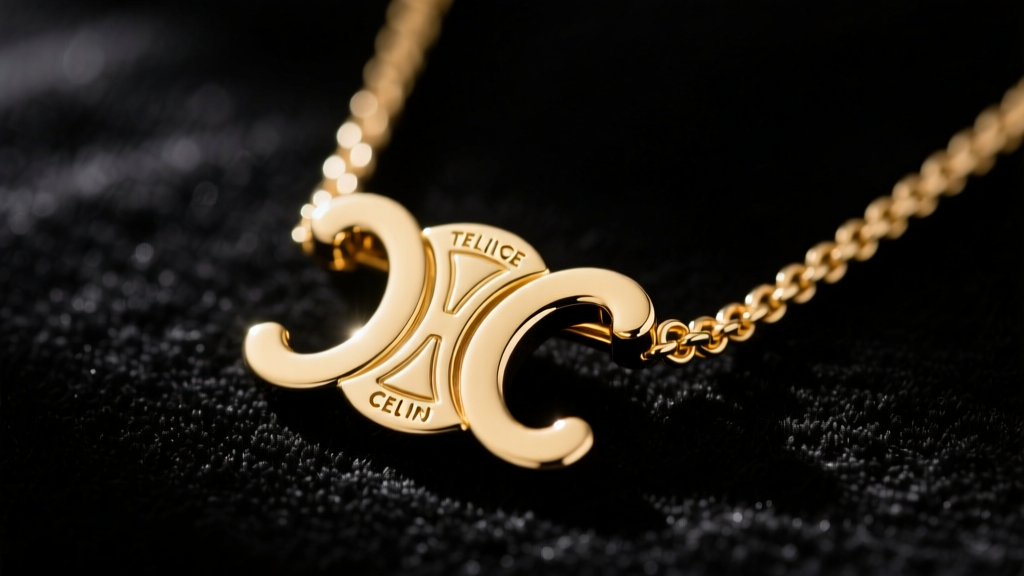
The Celine ID necklace remains one of the most coveted pieces in luxury fashion jewelry. Whether you are wearing the iconic Triomphe canvas tag or the sleek, Hedi Slimane-era brass ID pendants, this piece is a staple of modern minimalist styling. However, as we navigate the 2026 resale and secondary markets, owners are increasingly facing three major issues: highly deceptive 'superfakes', accelerated brass tarnishing, and mechanical clasp failures. Unlike fine jewelry crafted from solid 18k gold or platinum, the Celine ID necklace is primarily crafted from a brass base alloy with precious metal plating. This specific material composition requires a distinct approach to maintenance, authentication, and repair. In this comprehensive troubleshooting guide, we will break down the exact metallurgy, mechanical quirks, and authentication metrics you need to keep your necklace in pristine condition.
Authentication: Spotting the 2026 'Superfakes'
The proliferation of high-tier counterfeit jewelry has made authenticating a Celine ID necklace more challenging than ever. Modern superfakes now utilize CNC-machined molds that closely mimic the original dimensions, but they consistently fail in three specific areas: weight, alloy density, and hallmark kerning.
Weight and Alloy Density Metrics
Authentic Celine ID tags are cast from a high-density brass alloy (typically 60% copper and 40% zinc) and finished with a precise layer of gold or silver plating. The large Triomphe ID tag should weigh exactly between 14.2 and 14.8 grams. Counterfeit manufacturers often use cheaper zinc-aluminum alloys or hollow-cast their molds to save material costs, resulting in pendants that weigh between 10.5 and 12.0 grams. Always use a digital jewelry scale with 0.01g precision to verify the pendant weight.
Hallmark and Font Kerning Analysis
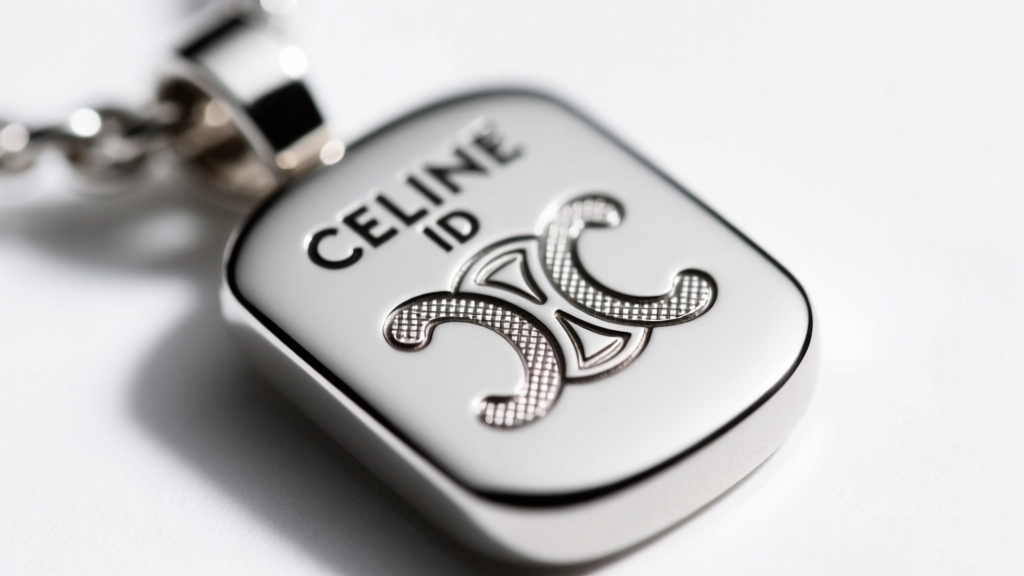
Flip the pendant over to examine the 'CELINE' and 'MADE IN ITALY' hallmarks. On an authentic piece, the engraving is achieved via high-pressure laser or precision stamping, resulting in sharp, V-shaped grooves with uniform depth. Fakes often use shallow acid etching, which leaves rounded, blurry edges. Furthermore, examine the kerning (spacing) between the letters. Authentic Celine fonts feature a distinctly wider gap between the 'L' and 'I' in 'ITALY', a nuance that counterfeit font libraries frequently miss.
| Metric | Authentic Celine ID | Common Superfake |
|---|---|---|
| Pendant Weight (Large) | 14.2g - 14.8g | 10.5g - 12.0g |
| Plating Thickness | 0.5 - 1.0 microns | 0.1 - 0.2 microns (Flash plated) |
| Hallmark Depth | Deep, sharp V-grooves | Shallow, rounded acid etch |
| Chain Link Welding | Flush, invisible laser welds | Visible solder bumps or gaps |
Troubleshooting Tarnish and Plating Wear
One of the most common complaints from owners is the necklace turning their skin green or developing dark, oxidized patches. This is not a sign of a fake; rather, it is a chemical reaction inherent to the brass base metal. According to the Gemological Institute of America (GIA), when the protective gold plating (usually 0.5 to 1.0 microns thick on luxury fashion jewelry) wears thin, the underlying copper in the brass reacts with sulfur and chloride in human sweat to form copper chloride and copper sulfide—compounds that manifest as green or black tarnish.
Safe Cleaning Protocols
Never use ultrasonic cleaners, silver dip, or abrasive polishing cloths on your Celine ID necklace. Ultrasonic waves can cause micro-fractures in the plating, while abrasive compounds will strip the remaining gold layer entirely, exposing the raw brass. Instead, use a pH-neutral, delicate jewelry cleaner. Connoisseurs Delicate Jewelry Cleaner is specifically formulated to lift body oils and environmental dirt without degrading thin precious metal plating.
- Step 1: Submerge the necklace in the delicate cleaning solution for no more than 10 seconds.
- Step 2: Gently agitate the chain to dislodge trapped sebum from the links.
- Step 3: Rinse thoroughly under lukewarm distilled water (tap water contains chlorine which accelerates brass oxidation).
- Step 4: Pat dry immediately with a lint-free microfiber cloth. Do not air dry, as water spots will etch into the plating.
Fixing Sticky or Broken Lobster Clasps
The lobster clasp on the Celine ID necklace is a marvel of micro-mechanics, but it is highly susceptible to environmental debris. Over time, microscopic particles of dust, lotion, and dead skin cells accumulate inside the clasp's spring housing, causing the lever to stick or fail to snap shut completely. This compromises the security of the heavy brass pendant.
The Graphite and Synthetic Lubricant Method
Do not use WD-40 or standard household oils, as these contain petroleum distillates that will attract more dirt and eventually turn into a gummy residue. To restore the clasp's tension and glide:
- Use a can of compressed air to blow out loose particulate matter from the clasp hinge.
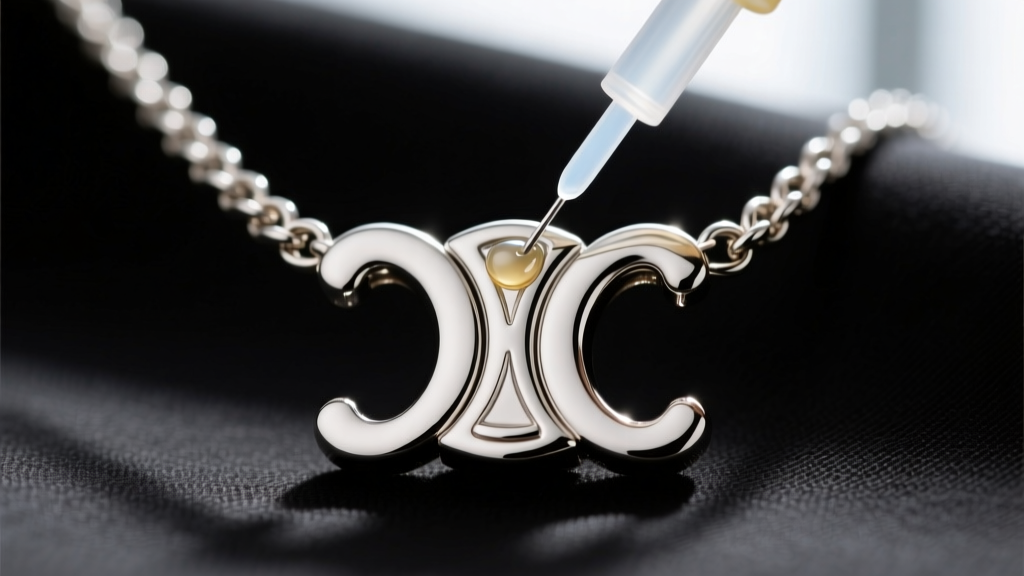
- Apply a microscopic drop of synthetic jewelry lubricant or dry PTFE (Teflon) spray to a toothpick.
- Dab the toothpick directly onto the clasp's internal hinge pin and work the lever back and forth 15 to 20 times to distribute the lubricant.
- Wipe away any excess oil from the exterior of the clasp to prevent it from transferring to your clothing.
Chain Tangling and Knot Resolution
The specific curb-and-cable hybrid chain profile used by Celine is designed to lay flat against the collarbone, but its interlocking geometry makes it highly prone to tangling when stored improperly. Forcing a tangled chain can warp the individual links, permanently altering the drape of the necklace.
Expert Tip: To untangle a severe knot in your Celine ID chain, lay the necklace flat on a glass surface. Sprinkle a small amount of cosmetic talcum powder or baby powder directly onto the knot. The powder acts as a dry lubricant, reducing the friction between the brass links. Use two sewing needles to gently tease the center of the knot outward until it loosens.
When to Seek Professional Celine After-Sales Service
While home troubleshooting can resolve minor mechanical and cosmetic issues, severe plating loss or structural chain breakage requires professional intervention. According to Celine Client Services, the brand offers a standard two-year warranty covering manufacturing defects. However, cosmetic wear, tarnishing, and plating loss resulting from daily use or exposure to chemicals are explicitly excluded from warranty coverage.
If your necklace requires out-of-warranty re-plating or soldering, you must take it to an official Celine boutique for an assessment. The boutique will send the piece to their centralized atelier (typically located in Italy or France). Expect out-of-warranty re-plating services to cost between $80 and $150, with a turnaround time of 6 to 10 weeks. Attempting to have a local jeweler re-plate the piece will immediately void any future service eligibility with the brand, as third-party polishing often alters the precise dimensions of the Triomphe or ID engravings.
Final Thoughts on Longevity
The Celine ID necklace is a masterclass in bold, architectural jewelry design, but its brass-core construction demands respect and proper care. By understanding the exact weight metrics to spot fakes, utilizing pH-neutral cleaning protocols to protect the micron-thin plating, and properly maintaining the micro-mechanics of the clasp, you can ensure your piece remains a flawless staple in your wardrobe for years to come. Always store the necklace flat in its original flannel pouch, separate from harder fine jewelry pieces that could scratch the gold finish.