The 'Boob of Necklace' Trend: Technical Guide to Chest Chains
Explore the technical design, drape geometry, and metal weights of chest chains and festoon necklaces, often searched as the boob of necklace.


Decoding the Search: What is a 'Boob of Necklace'?
While social media algorithms and voice-search typos might popularize the colloquial phrase 'boob of necklace,' jewelry technicians and bench jewelers refer to these pieces by their proper anatomical and structural classifications: festoon necklaces, bust chains, and décolletage drapes. Unlike standard 16-inch chokers or 18-inch princess necklaces that sit above the sternum, chest chains are engineered to drape across the upper bust, typically ranging from 24 to 32 inches in length. As of 2026, the resurgence of body-draping jewelry has pushed manufacturers to rethink chain physics, clasp tension, and skin-safe metallurgy to accommodate the unique topography of the human chest.
Designing a necklace that lays flat against the curvature of the bust without flipping, tangling, or causing contact dermatitis requires a deep understanding of jewelry engineering. This guide bypasses the superficial trend terminology and dives into the technical specifications that separate a high-quality festoon chain from a poorly balanced novelty item.
The Physics of Drape: Center of Gravity and Chain Weight
The most common failure mode in chest-draping jewelry is the 'pendulum effect.' When a wearer walks, a long, lightweight chain with a heavy central pendant or focal drape will swing outward and flip upside down, exposing the clasp at the front of the neck. This occurs due to an improper center of gravity.
To counteract this, expert bench jewelers utilize counter-weighting at the nape of the neck. For example, if the anterior (front) drape of a 28-inch festoon necklace weighs 35 grams due to intricate micro-mesh or gemstone settings, the posterior (back) chain must carry at least 15 to 20 grams of weight to anchor the piece. Standard 1.5mm cable chains weigh approximately 1.2 grams per inch, which is insufficient for anchoring heavy bust drapes. Instead, manufacturers opt for flattened curb chains or box chains, which offer a higher gram-per-inch ratio and lay flush against the skin, reducing lateral friction.
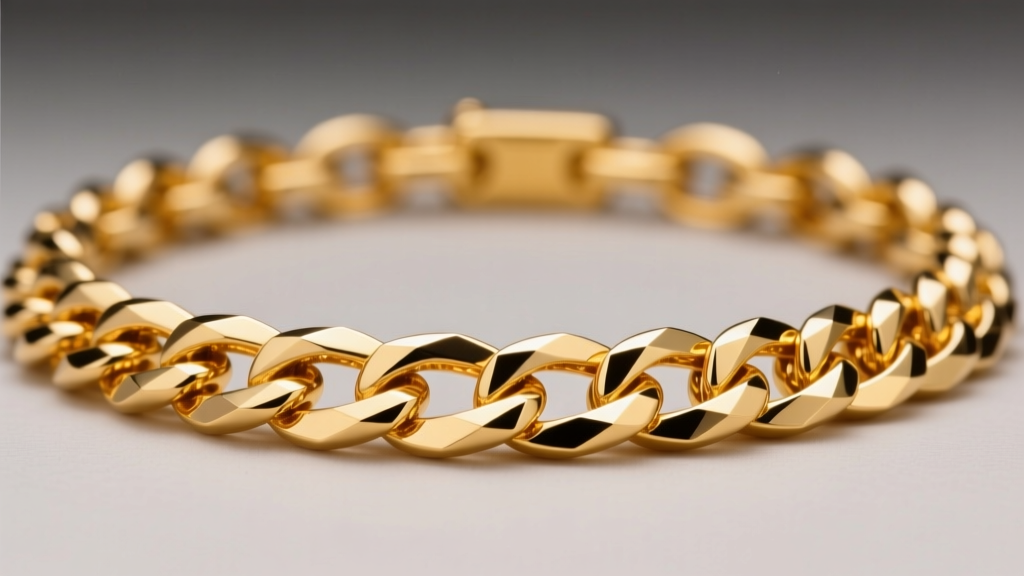
Chain Link Profiles for Bust Draping
- Flattened Curb Links: The beveled edges catch the light while the flat underside grips the skin slightly, preventing the pendulum swing.
- Micro-Mesh (Omega style): Offers a fluid, fabric-like drape that mimics the contour of the décolletage, though it is highly susceptible to kinking if bent backward.
- Wheat (Spiga) Chains: The woven, directional links provide structural rigidity, ensuring the 'V' or 'U' shape of the festoon maintains its geometry without collapsing.
Material Metallurgy and Décolletage Sensitivity
The skin on the upper chest and décolletage is significantly thinner and more sensitive than the skin on the neck or wrists. Furthermore, this area is prone to perspiration, which has a slightly acidic pH (typically between 4.5 and 5.5). This acidic environment accelerates the ionization and leaching of base metals, particularly nickel, which is a primary culprit in allergic contact dermatitis. According to the Mayo Clinic, prolonged exposure to nickel-leaching alloys in high-sweat zones is a leading cause of jewelry-induced skin reactions.
For chest chains that sit directly against the skin for extended periods, material selection is not merely an aesthetic choice; it is a biocompatibility requirement. The EU Nickel Directive (EN 1811:2011) strictly limits nickel release to 0.5 µg/cm²/week for prolonged skin contact items. Below is a technical comparison of common alloys used in body-draping jewelry.
| Material Grade | Nickel Content | Corrosion Resistance (Sweat pH 4.5) | Best Use Case |
|---|---|---|---|
| Titanium Grade 23 (Ti-6Al-4V ELI) | 0% (Nickel-Free) | Exceptional (Inert) | Sensitive skin, daily wear, heavy gauge chains |
| 18k Yellow Gold (75% Au) | Varies (Usually 0-2%) | High (Depending on alloy mix) | High-end festoons, luxury micro-mesh |
| 316L Surgical Stainless Steel | 10% - 14% | Moderate (Can leach in high acid) | Occasional wear, budget-friendly body chains |
| Sterling Silver (925 Ag) | 0% (Usually Cu alloyed) | Low (Tarnishes rapidly with sebum) | Short-term wear, requires rhodium plating |
For clients with known sensitivities, GIA and dermatological guidelines consistently recommend Titanium Grade 23 or high-purity Platinum (950 Pt) for any jewelry resting on the chest or bust area.
Clasp Tension and Shear Force Failures
A standard 16-inch choker rests securely in the cervical divot, requiring minimal clasp tension. A 30-inch chest chain, however, spans the shoulders and drapes over the slope of the bust, generating continuous lateral shear force. A standard 5mm lobster clasp possesses a spring tension of roughly 2.5 lbs. Under the lateral drag of a heavy festoon, the trigger mechanism can warp, or the jump ring can pull open, resulting in catastrophic loss of the piece.
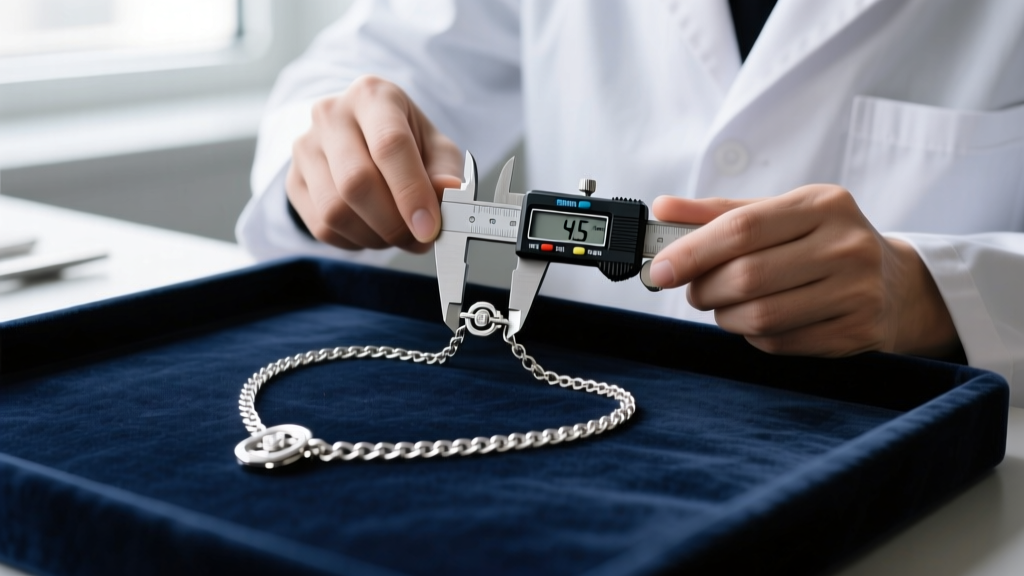
According to manufacturing standards outlined by jewelry suppliers like Rio Grande, heavy or long-span chains require specialized security findings. Bench jewelers recommend the following clasp mechanisms for chest chains:
Expert Recommendation: Never use a standard spring-ring or small lobster clasp on a chain exceeding 24 inches with a center drop. Always utilize a tongue-in-groove box clasp with a figure-8 safety catch, or a heavy-duty 12mm+ trigger clasp with soldered, flush-joint jump rings.
Mapping the Geometry: Sizing Your Festoon
The term 'boob of necklace' implies a specific anatomical landing zone. To achieve the desired aesthetic without restricting breathing or causing the chain to slide off the shoulders, precise measurement is critical. The geometry of the drape is categorized into three distinct tiers:
- The Upper Sternum Drape (24 - 26 inches): Rests just below the collarbone, skimming the very top of the bust line. Ideal for layered looks over high-neck garments.
- The Mid-Bust Festoon (28 - 30 inches): The classic 'V' or 'U' drape that crosses the upper curve of the bust. This length requires the most precise counter-weighting to prevent the pendulum effect.
- The Deep Body Chain (32 - 36 inches): Drops to the mid-sternum or lower bust, often incorporating multiple branching chains or lariat ends. Frequently worn over clothing or as statement body jewelry.
Maintenance Protocols for High-Sebum Zones
The décolletage is rich in sebaceous glands. The natural oils (sebum), combined with dead skin cells and environmental dust, create a microscopic abrasive paste that accumulates in the crevices of chain links. Over time, this buildup dulls the metal and accelerates wear on the link joints.
To maintain the structural integrity and brilliance of a chest chain, avoid harsh chemical dips, which can strip anti-tarnish coatings and weaken solder joints. Instead, utilize a warm ultrasonic bath with a mild, ammonia-free surfactant for 3 to 5 minutes. For micro-mesh or Omega chains, ultrasonic cleaners should be avoided entirely; instead, use a soft-bristled infant toothbrush and a specialized jewelry polishing cloth to gently wipe the flat surfaces after every third wear. By treating these pieces as engineered garments rather than simple accessories, wearers can ensure their chest chains remain structurally sound and visually striking for decades.


