Troubleshooting a Heart Necklace Sapphire: Repair and Care Guide
Learn how to troubleshoot, clean, and repair your heart necklace sapphire. Expert fixes for dullness, loose prongs, and chain damage.

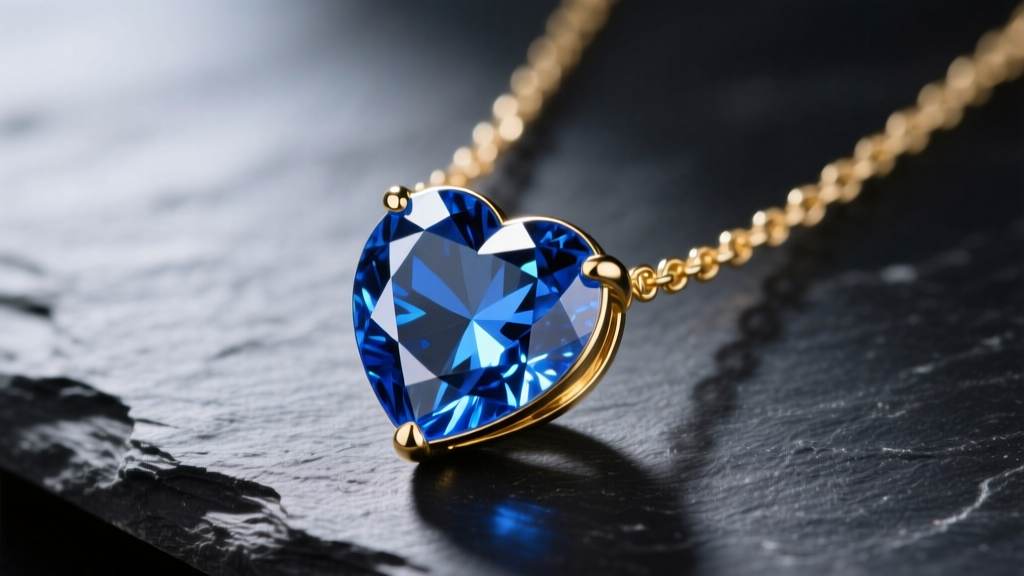
A heart necklace sapphire is more than just a beautiful accessory; it is often a deeply sentimental heirloom or a significant financial investment. Sapphires, ranking at a 9 on the Mohs hardness scale, are incredibly durable gemstones. However, the precious metal settings, delicate chains, and microscopic accumulations of daily wear can compromise the piece over time. When your favorite pendant loses its sparkle, catches on your clothing, or suffers a mechanical failure, knowing how to troubleshoot the issue is critical to preventing permanent damage or stone loss.
This comprehensive guide dives deep into the metallurgy, gemology, and mechanical engineering of sapphire pendants. We will walk you through exact diagnostic steps, safe cleaning protocols based on specific sapphire treatments, and actionable repair frameworks to restore your jewelry to its original brilliance.
The Anatomy of a Sapphire Heart Pendant (and Where It Fails)
Before troubleshooting, you must understand the structural weak points of a heart-shaped pendant. Unlike round brilliant cuts, heart-shaped sapphires feature a complex anatomy: a cleft (the dip at the top), two lobes, a belly, and a pointed tip. This geometry creates specific vulnerabilities in the setting.
The Cleft and the Tip
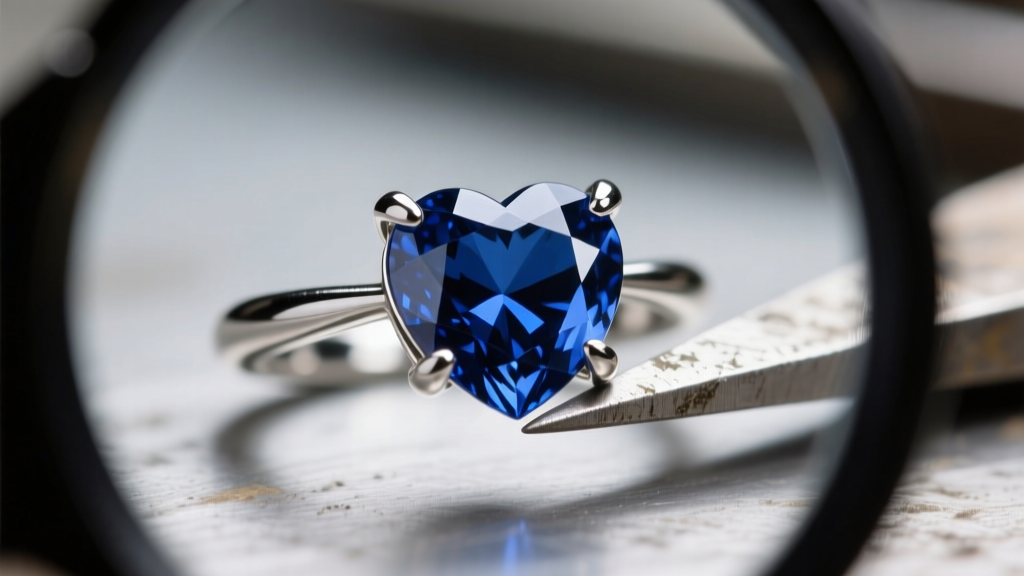
The cleft of a heart sapphire is notoriously difficult to secure. Jewelers typically use a V-prong or a specialized bezel to protect the sharp inner angles. The bottom tip is equally fragile. If your pendant has sustained a hard impact against a countertop or steering wheel, micro-fractures often originate at these two stress points. Always inspect the cleft and tip under a 10x jeweler's loupe for any radiating white lines, which indicate internal cleavage or fracturing.
The Bail and Jump Ring
The bail is the loop that connects the pendant to the chain. Constant friction between the bail and the chain causes microscopic metal shavings to accumulate, eventually wearing through the bail's apex. Similarly, the jump ring—the small circular wire linking the bail to the pendant's main body—is a primary failure point. If the jump ring was soldered poorly or stretched during a snag, it will develop a gap, leading to sudden pendant loss.
Troubleshooting Dullness: Why Your Sapphire Lost Its Sparkle
Sapphires possess a high refractive index (1.76 to 1.78), giving them their signature brilliance. If your heart necklace sapphire looks cloudy, milky, or flat, the issue is rarely the stone itself—it is almost always surface contamination or an inappropriate cleaning method.
The Grease Magnet Effect
Corundum (the mineral family of sapphires) is highly oleophilic, meaning it attracts and holds onto oils, lotions, and sebum. A microscopic layer of skin oil on the pavilion (bottom) facets will completely block light return, making a vivid blue sapphire look dark and lifeless.
The Danger of Ultrasonic Cleaners
While ultrasonic cleaners are excellent for diamond jewelry, they require extreme caution with sapphires. According to the Gemological Institute of America (GIA), heat-treated and untreated sapphires are generally safe in ultrasonics. However, fracture-filled sapphires (often treated with lead-glass to improve clarity) will be destroyed by ultrasonic vibrations and mild acids. Even a drop of lemon juice or a standard commercial jewelry dip can dissolve the glass filler, leaving your sapphire heavily pitted and opaque.
The Safe Manual Cleaning Protocol
To safely restore brilliance without risking treatment damage, use this universal protocol:
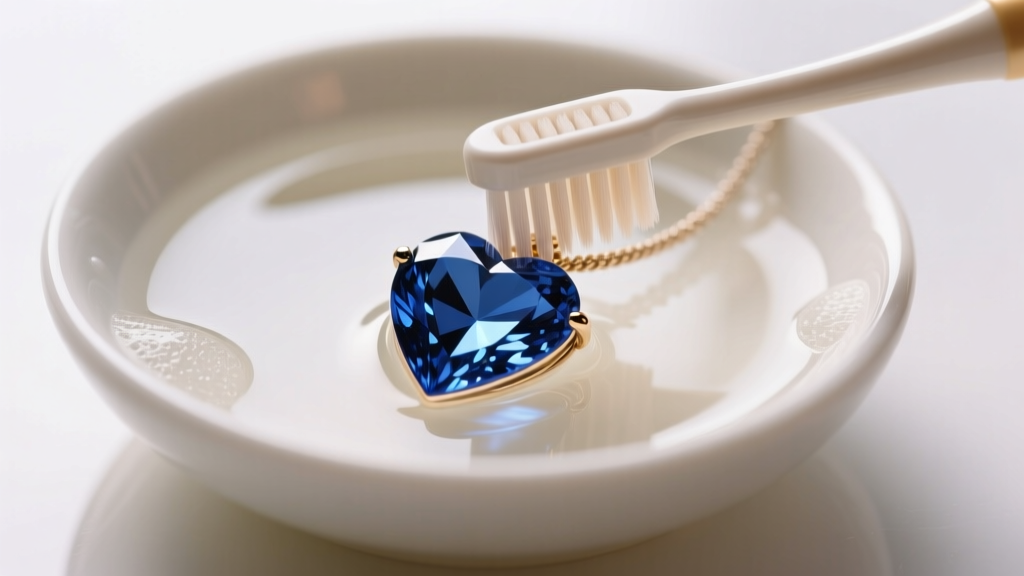
- Mix three drops of mild, phosphate-free dish soap (like Dawn) into a bowl of distilled water heated to exactly 100°F (38°C).
- Submerge the heart necklace sapphire for 15 minutes to loosen hardened sebum.
- Use a brand-new, ultra-soft baby toothbrush to gently sweep the pavilion facets. Never scrub the table (top) facet aggressively, as accumulated dust (which contains quartz, Mohs 7) can cause micro-scratches on the metal setting.
- Rinse with distilled water and dry with a lint-free microfiber cloth.
Loose Stones and Worn Prongs: The 24-Hour Rescue Plan
A loose sapphire in a heart setting is a ticking time bomb. Because heart shapes require asymmetrical prong placement to maintain their silhouette, the loss of even one prong compromises the entire structural integrity of the setting.
The Tap Test and Paper Test
To diagnose a loose stone without specialized tools, perform the Tap Test. Hold the necklace by the chain and gently tap the metal setting against your front tooth or a hard wooden desk. If you hear a faint, high-pitched clicking or rattling, the stone is moving within the gallery. Alternatively, slide a piece of thin receipt paper under the prongs. If the paper slips easily between the metal and the gemstone's girdle, the prong has lifted.
Prong Wear Diagnostic Table
Different metals wear differently. Platinum (950 Pt) prongs tend to bend and flatten over time, while 14k gold prongs become brittle and can snap. Use this diagnostic chart to determine your next steps:
| Visual Indicator | Risk Level | Metal Behavior | Required Action |
|---|---|---|---|
| Prong tip is flat but flush | Low | Normal wear | Schedule annual polish and re-tipping |
| Prong catches on silk/fabric | Medium | Prong has lifted | Visit jeweler for prong tightening within 1 week |
| Visible gap under the girdle | High | Severe metal loss | Stop wearing immediately; book emergency repair |
| Prong tip is completely missing | Critical | Sheared off | Place in a sealed bag; do not handle the stone |
Chain and Bail Failures: Fixing the Weak Links
Troubleshooting a heart necklace sapphire isn't just about the gemstone; the suspension system is equally vital. A heavy sapphire heart pendant (typically 2 to 5 carats, weighing 1.5 to 4 grams) places disproportionate stress on fine chains.
Chain Stretch and Link Deformation
If you wear a delicate cable or box chain (under 1.0mm in width) with a heavy sapphire pendant, the links near the clasp will eventually ovalize. This 'chain stretch' weakens the structural integrity of the necklace. To troubleshoot, lay the chain flat on a dark velvet pad. Run your fingernail lightly over the links. If you feel any raised, deformed, or twisted links, the chain is compromised and needs to be replaced or reinforced with a thicker gauge (minimum 1.2mm for pendants over 3 grams).
The Bail Friction Groove
Inspect the inside of the pendant's bail. Over years of wear, the chain will carve a friction groove into the metal. If the groove depth exceeds 30% of the bail's total thickness, the bail must be laser-welded or replaced by a professional jeweler to prevent the pendant from snapping off during daily wear.
Authenticity Disputes: Is Your Sapphire Real or Synthetic?
When troubleshooting a vintage or inherited heart necklace sapphire, you may encounter doubts regarding its origin. Synthetic sapphires (created via the Verneuil flame-fusion process or flux-growth methods) share the exact same chemical composition (Al2O3) and physical properties as natural sapphires, making them impossible to identify with the naked eye.
According to GIA identification standards, natural sapphires will typically exhibit angular color zoning, rutile silk needles, and fingerprint inclusions under magnification. Synthetic flame-fusion sapphires, conversely, often display curved striae (growth lines) and spherical gas bubbles. If your sapphire appears 'too perfect' with a neon-like saturation and zero internal inclusions, it requires professional gemological testing using a refractometer and polariscope to confirm its origin before you invest in expensive setting repairs.
Preventative Maintenance Schedule
To ensure your heart necklace sapphire remains secure and brilliant for decades, implement this strict maintenance framework:
- Daily: Put your necklace on *after* applying cosmetics, perfumes, and hairspray. Remove it before showering to prevent hard water calcium buildup on the pavilion facets.
- Monthly: Perform the visual prong check and the tap test. Clean using the warm distilled water and mild soap protocol outlined above.
- Bi-Annually: Take the piece to a certified gemologist or bench jeweler. Request a professional steam clean and a microscopic inspection of the bail, jump ring, and prong tips.
- Every 3-5 Years: Depending on your lifestyle, have the prongs professionally re-tipped and the bail reinforced. If the setting is white gold, schedule a rhodium re-plating to restore the bright white luster that complements the blue sapphire.
By understanding the specific mechanical and chemical vulnerabilities of your jewelry, you can troubleshoot issues before they result in irreversible damage. A well-maintained heart necklace sapphire is not just a triumph of lapidary art; it is a resilient symbol of enduring affection that will easily outlast a lifetime of daily wear.


