Material Guide: Choosing the Right Mens Skull Necklace Metal
Compare metals for your mens skull necklace. We break down sterling silver, titanium, steel, and tungsten properties, durability, and pricing.

The Metallurgy of Men's Skull Necklaces: Beyond the Aesthetic
When shopping for a mens skull necklace, most buyers focus entirely on the design—the grit of the teeth, the depth of the eye sockets, or the presence of occult motifs. However, as any master jeweler will tell you, the underlying metallurgy dictates not only the piece's longevity but also its weight, skin reactivity, and how well it holds intricate detail over time. A skull pendant is inherently a high-relief, shadow-heavy design. The metal you choose determines how those shadows are cast and maintained.
In this comprehensive material guide, we dissect the physical properties, failure modes, and pricing tiers of the five most common metals used in skull jewelry, giving you the technical data needed to make an informed purchase.
Metallurgy Breakdown: Comparing the Top 5 Skull Pendant Metals
925 Sterling Silver & The Art of Oxidation
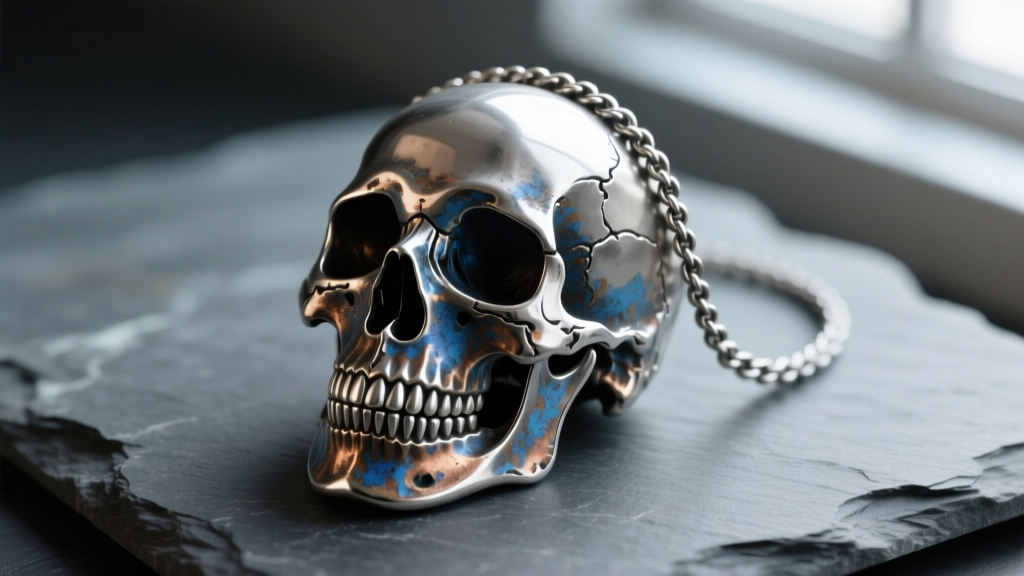
Sterling silver (92.5% pure silver, 7.5% copper alloy) remains the undisputed king of artisan skull jewelry. The copper content is crucial here: it allows jewelers to use liver of sulfur to induce controlled oxidation. This chemical reaction blackens the recessed areas of the skull (the nasal cavity, teeth gaps, and cranial fissures) while the high points (the cranium and cheekbones) are polished to a mirror finish. This contrast is what gives a silver skull its three-dimensional pop.
- Detail Resolution: Excellent. Silver casts beautifully via the lost-wax method, capturing microscopic textures like bone porosity.
- Failure Mode: Tarnish and scratching. Silver has a Mohs hardness of just 2.5 to 3. It will scratch against harder surfaces and requires maintenance.
- Price Range: $120 – $450 for solid, artisan-cast pieces.
316L Surgical Stainless Steel: The Workhorse
If you want a skull necklace you can wear in the ocean, the gym, and the shower without a second thought, 316L stainless steel is the answer. The 'L' stands for low carbon, and the alloy includes 2-3% molybdenum, which drastically increases resistance to chlorides and corrosion. Unlike silver, steel cannot be easily oxidized by hand, meaning skull designs often rely on physical engraving or black enamel fills for contrast rather than chemical patinas.
- Detail Resolution: Moderate to High. Harder to cast than silver, so high-end steel skulls are often CNC-milled or cast using advanced silicone molds.
- Failure Mode: Prone to seizing. If the jump ring connecting the skull bail to the chain is also steel, friction can cause the metals to cold-weld or seize over time.
- Price Range: $25 – $80.
Aerospace-Grade Titanium: Featherweight Durability
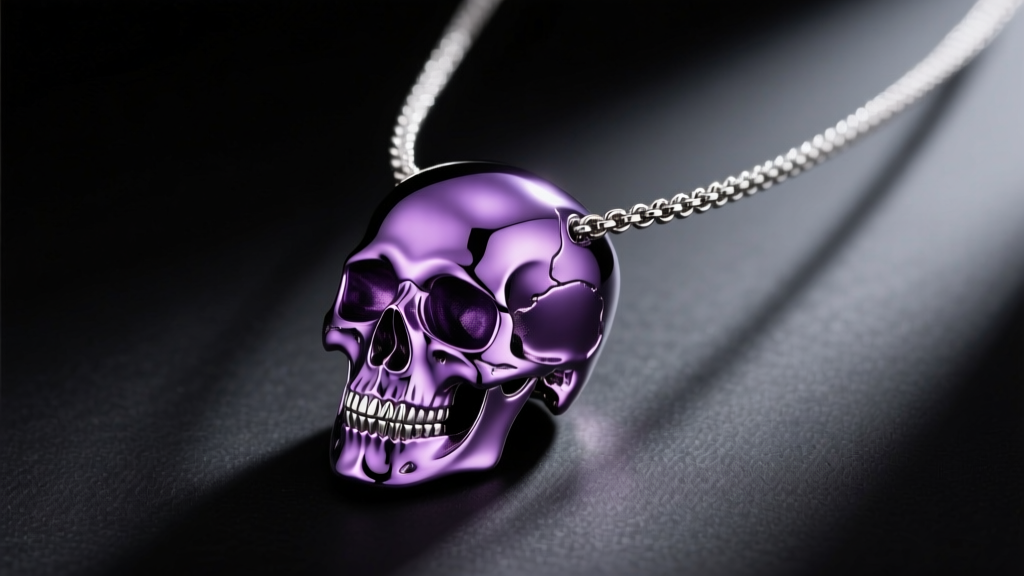
Titanium, specifically Grade 5 (Ti-6Al-4V), is an alloy containing aluminum and vanadium. It is roughly 40% lighter than stainless steel but boasts a vastly superior strength-to-weight ratio. For a large, oversized skull pendant that won't cause neck fatigue, titanium is unparalleled. Furthermore, titanium can be anodized using electrical voltage to create vibrant, permanent colors—like deep purples or blues—without the use of dyes or plating that could chip off.
- Detail Resolution: Low to Moderate. Titanium's high melting point and reactivity make traditional casting difficult. Most titanium skulls are CNC-machined from solid billets, resulting in sharper, more geometric, and modern interpretations of the skull motif.
- Failure Mode: Virtually indestructible in daily wear, but impossible to resize or solder if the bail breaks.
- Price Range: $150 – $600.
Tungsten Carbide: The Scratch-Proof Behemoth
Tungsten carbide is a composite material, not a pure metal. It registers an 8.5 to 9 on the Mohs scale, meaning it can only be scratched by diamonds or corundum. A polished tungsten skull will retain its mirror finish for decades. However, this extreme hardness comes with a critical trade-off: brittleness.
"While tungsten carbide excels in compressive strength and scratch resistance, its lack of ductility means it cannot absorb blunt force. A heavy tungsten skull pendant dropped onto a ceramic tile floor will likely shatter like glass." — Blue Nile Metal Education
- Detail Resolution: Low. Usually restricted to smooth, polished, geometric skull shapes rather than intricate anatomical carvings.
- Failure Mode: Shattering under blunt impact.
- Price Range: $40 – $120.
Bronze and Brass Alloys: Patina and Character
Bronze (copper and tin) and brass (copper and zinc) are favored in historical, steampunk, or raw biker aesthetics. These metals oxidize rapidly when exposed to the salts and acids in human sweat, developing a dark, mottled patina or even verdigris (a green crust). While some collectors prize this evolving character, the high copper content can cause a harmless but annoying green discoloration on the chest skin.
- Detail Resolution: Excellent. Casts similarly to silver and gold.
- Failure Mode: Skin discoloration and aggressive, uneven tarnishing if not sealed with a micro-crystalline wax.
- Price Range: $50 – $180.
Material Properties & Failure Modes at a Glance
To make a data-driven decision, refer to the comparison matrix below. According to James Allen's metal education guidelines, matching the metal's physical properties to your lifestyle is the most critical step in jewelry selection.
| Metal Alloy | Mohs Hardness | Relative Weight | Tarnish Risk | Best For |
|---|---|---|---|---|
| 925 Sterling Silver | 2.5 - 3.0 | Medium | High | Intricate artisan details, high contrast |
| 316L Stainless Steel | 5.5 - 6.0 | Heavy | None | Daily wear, water exposure, budget |
| Grade 5 Titanium | 6.0 | Light | None | Oversized pendants, metal allergies |
| Tungsten Carbide | 8.5 - 9.0 | Very Heavy | None | Scratch resistance, modern minimalism |
| Bronze / Brass | 3.0 - 4.0 | Medium | Very High | Raw aesthetics, evolving patina |
Chain Pairings: Matching the Bail and Links to the Pendant
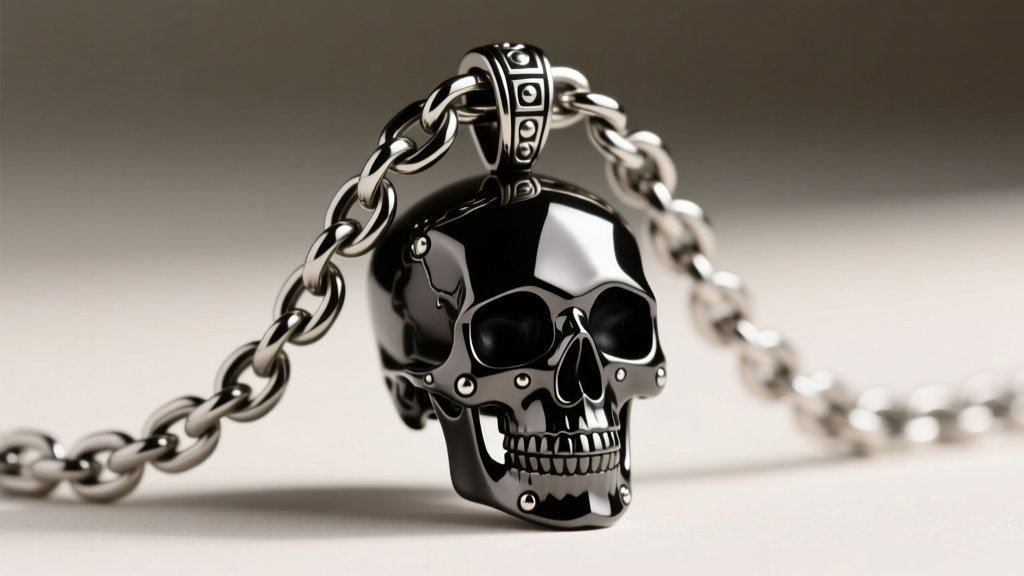
A common failure point in any mens skull necklace is the connection between the pendant bail and the chain. Skull pendants are inherently top-heavy and dense. A delicate 2mm chain will not only look proportionally incorrect but will physically snap under the pendulum stress of a 40-gram silver skull.
The Weight-to-Gauge Rule
- Lightweight Skulls (Under 20g): Titanium or hollow-cast silver. Pair with a 3mm to 4mm Figaro or Box chain.
- Mid-Weight Skulls (20g - 50g): Solid silver or steel. Pair with a 4mm to 5mm Rope chain. The twisted links of a rope chain provide excellent tensile strength and a masculine texture that complements bone motifs.
- Heavyweight Skulls (50g+): Solid bronze, thick steel, or tungsten. Pair with a 5mm to 7mm Cuban link chain. Ensure the clasp is a heavy-duty lobster lock or a mechanical toggle, as standard spring-ring clasps will fail under this weight.
Pro-Tip: Always check the bail diameter. Many artisan skull pendants feature integrated bails (carved directly into the top of the cranium) which can restrict the thickness of the chain you can thread through it. Measure the bail opening in millimeters before purchasing a chain.
Care, Maintenance, and Skin Reactions
Maintaining the contrast of a skull necklace requires specific protocols depending on the metal. If you own an oxidized sterling silver skull, never use liquid silver dips. These harsh chemical baths will strip the intentional black oxidation from the eye sockets and teeth, leaving you with a flat, lifeless, bright white skull. Instead, use a dry, treated polishing cloth and gently rub only the raised surfaces.
For titanium and stainless steel, an ultrasonic jewelry cleaner is highly effective at removing sebum, dead skin, and lotion that accumulate in the crevices of the skull's jawline and nasal cavity. If you suffer from contact dermatitis or nickel allergies, strictly avoid cheap, unmarked white metals and opt for Grade 5 Titanium or 316L steel, both of which are highly biocompatible and widely used in medical implants.
Final Verdict: Choosing Your Metal
The ideal metal for your skull necklace depends entirely on your lifestyle and aesthetic preferences. If you value artisanal craftsmanship, deep shadows, and traditional jewelry making, oxidized 925 sterling silver is the only choice. If you need a rugged, waterproof piece for active daily wear, 316L stainless steel offers unbeatable value. For those seeking a massive, statement-making piece without the neck strain, invest in CNC-milled titanium. Understand the metallurgy, respect the weight, and your skull necklace will last a lifetime.


