The Ultimate Care Guide for Your Necklace Cross Chain
Learn expert techniques to clean, untangle, and maintain your necklace cross chain. Discover metal-specific care tips to prevent tarnish and breakage.


The Unique Anatomy of a Necklace Cross Chain
A necklace cross chain presents a distinct set of maintenance challenges compared to standard pendants or simple solitaire necklaces. The combination of intricate chain links—whether cable, curb, figaro, or rope—and the detailed crevices of a cross pendant creates multiple trap points for sebum, dead skin cells, lotions, and environmental pollutants. Furthermore, the structural weak points, specifically the soldered jump rings and clasp mechanisms, require regular inspection to prevent catastrophic loss.
As we move through 2026, jewelry care has evolved beyond simple soap and water. Modern metallurgical standards, such as the FTC’s strict guidelines on gold vermeil (requiring a minimum of 2.5 microns of gold over a sterling silver base), dictate that aggressive polishing can permanently ruin a piece. This guide provides a comprehensive, professional-grade framework for cleaning, maintaining, and storing your necklace cross chain to ensure it remains a lasting staple in your collection.
Material-Specific Cleaning Protocols
The most critical mistake jewelry owners make is applying a universal cleaning method to all metals. The chemical composition of your necklace cross chain determines which cleaning agents are safe and which will cause irreversible damage. Below is a structured breakdown of cleaning protocols based on the most common metals used in cross chains.
| Metal Type | Recommended Cleaning Agent | Best Tool | Critical Warnings |
|---|---|---|---|
| 925 Sterling Silver | Mild phosphate-free dish soap + warm distilled water | Extra-soft baby toothbrush | Never use chlorine or bleach; it causes permanent blackening and structural brittleness. |
| Gold Vermeil (2.5μm+) | Specialized pH-neutral jewelry dip or mild soap | Untreated microfiber cloth | Avoid ultrasonic cleaners and abrasive polishing pastes, which will strip the gold layer. |
| Solid 14k / 18k Gold | Diluted ammonia-based cleaner (1 part ammonia to 6 parts water) | Soft lint-free polishing cloth | Safe for most diamond crosses, but highly dangerous for porous gemstone inlays. |
| 316L Stainless Steel | Isopropyl alcohol (70% or higher) | Cotton swabs and microfiber | Highly durable and rust-resistant, but avoid harsh wire brushes that can mar the polish. |
For everyday maintenance of a solid gold or sterling silver necklace cross chain, a simple soak in warm water with a few drops of Dawn dish soap for 10 to 15 minutes is usually sufficient to loosen body oils. Gently agitate the chain, rinse with distilled water to prevent hard water spots, and pat dry.
Deep Cleaning the Cross Pendant Crevices
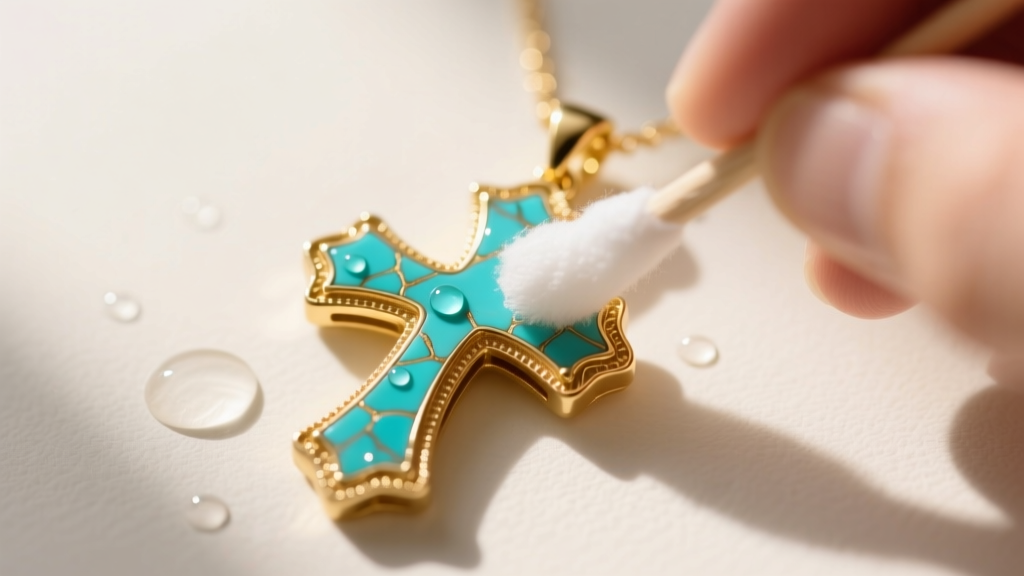
The cross pendant itself often features deep recesses, filigree work, diamond-cut facets, or gemstone inlays that a standard cloth cannot reach. According to the Gemological Institute of America (GIA), the porosity of gemstones must dictate your cleaning method. Many artisan and vintage cross pendants incorporate turquoise, mother-of-pearl, opal, or malachite.
When to Use (and Avoid) Ultrasonic Cleaners
Ultrasonic cleaners utilize high-frequency sound waves (typically around 40kHz) to create microscopic cavitation bubbles that blast dirt out of tiny crevices. While highly effective for solid gold or platinum diamond-cut crosses, ultrasonic cleaners will shatter fragile stones like emeralds, opals, and turquoise, and will completely strip cold enamel.
- Safe for Ultrasonic: Solid gold/silver crosses with diamonds, sapphires, or rubies (provided they are not fracture-filled).
- Never use Ultrasonic: Crosses with pearl inlays, turquoise, lapis lazuli, enamel work, or oxidized (blackened) silver detailing.
The Wooden Toothpick Technique
For delicate gemstone inlays or oxidized silver crosses where you want to preserve the dark patina in the recesses, use a wooden toothpick or a soft cotton swab dipped in a mild soapy solution. Gently trace the inner borders of the cross arms to lift trapped grime without scratching the metal or dislodging the adhesive holding the stones.
Mechanical Maintenance: Clasps, Jump Rings, and Tangling
A necklace cross chain is only as secure as its weakest mechanical link. The jump ring connecting the cross pendant to the chain, and the jump ring attaching the chain to the clasp, are the primary failure points. Over time, the tension of putting on and taking off the necklace can cause unsoldered jump rings to pull apart.
Inspecting the Jump Rings
Every three months, perform a visual and tactile inspection of your chain's jump rings. Look for any visible gaps in the seam. If the jump ring is not soldered shut, use two pairs of flat-nose jewelry pliers to twist the ring closed (always twist laterally, never pull the ends apart, which distorts the circle). For chains thinner than 1.2mm (approximately 18-gauge to 20-gauge wire), consider taking the piece to a jeweler to have the jump rings laser-soldered for permanent security.
Untangling Fine Chains Without Breakage
Fine cable and rope chains are notorious for tangling, especially when stored improperly. Pulling on a knot in a 1.0mm chain will permanently stretch or snap the links. Instead, use the mineral oil method:
- Lay the tangled necklace cross chain flat on a hard, well-lit surface.
- Apply a single drop of mineral oil or baby oil directly to the center of the knot to lubricate the links.
- Using two fine sewing needles, gently pick at the center of the knot, working the links outward. The oil reduces friction, allowing the metal links to slide past one another without kinking.
- Once untangled, clean the chain using the material-specific protocols outlined above to remove the oil.
Long-Term Storage and Tarnish Prevention
Proper storage is the most overlooked aspect of jewelry maintenance. Sterling silver cross chains are particularly susceptible to tarnishing (silver sulfide formation) when exposed to humidity and airborne sulfur compounds. Leaving your necklace on a bathroom counter or hanging on an open jewelry tree accelerates oxidation exponentially.

The Right Storage Environment
According to Jewelers of America, individual storage is key to preventing both tarnish and mechanical damage. Follow these storage rules for your cross chains:
- Use Polyethylene, Not PVC: Store your necklace in individual zip-lock bags made of polyethylene. Avoid PVC plastics, which can trap moisture and emit chemicals that accelerate tarnishing and degrade certain gemstone treatments.
- Anti-Tarnish Strips: Place a 3M anti-tarnish strip inside the poly bag. These strips absorb airborne sulfur and hydrogen sulfide, protecting sterling silver for up to 12 months in a sealed environment.
- Hang or Lay Flat: If using a jewelry box, hang the necklace cross chain on a velvet-lined hook or bust to prevent the chain from knotting. If laying it in a drawer, ensure the clasp is left unfastened but the chain is laid out in a wide circle or figure-eight to prevent tension kinks.
Expert Tip: Always put your necklace cross chain on after applying perfumes, hairsprays, and lotions. The alcohol and volatile organic compounds (VOCs) in cosmetics can degrade the finish of gold vermeil and dull the sparkle of diamond or cubic zirconia inlays on the cross pendant.
By adhering to these targeted cleaning protocols, conducting regular mechanical inspections, and utilizing proper anti-tarnish storage, your necklace cross chain will maintain its structural integrity and brilliant finish for decades. Treat your jewelry with the same precision and care that the artisan used to craft it, and it will remain a flawless expression of your personal style.


