Squashblossom Necklace Trends: Styling Heritage Silver in 2026
Discover how the squashblossom necklace is reshaping 2026 fashion. Explore styling tips, turquoise grades, and how to ethically source Navajo silver.

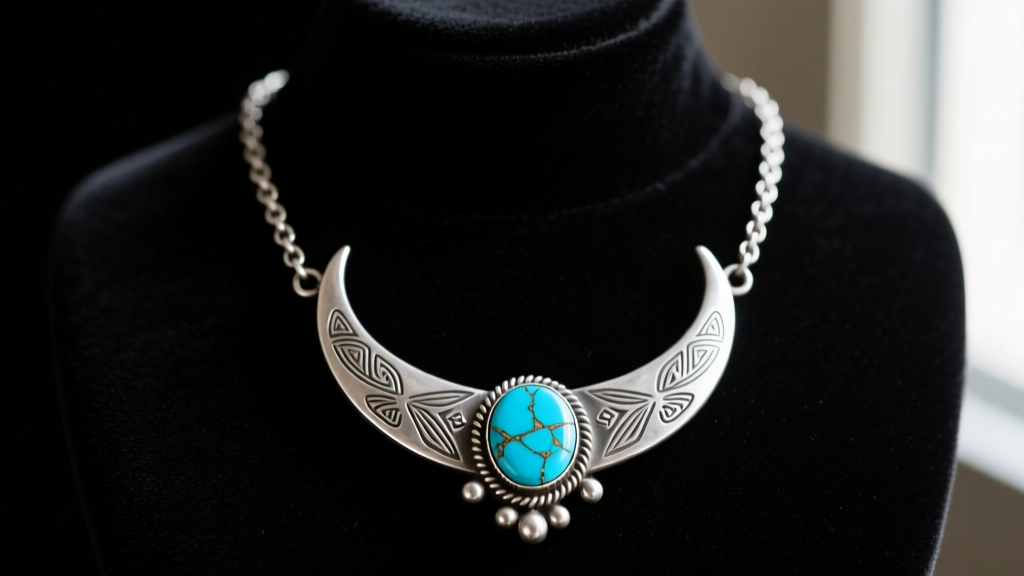
The 2026 fashion landscape has seen a definitive pivot away from fleeting micro-trends toward heritage investment pieces, and at the forefront of this movement is the squashblossom necklace. Once relegated to vintage archives and specific regional aesthetics, this monumental feat of Native American silversmithing is now dominating high-fashion editorials and minimalist street style alike. However, wearing a squashblossom necklace today requires more than just an eye for aesthetics; it demands an understanding of material science, cultural provenance, and structural weight. As a cornerstone of Southwestern jewelry, separating authentic master-crafted pieces from mass-produced tourist trade imitations is critical for any serious collector or style enthusiast.
The Anatomy of a True Squashblossom Necklace
To understand the styling potential of this piece, one must first deconstruct its architecture. A traditional Navajo squashblossom necklace is composed of three distinct elements, each carrying historical weight:
- The Naja Pendant: The crescent-shaped centerpiece suspended at the bottom. Originally derived from Moorish talismans brought to the Americas by the Spanish, it was adopted by Navajo artisans in the late 19th century as a symbol of protection.
- The Squash Blossoms: The fluted, petal-like beads flanking the Naja. Ironically, these are not squash blossoms at all, but rather stylized representations of the Spanish pomegranate motif, which was a common decorative element on Spanish conquistador armor and horse tack.
- The Round Silver Beads: Interspersed between the blossoms, these hand-soldered domed beads (often called 'Navajo pearls') provide the structural backbone and metallic weight of the necklace.
Material Science: Silver Purity and Turquoise Grading
The value and drape of a squashblossom necklace are dictated by its raw materials. In 2026, connoisseurs are looking past simple 'sterling' stamps and demanding exact metallurgical and gemological transparency.
Silver Gauge and Patina
Authentic vintage pieces (circa 1950s-1970s) were frequently crafted using 14-gauge to 16-gauge silver sheet. This substantial thickness results in a total necklace weight ranging from 90 to 150 grams. This weight is not a flaw; it is essential for the proper drape of the necklace, allowing it to lay flat against the sternum rather than flipping outward. Modern commercial replicas often use 20-gauge or 22-gauge silver, weighing under 50 grams, which compromises both the structural integrity and the luxurious feel. Furthermore, pre-1930s pieces may feature Coin Silver (.900 purity), which contains more copper than Sterling (.925), yielding a softer, darker, and highly prized oxidized patina.
Turquoise: Natural vs. Stabilized
Turquoise is a hydrous phosphate of copper and aluminum, naturally ranking between 5 and 6 on the Mohs hardness scale. Because it is highly porous, untreated stones will absorb skin oils and cosmetics, inevitably darkening over time. While some collectors prize this 'living' quality, the modern market heavily relies on stabilized turquoise—stones that have been vacuum-impregnated with clear epoxy resin to harden the gem and lock in its color. Stabilization is an accepted industry practice, provided it is disclosed. However, untreated, natural stones from closed mines command a massive premium.
The 2026 Styling Matrix: Contrast is Key
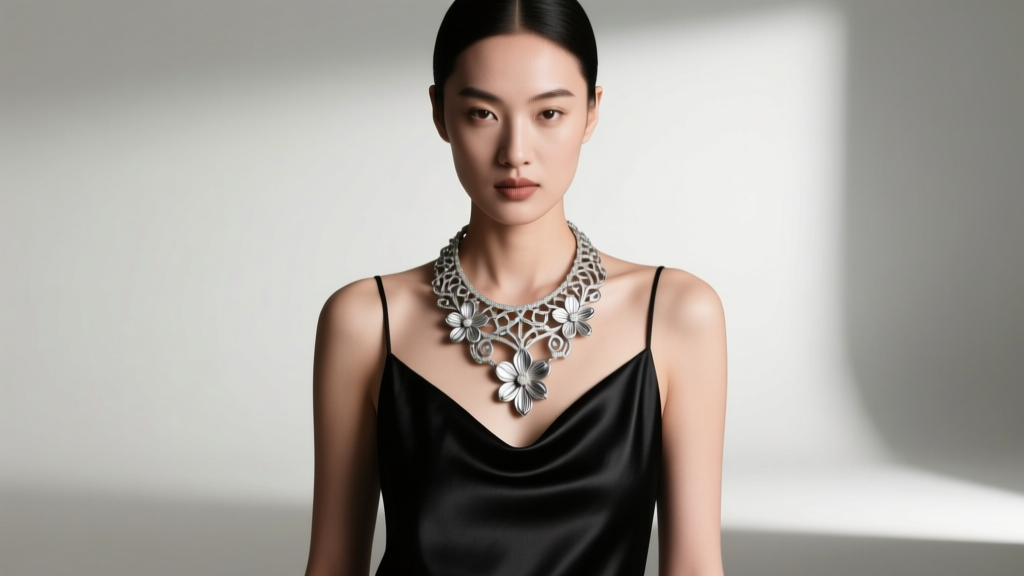
The most common styling mistake with a squashblossom necklace is treating it as a costume piece by pairing it with other bohemian or Southwestern garments. The 2026 style directive relies on stark contrast. The heavy, ornate, and historically rich nature of the silver and turquoise should be juxtaposed against severe minimalism, fluid silks, or sharp tailoring.
| Occasion | Necklace Length & Weight | Outfit Pairing | Styling Note |
|---|---|---|---|
| High-Fashion Editorial | 18-20 inches (100g+) | Black silk slip dress or backless velvet gown | Let the Naja rest directly on the skin. Avoid competing earrings; opt for simple silver cuffs. |
| Everyday Minimalist | 22-24 inches (80g) | Crisp white poplin button-down and wide-leg denim | Leave the top three buttons undone. The matte cotton contrasts beautifully with high-polish silver. |
| Winter Tailoring | 16-18 inches (Choker style) | Charcoal wool turtleneck or structured blazer | Wear the necklace over the fabric. The dark wool highlights the bright blue/green matrix of the turquoise. |
Ethical Sourcing and Authenticity Verification
The commercialization of Southwestern jewelry has led to a flood of imported counterfeits. When investing in a squashblossom necklace, ethical sourcing is paramount. According to the Indian Arts and Crafts Board, it is a federal offense to market Native American-style jewelry as authentic if it was not made by a member of a federally or state-recognized tribe. To ensure you are supporting Indigenous artisans and purchasing genuine heritage pieces, adhere to the following verification framework:
- Scrutinize the Hallmarks: Post-1970s pieces are typically signed on the back of the Naja pendant or the clasp. Look for specific artist stamps (e.g., 'T. Begay', 'I. Martinez') rather than generic 'Sterling' or 'Native Made' tags.
- Examine the Matrix: Mass-produced fakes often feature dyed howlite or magnesite with a uniform, printed-on matrix. Genuine turquoise (like Kingman or Royston) will have organic, asymmetrical webbing.
- The Magnet Test: Silver is paramagnetic. If a necklace clings to a strong neodymium magnet, the core is likely ferrous metal with a thin silver plating.
- Demand Provenance: Reputable dealers will provide a certificate of authenticity detailing the artist's name, tribal affiliation, and the specific turquoise mine used. The Smithsonian National Museum of the American Indian frequently highlights the importance of provenance in preserving Indigenous art forms.
Investment Value and Pricing Tiers
The market for squashblossom necklaces in 2026 is segmented into three distinct pricing tiers, reflecting both historical significance and material quality:
- Commercial / Contemporary Lightweight ($300 - $800): Often made with thinner gauge silver and stabilized, lesser-grade turquoise. Suitable for everyday wear but lacks significant investment appreciation.
- Vintage 1970s Boom Era ($1,500 - $5,000): The 1970s saw a massive surge in turquoise demand. Pieces from this era feature heavy coin or sterling silver and highly sought-after stones from now-closed mines like Sleeping Beauty. These pieces carry a distinct, worn-in patina that collectors covet.
- Contemporary Master Silversmiths ($3,500 - $12,000+): Award-winning Navajo, Hopi, and Zuni artisans who utilize advanced techniques like tufa-casting, intricate stamp-work, and rare, high-grade natural turquoise (such as Lander Blue or Number 8). These are museum-quality investments that consistently appreciate in value.
Ultimately, the squashblossom necklace is more than a passing trend; it is a wearable archive of North American history. By prioritizing material integrity, ethical sourcing, and intentional styling, you elevate this iconic piece from a mere accessory to a profound statement of heritage and high fashion.


