The Ultimate Gold Apple Necklace Buying Guide: Styles & Metals
Discover how to choose the perfect gold apple necklace. Our expert buying guide covers karat options, chain pairings, enamel details, and pricing.

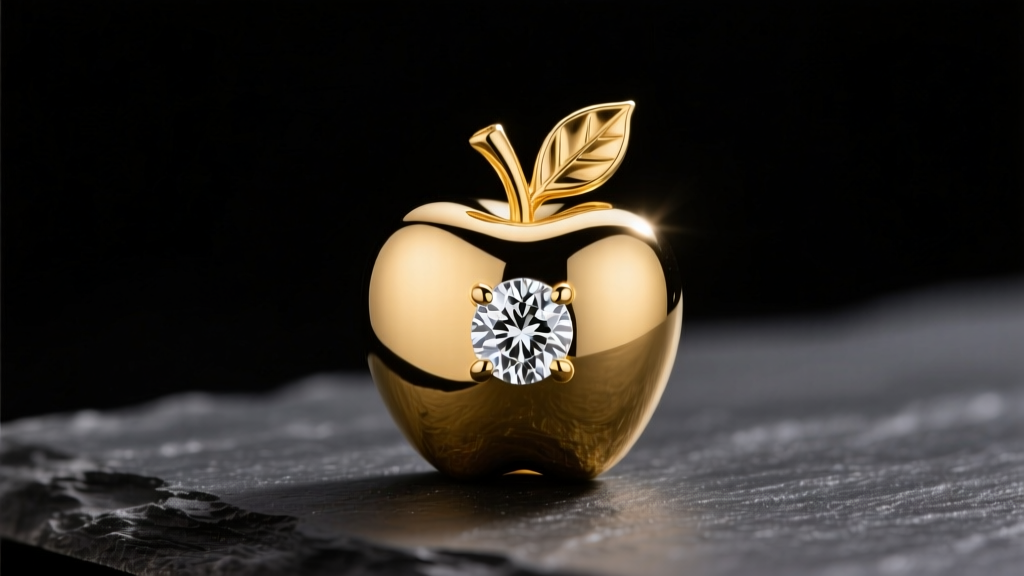
The Enduring Appeal of the Gold Apple Motif
The apple is one of the most historically rich motifs in jewelry design, symbolizing knowledge, immortality, and affection. In 2026, the gold apple necklace has evolved far beyond the novelty charm bracelets of the early 2000s. Today, it stands as a sophisticated staple in fine jewelry, embraced by minimalist designers and heritage houses alike. Whether you are seeking a subtle daily-wear piece or a bold statement pendant, navigating the market requires an understanding of metallurgy, construction techniques, and structural pairings. This comprehensive buying guide will equip you with the technical knowledge needed to invest in a gold apple necklace that balances aesthetic beauty with lifelong durability.
Decoding Gold Purity: 14K vs. 18K for Apple Pendants
When shopping for a gold apple necklace, the karat weight dictates not only the color but the structural integrity of the piece. According to the Gemological Institute of America (GIA), pure 24K gold is far too malleable for daily-wear pendants, especially those with 3D sculptural elements like an apple shape, which are prone to denting.
14K Gold: The Pragmatic Standard
Composed of 58.5% pure gold and 41.5% alloy metals (typically copper, silver, and zinc), 14K gold offers a Vickers hardness of approximately 135. This makes it highly resistant to scratches and dents. If you are buying a solid 3D gold apple charm meant for everyday wear, 14K is the optimal choice. The higher copper content also gives 14K yellow gold a slightly warmer, more robust hue that beautifully mimics the natural blush of a ripening apple.
18K Gold: The Luxury Investment
Containing 75% pure gold, 18K gold boasts a richer, deeper yellow color and is hypoallergenic, making it ideal for sensitive skin. However, its Vickers hardness drops to around 115, making it softer. An 18K gold apple necklace is best suited for flat, stamped designs or pieces featuring heavy gemstone pavé, where the gold itself is not subjected to heavy impact. Many high-end jewelers now utilize recycled 18K gold to meet 2026 sustainability standards without compromising on luxury.
Construction Methods: Solid, Hollow, and Stamped
The internal architecture of your apple pendant drastically affects its longevity, weight, and price. Always check the product specifications for these three construction types:
- Solid Cast: The gold is poured into a mold, resulting in a heavy, durable piece. A solid 3D apple pendant typically weighs between 4 and 8 grams. It will not crush if squeezed and can be easily polished to remove scratches.
- Electroformed (Hollow): This process creates a large, voluminous 3D apple using very little gold, keeping the price low. However, hollow pendants are incredibly fragile. A single drop onto a hard surface can cause irreparable dents, and they cannot be repaired or resized by a jeweler. Avoid hollow apples for daily wear.
- Die-Struck (Stamped): Created by stamping a sheet of gold under immense pressure, these flat or semi-3D apples are dense and durable. They are lightweight (1-3 grams) and perfect for layering on delicate chains.
The Art of Enamel: Elevating the Apple Design
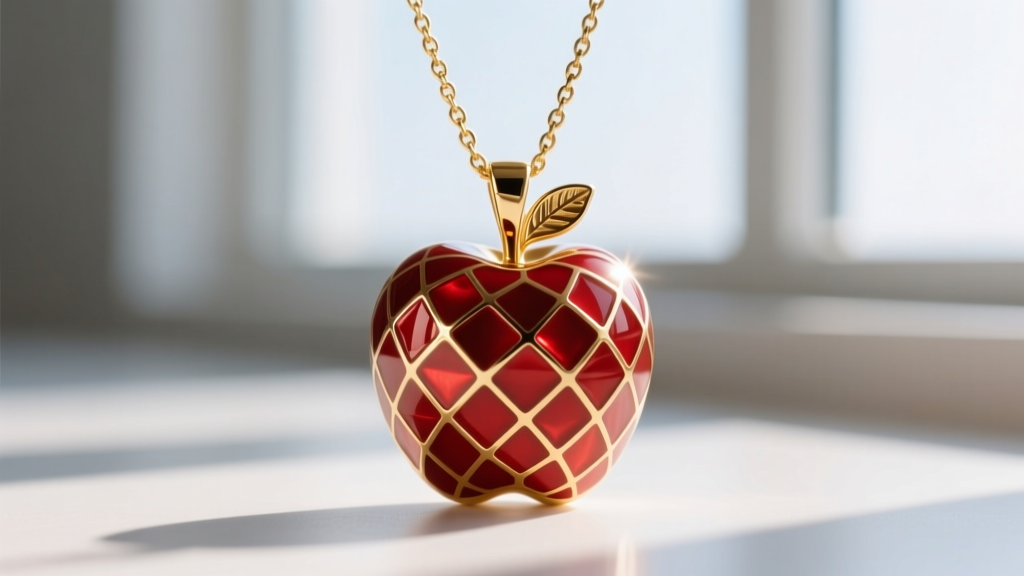
Many gold apple necklaces incorporate enamel to mimic the red or green skin of the fruit. Understanding the type of enamel used is critical for long-term care.
Vitreous (Fired) Enamel: This is crushed glass fused to gold at temperatures exceeding 1400°F. Techniques like guilloché (where translucent enamel is laid over an engine-turned geometric pattern) or champlevé (where enamel fills carved troughs in the gold) create breathtaking, scratch-resistant surfaces. Vitreous enamel will not fade or yellow, but it can shatter if the pendant is dropped on tile or stone.
Cold Enamel (Epoxy Resin): Common in lower-priced or fashion-tier jewelry, cold enamel is essentially a hardened resin. While it is shatterproof, it is highly susceptible to scratching and will eventually yellow or cloud when exposed to UV light and skin oils over several years.
Chain Selection: Matching the Bail and Weight
A common mistake buyers make is pairing a heavy 3D gold apple pendant with an inadequate chain. The bail (the loop connecting the pendant to the chain) must accommodate the chain's thickness, and the chain must possess the tensile strength to hold the pendant's weight without stretching or snapping.
As a general rule, the chain should be rated to hold at least three times the weight of the pendant. Below is a structural pairing guide based on pendant weight:
| Pendant Type | Avg. Weight | Recommended Chain | Min. Bail Inner Diameter |
|---|---|---|---|
| Flat Stamped Apple | 1.5 - 2.5g | 0.9mm - 1.2mm Cable or Box | 2.0mm x 1.5mm |
| Semi-3D Apple | 3.0 - 5.0g | 1.5mm - 2.0mm Rope or Wheat | 3.0mm x 2.0mm |
| Solid 3D Apple | 6.0g+ | 2.0mm - 3.0mm Wheat or Figaro | 4.0mm x 3.0mm |
Always verify the bail dimensions before checkout. A heavy solid apple on a thin 1.0mm chain will cause the chain links to deform and eventually break at the clasp or jump ring.
Pricing Benchmarks: What Should You Pay?
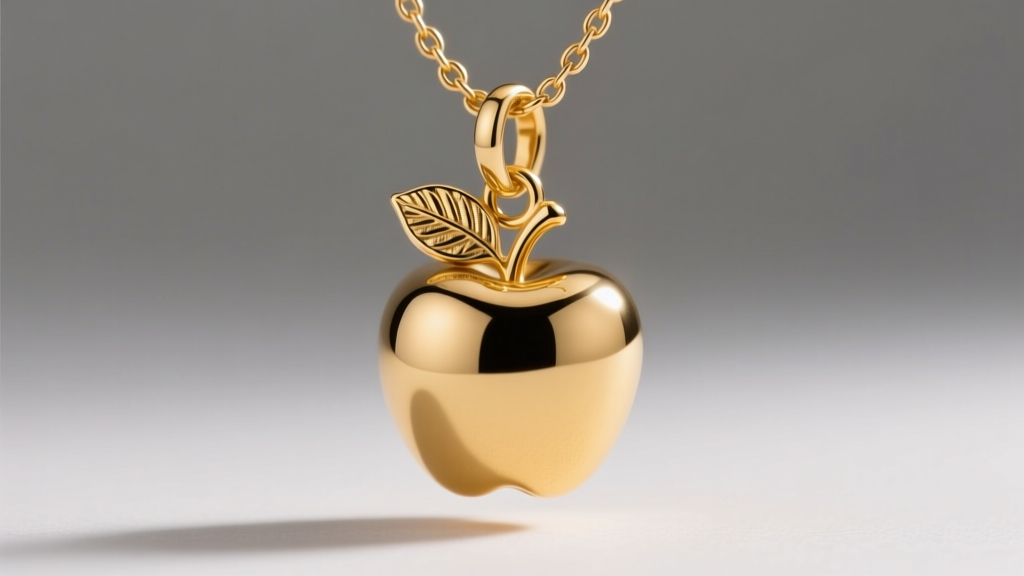
In the current 2026 precious metals market, gold prices dictate a baseline, but craftsmanship and accents drive the final retail cost. According to data tracked by the World Gold Council, here is what you should expect to pay for a quality gold apple necklace:
- 14K Solid Small Apple (1-3g): $150 - $350. Ideal for minimal, everyday layering.
- 18K 3D Apple with Vitreous Enamel (4-6g): $600 - $1,200. Reflects the cost of specialized artisanal enameling.
- 18K Apple with Pavé Lab-Grown Diamonds (5g+): $1,500 - $3,500+. The price variance depends heavily on the total carat weight and clarity of the diamond accents (often used on the apple's leaf or stem).
Be wary of 'bargain' solid gold apples priced significantly below the daily melt value of their gold weight. These are almost always hollow electroformed pieces or heavily gold-plated brass masquerading as solid gold.
Care, Maintenance, and Red Flags
To maintain the luster of your gold apple necklace, proper care is essential. For solid, un-enameled gold pieces, an ultrasonic cleaner is safe and effective for removing trapped oils from the textured stem or leaf crevices. However, never put an enameled or hollow apple pendant in an ultrasonic cleaner. The high-frequency vibrations can shatter vitreous enamel or crack the fragile seams of a hollow electroformed piece.
Instead, clean enameled apples with warm water, a drop of mild dish soap, and an extra-soft baby toothbrush. When storing the necklace, keep it in a soft microfiber pouch to prevent the gold leaf or stem from catching on other jewelry and bending.
Final Verdict: What to Look For Before Checkout
When buying a gold apple necklace, prioritize structural integrity over sheer size. Opt for 14K gold if you want a durable, solid 3D charm for daily wear, or choose 18K if you prefer a flat, stamped design with richer color. Always inspect the bail size to ensure it matches a chain with adequate tensile strength, and verify whether any colored accents are fired vitreous enamel or temporary cold epoxy. By focusing on these technical details, you will secure a timeless piece that beautifully marries symbolic heritage with modern jewelry engineering.


