How to Clean and Care for Your Kat Stickler Necklace
Learn how to clean, maintain, and protect your Kat Stickler necklace. Expert tips for removing tarnish and preserving gold-plated nameplate jewelry.

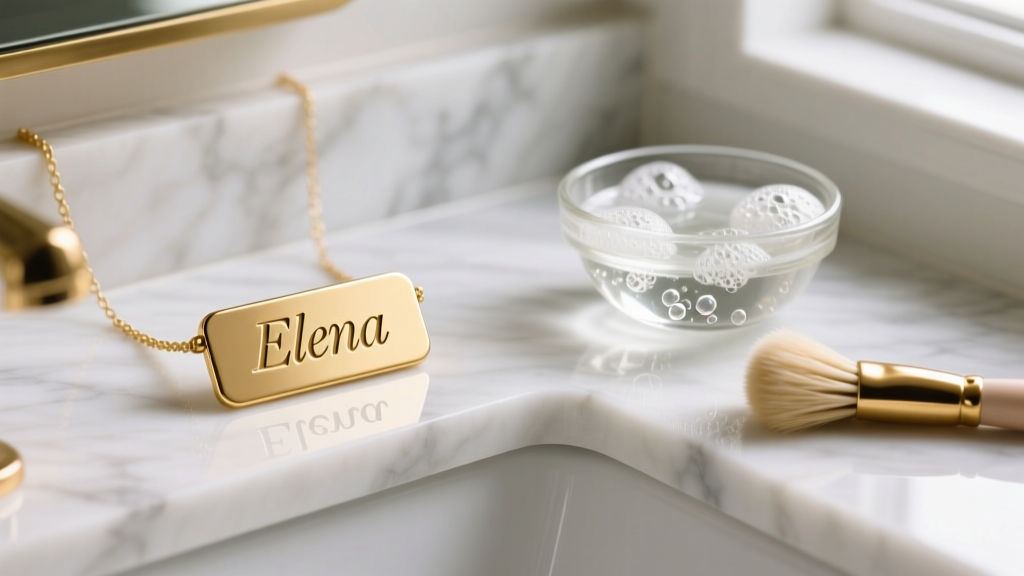
The Anatomy of a Custom Nameplate Necklace
The viral Kat Stickler necklace trend popularized the custom cursive nameplate necklace, a staple of modern personalized jewelry. Whether your piece is crafted from solid 14k gold, gold vermeil, or heavy gold electroplate over brass, the intricate script fonts and delicate cable chains require specialized maintenance. Unlike simple pendant necklaces, nameplate designs feature a horizontal backbar and multiple solder joints where the cursive letters connect. These structural intersections are notorious traps for sebum, dead skin cells, and cosmetic residues. Understanding the specific metallurgy and structural vulnerabilities of your necklace is the first step in preserving its luster and preventing irreversible damage to the plating or solder points.
Understanding Gold Plating and Vermeil Vulnerabilities
Most influencer-style nameplate necklaces are not solid gold due to the high cost of custom casting. Instead, they typically utilize gold vermeil (a minimum of 2.5 microns of gold plated over sterling silver) or gold-plated brass. According to the Federal Trade Commission (FTC) Jewelry Guides, the thickness and base metal dictate how the piece reacts to environmental stressors. When the gold layer is compromised by harsh chemicals or friction, the base metal is exposed. If the base is brass or copper, oxidation will cause the metal to react with the acids in your sweat, resulting in the dreaded green skin effect and a dull, brassy appearance on the necklace itself.
The Chemistry of Tarnish and Buildup
Daily wear exposes your necklace to a cocktail of corrosive elements. The average human sweat has a pH ranging from 4.5 to 7.0, which is acidic enough to slowly degrade gold plating under 1.0 microns. Furthermore, body lotions, perfumes, and hairsprays contain alcohols and emulsifiers that leave a microscopic film over the gold. This film not only dulls the reflective surface of the necklace but also accelerates tarnishing by trapping moisture against the metal. The loops of the cursive lettering on a Kat Stickler necklace act as tiny basins where these lotions pool and harden, requiring targeted mechanical cleaning to remove.
Step-by-Step Cleaning Guide for Nameplate Necklaces
To safely remove buildup without stripping the gold layer, you must avoid abrasive compounds. Never use baking soda, toothpaste, or commercial silver dips, as these contain silica or harsh acids that will permanently scratch or strip gold plating. The Gemological Institute of America (GIA) recommends mild, pH-neutral solutions for cleaning gold jewelry.
What You Will Need
- Lukewarm distilled water (tap water contains chlorine and hard minerals that can cause spotting)
- pH-neutral liquid dish soap (such as original blue Dawn, free of moisturizing additives)
- An ultra-soft baby toothbrush (adult toothbrush bristles are too stiff and will cause micro-scratches)
- A lint-free microfiber polishing cloth
- A clean, dry cotton swab
The Cleaning Process
- Prepare the Solution: Mix two drops of pH-neutral dish soap into a small glass bowl containing one cup of lukewarm distilled water. Avoid hot water, as extreme temperature shifts can weaken the adhesive in the plating layers.
- Soak Briefly: Submerge the necklace for exactly 3 to 5 minutes. This softens the hardened sebum and lotion trapped in the cursive loops and chain links. Do not exceed 10 minutes, as prolonged water exposure can promote oxidation if the plating has micro-fractures.
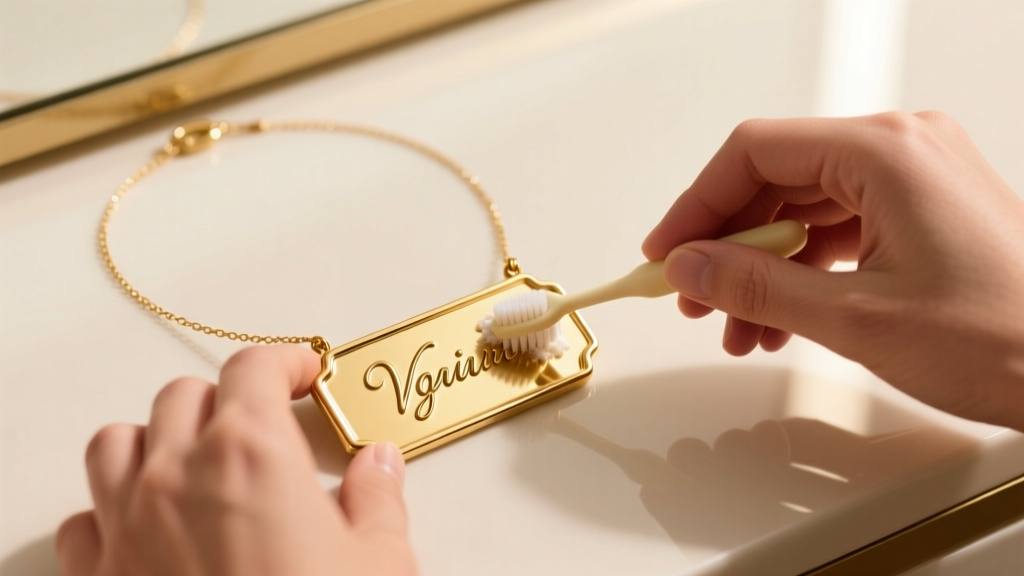
- Target the Lettering: Remove the necklace and gently brush the cursive letters and the backbar using the baby toothbrush. Use light, circular motions. Pay special attention to the underside of the nameplate, where it rests against the collarbone and accumulates the most sweat.
- Clean the Clasp: Use the cotton swab dipped in the soapy solution to clean inside the spring-ring or lobster clasp mechanism, which often gets stuck due to soap scum buildup.
- Rinse and Dry: Rinse the necklace under a gentle stream of lukewarm distilled water. Immediately pat it completely dry with the microfiber cloth. Ensure no moisture remains in the chain links before storing.
The Dangers of Ultrasonic Cleaners
A common mistake in jewelry maintenance is the use of ultrasonic cleaners. While excellent for solid gold and diamonds, ultrasonic cleaners use high-frequency sound waves to create microscopic cavitation bubbles in the cleaning fluid. For a custom nameplate necklace, these intense vibrations can easily snap the delicate solder joints connecting the script letters to the backbar. Furthermore, if your piece is gold-plated rather than solid gold, the cavitation process can literally peel the microscopic gold layer right off the base metal, ruining the piece instantly.
Troubleshooting Common Nameplate Necklace Issues
Even with meticulous care, daily wear can lead to specific mechanical and cosmetic issues. Below is a diagnostic framework for addressing the most common problems associated with delicate chain and nameplate jewelry.
| Issue | Root Cause | Actionable Solution |
|---|---|---|
| Green discoloration on skin | Plating wear exposing copper/brass base metal to sweat acids. | Remove plating residue with soap. Apply a micro-coating of clear nail polish to the back of the nameplate to create a temporary barrier. |
| Chain tangling and knotting | Friction from clothing and movement causing delicate cable links to weave together. | Lay the necklace on a flat surface. Use two straight sewing needles to gently pick apart the knot from the center outward. Apply a drop of baby oil to lubricate the links. |
| Stiff or stuck clasp | Dried lotion, dead skin, or dust trapped inside the spring mechanism. | Use a cotton swab dipped in rubbing alcohol to clean only the clasp mechanism (avoid the chain), then apply a microscopic drop of mineral oil to the hinge. |
| Dull, cloudy gold finish | Microscopic film of cosmetics, hard water spots, or body oils. | Perform the 5-minute distilled water and Dawn soap soak, followed by a gentle buff with a dry microfiber cloth. |
Strategic Storage and Prevention
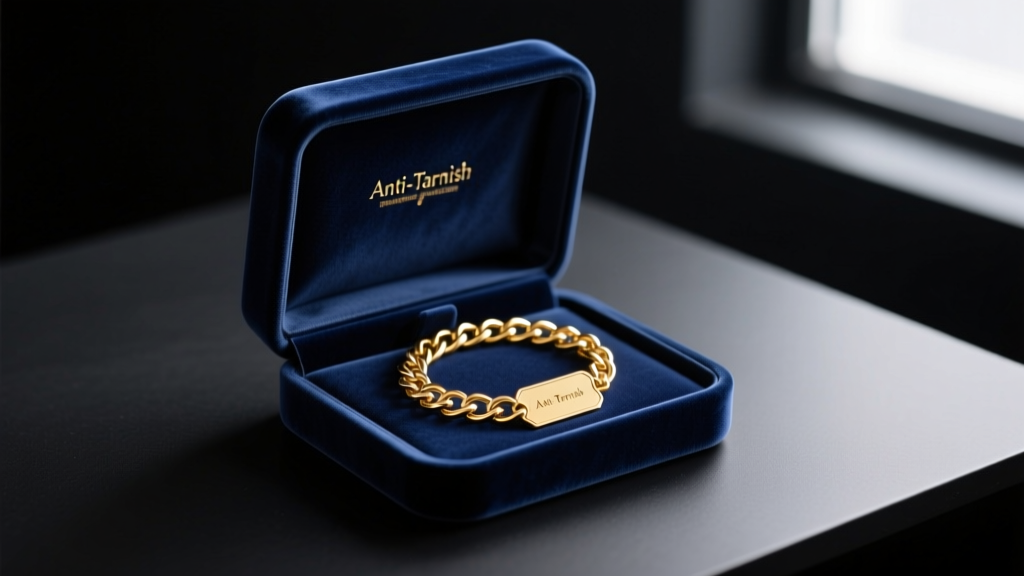
Proper storage is just as critical as the cleaning process. Gold-plated and vermeil nameplate necklaces should never be tossed into a communal jewelry box where they can rub against harder gemstones or other metals, causing friction wear. Store your Kat Stickler necklace in an individual, airtight polyethylene ziplock bag or a dedicated anti-tarnish velvet pouch. Include a small silica gel packet and a 3M anti-tarnish strip inside the storage container to absorb ambient moisture and neutralize sulfur gases in the air that cause base metals to oxidize. Always put your necklace on after applying perfumes, lotions, and hairspray, and take it off before showering, swimming, or exercising to maximize the lifespan of the gold finish.
Conclusion
Maintaining the brilliant shine and structural integrity of your Kat Stickler necklace requires a shift from passive wearing to active maintenance. By understanding the limitations of gold plating, avoiding destructive cleaning methods like ultrasonic machines, and implementing a gentle, pH-neutral washing routine, you can ensure your custom nameplate remains a pristine statement piece for years to come. Consistent, careful storage will ultimately dictate the longevity of your jewelry, protecting both the sentimental value and the physical craftsmanship of the piece.


