Fabric Choker Necklace Material Guide: Velvet, Silk, and Lace Compared
Discover the best fabric choker necklace materials. We compare velvet, silk, lace, and cotton for durability, skin sensitivity, and styling.

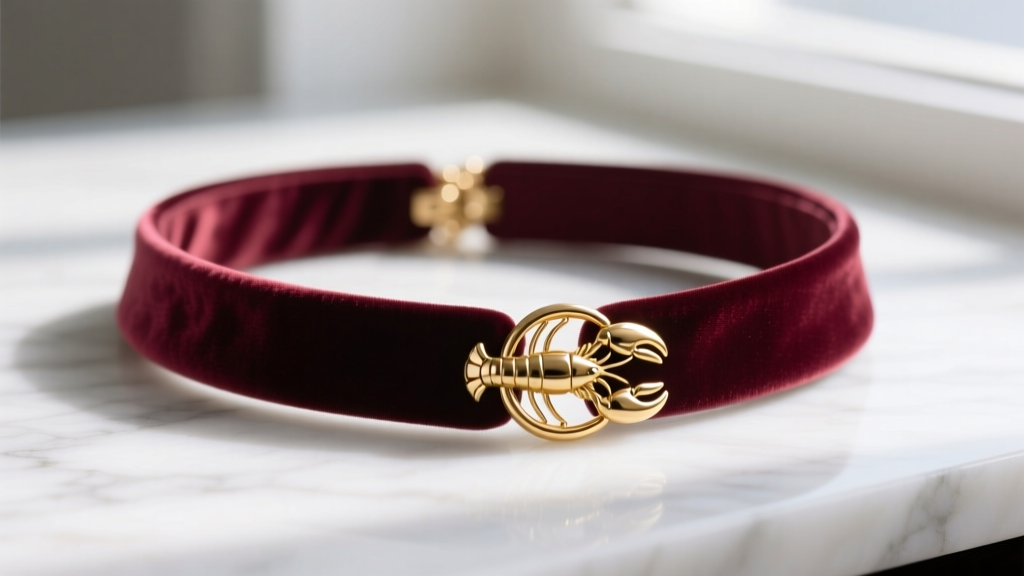
The Anatomy of a Fabric Choker Necklace
A fabric choker necklace bridges the gap between fine jewelry and apparel, relying on textile physics rather than metallurgical rigidity to achieve its silhouette. Unlike chain or wire chokers, a fabric choker must balance tensile strength, drape, and skin biocompatibility. The anatomy of a high-quality fabric choker consists of three critical zones: the primary textile (which dictates drape and visual weight), the stabilizer backing (which prevents warping and supports hardware), and the terminal findings (which transfer tension from the fabric to the metal clasp).
Choosing the right fabric choker necklace requires understanding how different weaves and fibers react to the unique microclimate of the human neck. The neck experiences high thermal fluctuations, sebum production, and friction. A material that performs beautifully on a dress form may degrade, stain, or cause contact dermatitis when worn against the jugular notch for eight hours. Below, we deconstruct the most prevalent textiles used in choker manufacturing, analyzing their specific weights, failure modes, and ideal use cases.
Material Deep-Dive: Velvet, Silk, Lace, and Blends
Velvet: The Heavyweight Drape
Velvet is defined by its pile—a dense, upright layer of yarn that gives the fabric its signature light-absorbing depth. In the context of a fabric choker necklace, the base material of the velvet dictates its longevity and comfort.
- Silk Velvet (14-16 momme): Woven on a silk base with a rayon or silk pile, this is the pinnacle of luxury. It drapes fluidly and breathes well. However, the pile is highly susceptible to crushing. If stored flat rather than hung or rolled, silk velvet will develop permanent pressure marks.
- Cotton Velvet (200-250 GSM): Heavier and more matte than silk, cotton velvet offers excellent structural integrity. It is less prone to pile crushing but absorbs moisture and sebum rapidly, requiring frequent spot cleaning to prevent collar-ring staining.
- Polyester Velvet (90-120 GSM): The most common commercial option. While highly durable and resistant to crushing, poly velvet traps heat. For individuals prone to contact dermatitis or heat rash, synthetic velvet worn tightly against the pulse points can cause irritation.
Silk and Satin: The Delicate Luxe
Satin is a weave structure, not a raw fiber, characterized by long floats of yarn that create a high-gloss surface. When crafting a silk charmeuse fabric choker necklace (typically 19 momme weight), the primary vulnerability is the edge. Satin weaves have a notoriously high fray rate because the long yarn floats are easily snagged by skin texture or jewelry clasps.
To mitigate this, premium silk chokers utilize a technique called "bagging out," where two layers of charmeuse are sewn right-sides together, inverted, and finished with a blind stitch, hiding all raw edges inside the tube. This not only prevents fraying but gives the choker a supple, three-dimensional roll that sits flush against the clavicle without buckling.
Lace and Crochet: The Textured Statement
Lace introduces negative space and intricate geometry to the choker silhouette, but it suffers from low tensile strength. There are two primary categories used in neckwear:
- Guipure Lace: Also known as Venetian lace, this is a heavy, bobbin lace where the motifs are connected by solid bars rather than a net background. It possesses high structural rigidity and can often support lightweight metal findings without a backing.
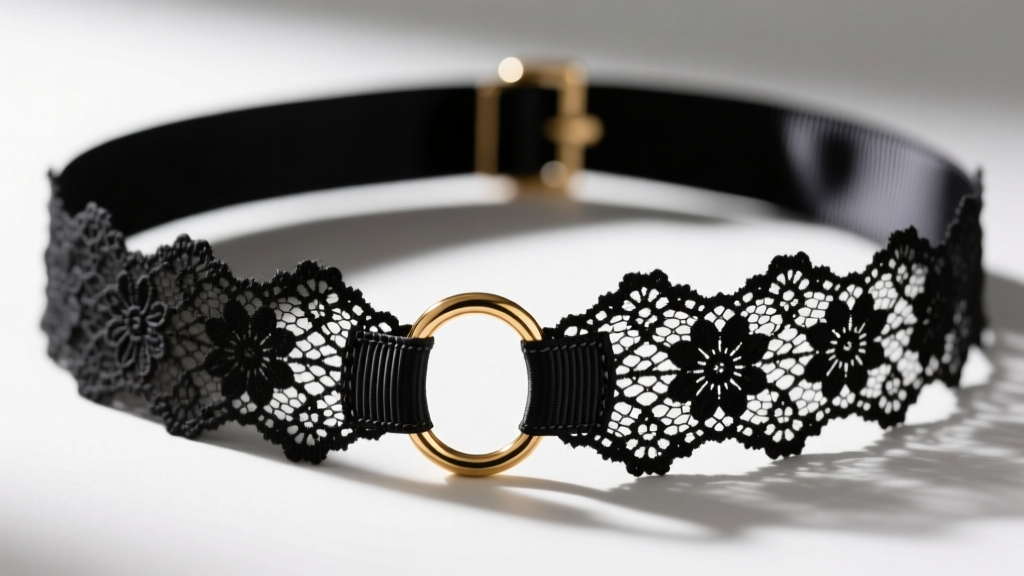
- Chantilly Lace: A delicate, fine net lace with floral embroidery. Chantilly has almost zero load-bearing capacity. If a metal clasp is pulled, the netting will tear instantly. Chantilly fabric choker necklaces must be backed with a 3mm to 5mm grosgrain ribbon to distribute the tension of the clasp across the entire circumference of the neck.
Elastic and Spandex Blends: The Utility Fit
Modern athleisure and streetwear often utilize elastane-blend fabrics (such as nylon-spandex jerseys) for fabric choker necklaces. These materials offer a 4-way stretch, eliminating the need for precise sizing or extender chains. However, the failure mode of elasticized chokers is elastane degradation. Exposure to UV light, chlorine, and the natural acids in human sweat will cause the elastane fibers to become brittle and snap over 12 to 18 months of regular wear, resulting in a permanently stretched, wavy edge.
Comparative Matrix: Durability, Care, and Skin Sensitivity
When selecting a fabric choker necklace, cross-reference your lifestyle needs with the material properties outlined in the matrix below. Data is based on standard 1-inch width choker constructions.
| Material | Weight / Density | Tensile Strength | Skin Reactivity | Primary Failure Mode | Care Protocol |
|---|---|---|---|---|---|
| Silk Velvet | 14-16 momme | Medium | Hypoallergenic | Pile crushing / Water spotting | Dry clean only |
| Cotton Velvet | 200-250 GSM | High | Low (Breathable) | Sebum staining at collarbone | Hand wash cold, lay flat |
| Silk Charmeuse | 19-22 momme | Low-Medium | Hypoallergenic | Edge fraying / Snagging | Spot clean with silk detergent |
| Guipure Lace | 150-180 GSM | High | Variable (Dye dependent) | Dye transfer to skin/clothing | Steam lightly, avoid immersion |
| Spandex Blend | 180-220 GSM | High (Elastic) | Medium (Traps heat) | Elastane degradation / Waviness | Machine wash cold, air dry |
Hardware Integration: How Fabric Meets Metal
The most critical point of failure in any fabric choker necklace is the terminal—the junction where the textile meets the metal clasp. Standard jewelry-making techniques used for wire and beading cord are catastrophic when applied to fabric.
"Never use a standard cylindrical crimp bead on a raw fabric edge. The sheer force of the crimping pliers will sever the warp and weft threads, guaranteeing that the clasp will detach under the first ounce of tension."
According to manufacturing standards outlined by jewelry findings specialists at Rio Grande, securing fabric requires distributing mechanical stress over a wider surface area. There are two professional methods for terminating a fabric choker:
1. The Fold-Over Crimp (Ribbon End)
For flat fabrics like velvet or ribbon, a fold-over crimp (often called a ribbon end or cord end) is ideal. These findings feature a flat base and a hinged top plate with micro-teeth. The fabric is inserted, and the plate is clamped down. Crucial E-E-A-T Tip: Always apply a micro-drop of cyanoacrylate (jewelry adhesive) to the inside of the fold-over crimp before clamping. The glue wicks into the fabric fibers, creating a rigid composite that prevents the metal teeth from slicing through the textile over time.
2. The Sew-In O-Ring with Bar Tack
For delicate fabrics like silk charmeuse or Chantilly lace, hardware must be sewn, not crimped. A small, soldered stainless steel or rhodium-plated O-ring is placed at the terminus. The fabric is folded over the ring and secured using a satin stitch or a bartack (a dense, zigzag stitch pattern). This method ensures that the pulling force of the lobster clasp is distributed across dozens of individual thread anchors rather than a single compression point.
Metallurgical Considerations: Preventing Fabric Staining
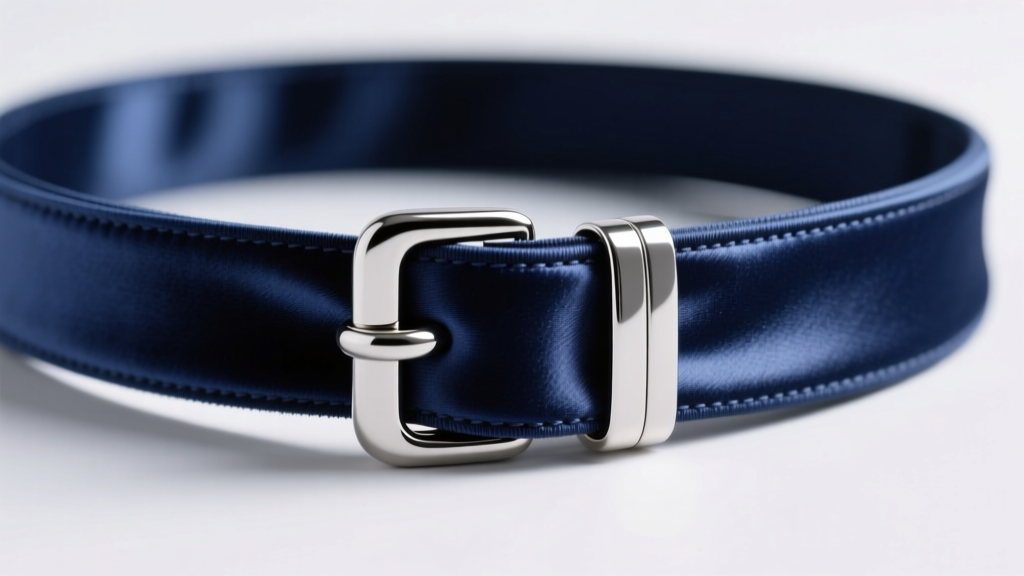
The metal you choose for your choker's hardware directly impacts the longevity of the fabric. Raw brass and copper findings are highly reactive. When exposed to the humidity and slight acidity of the neck, these base metals oxidize rapidly, creating a verdigris or dark tarnish that will permanently stain porous fabrics like cotton, silk, and lace.
To protect your fabric choker necklace, mandate the use of inert or heavily plated findings. Surgical-grade stainless steel (316L), titanium, or sterling silver plated with a thick layer of rhodium are the only metals safe for direct, prolonged contact with moisture-wicking textiles. If you must use brass for aesthetic reasons, ensure it is sealed with a micro-thin layer of clear electrophoretic lacquer.
Sizing and Tension: The 1.5-Inch Rule
Unlike a chain necklace that drapes loosely, a choker sits directly over the carotid artery and jugular vein, making precise sizing a matter of physical comfort. The human neck fluctuates in circumference by up to 0.5 inches throughout the day due to hydration, sodium intake, and thermal expansion.
Because woven fabrics (velvet, silk, lace) possess zero natural elasticity, a rigidly sized fabric choker will feel suffocating by late afternoon. The industry standard for non-stretch fabric choker necklaces is the 1.5-Inch Rule: The base fabric length should be exactly the wearer's snug neck measurement, terminating in a mandatory 1.5-inch extender chain. This micro-chain allows the wearer to micro-adjust the tension based on their collar height, posture, and daily swelling, ensuring the choker remains secure without restricting the airway.
Maintenance and Longevity Framework
Cleaning a fabric choker necklace requires an understanding of textile conservation. Submerging a structured choker in water can dissolve the internal stabilizers, ruin the pile of a velvet, or cause water-soluble dyes in lace to bleed. The Metropolitan Museum of Art's Textile Conservation guidelines emphasize that historic and delicate textiles should rarely be subjected to aggressive aqueous cleaning.
For routine maintenance of your fabric neckwear:
- Surface Dust & Sebum: Use a soft-bristled makeup brush to gently sweep the surface of velvet and lace. This lifts trapped dead skin cells and cosmetics without disturbing the fiber alignment.
- Spot Cleaning: For localized stains on silk or cotton, use a cotton swab dipped in distilled water mixed with a single drop of pH-neutral textile detergent. Dab—never rub—the stain, then blot immediately with a dry microfiber cloth to prevent water rings.
- Storage: Never hang a heavy velvet or beaded lace choker by its clasp, as the sustained gravity will stretch the bias of the fabric. Store them flat in a breathable cotton pouch, layered with acid-free tissue paper to maintain the fabric's structural memory and prevent the metal clasp from embossing into the textile.
By understanding the specific GSM, weave structures, and hardware requirements of these textiles, you can select or design a fabric choker necklace that offers both striking visual impact and enduring structural integrity.


