Mastering the Necklace Over Turtleneck: A Beginner Style Guide
Learn how to style a necklace over a turtleneck with our beginner guide. Discover ideal chain lengths, snag-free metals, and pendant tips.


The Hidden Physics of Knitwear and Jewelry
Wearing a necklace over a turtleneck is a quintessential winter styling move, yet it remains one of the most common stumbling blocks for jewelry beginners. The challenge is not purely aesthetic; it is rooted in the physical interaction between metal and textile. Knitwear fabrics like merino wool, cashmere, and cotton blends possess high-friction surfaces. When paired with the wrong chain link, these textiles act like microscopic hooks, catching on metal seams and causing severe snagging or even structural damage to your jewelry.
Furthermore, winter environments are notorious for generating static electricity. A lightweight chain resting on a synthetic-blend turtleneck will quickly succumb to static cling, twisting around itself and tangling into frustrating knots. To successfully pull off this look, you must approach your jewelry selection with an understanding of weight, gauge, and link geometry. As noted by the experts at Vogue, mastering winter layering requires treating your jewelry as an architectural element that must anchor itself against heavy fabrics.
Choosing the Right Chain: The Snag-Factor Matrix
The most critical decision you will make is selecting the chain type. Not all links are created equal when rubbing against wool fibers. Chains with flat, interlocking surfaces or exposed seams are prime candidates for snagging. Conversely, chains with smooth, rounded, or tightly interlocking geometric links will glide over knitwear without catching. According to JCK Online, proper chain selection is the first line of defense in jewelry maintenance and wearability.
| Chain Type | Snag Risk | Best Use Case on Knitwear |
|---|---|---|
| Herringbone | Very High | Avoid entirely. The flat, scale-like links will pull wool fibers and easily kink. |
| Snake | High | Avoid. The tight, smooth surface easily catches on microscopic fabric pills. |
| Box | Low | Excellent. The smooth, square, interlocking links slide cleanly over cashmere. |
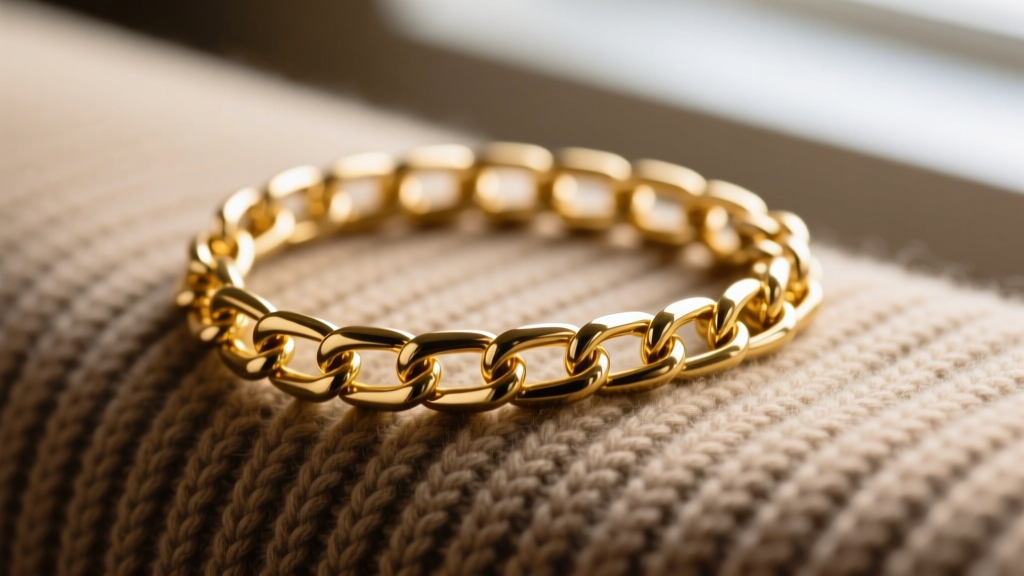
| Curb / Cuban | Low | Ideal for bold looks. The thick, flattened links are too heavy and smooth to snag. |
| Rope | Medium | Good for thicker gauges (3mm+). Thin rope chains can trap fine fuzz. |
For beginners, a 3mm to 5mm Box or Curb chain crafted from 14k solid gold or 316L surgical stainless steel offers the perfect balance of durability, smoothness, and visual weight. Avoid gold-plated brass chains, as the friction from the turtleneck collar can accelerate the wear of the thin gold vermeil layer, leading to premature tarnishing.
Finding the Perfect Length and Drop
The collar of a turtleneck adds significant visual and physical bulk to the neck. This alters the way standard necklace lengths drape. A chain that sits perfectly on a bare collarbone will look choked and awkward when placed over a thick ribbed collar.
The 24-to-30 Inch Sweet Spot
When styling a necklace over a turtleneck, you generally want to bypass the Choker (14-16 inches) and Princess (18 inches) lengths. Instead, aim for the Matinee (20-24 inches) or Opera (28-36 inches) lengths. A 24-inch chain will clear the bulk of the collar and rest elegantly on the upper chest, providing a clean canvas for a medium-sized pendant. A 28-to-30-inch Opera length creates a deep, elongating 'V' illusion that breaks up the blocky silhouette of a winter sweater, drawing the eye downward and slimming the torso.
When to Break the Rules
The only exception to the length rule is if you are wearing a rigid, structured metal collar or a heavy, tight-fitting choker (such as a solid 12mm gold torque). Because these pieces do not drape or flex, they sit cleanly above the turtleneck's fold without tangling in the fabric. However, these are advanced statement pieces rather than beginner-friendly everyday options.
Pendant Weight and Fabric Drape
Gravity is your best friend when wearing jewelry over high-friction fabrics. If you choose a lightweight cable chain (weighing under 5 grams), it will float on the surface of the turtleneck, shifting with every movement and inevitably tangling. To combat this, you need structural weight.
The Plumb Bob Principle: Always pair a turtleneck chain with a pendant that weighs at least 7 to 15 grams. The pendant acts as an anchor, pulling the chain taut and forcing it to lay flat against the contours of your body, minimizing surface friction and static-induced twisting.
Consider a solid geometric brass or sterling silver pendant. The Gemological Institute of America (GIA) emphasizes that understanding the physical properties and weight of your metals is crucial for long-term jewelry care, especially when subjected to the friction of heavy winter garments. A heavier pendant ensures the chain remains in place, maintaining a polished, intentional look throughout the day.

Color Theory: Metal Tones Against Winter Fabrics
Because turtlenecks cover the majority of your torso, the contrast between your metal and the fabric is highly pronounced. Use this to your advantage by applying basic color theory to your jewelry selection:
- Yellow Gold on Navy, Black, or Emerald: The warmth of 14k or 18k yellow gold pops brilliantly against deep, cool-toned winter fabrics, creating a luxurious, high-contrast focal point.
- Sterling Silver / White Gold on Cream, Camel, or Oatmeal: Cool metals provide a crisp, modern edge to warm, neutral earth tones, preventing the outfit from looking washed out.
- Rose Gold on Charcoal or Slate Grey: The subtle pink undertones of rose gold harmonize beautifully with the cool, muted tones of grey wool, offering a soft, romantic aesthetic.
- Mixed Metals on Multi-Colored Fair Isle: If your turtleneck features a busy pattern, opt for a two-tone chain (like a silver chain with gold clasps) to bridge the color gap without clashing.
Troubleshooting Static and Friction
Even with the perfect chain and length, winter static can ruin your styling. If you find your necklace clinging to your chest or twisting, the issue is likely static buildup in the knitwear. To resolve this, lightly mist your turtleneck with a mixture of water and a few drops of fabric softener before dressing, or rub a dryer sheet lightly over the chest area of the sweater. This neutralizes the electrical charge, allowing your heavy box or curb chain to drape naturally.
Additionally, always inspect your chain links before the winter season begins. Run the chain through your fingers; if you feel any microscopic burrs, bent links, or rough soldering joints, take it to a jeweler for a quick polish and repair. A single rough edge on a 24-inch chain can destroy a delicate cashmere turtleneck in a matter of hours. By respecting the physics of knitwear and choosing your metals with intention, you can effortlessly elevate your winter wardrobe with confidence and style.


