How to Use a Necklace Magnifying Glass to Authenticate Pendants
Learn how to use a necklace magnifying glass to inspect hallmarks, verify chain integrity, and authenticate pendant gemstones like a pro.

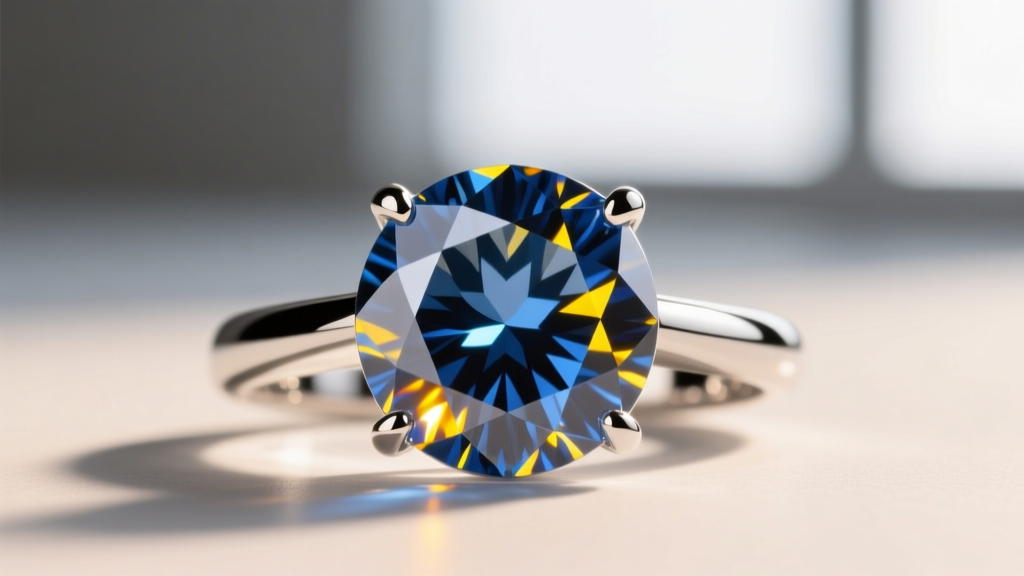
When evaluating fine jewelry, the naked eye can only tell you so much. Whether you are a seasoned collector, a vintage reseller, or simply someone looking to verify the authenticity of a cherished heirloom, a necklace magnifying glass—more accurately known in the trade as a jeweler's loupe—is your most critical tool. While the term sometimes refers to functional, wearable magnifying pendants, in the context of gemology and appraisal, it represents the essential optical instrument used to inspect chains, clasps, and pendants at a microscopic level.
In this comprehensive guide, we will break down exactly how to choose the right loupe, inspect metal hallmarks, evaluate chain integrity, and authenticate pendant gemstones with professional precision.
Why Every Collector Needs a Necklace Magnifying Glass
The human eye is remarkably adept at judging color and general symmetry, but it fails at detecting micro-wear, synthetic inclusions, and forged stamps. According to the Federal Trade Commission (FTC) Jewelry Guides, metal purity and gemstone disclosures must be accurate, but the secondary market is rife with mislabeled pieces. A 10x magnification reveals the truth hidden in the microscopic crevices of a pendant's bail or the interior of a spring-ring clasp. In 2026, with the rise of advanced lab-grown simulants and micro-laser hallmarking, optical inspection is no longer optional; it is mandatory for confident purchasing.
Choosing the Right Loupe: Magnification and Lens Types
Not all magnifying glasses are created equal. A cheap plastic magnifier will introduce spherical aberration (blurring at the edges) and chromatic aberration (color fringing), leading to false conclusions about a gemstone's clarity or a metal's stamp. For necklace inspection, you must invest in a Hastings Triplet Loupe. A triplet contains three cemented lenses that correct both edge distortion and color fringing, providing a perfectly flat, true-color field of view.
| Magnification | Lens Type | Best Use Case for Necklaces | Depth of Field |
|---|---|---|---|
| 10x | Triplet | Standard hallmark inspection, gemstone grading, FTC compliance checks. | High (Easy to focus) |
| 20x | Doublet/Triplet | Inspecting micro-pave pendant settings, checking for laser-drilled diamonds. | Medium (Requires steady hand) |
| 30x | Single/Doublet | Deep inclusion mapping, inspecting chain link solder joints. | Low (Very difficult to focus) |
The Gemological Institute of America (GIA) strictly mandates the 10x triplet loupe as the standard for diamond and gemstone grading. Stick to a 10x triplet with a 18mm to 21mm lens diameter for the most versatile necklace inspection experience.
Step-by-Step: Inspecting Necklace Hallmarks and Maker's Marks
Hallmarks are the DNA of a necklace. They indicate metal purity, origin, and the manufacturing house. However, counterfeiters frequently cast fake stamps into mold bases, resulting in blurred, shallow, or misaligned numbers.
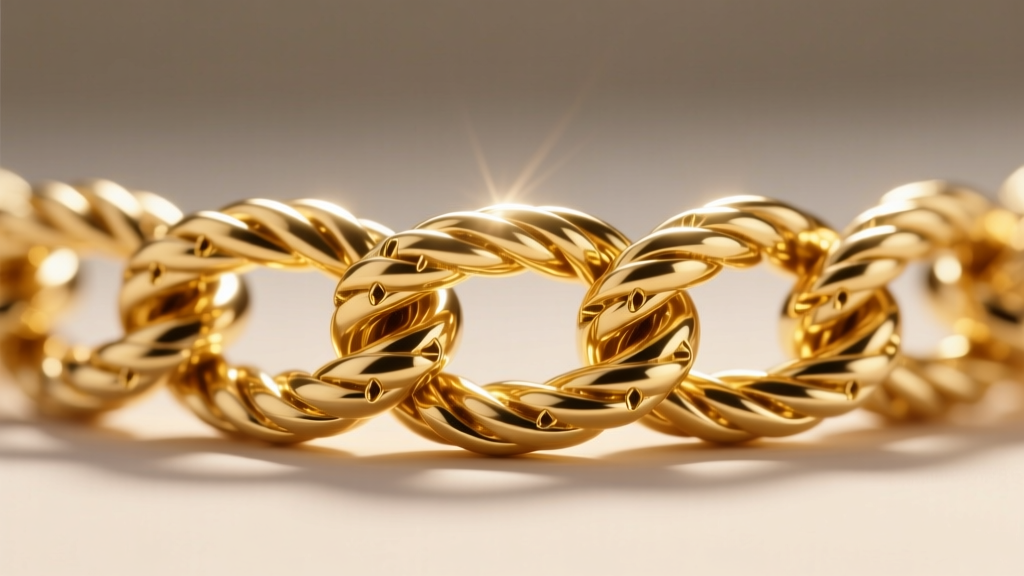
Where to Look on a Necklace
- The Jump Ring: The small oval ring connecting the chain to the clasp is the most common location for a '925' or '750' stamp.
- The Clasp Body: Lobster clasps often feature stamps on the flat side or the lever.
- The Pendant Bail: The loop connecting the pendant to the chain. Look inside the loop where it is hidden from casual view.
- The Pendant Edge: Vintage pieces, especially European antiques, may feature stamped maker's marks or assay marks (like the French Eagle Head) on the outer rim or the backplate.
Authentic vs. Cast Stamps
When viewing through your 10x loupe, an authentic, post-cast stamped hallmark will appear crisp, with sharp 90-degree interior angles and a slightly raised border where the metal was displaced by the steel punch. Conversely, a cast fake stamp will look 'mushy' with rounded interior corners and a pitted texture inside the numbers, caused by the casting mold's grain.
Evaluating Chain Integrity and Clasp Mechanisms
A necklace is only as strong as its weakest link. Using your necklace magnifying glass, you can predict structural failures before they result in a lost pendant.
Pro Tip: Always inspect the 'Puka' (the hole) of the jump ring. If the wire is thinning or the gap is slightly open, the chain is suffering from friction wear against the clasp and requires immediate replacement.
Common Chain Failure Points
- Spring Ring Clasps: Check the tiny internal spring mechanism. If the lever doesn't snap back flush against the ring, the internal tension spring is fatigued.
- Soldered vs. Laser-Welded Links: Under 10x magnification, traditional soldered links will show a slight color variation where the solder flows. Modern 2026 laser-welded chains will show a tiny, precise, dark pinpoint of fused metal without surrounding heat discoloration.
- Hollow Chains: Look closely at the links of lightweight tubular chains (like herringbone or certain rope chains). If you see dents or micro-cracks along the seams, the hollow interior is compromised, and the chain cannot be easily repaired.
Authenticating Pendant Gemstones and Foil Backing
The pendant is often the most valuable component of the necklace. Your magnifying glass is the first line of defense against glass simulants, doublets, and foil-backed stones.
Spotting Foil-Backed and Closed-Back Settings
In antique and vintage necklaces, gemstones were often set in 'closed-back' bezels. While this was historically done to protect the stone, it was also used to hide foil backing—a thin sheet of colored metal placed behind a clear stone (or glass) to enhance its color and brilliance. Tilt the pendant under a bright light and look through the side profile of the stone. If you see a distinct, unnatural metallic reflection or a separation line between the stone's pavilion and a backing layer, you are likely looking at a foil-backed piece or a paste glass doublet.
Detecting Moissanite and Zircon Doubling
If you are inspecting a diamond pendant, look closely at the facet junctions (the lines where the flat polished surfaces meet). Moissanite and Zircon are doubly refractive. Under a 10x or 20x loupe, if you look through the table (top facet) down into the stone, the back facet lines will appear 'doubled' or ghosted. Diamonds are singly refractive and will always show crisp, single lines.
The Fashion Angle: Wearable Magnifying Glass Pendants
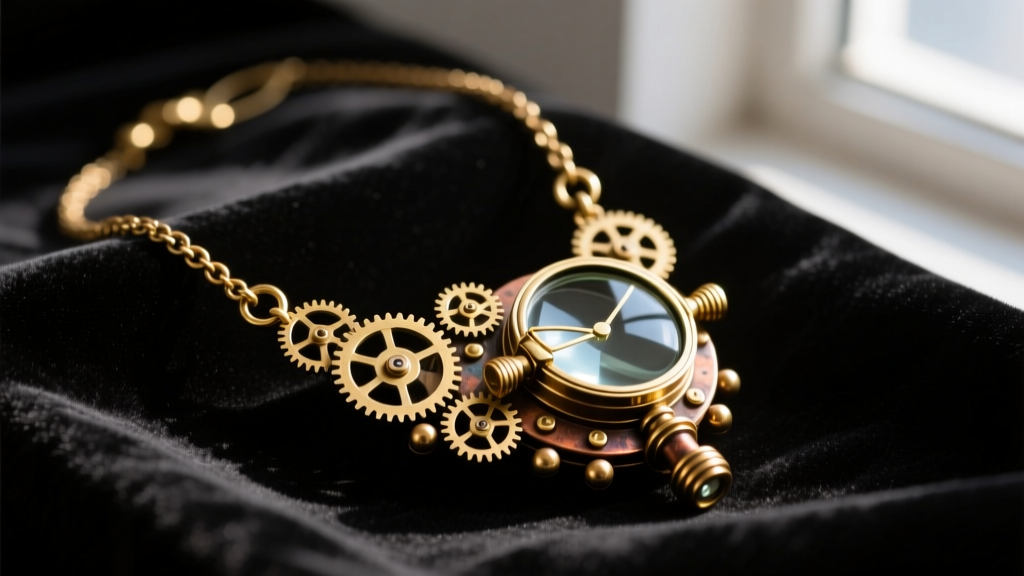
Beyond appraisal tools, the literal 'necklace magnifying glass' has carved out a unique niche in functional fashion. Steampunk, Victorian-revival, and utility-core aesthetics frequently feature wearable loupes. These pendants typically feature a 2x to 4x magnification glass set in brass, copper, or oxidized silver, often attached to a heavy rolo or curb chain.
When shopping for a functional magnifying pendant necklace, pay attention to the focal length. A high-quality wearable loupe will have a focal length of roughly 4 to 8 inches, allowing the wearer to flip the pendant up to their eye and actually read small print or inspect a menu in dim lighting. Ensure the lens is made of optical glass rather than acrylic, as acrylic scratches easily when resting against other jewelry or clothing. Look for pendants that feature a protective metal shroud or a flip-up cover to keep the lens pristine when not in use.
Final Thoughts on Optical Inspection
Mastering the use of a necklace magnifying glass transforms you from a passive buyer into an informed collector. By systematically checking hallmarks for crispness, evaluating chain links for friction wear, and scanning pendant stones for doubling and foil, you protect your investments and uncover the hidden histories woven into every piece of fine jewelry. Always carry your 10x triplet loupe, ensure you have a bright, directional light source, and never take a metal stamp at face value without optical verification.


