How to Fix a 20 Inch Length Necklace Fit and Tangling Issues
Troubleshoot your 20 inch length necklace fit, tangling, and neckline clashes. Expert solutions for chain weaves, clasps, and adjustments.


The 20 inch length necklace occupies a notoriously tricky real estate on the human body. Often classified as a "princess" length, it sits right on the border between a traditional collarbone drape and a deeper matinee drop. While it is one of the most popular sizes for pendant necklaces, it is also the most frequent culprit for fit complaints, persistent tangling, and frustrating neckline clashes. If your favorite mid-length chain is constantly twisting, catching on your hair, or falling awkwardly against your clothing, the issue is rarely just bad luck. It usually comes down to chain weave physics, hardware mismatching, or a misunderstanding of your own anatomical proportions.
In this troubleshooting guide, we break down the exact mechanics of the 20 inch length necklace, diagnose the most common wearability failures, and provide actionable, jeweler-approved solutions to fix them.
The Anatomy of a 20 Inch Length Necklace Drop
Before troubleshooting the fit, you must understand how a 20-inch chain interacts with human anatomy. The average adult female neck circumference ranges from 13 to 14.5 inches, while the average adult male neck measures between 15 and 17 inches. When you fasten a 20 inch length necklace on a 14-inch neck, you are left with 6 inches of excess chain. Because the chain must travel around the curve of the neck and down the slope of the shoulders, the actual visible vertical drop from the base of the throat is usually only 2.5 to 3.5 inches.
Troubleshooting the "Choking" Sensation: If your 20 inch length necklace feels too tight, you likely have a broader neck circumference or sloping shoulders that eat up the chain's length. For individuals with a neck circumference over 16 inches, a 20-inch chain will sit like a choker, resting high on the collarbone and restricting movement. The fix is to size up to a 22-inch or 24-inch matinee length, or install a permanent 2-inch extender chain.
Troubleshooting the "Swinging" Effect: Conversely, on a very petite frame (neck circumference under 13 inches), a 20-inch chain drops significantly lower, often hitting the upper sternum. This creates a pendulum effect where the pendant swings wildly during movement, striking the chest and causing the chain to twist.
Troubleshooting Neckline Clashes at 20 Inches
The 20-inch drop is infamous for clashing with specific garment necklines. Because it terminates right in the middle of the upper chest, it can visually bisect a neckline or get swallowed by fabric folds.
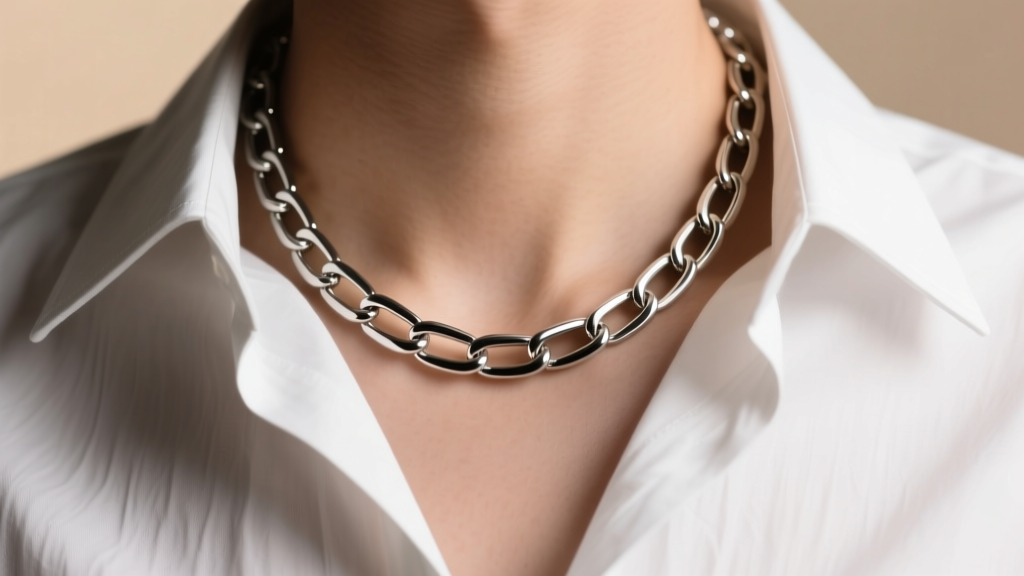
| Garment Neckline | 20-Inch Drop Interaction | Troubleshooting Fix |
|---|---|---|
| Crew Neck T-Shirt | Chain rests directly on the fabric seam, looking cluttered and causing friction. | Switch to an 18-inch choker/princess or layer with a 14-inch chain to avoid the seam. |
| V-Neck Top | Ideal. The 20-inch pendant sits perfectly in the negative space of the V. | Ensure the pendant bail is small enough not to visually crowd the apex of the V. |
| Button-Down Collar | Chain gets caught under the collar points or rubs against the top button. | Wear the chain inside the shirt against the skin, or unbutton the top two buttons. |
| Off-the-Shoulder | Chain floats awkwardly over bare skin without a framing garment. | Use a thicker, standalone 20 inch length necklace (3mm+ gauge) rather than a delicate pendant chain. |
Solving the 20-Inch Chain Tangling Problem
Why does a 20 inch length necklace tangle more frequently than a 16-inch or 24-inch chain? The answer lies in friction zones. A 20-inch chain terminates exactly where long hair brushes the shoulders, where scarves are tied, and where the edges of open cardigans rub together. This constant, low-grade friction forces the links to rotate and interlock.
The Chain Weave Factor
Not all chains are created equal when it comes to knotting. If your 20-inch necklace requires untangling every time you take it out of the box, check the weave:
- Snake and Herringbone Chains (Avoid): These flat, fluid weaves are beautiful but structurally prone to kinking. At 20 inches, the swing radius allows the flat links to fold over themselves. Once a herringbone chain kinks, the metal is permanently stressed and weakens.
- Cable and Curb Chains (Embrace): The symmetrical, interlocking oval links of a cable chain (ideally 1.5mm to 2.0mm in gauge) naturally resist twisting. Curb chains lay flat and are virtually tangle-proof at the 20-inch length.
- Rope Chains (Proceed with Caution): While beautiful, the spiraled links of a rope chain can easily catch on individual strands of hair or loose threads from knit sweaters at the mid-chest drop zone.
The Weight Distribution Hack
If your lightweight 20 inch length necklace (under 3 grams) keeps flipping backward so the clasp rests on your collarbone, it lacks a center of gravity. According to jewelry fabrication principles, a mid-length chain requires a pendant or focal bead that weighs at least 30% to 50% of the total chain weight to act as an anchor. If you prefer a bare chain, upgrade to a heavier gauge—such as a 3.0mm 316L stainless steel curb chain—which possesses enough intrinsic mass to stay put.
Clasp and Hardware Failures Specific to Mid-Length Chains
The hardware on a necklace takes the brunt of the mechanical stress. On a 20 inch length necklace, the pendulum swing generates lateral torque on the clasp and the adjoining jump rings. Over time, this leads to specific failure modes.
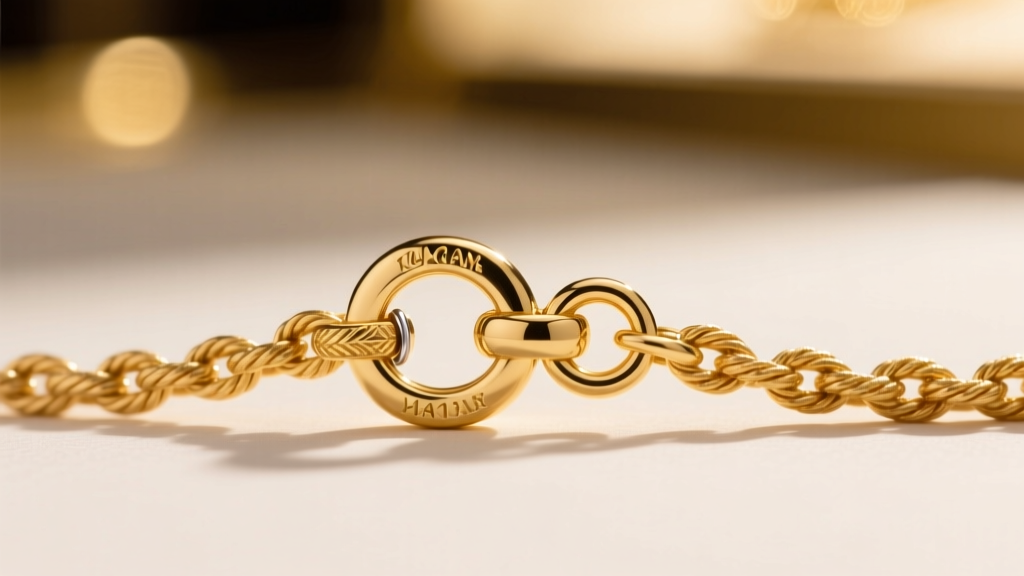
Spring Ring vs. Lobster Clasp
Many mass-produced 20-inch chains come equipped with tiny 4mm spring ring clasps. These are notoriously difficult to operate with one hand and feature an internal tension spring that fatigues quickly. When the spring weakens, the clasp pops open mid-wear, leading to lost jewelry. The Fix: Take your necklace to a local jeweler and have them swap the spring ring for a 5mm or 7mm lobster clasp. Lobster clasps feature a more robust internal mechanism and a heavier trigger, making them vastly superior for the 20-inch swing radius. Expect to pay between $15 and $35 for this swap, depending on whether you choose 925 sterling silver or solid 14k gold.
The Open Jump Ring Vulnerability
The jump ring connecting the clasp to the chain is often the weakest link. If it is an "open" jump ring (meaning it has a slit where the wire was cut), the lateral swinging of a 20-inch chain will eventually pry it open. Always inspect your jump ring. If you see a gap, have a jeweler solder it shut. As recommended by the Jewelers of America, regular inspection of soldered rings and clasps is a critical part of jewelry maintenance to prevent catastrophic loss.
Adjustment Hacks: When 20 Inches is Just Slightly Off
Sometimes, a 20 inch length necklace is perfect for a V-neck but half an inch too long for a specific crew-neck sweater. Rather than buying a duplicate chain in 18 inches, utilize these professional adjustment techniques:
- Silicone Necklace Adjusters: These tiny, transparent silicone beads slide onto the end of the chain. You loop the chain through the bead, pull it to your desired length (e.g., choking the 20-inch chain up to 18.5 inches), and the silicone grips the metal to hold it in place. They cost under $10 for a multi-pack and are completely invisible against the skin.
- Chain Extenders: A 2-inch extender chain (preferably 14k gold-filled to match your existing hardware) can be added to the clasp side. This not only allows you to drop the necklace to 22 inches for high-neck blouses but also provides a satisfying visual "tail" that hangs down the back of the neck.
- The Safety Pin Hack (Emergency): If you are on the go and your 20-inch chain is getting caught in a scarf, use a small, gold-toned safety pin. Pinch a small fold of the chain at the nape of your neck and secure it with the safety pin hidden beneath your hair. This instantly converts a 20-inch chain into an 18-inch princess length.
Expert Insight: When purchasing a high-value 20 inch length necklace in solid 14k or 18k gold (pricing typically ranges from $250 to $800+ depending on weight), always verify the clasp quality before leaving the store. The Gemological Institute of America (GIA) notes that hardware integrity is just as vital as metal purity. A $600 gold chain secured by a $2 hollow spring ring is a liability waiting to happen.
Final Thoughts on Mid-Length Mastery
The 20 inch length necklace remains a staple of modern jewelry wardrobes because of its versatility, but it demands a bit more mechanical awareness than shorter or longer chains. By selecting tangle-resistant weaves like the curb or cable, ensuring your hardware features soldered jump rings and lobster clasps, and understanding how the 20-inch drop interacts with your specific neckline, you can transform a frustrating piece of metal into a flawless, everyday anchor for your personal style.


