The Ultimate Iran Necklace Buying Guide: Persian Motifs & Turquoise
Discover how to authenticate and buy an authentic Iran necklace. Learn about Neyshabur turquoise, Persian calligraphy, and gold purity standards.

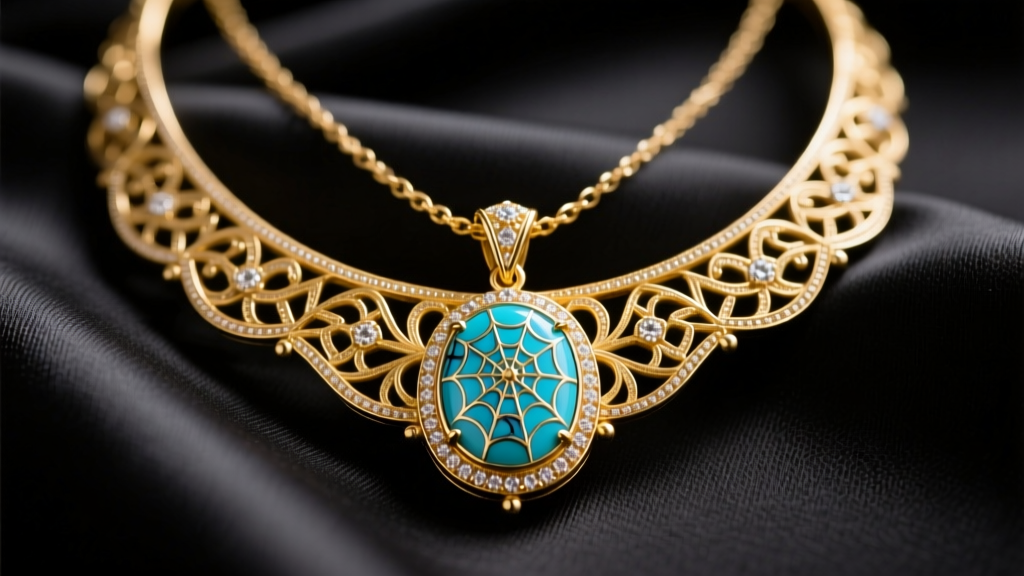
When collectors and jewelry enthusiasts search for an authentic iran necklace, they are rarely looking for mass-produced fashion jewelry. Instead, they are seeking pieces steeped in millennia of Persian craftsmanship, characterized by intricate gold filigree, poetic calligraphy, and the world’s most prized turquoise. As of 2026, the market for genuine Iranian heritage jewelry has seen a massive surge, driven by the depletion of historic mines and a renewed global appreciation for artisanal, culturally significant adornments.
Whether you are hunting for a vintage piece from the bazaars of Isfahan or a contemporary pendant featuring Neyshabur turquoise, knowing what to look for is critical. This comprehensive buying guide will help you navigate the gemological nuances, metal purities, and authentication markers necessary to invest in a genuine Persian necklace.
Understanding the Heritage: What Defines Authentic Persian Craftsmanship?
An authentic Iranian necklace is typically defined by its regional craftsmanship. Historically, cities like Isfahan, Tabriz, and Shiraz have served as the epicenters of Persian goldsmithing. Unlike Western jewelry, which often prioritizes diamond clarity and minimalist settings, traditional Persian jewelry emphasizes elaborate metalwork, enamel painting (Minakari), and the integration of poetry.
When evaluating a piece, look for signs of hand-fabrication. Authentic filigree work (known as Maliileh-kari) involves twisting and soldering microscopic threads of gold or silver into lace-like patterns, often inspired by Shah Abbasi floral motifs. Mass-produced imitations will lack the slight, organic asymmetries and deep undercut soldering found in genuine handcrafted pieces from master artisans.
The Crown Jewel: Sourcing Authentic Neyshabur Turquoise
No discussion of an Iran necklace is complete without addressing Persian turquoise, specifically from the historic Neyshabur (Nishapur) region in the Razavi Khorasan province. For over a millennium, the Ali-Mirza-Khani mine has produced what gemologists consider the finest turquoise in the world.
Gemological Markers of Neyshabur Turquoise
Unlike the chalky, porous turquoise found in some American or Chinese mines that requires stabilization, high-grade Neyshabur turquoise is naturally dense and hard (often reaching 5.5 to 6 on the Mohs scale). When buying, you should look for:
- Color: A vibrant, saturated 'robin’s egg' or deep sky blue, derived from high copper content and minimal iron.
- Matrix: While clear stones are prized, a fine, golden-brown or black 'spiderweb' matrix (composed of limonite or sandstone) is highly sought after by collectors and proves the stone's natural origin.
- Untreated Status: According to the Gemological Institute of America (GIA), the most valuable turquoise is completely untreated. In 2026, untreated, mine-direct Neyshabur stones command premium prices, often exceeding $150 per carat for top-tier specimens.
Red Flag: Avoid stones with a plastic-like luster or uniform, unnatural blue coloring. These are likely dyed howlite or stabilized with epoxy resins (such as the Zachery treatment), which drastically reduces the historical and monetary value of the necklace.
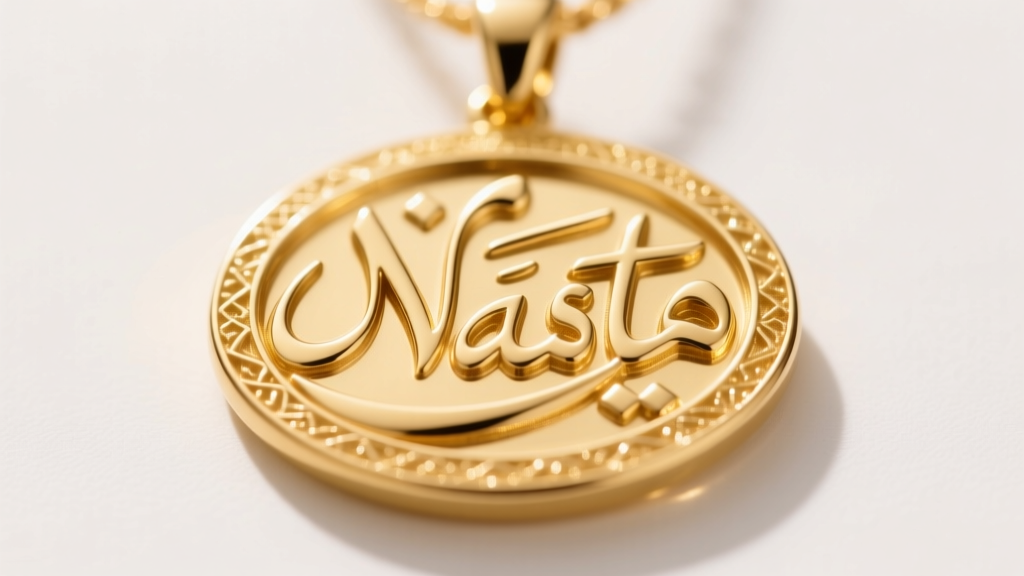
Decoding Persian Motifs and Calligraphy Pendants
The pendant is the soul of an Iranian necklace. Persian jewelers frequently incorporate cultural and literary motifs into their designs. Understanding these symbols will help you verify the piece's authenticity and cultural relevance.
Common Authentic Motifs
- Persian Calligraphy: Pendants engraved with the Nasta'liq script often feature verses from legendary poets like Hafez, Rumi, or Saadi. Authentic engraving is done by hand using a burin, resulting in varied line depths and sharp, elegant curves. Laser-engraved imitations will have uniform, flat-bottomed grooves.
- The Faravahar: An ancient Zoroastrian symbol featuring a winged disc. Authentic vintage pieces will show wear consistent with their age, and the detailing on the feathers and rings should be crisp, not muddy from poor casting.
- Hamsa and Evil Eye: While common across the Middle East, Iranian interpretations often integrate turquoise cabochons directly into the palm of the Hamsa or surround the eye with intricate gold granulation.
Gold Purity Standards in Iranian Jewelry
One of the most common mistakes Western buyers make is assuming an Iranian necklace is 'fake' because it lacks a 14k stamp. In Iran and the broader Middle Eastern market, 18k (750) is the standard minimum for fine jewelry, with 21k (875) being highly preferred for its rich, buttery yellow hue and investment value.
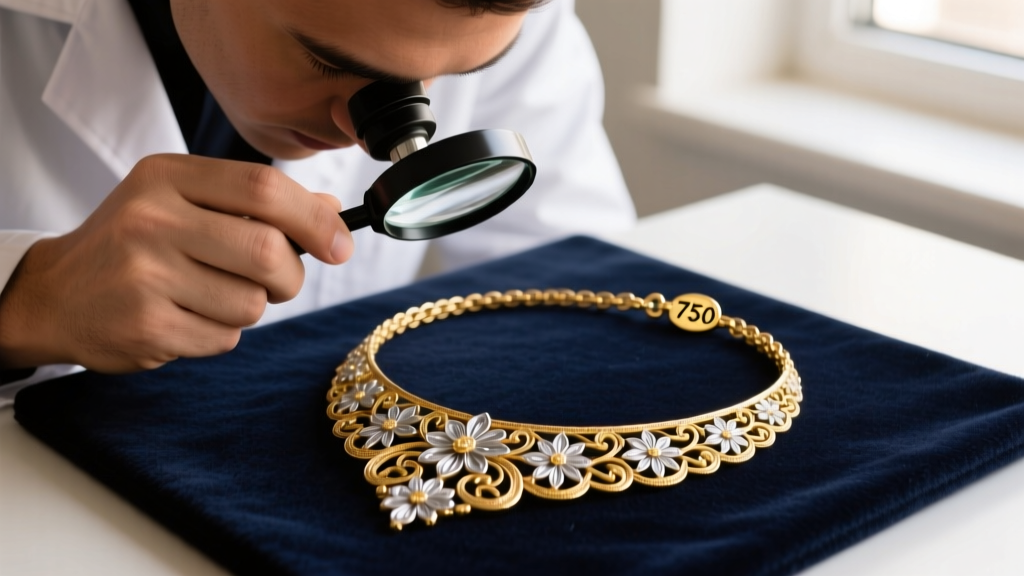
Because 21k gold is softer, authentic Iranian necklaces featuring this alloy will often have thicker, more robust chain links to compensate for the metal's malleability. Always inspect the clasp or the back of the pendant bale for the '750' or '875' hallmark. According to historical archives documented by institutions like The British Museum, traditional Middle Eastern goldsmithing has long favored higher karat weights, making 14k (585) a strong indicator of a piece made specifically for Western tourist export rather than domestic heritage markets.
Chain Selection: Pairing the Right Link with Persian Pendants
Persian pendants, especially those featuring solid turquoise or heavy 21k gold calligraphy, carry significant weight. Choosing the wrong chain will result in broken links or a necklace that sits poorly on the collarbone. Below is a structural guide for pairing chains with heavy Iranian pendants.
| Chain Style | Tensile Strength | Best Pairing | Aesthetic Profile |
|---|---|---|---|
| Wheat (Spiga) | High | Heavy Turquoise Cabochons | Textured, woven look that complements organic stone matrices without competing for attention. |
| Rope | Very High | Large Calligraphy Pendants | Classic, twisting design that mimics the fluid lines of Nasta'liq script. |
| Figaro | Moderate | Lightweight Filigree Motifs | Patterned links that add visual interest but may snap under the weight of solid 21k gold. |
| Box | Low to Moderate | Geometric/Enamel Pieces | Modern, sleek lines; avoid for heavy vintage pieces as the square links can kink and break. |
For a heavy, authentic Iran necklace, a 2.5mm to 3.5mm Wheat or Rope chain in 18k gold is the optimal choice for both longevity and historical accuracy.
Pricing, Authentication, and Red Flags in 2026
The secondary market for vintage and antique Persian jewelry has become highly lucrative, which unfortunately attracts sophisticated forgeries. Here is a practical framework for evaluating pricing and authenticity:
- Under $200: Likely modern, mass-produced silver or gold-plated brass with dyed howlite or stabilized Chinese turquoise. Often sold as 'boho' or 'oriental' style rather than authentic heritage pieces.
- $500 - $1,500: Authentic contemporary 18k gold pieces with commercial-grade (but natural) Neyshabur turquoise, or vintage silver pieces with high-quality Minakari enamel work.
- $2,500 - $10,000+: Investment-grade necklaces featuring untreated, high-domed Neyshabur turquoise with pristine spiderweb matrix, set in hand-forged 21k gold with master-level calligraphy or antique Pahlavi-era craftsmanship.
Pro-Tip for Buyers: Always request a loupe photo of the hallmark and the stone's matrix. If the seller cannot provide high-resolution macro photography showing the natural inclusions of the turquoise or the soldering points of the filigree, walk away. Genuine artisans and reputable antique dealers pride themselves on the microscopic details of their work.
Care and Maintenance for Heritage Pieces
Owning an authentic Iran necklace requires specialized care, particularly if it features untreated turquoise and high-karat gold. Turquoise is a porous hydrous phosphate; it is highly sensitive to cosmetics, perfumes, and ultrasonic cleaners, which can alter its color or cause the matrix to fracture. Always put your necklace on after applying cosmetics.
To clean the gold components, use a soft-bristled brush with warm water and a drop of mild, phosphate-free dish soap. Avoid harsh chemicals or commercial jewelry dips, which can strip the natural patina from vintage gold and damage the delicate surface of untreated Persian turquoise. By treating these pieces with the respect their history demands, you ensure that your Iranian heritage necklace remains a stunning, wearable artifact for generations to come.


