The 5 Strand Pearl Necklace: 2026 Trend & Style Guide
Discover how to style the 5 strand pearl necklace in 2026. Explore pearl grades, clasp mechanics, neckline pairings, and trend analysis.

The Resurgence of the Multi-Strand Pearl in 2026
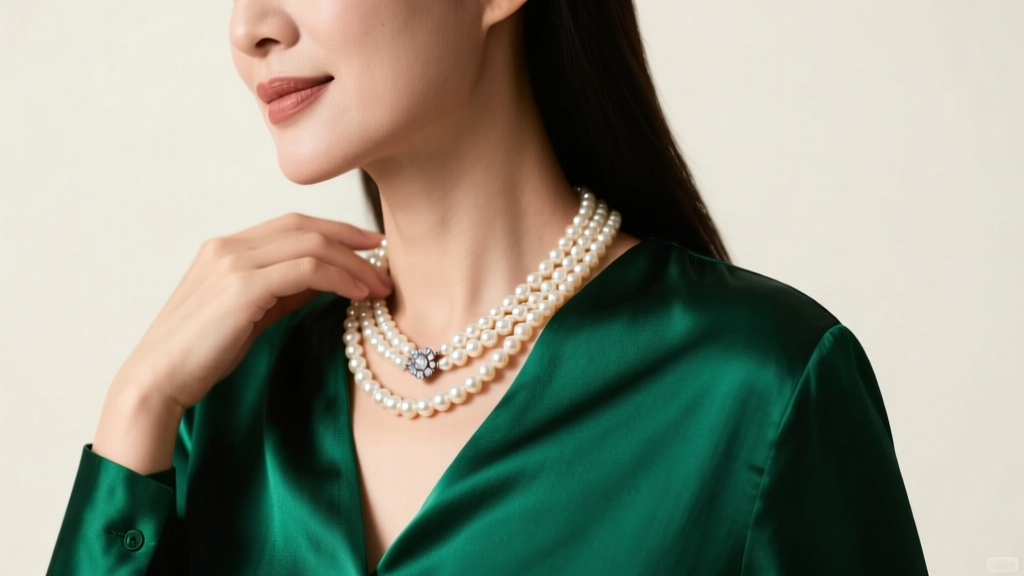
The landscape of fine jewelry in 2026 has decisively pivoted from the ultra-minimalist, single-strand aesthetics of the early 2020s toward a new era of heritage maximalism. At the forefront of this movement is the 5 strand pearl necklace, a piece that commands attention while retaining an air of timeless sophistication. No longer reserved exclusively for vintage collectors or red-carpet galas, the multi-strand pearl has been reimagined by contemporary designers to serve as a versatile anchor in modern wardrobes. Whether crafted from luminous Akoya pearls or organic, baroque freshwater varieties, this statement piece bridges the gap between historical opulence and modern structural fashion.
However, investing in and styling a multi-strand necklace requires a nuanced understanding of jewelry engineering, material grading, and proportional styling. Unlike a simple pendant chain, a five-strand piece is a complex assembly of weight distribution, tension management, and precise gemological matching. This comprehensive guide breaks down the anatomy, market tiers, and styling matrices necessary to master this definitive 2026 trend.
Anatomy of a High-Quality 5 Strand Pearl Necklace
Constructing a multi-strand piece is an exercise in structural engineering as much as it is an art form. The sheer volume of material introduces unique challenges regarding drape, friction, and hardware stress.
Pearl Grading, Sizing, and Graduation
When evaluating a 5 strand pearl necklace, uniformity and luster are paramount. According to the Gemological Institute of America (GIA), pearl quality is dictated by luster, surface characteristics, shape, color, and nacre thickness. For a multi-strand piece, the visual impact relies heavily on the consistency of these factors across hundreds of individual pearls.
- Akoya Pearls (6mm–8.5mm): The gold standard for multi-strand necklaces. Their mirror-like luster and perfectly round shapes create a cohesive, liquid-light effect. A 5-strand Akoya piece typically requires over 350 individually matched pearls.
- Freshwater Pearls (7mm–10mm): Modern nucleation techniques have yielded near-round freshwater pearls with exceptional luster at a fraction of the cost. They offer a slightly softer, more satiny glow that pairs beautifully with casual or avant-garde styling.
- Graduation Mechanics: A properly engineered 5-strand necklace must feature precise length graduation. The innermost strand typically sits at 16 inches (choker length), with each subsequent strand adding 0.75 to 1 inch. If the strands are cut to identical lengths, they will tangle, bunch, and grind against one another, causing severe nacre damage over time.
The Crucial Role of the Multi-Strand Clasp
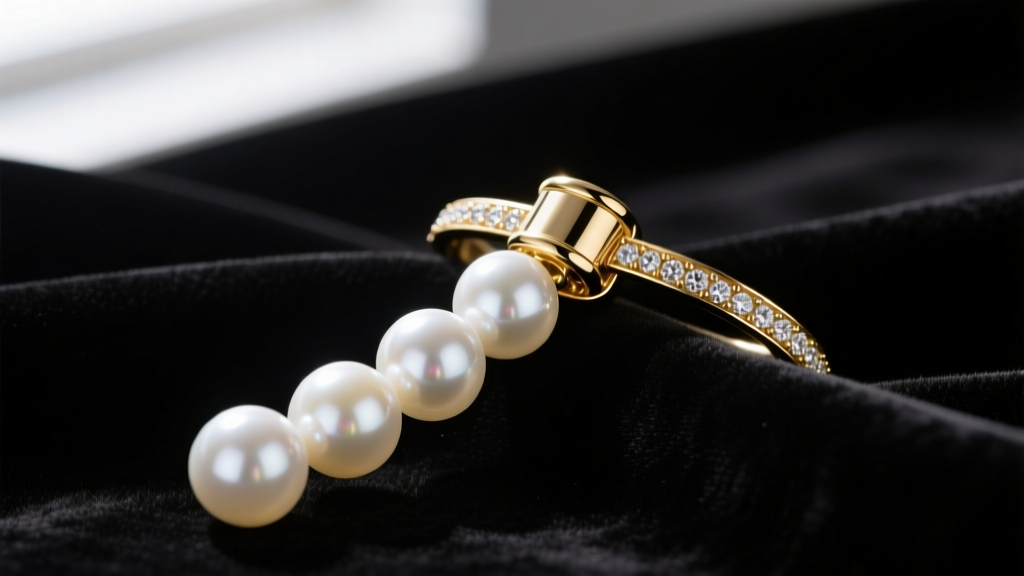
The clasp is the most critical failure point on any multi-strand necklace. A standard 5-strand pearl necklace can weigh anywhere from 150 to 280 grams, generating immense torque on the hardware. Traditional spring-ring or lobster clasps are entirely inadequate and will warp or snap under this continuous tension.
High-end iterations utilize diamond-set barrel clasps or interlocking box clasps with double figure-8 safety catches. These clasps feature internal threading or multi-loop tension bars that distribute the weight of all five strands evenly across a wide surface area. When shopping, always inspect the clasp's interior mechanism; if it relies on a single thin wire to hold five heavy strands, it is a structural liability.
2026 Styling Matrix: Necklines and Occasions
The versatility of the 5 strand pearl necklace lies in its ability to adapt to various necklines, provided the graduation and overall width of the piece are proportionate to the garment. The 2026 styling ethos favors high-contrast pairings—mixing the traditional elegance of pearls with structured, modern tailoring or relaxed, luxurious knits.
| Neckline Type | Recommended Strand Graduation | Styling Vibe & Occasion | Material Recommendation |
|---|---|---|---|
| Deep V-Neck | 18" to 22" (Longer drop) | Evening wear, galas, silk slip dresses | High-luster Akoya or South Sea |
| Strapless / Sweetheart | 15" to 18" (Choker to Princess) | Bridal, formal events, bare collarbones | Uniform round Akoya (6-7mm) |
| Structured Blazer / Lapel | 16" to 19" (Collarbone resting) | Power dressing, boardroom, editorial | Mixed baroque Freshwater |
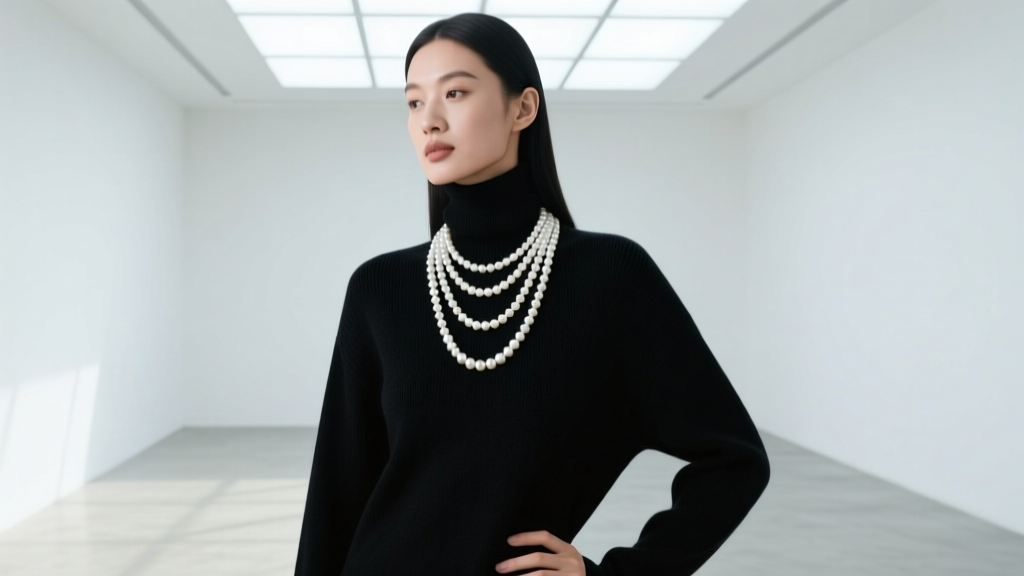
| Cashmere Turtleneck | 17" to 21" (Over the fabric) | Winter layering, smart-casual, gallery hops | Large 9mm+ Freshwater or South Sea |
Investment and Pricing Tiers
Because a 5 strand pearl necklace requires hundreds of matched gems and complex assembly, the pricing structure is heavily stratified by pearl origin, nacre quality, and hardware. The American Gem Society (AGS) notes that multi-strand pieces command a premium due to the exponential difficulty of matching pearls across five separate strands.
- AAA Freshwater (Entry Luxury): $800 – $2,500. Features near-round shapes with good luster. Often strung on advanced synthetic threads for durability. Ideal for daily wear and trend-focused styling.
- Hanadama / AAA Akoya (Fine Jewelry): $4,500 – $15,000. Certified for exceptional luster and thick nacre. Typically finished with 18k gold and diamond-accented barrel clasps. This is the sweet spot for heirloom-quality investments.
- White South Sea (Ultra-Luxury): $30,000 – $100,000+. Featuring massive 10mm–14mm pearls with a satiny, luxurious glow. These pieces are exceptionally heavy and are usually custom-commissioned with reinforced platinum clasps.
Care, Maintenance, and Restringing
The maintenance requirements for a multi-strand necklace are significantly higher than those for a single chain. The combined weight of five strands places constant stress on the silk or synthetic threading material, particularly near the clasp loops where friction is highest.
For traditional silk-knotted necklaces, professional restringing is mandatory every 18 to 24 months if worn regularly. If the necklace is worn over heavy fabrics like wool or cashmere, the fibers can act as an abrasive, slowly sawing through the silk thread. Many modern jewelers now recommend using micro-knotted PowerPro braided gel-spun polyethylene thread for multi-strand pieces, which offers the drape of silk but possesses a tensile strength capable of holding over 50 pounds of weight, virtually eliminating the risk of a catastrophic strand break.
Expert Insight: 'Never store a 5 strand pearl necklace hanging on a jewelry tree. The immense gravitational pull will permanently stretch the threads and warp the graduation. Always lay it flat in a lined jewelry box, and use a specialized multi-strand clasp lock to keep the strands aligned and tangle-free.'
By understanding the precise engineering, grading standards, and styling proportions of the 5 strand pearl necklace, collectors and fashion enthusiasts can confidently navigate this opulent 2026 trend, securing a piece that is as structurally sound as it is visually breathtaking.


