Snake Necklace Diamond Value Guide: 2026 Pricing Tips
Discover the true value of a snake necklace diamond in 2026. Compare pricing tiers, gold karats, and chain durability to make a smart jewelry investment.

The True Cost of a Snake Necklace Diamond: Defining the Category
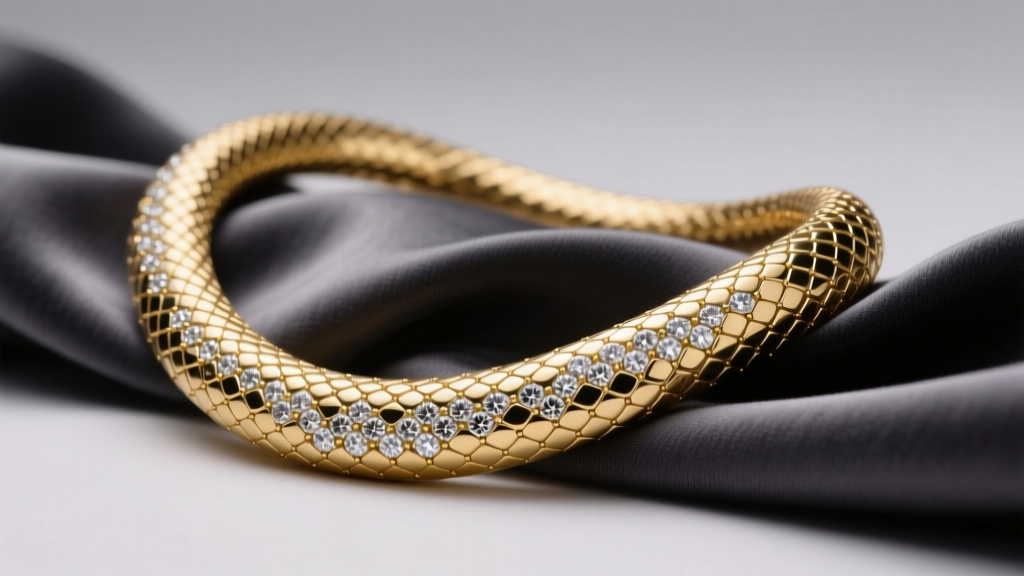
When evaluating a snake necklace diamond, buyers frequently confuse two fundamentally different jewelry structures: the tubular snake chain and the articulated serpent motif. This distinction is the single most critical factor in determining long-term value, structural integrity, and resale potential. A 'snake chain' refers to a specific type of tubular, woven metal chain often used to suspend a diamond pendant. A 'serpent motif' necklace, popularized by heritage brands like Bvlgari and David Yurman, features the actual body of the snake constructed from interlocking, diamond-paved links. In 2026, understanding which structure you are purchasing is the first step in accurate budget and value assessment.
Material Grades and the Pricing Baseline
The baseline value of any diamond-accented serpent jewelry is anchored by its precious metal weight and diamond quality. For luxury serpent motifs, 18k gold (75% pure gold) is the industry standard, offering a rich color that complements the organic theme of the snake. However, 18k gold is inherently softer than 14k gold. If the necklace features a heavy diamond-encrusted serpent head, the clasp and primary structural rings should ideally be reinforced with 14k gold or platinum to prevent stretching and clasp failure.
Regarding the diamonds, serpent necklaces primarily utilize 'melee' diamonds (stones weighing less than 0.10 carats each) for pavé settings. According to the Gemological Institute of America (GIA), melee diamonds are rarely graded with full certificates due to the cost-prohibitive nature of grading hundreds of tiny stones. Instead, they are sorted by parcel grades. For a high-value snake necklace, you should demand a minimum parcel grade of G-H color and SI1-SI2 clarity. Upgrading to VVS clarity or D-F color in melee stones will increase the retail price by 30% to 40%, but yields virtually zero visual return to the naked eye. Smart buyers prioritize excellent cut and precise bead-setting over imperceptible clarity upgrades in pavé work.
2026 Market Pricing Tiers: What Should You Actually Pay?
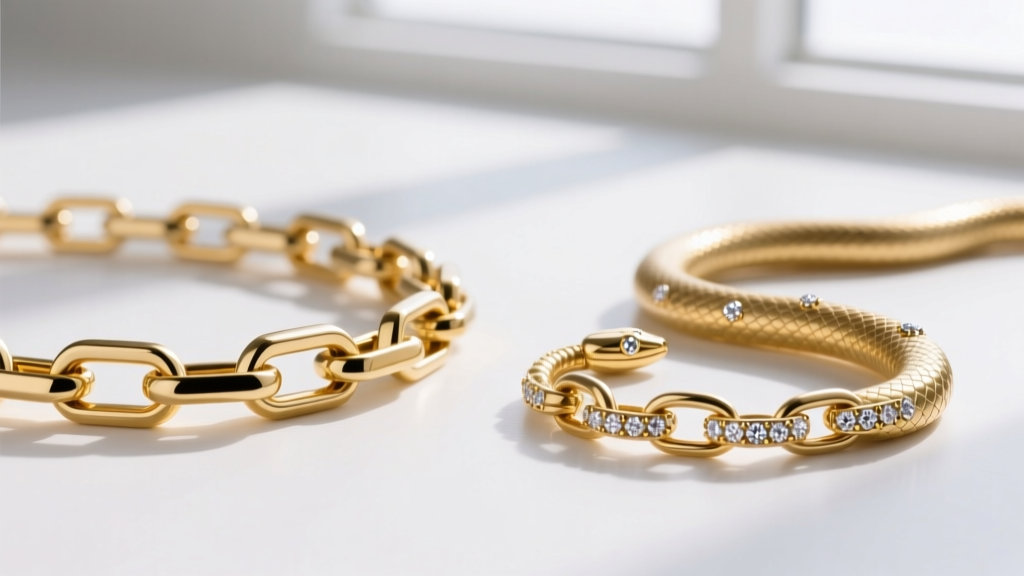
To accurately assess if you are getting a fair deal, you must categorize the necklace into one of three distinct market tiers. The pricing below reflects the 2026 retail landscape, accounting for recent fluctuations in gold spot prices and the stabilization of lab-grown diamond costs.
| Market Tier | Material Specifications | Chain / Link Type | 2026 Price Range | Value Retention |
|---|---|---|---|---|
| Entry-Level | 14k Gold, Lab-Grown Melee (SI/GH) | Tubular Snake Chain or Cast Motif | $450 - $1,200 | Low (20-30%) |
| Mid-Range | 18k Gold, Natural or Premium Lab Melee | Articulated Serpent Links | $2,500 - $6,500 | Medium (50-65%) |
| Luxury Heritage | 18k Gold/Platinum, VVS/FG Natural Melee | Engineered Vertebrae Hinges | $12,000 - $45,000+ | High (80-110%) |
As outlined by the Federal Trade Commission (FTC) Jewelry Guides, sellers must accurately disclose the total carat weight (CTW) of the diamonds. Be wary of mid-range sellers who obscure the CTW; a 2.50 CTW diamond serpent necklace should command a significantly higher price than a 0.75 CTW piece, even if the gold weight is identical.
The Durability Trap: Snake Chains vs. Serpent Links
This is where the majority of buyers lose money. If your 'snake necklace diamond' consists of a flexible tubular snake chain holding a diamond pendant, you are purchasing a high-maintenance liability. Tubular snake chains are constructed from tightly wound, interlocking metal ribbons. They are notoriously prone to kinking. Once a snake chain kinks, the metal work-hardens and loses its structural integrity. Repairing a kinked snake chain requires soldering, but the intense heat needed to flow the solder will often melt the delicate ribbons, leaving a rigid, discolored scar. If you suspend a heavy diamond pendant (e.g., 5+ grams) from a tubular snake chain, the constant torque and friction will eventually cause the chain to snap at the clasp ring or the weakest kink point.
Conversely, an articulated serpent motif necklace—where the snake's body is formed by interlocking vertebrae links connected by hidden hinges—is structurally superior. These links move independently, distributing tension evenly across the entire necklace. They do not kink, they support heavy diamond-encrusted components effortlessly, and they retain their value because they can be repaired link-by-link without catastrophic heat damage. When budgeting, always allocate funds toward an articulated link structure rather than a tubular chain.
Lab-Grown vs. Natural Diamonds in Serpent Jewelry
The 2026 jewelry market has fully integrated lab-grown diamonds into mid-tier luxury. For a diamond snake necklace, lab-grown melee offers a massive budget advantage. A mid-range articulated serpent necklace featuring 3.00 CTW of natural G-H melee diamonds might retail for $5,800. The exact same design, crafted with premium lab-grown melee, will typically cost between $2,200 and $2,800. Because melee diamonds are too small to be individually certified and do not carry the same emotional weight as a large center solitaire, the visual difference is nonexistent. However, if your primary goal is investment and resale value, natural diamonds in heritage designer pieces still hold a distinct advantage in the secondary auction market.
How to Inspect a Snake Necklace Diamond Before Buying
Before finalizing your purchase, conduct a rigorous physical inspection focusing on the specific failure points of serpent jewelry:
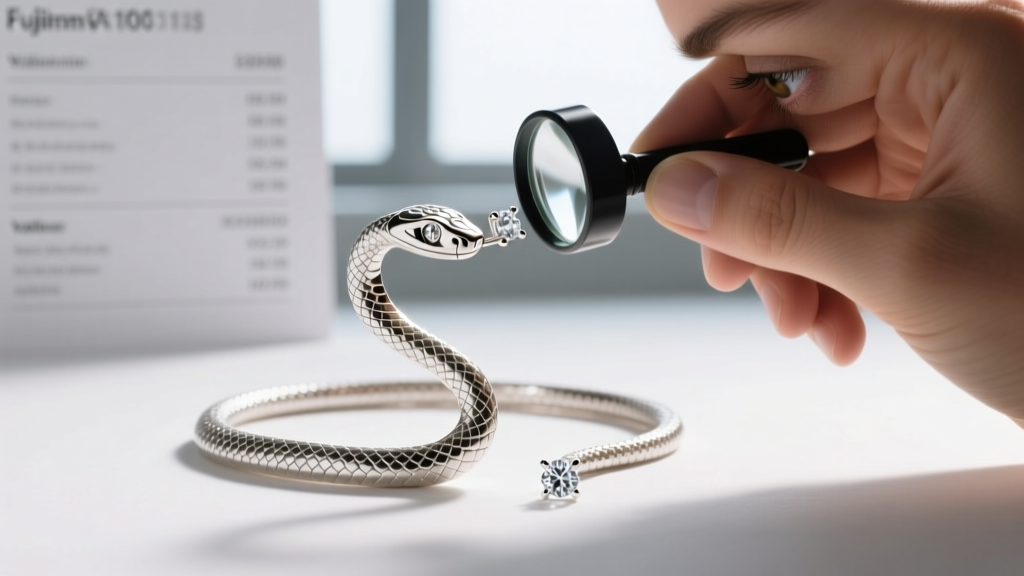
- Pavé Setting Integrity: Use a 10x jeweler's loupe to examine the diamond scales. High-quality serpent necklaces use 'bead setting' or micro-prong setting where the metal is pushed over the diamond's girdle. Avoid pieces where the diamonds are simply glued or where the prongs are visibly snagging on silk fabric.
- Hinge Tension: If buying an articulated motif, lay the necklace flat on a glass surface. It should lay completely flush without any links jutting upward. Lift it by the clasp; the serpent head should articulate smoothly without stiff, grinding resistance, which indicates poorly polished internal hinges or trapped polishing compound.
- Clasp Engineering: Luxury serpent necklaces utilize hidden box clasps with double figure-eight safety catches that seamlessly blend into the snake's tail. Entry-level pieces often use standard lobster clasps that disrupt the visual flow and are prone to spring failure.
Final Verdict: Maximizing Your Investment
A snake necklace diamond is a striking, symbolic piece of jewelry, but its value is entirely dependent on its structural engineering. To maximize your budget in 2026, avoid tubular snake chains entirely. Direct your funds toward an 18k gold articulated serpent link necklace with G-H color melee diamonds. By prioritizing structural link integrity over imperceptible diamond clarity upgrades, you secure a piece that is not only visually captivating but built to survive decades of daily wear without catastrophic failure.


