How to Clean & Care for Your Harry Styles Banana Necklace
Learn expert cleaning and maintenance tips for your Harry Styles banana necklace. Protect enamel, pearls, and gold vermeil from daily wear.

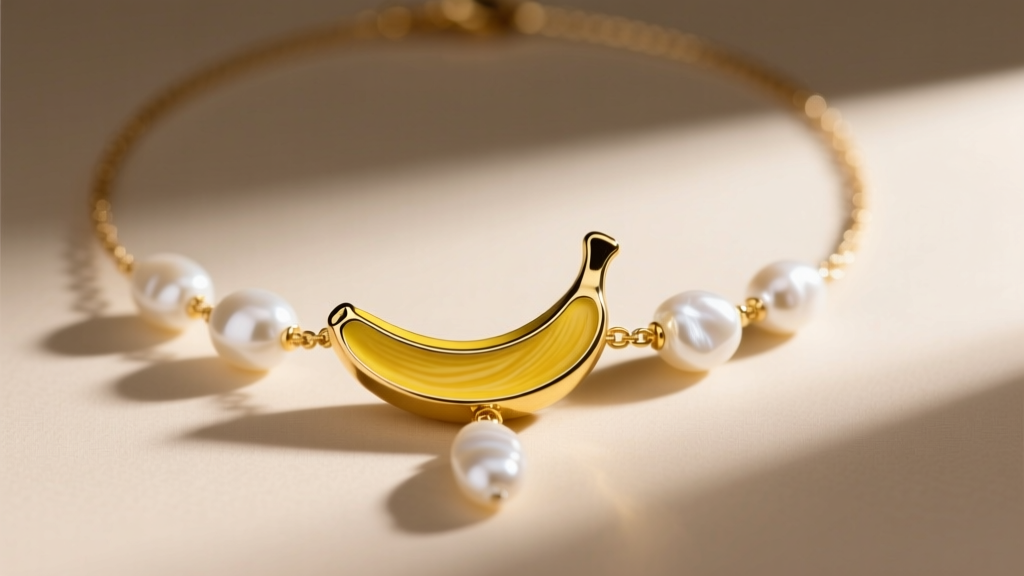
When Harry Styles popularized the whimsical, gender-fluid aesthetic of mixed-media fruit jewelry, the iconic Harry Styles banana necklace became an instant cultural touchstone. Blending playful motifs with sophisticated materials, these pieces typically feature a vibrant yellow fruit charm suspended among irregular freshwater pearls, glass beads, and gold vermeil hardware. However, this eclectic mix of organic and synthetic materials creates a unique maintenance challenge. Unlike a solid gold chain that can be tossed into an ultrasonic cleaner, a mixed-media motif necklace requires a highly specific, multi-step care regimen to prevent irreversible damage to its delicate components.
As we navigate the jewelry landscape of 2026, the longevity of these statement pieces depends entirely on understanding the chemical and mechanical vulnerabilities of their constituent parts. Below is your definitive, expert-level guide to preserving the structural integrity and visual brilliance of your fruit-motif necklaces.
Anatomy of the Motif Necklace: Materials & Vulnerabilities
To properly care for your necklace, you must first understand what it is actually made of. Most celebrity-style fruit pendants are not crafted from vitreous (fired glass) enamel, but rather cold enamel (epoxy resin) poured into a metal casting. This distinction is critical for cleaning. Furthermore, the metal base is usually gold vermeil, which carries its own set of degradation risks.
| Material Component | Hardness / Durability | Primary Vulnerability | Cleaning Agents to Avoid |
|---|---|---|---|
| Cold Enamel (Resin) | Mohs 2.0 - 3.0 | UV yellowing, chemical melting, impact chipping | Alcohol, acetone, ultrasonic waves |
| Gold Vermeil (2.5μm) | Mohs 2.5 - 3.0 | Friction wear, galvanic tarnish from sweat | Polishing cloths, abrasive pastes |
| Freshwater Pearls | Mohs 2.5 - 3.0 | Acid dissolution, dehydration, nacre peeling | Ammonia, bleach, acidic soaps |
| Silk/Nylon Thread | Tensile weakness | Stretching, rot from trapped moisture | Prolonged water submersion |
The Daily Wear Protocol: Preventing Enamel and Vermeil Damage
The most effective cleaning method is preventative maintenance. Human sweat has a pH ranging from 4.5 to 7.0, making it mildly acidic. When this acidity interacts with the sterling silver base beneath the gold vermeil, it accelerates tarnishing. If the gold layer (which must be at least 2.5 microns thick to be legally classified as vermeil) wears thin due to friction, the acidic sweat will cause the underlying silver to oxidize rapidly, resulting in a dark, mottled appearance around the banana charm's bail.
Furthermore, cold enamel is highly susceptible to chemical degradation from volatile organic compounds (VOCs) found in everyday grooming products. The alcohol and essential oils in colognes, perfumes, and hairsprays can cause the resin to soften, cloud, or peel away from the metal casing. Always adhere to the 'Last On, First Off' rule: your necklace should be the final item you put on after all cosmetics and fragrances have dried, and the very first item you remove when returning home.
Step-by-Step Cleaning Guide for Mixed-Media Fruit Charms
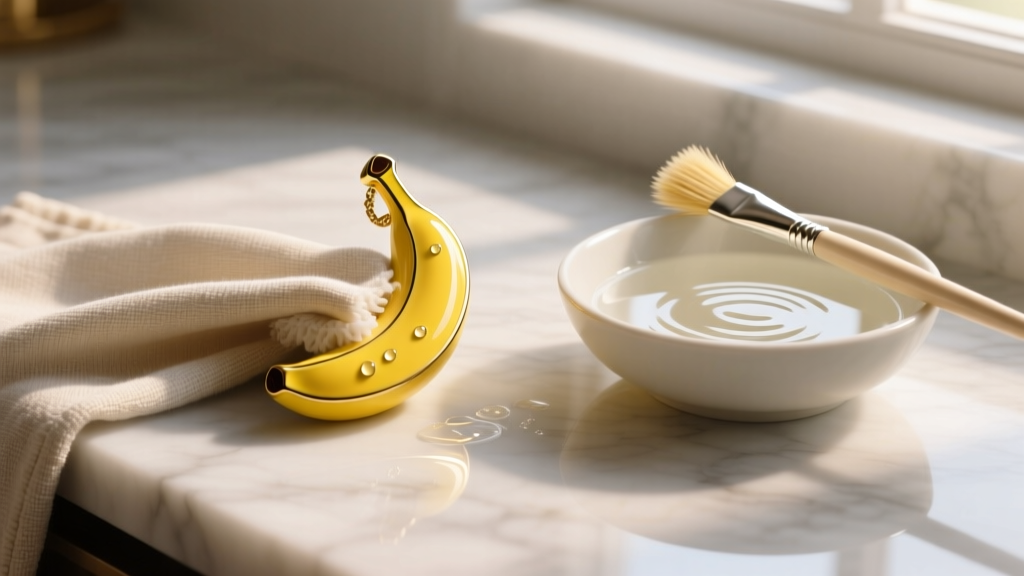
When your necklace accumulates skin oils, environmental dust, and microscopic debris, it requires a gentle, targeted cleaning approach. Never submerge the entire piece in water, as this will weaken the silk or nylon stringing material and potentially trap moisture inside the pearl drill holes, leading to internal rot.
Cleaning the Enamel Banana Charm
To clean the resin fruit charm, use a dry, ultra-fine microfiber cloth. If there is stubborn grime in the crevices of the charm, lightly dampen a cotton swab with distilled water (never tap water, which contains chlorine and heavy minerals) and gently roll it over the affected area. Dry immediately with a separate swab. According to conservation guidelines from the Victoria and Albert Museum, avoiding sudden temperature changes and harsh solvents is paramount for preserving the bond between resin enamels and their metal substrates.
Reviving Gold Vermeil and Beads
Gold vermeil requires a delicate touch. Do not use standard silver polishing cloths, as they contain mild abrasives that will strip the 2.5-micron gold layer straight off the sterling silver base. Instead, use a clean, untreated eyeglass cloth to gently buff the gold components. For glass or natural stone beads interspersed in the design, a slightly damp cloth is sufficient to restore their luster without risking damage to the adjacent materials.
Pearl and String Maintenance
Freshwater pearls are composed of calcium carbonate and conchiolin, making them highly reactive to acids. The Gemological Institute of America (GIA) strongly advises against using any commercial jewelry dips on pearls. To clean the nacre, wipe each pearl individually with a soft, lint-free cloth that has been barely misted with a solution of distilled water and a single drop of pH-neutral castile soap. Never pull or stretch the silk thread while wiping, as wet silk is highly vulnerable to snapping and permanent deformation.
Troubleshooting Common Failure Modes
Even with meticulous care, mixed-media necklaces are subject to specific failure modes. Here is how to identify and address the most common issues:
- Cloudy or Yellowing Enamel: Cold enamel (resin) naturally degrades and yellows when exposed to prolonged UV radiation. This is a chemical change within the epoxy, not surface dirt. It cannot be polished out. The only remedy is to have a professional jeweler carefully drill out the old resin and repour a fresh batch of color-matched cold enamel.
- Fraying or Stretching Thread: If you notice gaps between the pearls or the knots, the structural integrity of the silk has failed. Do not wear the necklace. Take it to a professional beader to be restrung using 'French knotting' (knotting between every single bead) and ensure they use a synthetic, high-tensile thread like PowerPro if you live in a humid climate, as natural silk rots faster in high moisture.
- Darkening Vermeil Bail: If the loop (bail) holding the banana charm turns black, the gold layer has worn away due to the constant metal-on-metal friction against the chain or thread. A jeweler can re-plate this specific component using an electroplating pen without needing to submerge the pearls or enamel in the plating solution.
- Loose Charm Clasps: The jump rings connecting the fruit charms to the main chain often pull apart under the weight of the beads. Always have a jeweler solder the jump rings shut, or replace them with heavy-duty locking jump rings to prevent catastrophic loss of the pendant.
Long-Term Storage and Archival Care
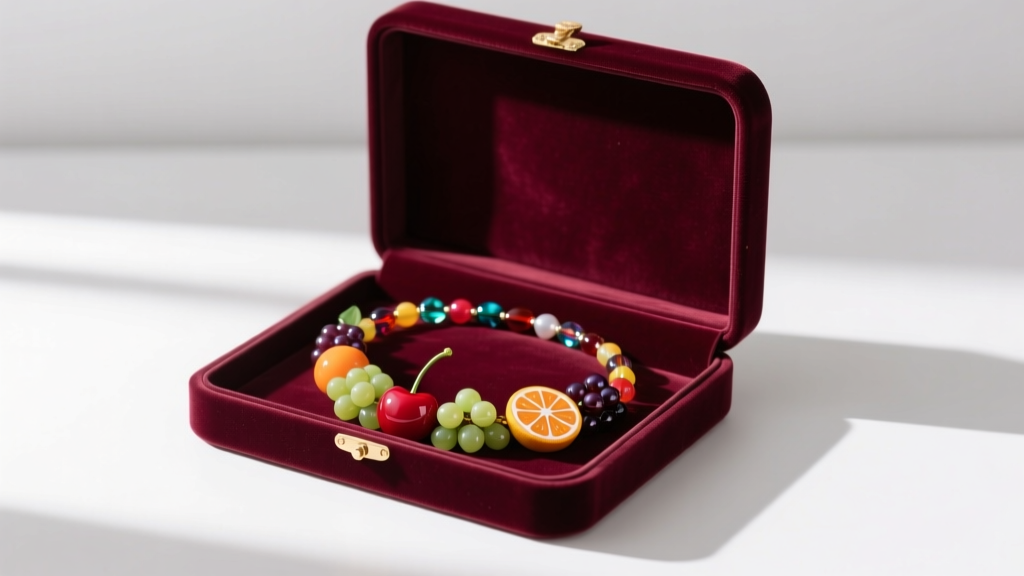
How you store your Harry Styles banana necklace when it is not being worn is just as critical as how you clean it. Tossing it into a communal jewelry box is a recipe for disaster. The Mohs hardness of the metal clasps and any accompanying gemstones will easily scratch the soft resin enamel and the delicate nacre of the freshwater pearls.
Store the necklace flat in a dedicated, velvet-lined compartment to prevent the stringing material from stretching under its own weight. Hanging beaded necklaces on vertical hooks for months at a time will permanently elongate the silk thread, creating unsightly gaps between the beads. Furthermore, keep the storage box in a climate-controlled environment away from direct sunlight to prevent UV-induced yellowing of the cold enamel. Include a small packet of silica gel in the storage drawer to control ambient humidity, protecting the sterling silver base of the vermeil from oxidizing and the organic pearls from dehydrating and cracking. By treating this playful piece with the same archival respect as high jewelry, you ensure its vibrant aesthetic remains intact for years to come.


