Tie Necklace Adjustable Knot: Mechanics and Styling Guide
Master the tie necklace adjustable knot with our technical guide. Explore cord materials, friction mechanics, and styling tips for perfect layering.

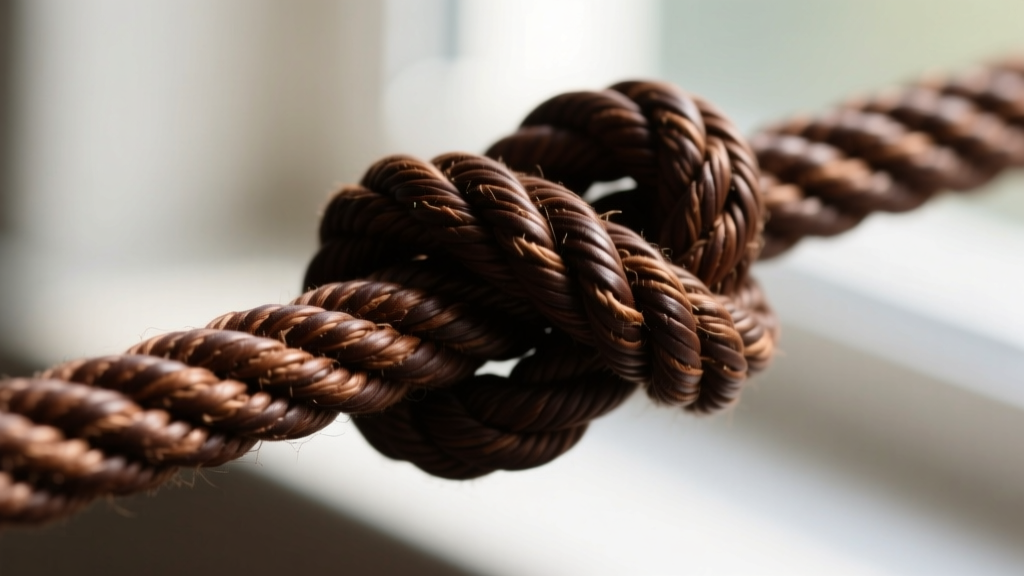
The tie necklace adjustable knot is often dismissed as a simple bohemian fastening, but from a textile engineering perspective, it is a brilliant application of variable static friction. Whether you are designing custom jewelry, repairing a vintage piece, or simply trying to achieve the perfect neckline drop, understanding the mechanics behind this knot will elevate your styling and ensure your pendants stay exactly where you want them. In this deep dive, we explore the material science, structural integrity, and precise styling metrics of adjustable cord necklaces.
The Physics of Friction: How Adjustable Knots Actually Work
At its core, a sliding knot relies on the transition between static and kinetic friction. When the knot is stationary, static friction holds the cord in place, supporting the weight of the pendant (typically ranging from 5 to 25 grams). When you pull the cord to adjust the length, you must apply enough force to overcome this static threshold, initiating kinetic friction, which allows the cord to slide.
The most reliable configuration for a tie necklace adjustable knot is the Sliding Square Knot (a macramé staple). Unlike a simple overhand knot or a lark's head, the square knot creates a symmetrical, multi-point contact surface. When tension is applied by the weight of the pendant, the knot compresses radially against the base cords. According to textile mechanics, increasing the surface area of the weave directly increases the frictional grip. A properly tied sliding square knot using a 1.0mm wrapping cord over a 1.5mm base cord generates enough compressive force to hold a 50-gram metal pendant without slipping, provided the materials are correctly matched.
Cord Material Breakdown: Durability and Slide Resistance
The success of your adjustable knot depends entirely on the cord material. A slick cord will slip under the weight of a heavy brass or silver pendant, while a cord with too much friction will be impossible to adjust smoothly. Below is a technical comparison of standard jewelry cord materials used in adjustable necklaces.
| Cord Material | Friction Profile | Water/Sweat Resistance | Optimal Base Diameter | Best Application |
|---|---|---|---|---|
| Waxed Cotton | High (Microcrystalline) | Medium (Degrades with sebum) | 1.0mm - 2.0mm | Heavy metal pendants, daily wear |
| Nylon (S-Lon) | Medium (Smooth finish) | High (Non-absorbent) | 0.8mm - 1.5mm | Lightweight gems, water activities |
| Braided Silk | Low (Slick surface) | Low (Water spots easily) | 1.5mm - 2.5mm | Fine pearls, lightweight gold |
| Suede Leather | Very High (Fibrous grip) | Very Low (Stains and stretches) | 2.0mm - 3.0mm | Chunky boho styles, light pendants |
For the best balance of adjustability and grip, Rio Grande and other professional jewelry suppliers recommend microcrystalline waxed cotton. Unlike natural beeswax, which melts at lower temperatures and can become tacky against the skin, microcrystalline wax has a higher melting point and provides a consistent, dry glide that locks securely when released.
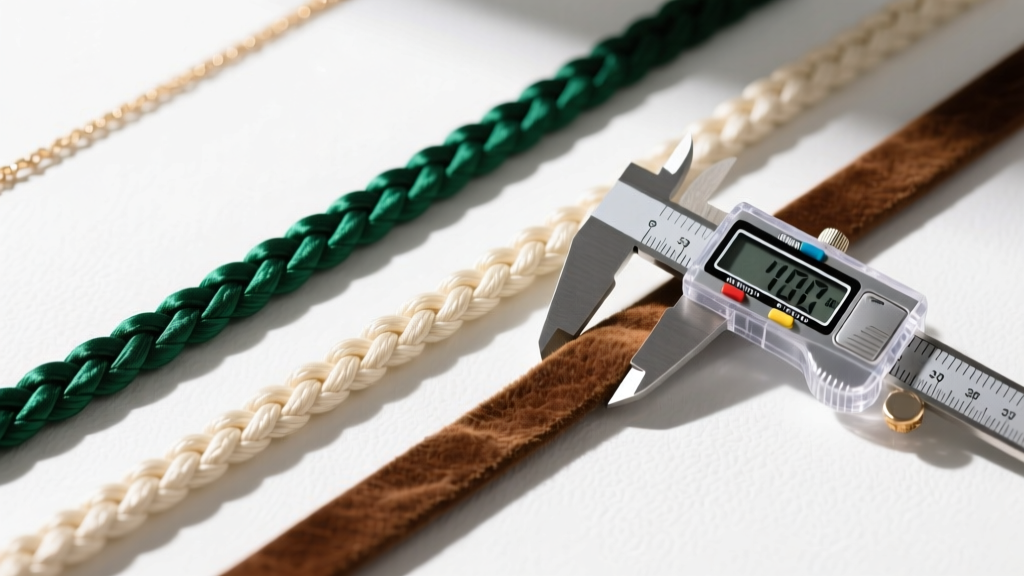
Step-by-Step: Tying the Perfect Sliding Square Knot
To achieve a professional-grade tie necklace adjustable knot, precision in your wrapping is required. You will need two base cords (the main necklace length) and one wrapping cord (the piece that forms the knot).
1. Dimensional Ratios
The wrapping cord should be approximately 70% to 85% of the thickness of the base cords. If your base cord is 1.5mm, use a 1.0mm or 1.2mm wrapping cord. If the wrapping cord is too thick, the knot will be bulky and stiff; if it is too thin, it will lack the structural integrity to grip the base cords securely.
2. The Wrapping Sequence
- Step 1: Overlap the two base cords parallel to each other. Lay the center of your wrapping cord (about 8 inches long) perpendicularly across the base cords.
- Step 2: Bring the right wrapping tail over the base cords, then under the left wrapping tail. Pull tight to form the first half of the square knot.
- Step 3: Bring the left wrapping tail over the base cords, then under the right wrapping tail. This alternating pattern is what creates the flat, symmetrical square knot.
- Step 4: Repeat this alternating sequence for 6 to 8 wraps. Fewer than 5 wraps will not provide enough surface area for static friction; more than 10 wraps will make the knot too rigid to slide comfortably.
- Step 5: Trim the wrapping tails to 2mm, apply a micro-drop of cyanoacrylate (jewelry glue) to the ends, and tuck them under the final wrap using a beading awl.
Failure Modes: Why Your Tie Necklace Loosens Over Time
Even a perfectly tied adjustable knot can fail over time. Understanding these failure modes allows you to troubleshoot and maintain your jewelry effectively.
The Sebum Effect and Wax Degradation
The most common cause of a slipping knot is the accumulation of sebum (human skin oils) and environmental humidity. Sebum acts as a lubricant, drastically reducing the coefficient of friction on waxed cotton and leather cords. According to jewelry conservation guidelines outlined by Fire Mountain Gems, cords worn daily against the skin should be cleaned with a mild, non-detergent soap and occasionally re-waxed using a specialized jewelry cord wax to restore their gripping properties.
Cord Creep and Elasticity
Natural fibers like cotton and silk are subject to "creep"—the tendency of a material to slowly deform under constant mechanical stress. If you wear a heavy pendant (20g+) on a thin cotton cord, the continuous downward force will stretch the fibers over several months, causing the cord to thin out. As the cord diameter decreases, the sliding knot becomes loose and loses its radial compression. To prevent this, always pair heavy pendants with a thicker base cord (minimum 1.5mm) or opt for a synthetic core like nylon, which exhibits virtually zero creep under standard jewelry weights.

Styling and Neckline Calibration
The primary advantage of the tie necklace adjustable knot is its infinite adjustability. However, to style it like a professional, you must calibrate the drop length to your specific neckline. Here is a technical styling framework for exact drop measurements:
- 14" - 16" (Choker/Collar): Best for off-the-shoulder tops, strapless dresses, or deep V-necks. The knot sits at the nape of the neck, and the pendant rests on the collarbone. Use a thinner cord (0.8mm) for a delicate look.
- 18" (Princess): The universal standard. The pendant rests just below the clavicle. Ideal for crew necks, button-down shirts, and casual tees. This length distributes the pendant's weight evenly, reducing strain on the sliding knot.
- 20" - 24" (Matinee): Perfect for high necklines, turtlenecks, and business casual attire. The pendant drops to the sternum. When adjusting to this length, ensure your sliding knot is pulled tight, as the longer lever arm of the cord can cause heavier pendants to swing and generate kinetic momentum that might loosen a poorly tied knot.
Maintenance and Recalibration
To maximize the lifespan of your adjustable tie necklace, store it flat or hung by the loop, never crumpled in a jewelry box which can introduce micro-kinks into the base cord. If your knot becomes stiff and difficult to slide, gently massage it with your fingers to break up any crystallized wax or skin oils. If the knot becomes too loose, it is usually a sign that the base cord has compressed or worn down; at this point, re-stringing the pendant onto a fresh cord is the only reliable fix. By respecting the material science and precise mechanics of the tie necklace adjustable knot, you ensure your jewelry remains both a functional tool and a flawless stylistic asset.


