eNewton Gold Cross Necklace: Technical Review & Material Deep Dive
An expert technical review of the eNewton gold cross necklace, analyzing 14k gold fill durability, chain gauge, and layering metrics.


Introduction to eNewton's Construction Philosophy
When evaluating the accessible luxury jewelry market, the eNewton gold cross necklace frequently emerges as a benchmark piece. While many consumers are drawn to its minimalist aesthetic and approachable price point, a true assessment of its value requires looking past the surface. As jewelry analysts, we must examine the metallurgical composition, structural integrity, and precise dimensional geometry that dictate how this piece performs under daily wear conditions. This deep dive dissects the technical specifications of the eNewton gold cross necklace, providing a data-driven perspective on its longevity, material science, and optimal styling metrics for 2026 and beyond.
Unlike fast-fashion alternatives that rely on micro-thin electroplating, eNewton has built its reputation on utilizing 14k gold fill and high-grade vermeil. But what does that actually mean for the tensile strength of the chain and the wear-resistance of the cross pendant? Let us break down the anatomy of this specific necklace.
Metallurgical Breakdown: 14k Gold Fill vs. Alternatives
The core of the eNewton gold cross necklace's durability lies in its material composition. The brand predominantly utilizes 14k gold-filled wire and tubing for its chains and pendants. According to the Federal Trade Commission Jewelry Guides, a product can only be legally classified as 'gold filled' if the gold layer constitutes at least 1/20th (5%) of the total weight of the metal, and is mechanically bonded to a base metal core using extreme heat and pressure.
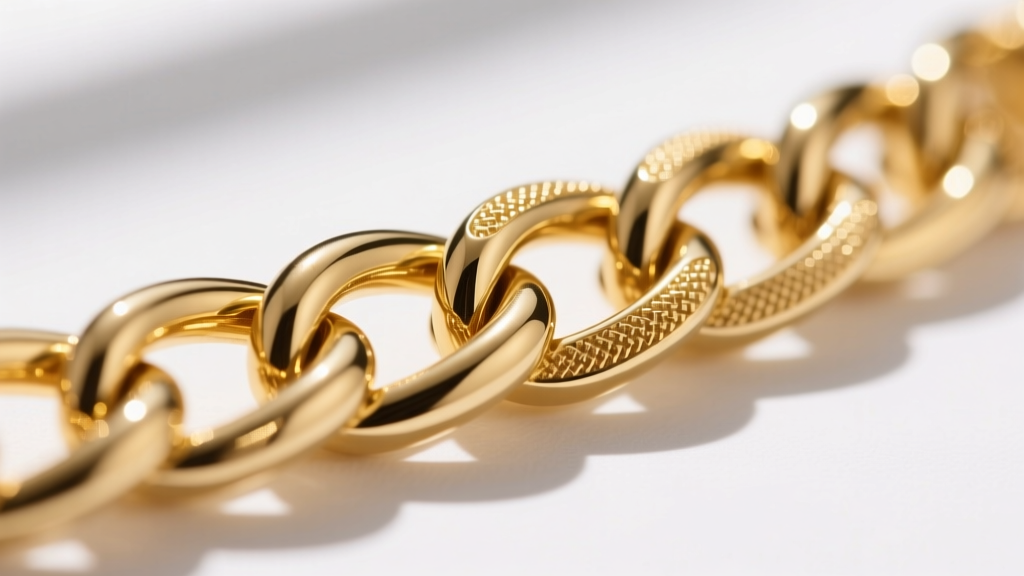
This mechanical bonding process creates a permanent molecular link that is vastly superior to the electrochemical adhesion of standard gold plating. The base metal used in eNewton's gold fill is typically a high-quality jeweler's brass, which provides excellent structural rigidity. The Vickers hardness of the brass core prevents the delicate cable chain from stretching out of shape under minor tension, while the 14k gold exterior provides the necessary tarnish resistance and skin-safe hypoallergenic properties.
Material Comparison Matrix
To contextualize the eNewton gold cross necklace within the broader market, we must compare its 14k gold fill construction against other common jewelry materials. The Gemological Institute of America (GIA) notes that gold layer thickness is the primary determinant of a piece's lifespan.
| Material Type | Gold Layer Thickness | Base Metal Core | Expected Lifespan (Daily Wear) |
|---|---|---|---|
| 14k Gold Fill (eNewton Standard) | ~2.5 to 5.0 microns (1/20th weight) | Jeweler's Brass | 10-30 years |
| Heavy Gold Vermeil | 2.5 microns minimum | Sterling Silver (.925) | 3-7 years |
| Solid 14k Gold | N/A (Homogeneous alloy) | N/A | Lifetime / Heirloom |
| Standard Flash Plate | 0.1 to 0.5 microns | Brass or Copper | 6-12 months |
Chain Gauge, Clasp Mechanics, and Tensile Strength
A pendant is only as secure as the chain that holds it. The eNewton gold cross necklace typically features a delicate 1.2mm to 1.4mm cable chain. From an engineering standpoint, a 1.2mm 14k gold-filled cable chain possesses a tensile yield strength of approximately 5 to 7 pounds before permanent deformation occurs. While this is more than sufficient to support the lightweight cross pendant (which generally weighs under 1.5 grams), it requires the wearer to avoid sudden, high-impact snags.
The clasp mechanism is equally critical. eNewton utilizes a standard 5mm or 7mm lobster claw clasp rather than a spring-ring clasp. Lobster clasps feature a more robust internal spring and a thicker closing lever, reducing the failure rate associated with daily opening and closing. Furthermore, the jump rings connecting the clasp to the chain are typically 4mm, 20-gauge wire that is fully soldered shut. This soldering is a vital technical detail; unsoldered jump rings can easily be pried open by friction against clothing, leading to catastrophic chain separation and pendant loss.
The Cross Pendant: Dimensions and Bail Architecture
The pendant itself is a study in minimalist geometry. The standard eNewton cross pendant measures approximately 10mm in width and 14mm in height, with a uniform thickness of 1.2mm. This specific aspect ratio ensures the cross remains legible from a distance without overwhelming the wearer's neckline. The surface finish is usually a subtle brushed or satin texture, which is achieved through fine-grit abrasive tumbling. This texture not only diffuses light beautifully but also serves a practical purpose: it masks micro-scratches that inevitably accumulate on high-polish surfaces over years of wear.
Crucially, we must examine the bail—the loop through which the chain passes. On the eNewton gold cross necklace, the bail is a soldered, closed-loop design integrated directly into the top of the cross. Unlike open 'C-bails' or pinch-bails that rely on tension, a soldered closed loop guarantees that the pendant cannot accidentally slip off the chain if the clasp fails or if the chain is threaded incorrectly during cleaning.
Layering Metrics: Lengths and Drop Calculations
The eNewton gold cross necklace is highly favored for layering, but achieving the correct visual spacing requires precise length calculations. When layering, the goal is to maintain a minimum 1.5-inch to 2-inch visual drop between each chain to prevent tangling and ensure each pendant is visible.
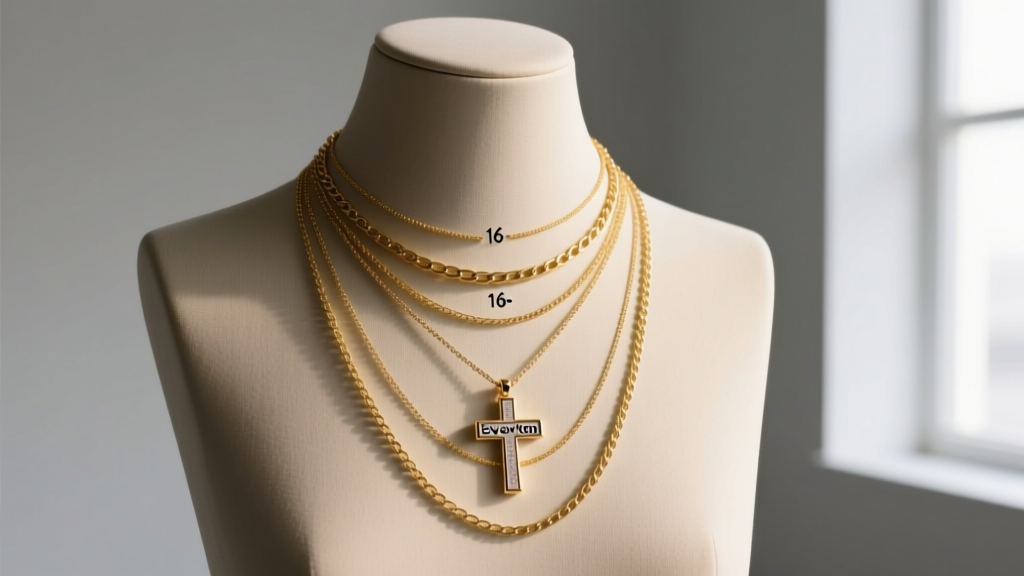
- The 16-Inch Choker Position: At 16 inches, the eNewton cross rests precisely at the base of the neck/collarbone. This is the optimal length for wearing the cross solo or pairing it with a 14-inch choker chain lacking a pendant.
- The 18-Inch Princess Position: At 18 inches, the cross drops to the upper chest. This length is ideal for layering over a 16-inch bead chain or beneath a 20-inch lariat.
- Tangling Coefficients: Chains of the same gauge and link type (e.g., two 1.2mm cable chains) are highly prone to interlocking if their lengths are within 0.5 inches of each other. Always ensure a strict 2-inch delta between layered eNewton pieces to minimize friction and knotting.
Expert Verdict and Longevity Protocols
From a technical and metallurgical standpoint, the eNewton gold cross necklace represents an exceptional intersection of durability, aesthetic precision, and material science. By adhering strictly to FTC guidelines for 14k gold fill and utilizing soldered structural components, eNewton has engineered a piece that bridges the gap between disposable fashion jewelry and prohibitively expensive solid gold.
"The longevity of gold-filled jewelry is directly proportional to the wearer's maintenance protocols. While the 14k gold exterior is highly resistant to oxidation, the mechanical bond can be compromised by harsh chemical abrasives."
To maximize the lifespan of your eNewton gold cross necklace, adhere to the following maintenance protocols:
- Avoid Ultrasonic Cleaners: The high-frequency cavitation bubbles in ultrasonic cleaners can cause micro-fractures in the brass core if the gold layer has any microscopic surface breaches, leading to delamination.
- Chemical Avoidance: Remove the necklace before exposure to chlorinated pool water or sulfur-heavy hot springs. Chlorine reacts aggressively with the copper and zinc alloys present in both the 14k gold and the brass core.
- Proper Storage: Store the necklace flat or hung vertically in a low-humidity environment. Coiling the chain tightly can introduce torsional stress to the individual 1.2mm links, causing permanent kinking.
Ultimately, for consumers seeking a structurally sound, meticulously crafted daily-wear pendant without the premium markup of solid 14k gold, the eNewton gold cross necklace remains a technically superior choice in the 2026 market.


