Is an Amethyst Station Necklace Worth It? 2026 Value Guide
Discover if an amethyst station necklace is worth your budget in 2026. We break down stone grades, chain metals, and pricing tiers for smart buyers.

The Anatomy and Appeal of the Station Necklace
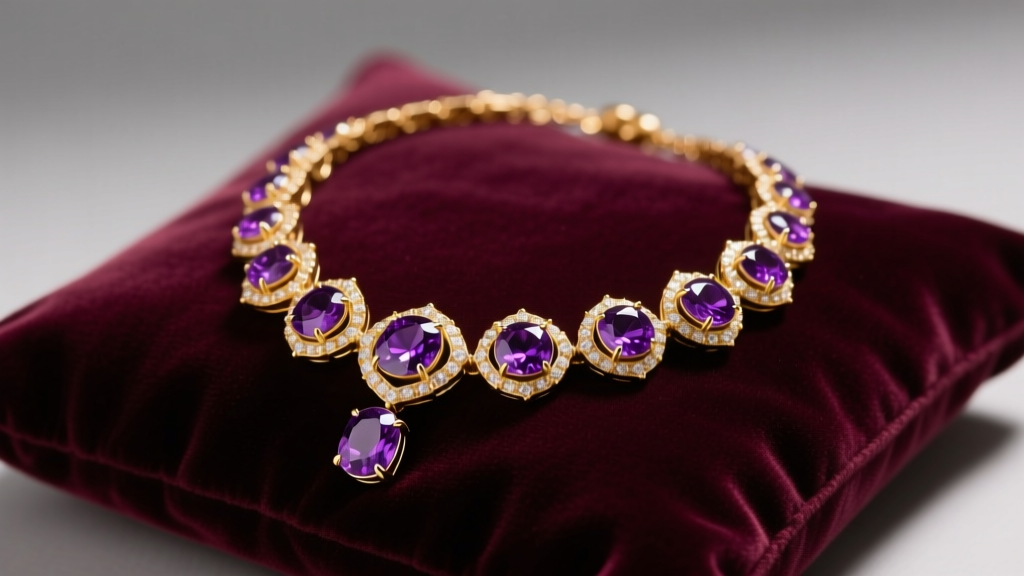
The station necklace has cemented its place as a cornerstone of minimalist jewelry design, and in 2026, the amethyst station necklace remains one of the most sought-after iterations of this style. Unlike a traditional pendant that relies on a single focal point, a station necklace distributes three to seven gemstones evenly across a delicate chain. This creates a continuous shimmer and allows the piece to be worn alone for a subtle look or layered with heavier chains for a maximalist effect. However, because the design relies on multiple stones and numerous solder points, assessing its true value requires looking far beyond the initial price tag. Whether you are spending $60 or $600, understanding the gemological and metallurgical realities of this specific design will save you from buyer's remorse.
Stone Quality: Where the Real Value Lies
Amethyst is a purple variety of quartz, registering a 7 on the Mohs hardness scale. While it is durable enough for necklace wear, it is not impervious to scratches from harder materials like diamonds or sapphires. The value of an amethyst station necklace is almost entirely dictated by the color saturation and origin of the stones used.
Color Saturation and Clarity Matrix
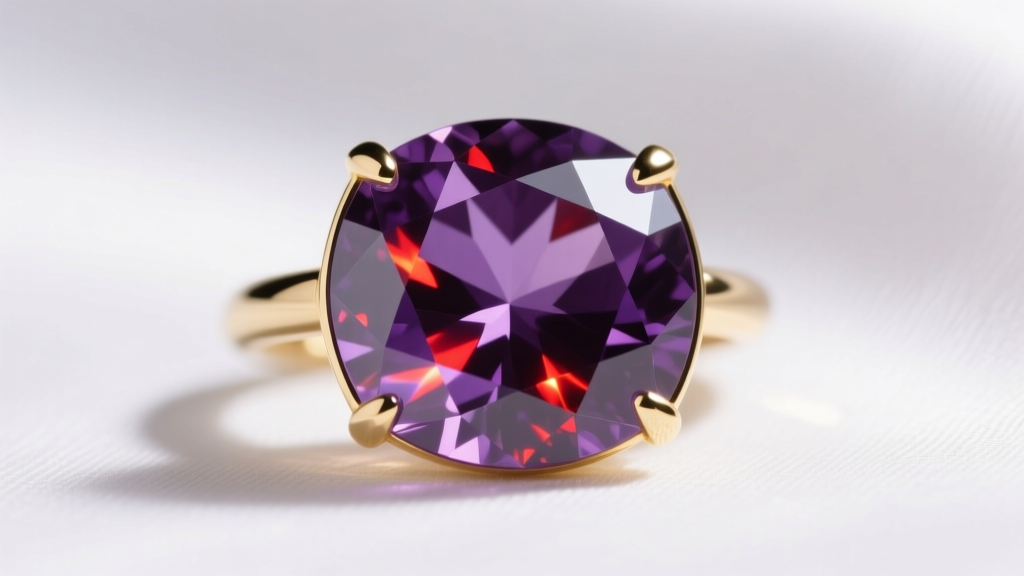
Gemologists grade amethyst primarily on color. The most valuable stones exhibit a deep, vivid purple with secondary flashes of red and blue. Lighter stones are significantly more abundant and therefore cheaper. Below is a breakdown of the three primary amethyst grades you will encounter in the 2026 market:
| Grade / Origin | Color Profile | Typical Inclusions | Value Impact |
|---|---|---|---|
| Siberian (Top Tier) | Deep violet with red/blue flashes | Minimal; occasional tiger stripes | Premium ($40-$80+ per carat) |
| Uruguayan (Mid Tier) | Rich, saturated purple | Color zoning, minor veils | Moderate ($15-$35 per carat) |
| Rose de France (Budget) | Pale lavender / lilac | Usually eye-clean | Low ($2-$8 per carat) |
When shopping for a station necklace, beware of severe 'color zoning'—visible stripes of light and dark purple within a single stone. High-quality lapidaries will use a checkerboard cut or a deep brilliant cut to mask this zoning and maximize light return. If the stones in a station necklace look flat or heavily striped, you are looking at lower-tier commercial-grade material.
Chain Metals and Hardware: The Hidden Cost Drivers
The chain is the structural backbone of any station necklace. Because the chain must be threaded through or soldered to multiple stone settings, the metal choice dictates both the price and the lifespan of the jewelry. Here is a realistic assessment of the metals used in 2026:
- Gold Vermeil: A sterling silver base plated with at least 2.5 microns of gold. While beautiful initially, the friction from daily wear will eventually wear through the plating, especially around the jump rings connecting the stations. Expect a lifespan of 1 to 3 years with regular use.
- Gold-Filled: A brass core mechanically bonded with a layer of gold that makes up at least 5% of the total weight. This is the sweet spot for budget-conscious buyers. It offers the look of solid gold and can last 5 to 10 years without flaking.
- Solid 10k or 14k Gold: The only option for a true heirloom piece. Solid gold will never flake or tarnish, making it the required choice if you plan to wear your amethyst station necklace in the shower or while swimming.
Failure Mode Alert: The most common point of failure on a station necklace is the jump ring connecting the bezel to the chain. Mass-produced necklaces often use machine-stamped jump rings that are merely pinched shut. For long-term value, inspect the hardware to ensure the jump rings are laser-welded or properly soldered shut.
2026 Pricing Tiers: What Should You Actually Pay?
To determine if you are getting a fair deal, you must align the stone grade with the metal type. Use this 2026 pricing matrix to evaluate retail listings:
| Tier | Stone Grade | Chain Metal | Fair Retail Price Range |
|---|---|---|---|
| Budget | Rose de France or Lab-Created | Vermeil or Gold-Plated Brass | $45 - $95 |
| Mid-Range | Uruguayan or High-Grade Lab | 14k Gold-Filled | $120 - $280 |
| Premium | Natural Siberian | Solid 14k or 18k Gold | $450 - $1,200+ |
If a retailer is offering a 'Siberian Amethyst' station necklace in solid 14k gold for under $150, the stones are almost certainly hydrothermal synthetics or purple glass. Always request a gemological disclosure.
Natural vs. Lab-Created: The Synthetic Dilemma
Hydrothermal lab-created amethyst is chemically and optically identical to natural amethyst, but it costs a fraction of the price. According to the FTC Jewelry Guides, retailers must clearly disclose if a stone is lab-created. Natural amethyst often contains microscopic 'tiger stripe' or 'zebra stripe' inclusions, which are hallmark fingerprints of its natural formation deep within the earth. Lab-created stones are typically flawless to the naked eye and under 10x magnification. If you are buying purely for aesthetics and color, a lab-created amethyst station necklace in gold-filled metal offers the absolute best value-to-longevity ratio on the market.
Setting Styles and Durability Risks
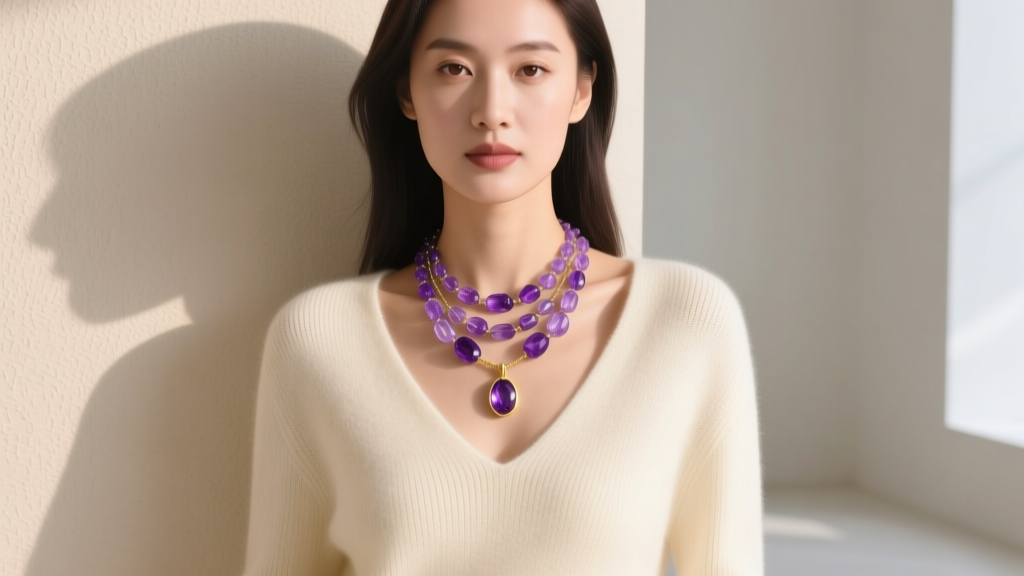
Because station necklaces drape across the collarbone, the stones are subject to frequent bumps, snags, and friction. The setting style is not just an aesthetic choice; it is a structural necessity.
Prong Settings: While prongs allow more light to enter the stone, they are a liability on station necklaces. The delicate prongs easily catch on knitwear and scarves, bending backward and releasing the stone. Furthermore, prong settings require a thicker metal profile, which can look clunky on a delicate 1.0mm chain.
Bezel Settings: A full or half-bezel setting wraps a rim of metal entirely around the girdle of the amethyst. This is the gold standard for station necklaces. It protects the edges of the quartz from chipping and eliminates snagging hazards. When assessing value, a well-crafted bezel with smooth, snag-free edges commands a higher price due to the increased labor and metal weight required.
Maintenance and Care for Longevity
Amethyst is sensitive to prolonged exposure to direct, intense sunlight, which can cause the purple color to fade into a muddy brown over time. Store your necklace in a dark jewelry box when not in use. While the Gemological Institute of America (GIA) notes that amethyst is generally safe for ultrasonic cleaners, doing so with a station necklace is risky. The high-frequency vibrations can easily shake loose a poorly set stone or weaken the solder points on delicate jump rings. Instead, clean your necklace using a soft baby toothbrush, warm water, and a drop of mild dish soap, gently brushing the backs of the bezels where skin oils and lotion accumulate.
Final Verdict: How to Maximize Your Investment
An amethyst station necklace is absolutely worth the investment if you buy strategically. For everyday wearers on a budget, a 14k gold-filled chain featuring lab-created or Uruguayan amethyst in bezel settings offers incredible durability and vibrant color for under $250. For fine jewelry collectors, investing in solid 14k gold with natural, deep-purple Siberian stones provides a timeless heirloom that will retain its structural and aesthetic integrity for decades. Always prioritize bezel settings, soldered jump rings, and transparent gemological disclosures to ensure your purchase holds its true value.


