The Lucerne Necklace Watch: Technical Guide to Vintage Swiss Pendants
Explore the mechanics, case metals, and authentication of the vintage Lucerne necklace watch. An expert horological guide for collectors.

The Horological Heritage of the Lucerne Necklace Watch
When horological historians and vintage collectors discuss the golden era of Swiss pendant timepieces, the Lucerne necklace watch occupies a highly specific and revered niche. Unlike the mass-produced fashion pendants of the late 20th century, authentic mid-century pieces originating from or retailed through the luxury ateliers of Lucerne (Luzern) represent a pinnacle of micro-mechanical engineering and decorative art. During the 1930s through the 1960s, Lucerne was not merely a tourist hub; it was a central artery for high-end Swiss watchmaking retail, spearheaded by heritage houses like Bucherer and numerous bespoke local jewelers.
The transition from the pocket watch to the necklace watch was driven by the shifting sartorial norms of women's fashion post-WWI. As necklines dropped and garments became less structured, the heavy silver hunter-case pocket watch gave way to the sleek, lightweight pendant watch. A true Lucerne necklace watch from this era is characterized by its integration of haute joaillerie and serious horology. These were not mere jewelry pieces with cheap pin-lever movements; they were precision instruments housed in micro-calibres, designed to keep chronometric time while suspended from a silk cord or precious metal chain.
Technical Anatomy: Movements and Calibres
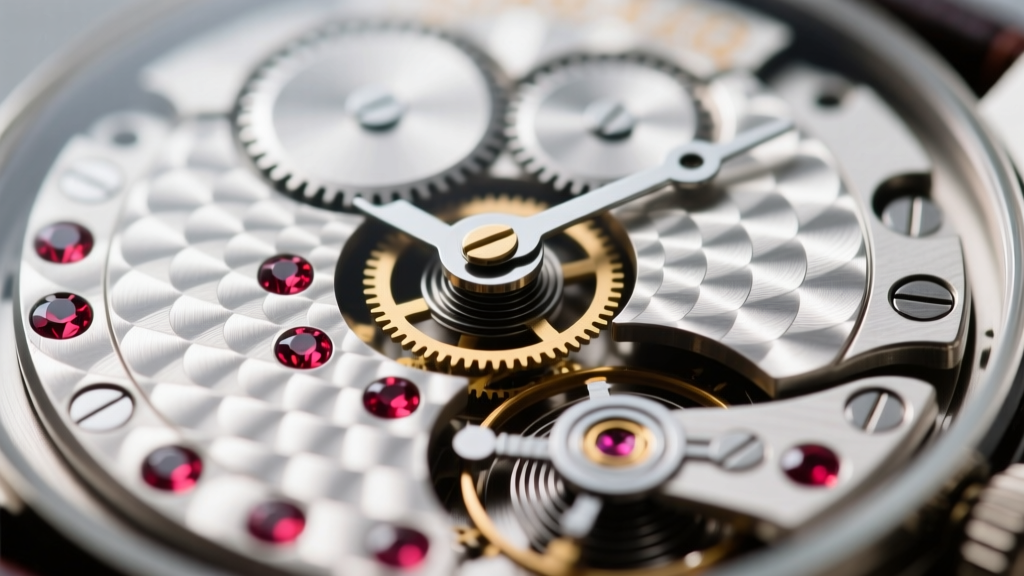
The defining technical challenge of any pendant watch is spatial limitation. To maintain a sleek profile against the sternum, watchmakers had to utilize ultra-thin, miniaturized form movements. The most prevalent calibres found in high-grade vintage Lucerne pieces were produced by specialized ébauche manufacturers like FHF (Fabrique d'Horlogerie de Fontainemelon) and ETA. These movements were typically measured in the traditional Swiss ligne system, with oval and baguette movements ranging from 5x7 ligne to 6x8 ligne.
Working on a 5x7 ligne movement requires extreme horological dexterity. The mainspring barrel is exceptionally small, meaning the torque output is minimal. Consequently, the gear train must be polished to a mirror finish to reduce friction, and the jewel count is often maximized (typically 15 to 17 jewels) to ensure longevity. Unlike wristwatches, which benefit from the kinetic motion of the arm to keep oils distributed, a necklace watch remains relatively static. This necessitates the use of high-grade synthetic watch oils that resist congealing over decades of static storage.
Common Calibre Specifications in Mid-Century Pendants
| Calibre Type | Dimensions (Ligne) | Jewel Count | Beat Rate (vph) | Power Reserve |
|---|---|---|---|---|
| FHF 5x7 Manual | 5 x 7 | 15 or 17 | 18,000 | 24 - 28 Hours |
| ETA 2140 Baguette | 5.5 x 9 | 17 | 19,800 | 30 - 34 Hours |
| Early Quartz (1970s) | 6 x 8 | N/A (IC Board) | 32,768 Hz | 2 - 3 Years (Cell) |
Metallurgy, Enamel, and Case Construction
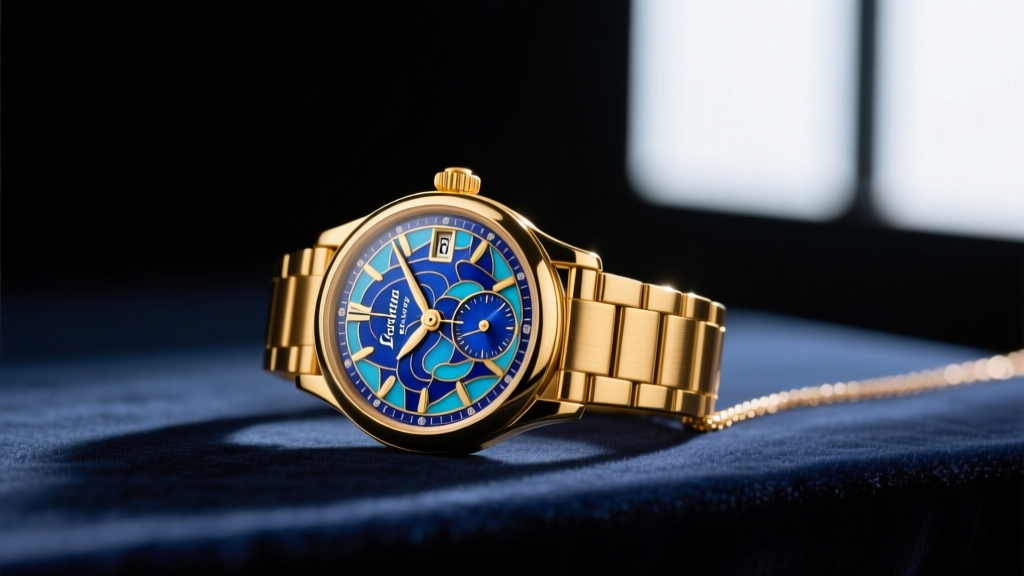
The casing of a vintage Lucerne necklace watch is where metallurgy meets fine art. The most prized examples from the 1940s and 1950s feature solid 14k or 18k gold cases, often augmented by guilloché enamel. Guilloché involves engine-turning a geometric pattern into the base metal and then fusing translucent vitreous enamel over it at temperatures exceeding 800°C. This creates a mesmerizing, three-dimensional light-play effect that modern epoxy resins simply cannot replicate.
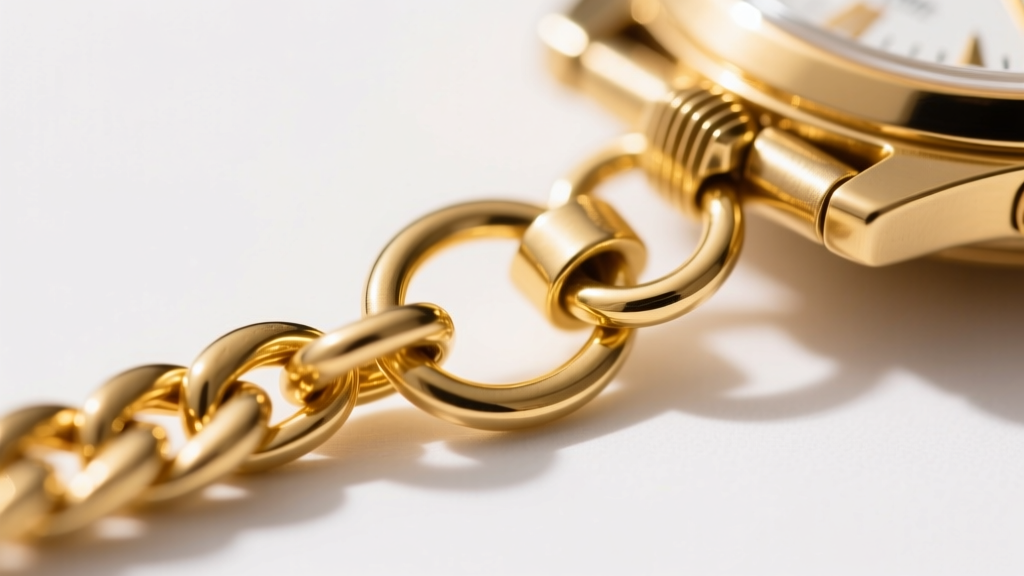
From a structural standpoint, the most critical component of the case is the bow—the loop at the top through which the chain passes. On inferior pendant watches, the bow is soldered with low-temperature lead-based solder, which fatigues and snaps under the pendulum-like swinging motion of daily wear. Authentic Swiss luxury pieces feature high-temperature silver-soldered bows, often reinforced with an internal steel or platinum sleeve to prevent the gold from wearing thin against the friction of the chain. When evaluating a piece, always inspect the interior of the bow for microscopic grooving; deep grooves indicate decades of friction and an impending structural failure.
The Physics of Chain Pairing
A common mistake made by modern collectors is pairing a heavy, solid-gold enamel pendant with an inadequate chain. A fully cased 18k gold Lucerne necklace watch with a glass crystal and enamel detailing can easily weigh between 25 and 40 grams. When worn, the dynamic force exerted on the chain during movement can multiply this static weight by a factor of three.
- Wire Gauge: Never use a chain thinner than 1.2mm. For pendants exceeding 30 grams, a 1.5mm to 2.0mm gauge is mandatory.
- Chain Style: Wheat (spiga) and box chains offer the highest tensile strength and resist kinking. Avoid hollow-rope chains, which crush easily under the localized pressure of the pendant bow.
- Clasp Mechanics: The jump ring connecting the chain to the bow must be soldered shut. A standard spring-ring clasp is insufficient; a heavy-duty lobster clasp with a reinforced lever is required to prevent accidental unclasping.
Authentication and Market Valuation in 2026
As of 2026, the vintage market for high-end Swiss pendant watches has seen a resurgence, driven by a renewed appreciation for artisanal enamel work and micro-mechanics. However, this has also led to an influx of franken-watches and counterfeit pieces. Authenticating a genuine Lucerne-origin necklace watch requires a meticulous examination of Swiss hallmarks.
According to the guidelines established by the Federation of the Swiss Watch Industry FH, vintage Swiss gold cases bear specific assay marks. For 18k gold, look for the profile of Helvetia (a woman's head in profile). For 14k gold, older pieces may feature a squirrel hallmark, while later 20th-century pieces transitioned to standardized numeric stamps (585) alongside the maker's mark. Furthermore, the movement bridge should bear the stamp of the ébauche manufacturer and the jewel count (e.g., 'SWISS 17 JEWELS').
Expert Insight: Never rely solely on the dial signature for authentication. Many mid-century jewelers in Lucerne would purchase high-grade unsigned ébauches and case them locally, stamping only their boutique name on the dial. The true value lies in the case hallmarks, the enamel quality, and the movement finishing.
In the current auction landscape, institutions like the Sotheby's Watch Department regularly feature mid-century enameled pendant watches. While standard gold-filled examples trade in the $400 to $800 range, solid 18k gold pieces with pristine basse-taille or plique-à-jour enamel dials and original FHF micro-calibres consistently fetch between $3,500 and $8,000, depending on provenance and condition.
Servicing and Maintenance Realities
Servicing a micro-calibre necklace watch is fundamentally different from servicing a standard wristwatch. The primary issue horologists face is amplitude drop. Because the mainspring is so short, any degradation in the lubrication of the gear train results in a severe loss of amplitude, causing the watch to run slow or stop entirely when placed in a vertical position.
A proper overhaul requires complete disassembly, ultrasonic cleaning of the bridges and mainplate, and the careful polishing of the pivot holes. Unlike modern watches, replacement parts for 5x7 ligne movements are virtually non-existent. If a balance staff is broken or a click spring is fatigued, the watchmaker must fabricate the part from raw steel stock on a lathe. Consequently, buyers should budget between $350 and $600 for a comprehensive service by a master horologist specializing in vintage micro-mechanics. Furthermore, the acrylic or mineral glass crystals on these pieces are often friction-fitted; replacing a cracked crystal requires sourcing custom-cut glass from specialized lapidaries, as standard off-the-shelf sizes rarely accommodate the unique oval and tonneau shapes of the Lucerne aesthetic.
Final Collector's Checklist
Before acquiring a vintage Lucerne necklace watch, run through this technical checklist to ensure you are purchasing a viable horological artifact rather than a decorative liability:
- Verify the Helvetia or numeric gold hallmark on the exterior case back and the interior cuvette.
- Inspect the solder joints on the pendant bow under a 10x loupe for stress fractures.
- Wind the crown gently; it should engage smoothly with a distinct, crisp clicking sound from the ratchet wheel.
- Check the enamel under raking light for hairline fractures or 'crazing', which drastically reduces the piece's numismatic and aesthetic value.
- Ensure the dial feet are intact; a loose dial that shifts when the watch is tapped indicates broken feet, requiring expensive dial restoration.
By understanding the intricate mechanics, metallurgical realities, and historical context of these pieces, collectors can properly preserve the legacy of the Lucerne necklace watch for future generations.


