Heidi Daus Cross Necklace: 2026 Style & Trend Analysis
Explore the 2026 maximalist trend through the Heidi Daus cross necklace. We analyze materials, styling frameworks, and value for statement jewelry.

The 2026 Shift: Heirloom Maximalism and Symbolic Motifs
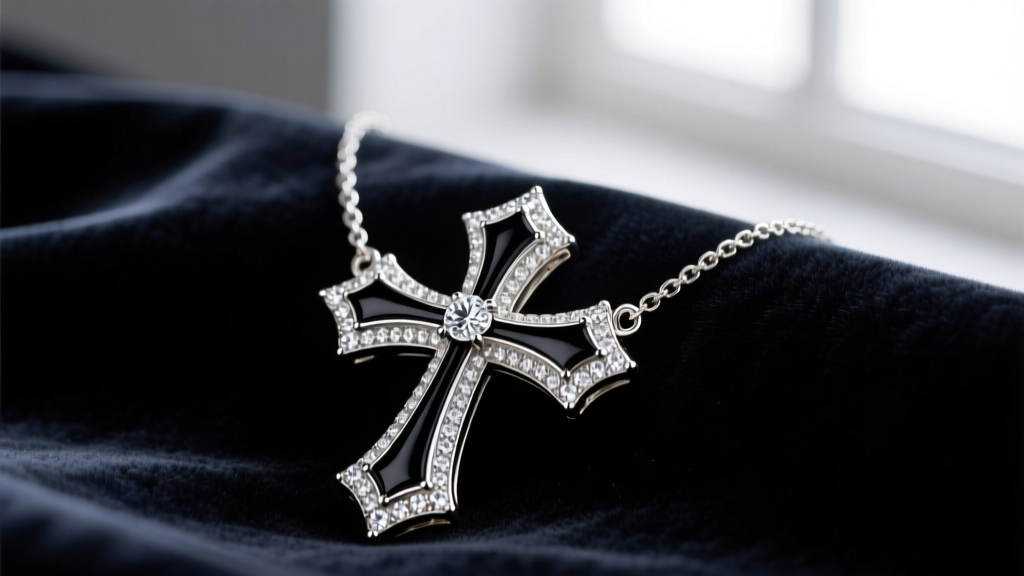
The jewelry landscape in 2026 has decisively pivoted away from the ultra-minimalist, barely-there chains that dominated the previous decade. Today, the market is defined by 'heirloom maximalism'—a demand for bold, narrative-driven pieces that feel plucked from a vintage archive. At the epicenter of this movement is the ornamental cross pendant. No longer confined to subtle religious expression, the cross has been reclaimed as a premier canvas for Art Deco geometry, gothic romance, and intricate crystal pavé. Leading this charge in the fashion jewelry sector is the Heidi Daus cross necklace, a masterclass in wearable art that perfectly encapsulates the current appetite for heavy, opulent symbolism. According to trend forecasters at Vogue, the modern consumer is seeking 'emotional armor' in their accessories, favoring pieces with historical weight and undeniable visual impact over delicate, easily overlooked chains.
Deconstructing the Anatomy of a Heidi Daus Cross
To understand why a Heidi Daus cross necklace commands such a devoted following and sits at the intersection of art and fashion, one must look past the surface sparkle and examine the underlying architecture. Unlike mass-produced fashion jewelry that relies on cheap zinc alloys or hollow stamped metals, Heidi Daus utilizes a solid brass base. Brass provides the necessary density and weight to support the heavy stone settings without warping over time. This base is then plated in either thick rhodium (for a tarnish-resistant, white-gold finish) or a rich 14k gold-tone.
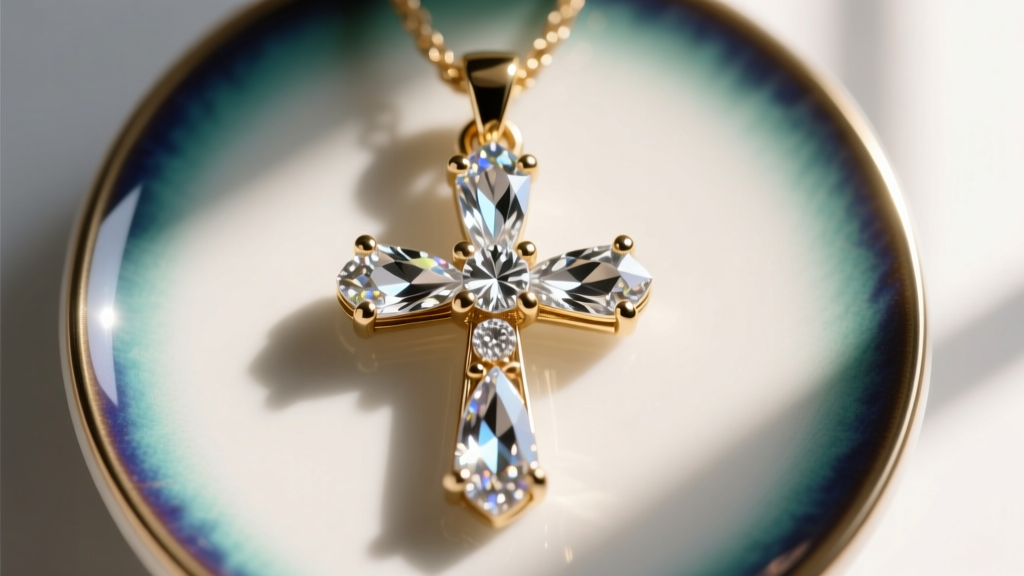
The true hallmark of these pieces, however, is the stone setting and enamel work. The crystals used are precision-cut Swarovski Elements, selected for their high refractive index and optical brilliance. In a typical Heidi Daus Art Deco cross, you will find a complex matrix of marquise, baguette, and round brilliant cuts, all hand-set into individual brass prongs rather than glued into shallow channels. This prong-setting technique allows light to enter the crystal from multiple angles, maximizing the scintillation. Furthermore, the integration of cold enamel (a resin-based pigment) provides deep, opaque pools of color—often jet black, ruby red, or emerald green—that contrast sharply with the icy brilliance of the rhodium and crystal.
Material, Value, and Weight Comparison Matrix
When evaluating statement crosses in the 2026 market, it is crucial to understand where the Heidi Daus cross necklace sits in the hierarchy of jewelry manufacturing. Below is a comparative breakdown of material grades, weight, and pricing across different market tiers.
| Feature | Heidi Daus (Statement Fashion) | Standard Fashion (e.g., BaubleBar) | Fine Jewelry (e.g., David Yurman) |
|---|---|---|---|
| Base Metal | Solid Brass | Zinc Alloy / Pewter | Sterling Silver / 18k Gold |
| Plating | Rhodium or 14k Gold-Tone | Flash Silver / Gold Plating | Solid (No Plating) |
| Stones | Swarovski Elements (Prong Set) | Acrylic / Glass (Glue Set) | Natural Diamonds / Sapphires |
| Average Weight | 55g - 85g | 15g - 25g | 10g - 30g |
| Price Range | $180 - $350 | $40 - $90 | $1,500 - $5,000+ |
As noted by industry analysts at JCK Online, the 'bridge' jewelry category—pieces that offer fine jewelry aesthetics and substantial weight at a fashion-accessible price point—is the fastest-growing segment in 2026. The Heidi Daus cross delivers the physical gravitas of a $3,000 fine jewelry piece for roughly $250, making it a highly strategic purchase for trend-conscious buyers.
The 2026 Layering Framework for Heavy Pendants
Styling a 70-gram crystal-encrusted cross requires a deliberate approach to chain selection and weight distribution. The most common failure mode when wearing heavy statement pendants is the 'forward flip,' where the weight of the pendant drags the chain down, causing the clasp to migrate from the back of the neck to the front. To counteract this in 2026, stylists recommend a specific structural framework for layering and support.
Chain Gauge and Clasp Mechanics
- Chain Thickness: Never pair a heavy Heidi Daus cross with a chain under 2.5mm. The ideal pairing is a 3.2mm to 4.0mm rope chain or a 3.5mm flat curb chain. These gauges provide the tensile strength needed to support the brass base without kinking.
- Clasp Counterbalancing: To prevent the clasp from sliding forward, use a chain with an oversized decorative toggle clasp or a heavy magnetic clasp at the nape of the neck. The added weight at the back acts as a counterbalance to the pendant.
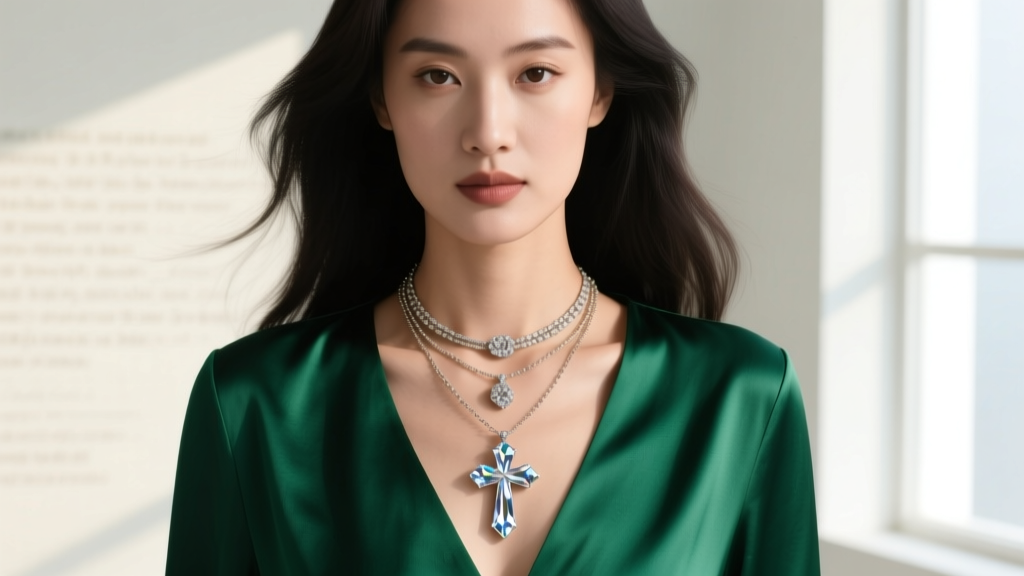
- Length Proportions: For high-neckline blouses, opt for a 24-inch opera length to let the cross rest on the sternum. For deep V-necks or sweetheart necklines, a 16-inch choker length or 18-inch princess length positions the cross perfectly in the decolletage without looking lost.
The Art of the Mixed-Metal Stack
While the maximalist trend encourages layering, stacking a highly detailed, multi-colored Heidi Daus cross with other ornate pendants creates visual clutter. The 2026 styling rule is 'One Hero, Multiple Anchors.' Pair the crystal cross with two or three solid, unadorned chains of varying textures—such as a 14k gold-filled paperclip chain and a simple oxidized silver herringbone chain. This allows the intricate enamel and pavé work of the cross to remain the undisputed focal point while satisfying the desire for a curated, layered neckline.
Occasion Mapping: When to Deploy the Statement Cross
The versatility of the Heidi Daus cross necklace lies in its ability to traverse different dress codes, provided the styling is calibrated correctly. Here is a practical guide to occasion mapping for ornate crystal crosses:
- Alternative & Gothic Bridal: A black-enamel and jet-crystal Heidi Daus cross is a staple for non-traditional bridal wear. Pair it with a velvet choker base and a plunging lace gown for a romantic, Victorian-gothic aesthetic that photographs exceptionally well in low-light venues.
- Editorial & Gala Wear: For black-tie events, the cross should be worn as a substitute for a traditional diamond pendant. Pin the pendant onto a wide, structured silk ribbon rather than a metal chain to elevate the piece from 'fashion jewelry' to 'haute couture accessory.'
- Elevated Daywear: To dress down the opulence for a high-end daytime lunch or gallery opening, layer the cross over a crisp, oversized white button-down shirt. The rigid collar provides a structural frame that grounds the sparkle, preventing the piece from looking overly theatrical.
Archival Care for Rhodium and Cold Enamel
Maintaining the pristine condition of a Heidi Daus cross necklace requires abandoning standard jewelry cleaning habits. The use of cold enamel and glue-assisted pavé settings means that ultrasonic cleaners and harsh chemical dips (like silver polish) are strictly prohibited. Ultrasonic vibrations will shatter the cold enamel and loosen the adhesive backing the crystal settings, leading to catastrophic stone loss.
Instead, adopt a dry-to-damp archival cleaning method. Use a soft-bristled, clean makeup brush to gently sweep dust out from between the brass prongs and crystal facets. For smudges or skin oils on the rhodium plating, lightly dampen a microfiber cloth with distilled water and a single drop of pH-neutral dish soap, wiping the metal gently without touching the enamel pools. Always store the necklace flat in a tarnish-inhibiting flannel pouch; hanging a 70g brass pendant on a jewelry tree will eventually stress the jump ring and distort the chain links over time. By treating these pieces as wearable art rather than disposable accessories, collectors can preserve the optical brilliance and structural integrity of their statement crosses for decades.


