The Ultimate Guide to Choosing a Diamond Sideways Cross Necklace
Discover how to choose, style, and buy the perfect diamond sideways cross necklace. Learn about carat weights, chain pairings, and metal grades.

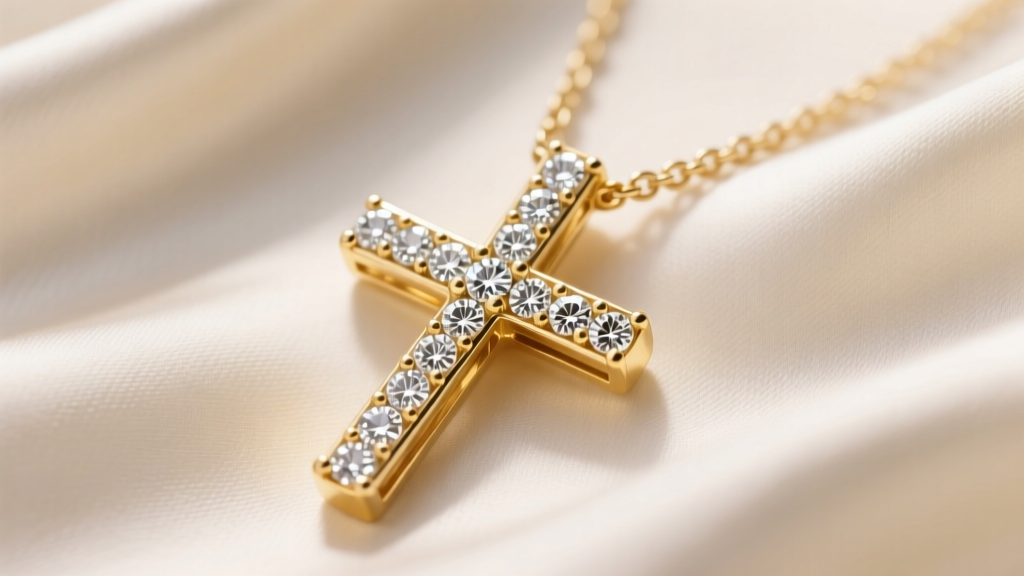
What is a Sideways Cross Necklace?
The diamond sideways cross necklace has evolved from a niche streetwear staple into a mainstream fine jewelry essential. Unlike traditional upright crosses that emphasize verticality and religious iconography, the horizontal orientation of a sideways cross shifts the visual focus to balance, symmetry, and modern minimalism. For beginners stepping into the world of fine jewelry, this pendant style offers a versatile, everyday wearable piece that layers effortlessly or stands alone as a subtle statement.
However, buying your first diamond cross requires navigating a maze of jewelry terminology. From understanding melee diamond quality to selecting a chain that will not snap under the pendant's weight, making an informed decision ensures your investment lasts a lifetime. This guide breaks down the exact specifications, material grades, and pricing tiers you need to know before purchasing.
Anatomy and Proportions: Getting the Ratio Right
The aesthetic success of a sideways cross relies heavily on its proportions. Because the human eye reads horizontal lines differently than vertical ones, a standard 1:1 equal-armed cross can look stunted when rotated 90 degrees.
- The 2:1 Ratio: The most flattering and common proportion for a sideways cross is a horizontal beam that is exactly twice as long as the vertical beam. This mimics the natural width-to-height ratio of the human collarbone, creating a harmonious look when worn.
- The 3:1 Ratio: For a more dramatic, elongated appearance, a 3:1 ratio offers a sleek, bar-like silhouette that pairs beautifully with deep V-necklines.
- Thickness and Depth: A beginner mistake is choosing a pendant that is too thin. Look for a metal depth of at least 1.5mm to 2.0mm. This provides enough structural integrity to hold diamond settings securely without bending when the chain is pulled.
Decoding Diamond Quality for Cross Pendants
Sideways cross necklaces rarely feature large, single solitaire diamonds. Instead, they utilize melee diamonds—small stones typically ranging from 0.01 to 0.15 carats each, which are set closely together in a pavé, channel, or bezel setting. According to GIA research on diamond melee, these small stones are primarily valued for their collective sparkle rather than individual grading reports.
Why Cut Matters More Than Clarity
When evaluating a diamond sideways cross necklace, prioritize the cut quality of the melee stones over their clarity. Because the stones are so small, natural inclusions (the internal flaws graded by the GIA) are completely invisible to the naked eye. Paying a premium for VVS (Very Very Slightly Included) clarity in a pavé cross is a waste of budget. Instead, look for SI1 to SI2 clarity grades, which are entirely eye-clean in melee sizes.
Cut, however, dictates how light reflects off the tiny facets. Poorly cut melee diamonds will look dull and glassy, especially in dim lighting. Ensure the product description specifies 'Ideal' or 'Excellent' cut melee, or buy from a vendor that guarantees high-light-performance stones. For color, G to H grades are the sweet spot; they appear completely colorless when set in white gold or platinum, without the steep price markup of D to F colorless grades.
Metal Choices and Chain Pairings
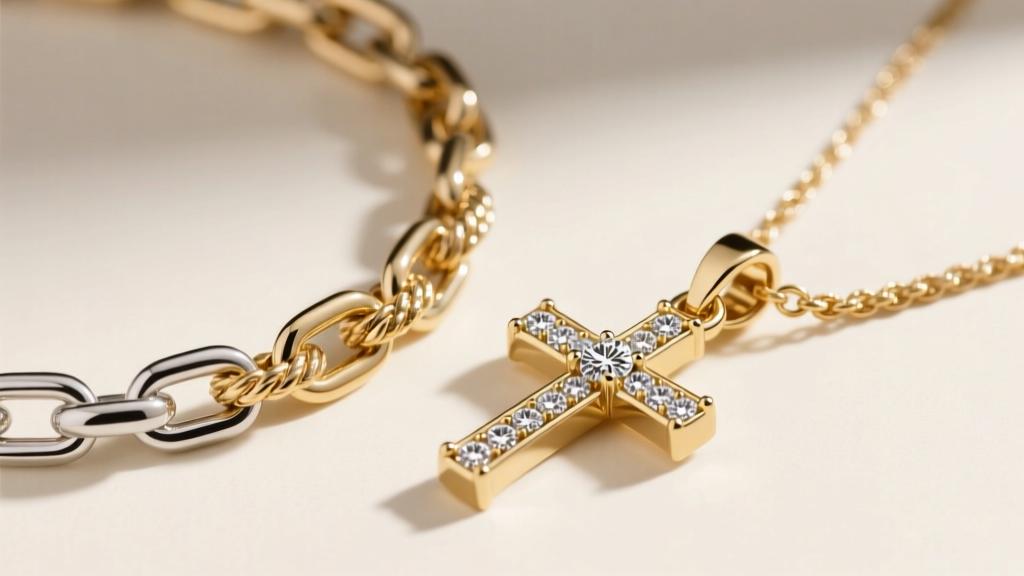
The metal you choose dictates both the durability of your necklace and its maintenance requirements. Furthermore, the chain must be proportionate to the pendant's weight. A heavy, 1.00-carat total weight (CTW) cross will snap a delicate 0.8mm cable chain over time.
| Metal Type | Durability & Scratch Resistance | Maintenance Level | Best Chain Style for Crosses |
|---|---|---|---|
| 14k White Gold | High (alloyed with nickel/zinc) | Medium (requires rhodium plating every 1-2 years) | 1.2mm Box Chain |
| 18k Yellow Gold | Medium (softer, prone to micro-scratches) | Low (polishes easily, no plating needed) | 1.0mm Rope Chain |
| Platinum (950) | Very High (displaces rather than loses metal) | Medium (develops a natural patina over time) | 1.5mm Cable Chain |
| 14k Rose Gold | High (copper alloy adds tensile strength) | Low (color is permanent, no plating) | 1.2mm Bead (Pellina) Chain |
Expert Tip: Avoid box chains for everyday wear if you have long hair. The sharp, geometric links of a box chain are notorious for catching and pulling hair strands. A rounded cable or rope chain is significantly more comfortable for daily use and less likely to kink if tangled.
Sizing and Proportions: Finding Your Fit
The visual impact of your sideways cross depends heavily on the chain length and the pendant's physical dimensions. Most standard crosses range from 15mm to 25mm in horizontal width.
- The 16-Inch Choker Fit: Best for crosses under 18mm wide. This length sits snugly at the base of the throat, making it ideal for layering with longer, 18-inch or 20-inch chains.
- The 18-Inch Standard: The most universally flattering length. An 18-inch chain allows a 20mm to 25mm sideways cross to rest perfectly on the upper chest, visible above most standard crewneck and scoop-neck t-shirts.
- Clasp Hardware: Always check the clasp. A standard spring-ring clasp is fine for lightweight chains, but if your cross and chain exceed 4 grams, upgrade to a lobster claw clasp for secure closure.
Real-World Pricing: What Should You Pay?
Pricing for a diamond sideways cross necklace varies wildly based on Total Carat Weight (TCW), metal choice, and brand prestige. Below is a realistic 2026 market breakdown to help you identify fair retail pricing and avoid inflated markups.
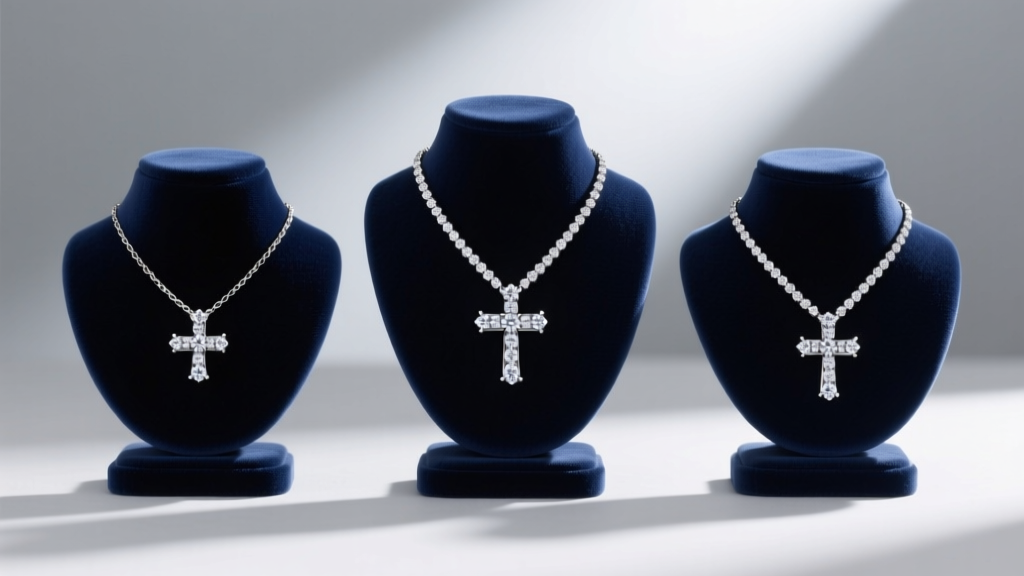
Entry-Level ($350 - $700)
Specs: 0.15 to 0.30 CTW, 10k or 14k gold, I-J color, I1-I2 clarity.
What to expect: The diamonds will be very small (under 0.02ct each). The cross will likely be hollowed out on the back to save metal weight. Excellent for teenagers or as a subtle, minimalist first piece.
Mid-Tier / Sweet Spot ($850 - $2,200)
Specs: 0.50 to 0.85 CTW, 14k or 18k gold, G-H color, SI1-SI2 clarity.
What to expect: This is where you get the best value. The diamonds are large enough to catch the light from across a room, and the metal weight is substantial enough to feel luxurious. Look for solid-backed settings in this tier.
Premium & Designer ($3,000 - $6,500+)
Specs: 1.00 to 2.00+ CTW, 18k gold or Platinum, D-F color, VS1-VS2 clarity.
What to expect: Exceptional craftsmanship, often featuring hand-set pavé or intricate milgrain detailing. You are paying for top-tier diamond color and brand prestige. Ensure the piece comes with an independent grading report or a detailed gemologist appraisal, as recommended by GIA diamond grading standards.
Care, Maintenance, and Troubleshooting
Pavé and channel settings require specific care to prevent diamond loss. The tiny metal beads or walls holding the melee diamonds can wear down or catch on fabrics over time.
- The Snag Test: Once a month, gently run a piece of silk or thin cotton over your cross. If the fabric catches on a prong or bead, the setting is loose and needs professional tightening immediately.
- Ultrasonic Cleaners: Avoid using ultrasonic jewelry cleaners on pavé sideways crosses. The high-frequency vibrations can shake loose the tiny diamonds if the setting is even slightly compromised. Instead, use a soft baby toothbrush, warm water, and a drop of mild dish soap.
- Storage: Never toss your necklace into a jewelry box loose. The diamonds on the cross can scratch the metal of the chain, or worse, scratch other softer gemstones. Always hang it or lay it flat in a dedicated microfiber pouch.
By understanding the nuances of melee diamond quality, metal durability, and proportional styling, you can confidently select a diamond sideways cross necklace that offers both enduring beauty and exceptional everyday wearability.


