Mood Necklace Colours and Meanings: The Science of Thermochromic Gems
Explore the science behind mood necklace colours and meanings. Compare thermochromic materials, capsule types, and base metals for optimal thermal response.

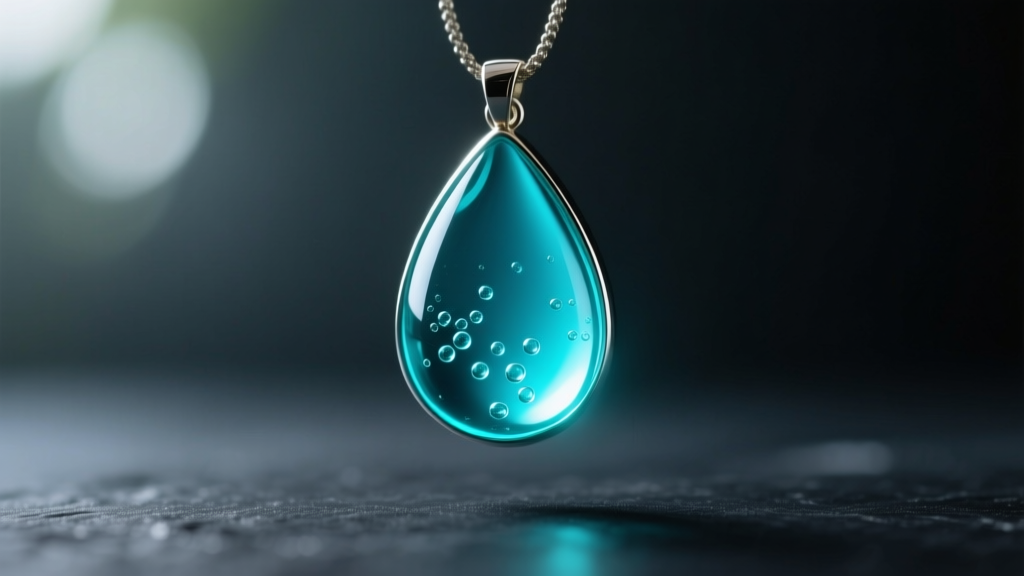
While mood jewelry first captured the public imagination in the 1970s as a novelty, the modern iterations available today rely on highly refined material science. Understanding the true mood necklace colours and meanings requires looking past the marketing and into the thermodynamic properties of the materials involved. Rather than measuring human emotion directly, these pendants act as highly sensitive, wearable thermometers. By examining the thermochromic compounds, capsule enclosures, and base metal alloys, we can decode exactly how these accessories function, why they change color, and how to choose a piece that offers both longevity and accurate thermal response.
The Material Science of Thermochromic Liquid Crystals
At the heart of every authentic mood pendant is a layer of cholesteric liquid crystals. Unlike standard solid crystals, these molecules exist in a chiral nematic phase, meaning they are arranged in a helical structure. When the temperature of the pendant changes, the pitch of this helix expands or contracts. This physical shift alters the wavelength of light that undergoes Bragg reflection, which is the exact mechanism that changes the visible color of the stone.
In high-quality 2026 jewelry manufacturing, these liquid crystals are often combined with leuco dyes to create a broader spectrum of color shifts. The thermochromic response is calibrated to human skin temperature, which typically ranges from 31°C to 34°C (88°F to 93°F) at the extremities, but can fluctuate based on ambient room temperature and peripheral blood flow.
Decoding Mood Necklace Colours and Meanings
The traditional mood necklace colours and meanings chart is essentially a translation of skin temperature correlates. When you are stressed or anxious, vasoconstriction causes blood to retreat from your extremities to your core, lowering your skin temperature. Conversely, excitement or physical activity increases peripheral blood flow, raising skin temperature. Below is the definitive material-to-temperature translation chart:
| Color Displayed | Temperature Threshold | Physiological State | Traditional 'Meaning' |
|---|---|---|---|
| Black / Clear | < 22°C (72°F) | Cold / Extreme Vasoconstriction | Stressed, Anxious, or Overwhelmed |
| Brown / Amber | 22°C - 25°C (72°F - 77°F) | Cool / Resting Baseline | Relaxed, Pensive, or Neutral |
| Green | 26°C - 28°C (78°F - 82°F) | Average Skin Temperature | Calm, Balanced, and Content |
| Blue / Turquoise | 29°C - 31°C (84°F - 87°F) | Warm / Increased Blood Flow | Happy, Active, or Sociable |
| Violet / Purple | > 32°C (89°F+) | Hot / Peak Peripheral Circulation | Passionate, Excited, or Romantic |
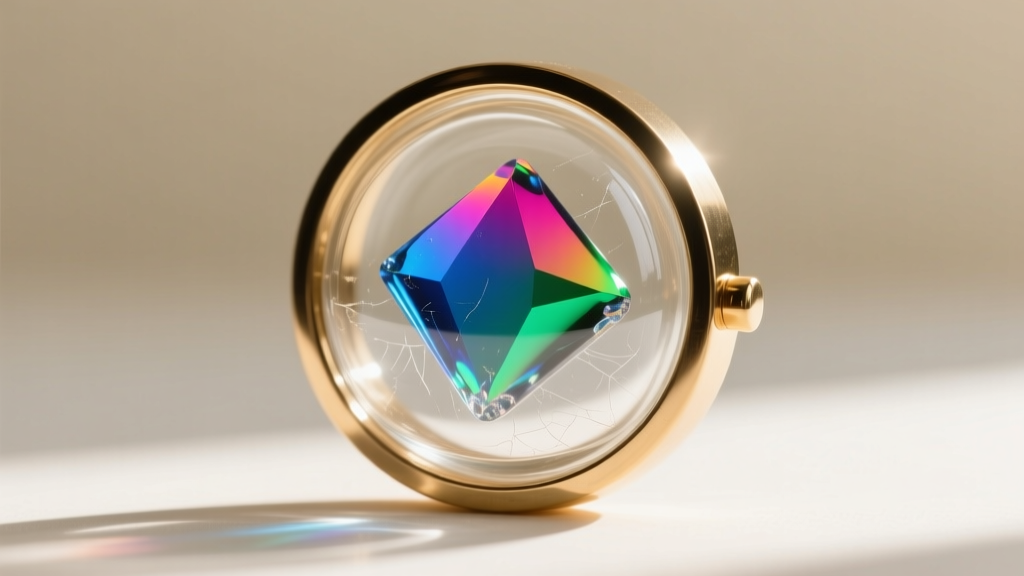
Capsule Construction: Borosilicate Glass vs. Polymer Resins
The liquid crystals must be hermetically sealed to prevent oxidation and moisture ingress. The choice of capsule material drastically affects the pendant's thermal responsiveness and durability.
- Borosilicate Glass: The premium standard for high-end thermochromic jewelry. Glass offers superior optical clarity and excellent thermal conductivity, allowing the liquid crystals to react to temperature shifts within 3 to 5 seconds. However, it is inherently brittle and susceptible to shattering upon hard impact.
- Polyurethane / Epoxy Resins: Often used in mass-market or children's jewelry. While highly impact-resistant, polymers act as mild thermal insulators. This results in a delayed color shift (often taking 15 to 20 seconds to register a temperature change). Furthermore, cheaper resins are prone to UV yellowing over time, which can permanently skew the color spectrum of the underlying crystals.
Base Metals and Thermal Conductivity
A frequently overlooked aspect of thermochromic principles in jewelry design is the thermal conductivity of the bezel and chain. The metal housing acts as a heat sink or a thermal bridge, directly influencing how quickly the stone registers your body heat.
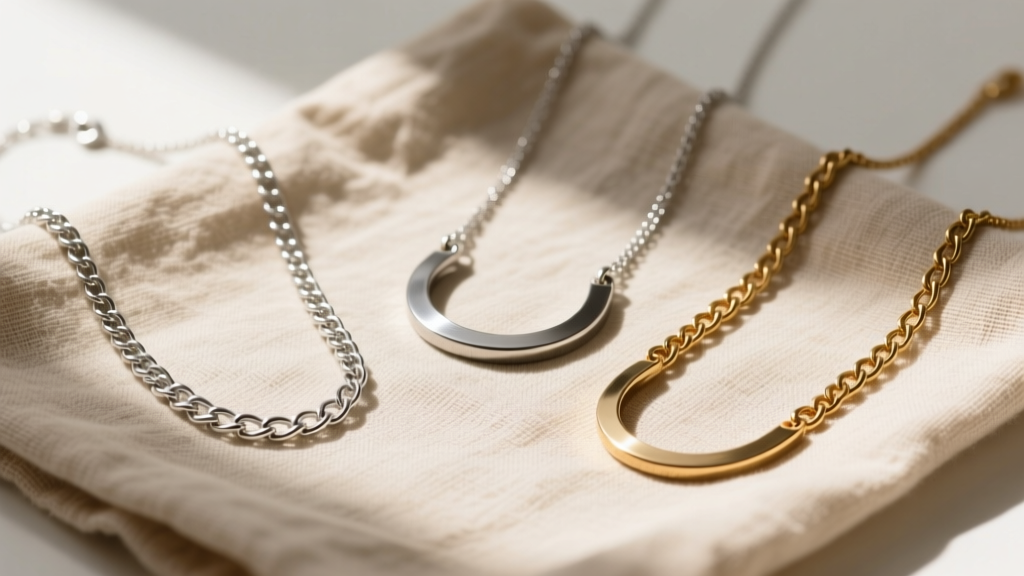
Sterling Silver (Ag 925) boasts a remarkably high thermal conductivity of approximately 429 W/m·K. A mood pendant set in a thin sterling silver bezel will react almost instantaneously to changes in your skin temperature, providing a highly dynamic color display. However, silver is prone to tarnishing when exposed to sulfur compounds in the air, requiring regular polishing.
Surgical Stainless Steel (316L) is highly durable, hypoallergenic, and resistant to tarnish, but its thermal conductivity is significantly lower, at roughly 16 W/m·K. Pendants housed in thick steel bezels will exhibit a sluggish color change, often remaining stuck in the 'green' or 'blue' spectrum because the metal fails to rapidly transfer ambient cold or localized heat spikes to the liquid crystal layer.
Brass and Bronze offer a middle ground (approx. 109 W/m·K) and are frequently used in vintage-style settings. They provide decent thermal transfer but require a protective rhodium or gold plating to prevent the copper content from reacting with skin acids, which can cause a green discoloration on the wearer's chest.
The chain itself also plays a role. A heavy, solid-cable chain resting directly against the sternum creates a larger thermal mass, which can slightly cool the pendant bezel compared to a delicate, lightweight box chain that minimizes skin-to-metal contact area.
UV Degradation and Moisture Ingress: Failure Modes
The most common complaint regarding mood jewelry is the stone turning permanently black. From a materials science perspective, this is rarely a 'broken' emotional state, but rather a catastrophic failure of the thermochromic compound due to environmental exposure.
Photodegradation: Cholesteric liquid crystals and leuco dyes are highly sensitive to ultraviolet (UV) radiation. Prolonged exposure to direct sunlight breaks down the molecular bonds responsible for the helical pitch shift. Once UV degradation occurs, the molecules lose their ability to reflect light selectively, resulting in a permanent, opaque black or dark amber state.
Moisture Ingress: If the hermetic seal of the glass or resin capsule is compromised—often due to micro-fractures from dropping the pendant or extreme thermal shock from jumping into cold water—moisture enters the chamber. Water molecules disrupt the delicate alignment of the liquid crystals, causing them to clump together. This structural collapse permanently destroys the thermochromic effect.
To maximize the lifespan of a thermochromic pendant, it must be stored in an opaque, climate-controlled jewelry box when not in use. Avoid wearing these pieces during activities that involve harsh chemicals, such as swimming in chlorinated pools or applying heavy lotions, as these substances can degrade the adhesive resins used to seal the capsule backing.
Final Thoughts on Material Selection
When evaluating the market for your next purchase, prioritize pendants that explicitly state the use of borosilicate glass capsules and high-conductivity bezels like sterling silver or thin-gauge brass. Understanding the physical properties behind mood necklace colours and meanings transforms the piece from a simple novelty into a fascinating, interactive display of thermodynamics and material engineering.


