Ultimate Care Guide for Your Sapphire Heart Necklace
Learn how to safely clean, maintain, and store your sapphire heart necklace. Expert tips on ultrasonic risks, prong checks, and daily wear.

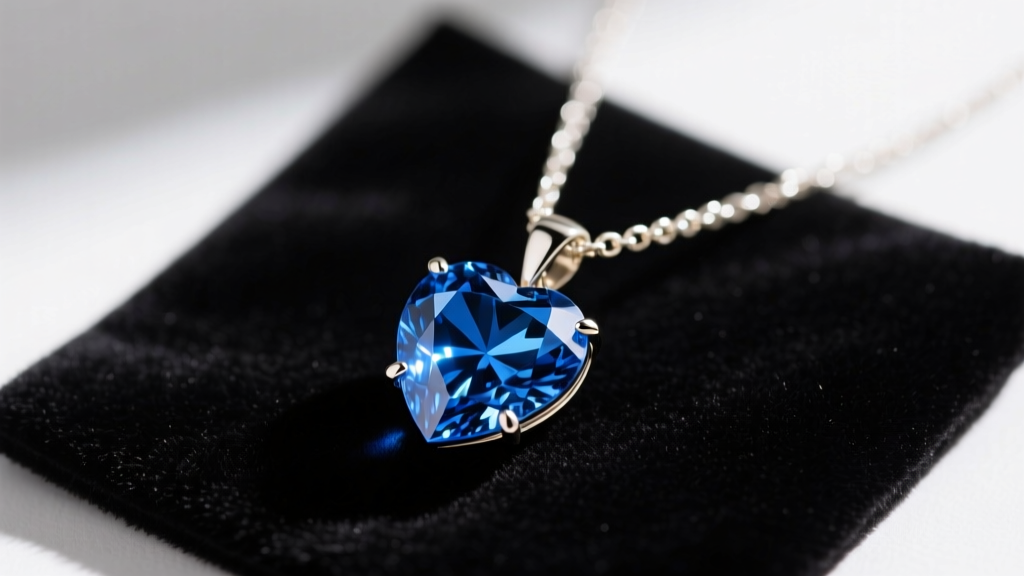
A sapphire heart necklace is more than just a romantic gesture; it is an investment in fine jewelry that requires meticulous care to maintain its brilliance and structural integrity. While sapphires are renowned for their exceptional hardness, the intricate anatomy of a heart-cut gemstone—specifically the deep cleft at the top and the sharp, vulnerable point at the bottom—creates unique maintenance challenges. Oils, lotions, and environmental dust easily accumulate in these crevices, dulling the stone's optical performance and accelerating wear on the metal setting. This comprehensive guide provides actionable, gemologist-backed protocols for cleaning, inspecting, and storing your sapphire heart pendant to ensure it remains flawless for generations.
The Gemology of Corundum: Hardness vs. Toughness
To properly care for your necklace, you must first understand the physical properties of sapphire. Sapphire is a variety of corundum, scoring a 9 on the Mohs scale of mineral hardness. This makes it highly resistant to scratching, second only to diamond. However, hardness is not synonymous with toughness. Toughness refers to a gem's resistance to chipping or breaking from impact.
The heart shape is a modified brilliant cut that inherently features a sharp inferior point. If this point strikes a hard surface like a granite countertop or a ceramic sink, the sapphire can chip or fracture, regardless of its Mohs rating. Furthermore, many commercial sapphires undergo treatments. While standard heat treatment is stable and permanent, the Gemological Institute of America (GIA) warns that fracture-filled sapphires—those infused with lead-glass to mask inclusions—are highly unstable. Exposure to mild acids, ammonia, or even repeated ultrasonic cleaning can cloud, etch, or completely destroy a fracture-filled stone.
Step-by-Step At-Home Cleaning Protocol
Routine cleaning at home is safe and effective, provided you use the correct materials. Avoid commercial jewelry dips, which often contain harsh chemicals that can degrade the alloy metals in your chain or damage treated stones.
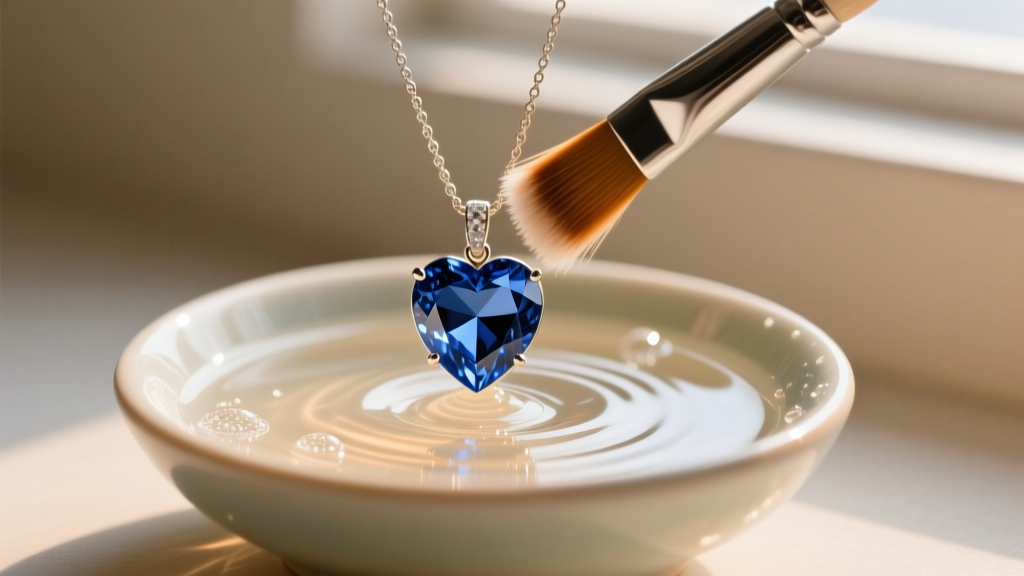
The Safe Cleaning Method
- Prepare the Solution: Fill a small glass bowl with lukewarm distilled water. Tap water contains calcium and magnesium that can leave microscopic hard-water spots on the gem. Add two drops of a pH-neutral, lotion-free dish detergent (such as original Dawn).
- Soak: Submerge the sapphire heart necklace and let it soak for 10 to 15 minutes. This loosens sebum and cosmetic buildup trapped in the cleft of the heart and beneath the pavilion facets.
- Agitate Gently: Using a brand-new, ultra-soft baby toothbrush, gently brush the stone. Pay special attention to the cleft (the dip at the top of the heart) and the underside of the gem, where light-blocking oils accumulate. Never use stiff-bristled brushes, which can scratch the gold or platinum setting.
- Rinse Thoroughly: Rinse the pendant under a gentle stream of lukewarm distilled water. Ensure the drain is securely plugged to prevent catastrophic loss.
- Dry and Polish: Pat dry with a lint-free microfiber cloth. Avoid cotton swabs or tissue paper, as the fibers can snag on the prongs and pull them away from the gemstone.
Navigating Ultrasonic and Steam Cleaners
Many jewelry owners rely on ultrasonic cleaners for convenience, but these devices use high-frequency sound waves to create microscopic cavitation bubbles. When these bubbles implode, they generate intense localized shockwaves. While generally safe for untreated, high-clarity sapphires, they pose severe risks to stones with inclusions or treatments.
| Cleaning Method | Safe for Heated/Untreated | Safe for Fracture-Filled | Primary Risk Factors |
|---|---|---|---|
| Mild Soap & Distilled Water | Yes | Yes | None, if rinsed properly |
| Ultrasonic Cleaner | Usually Safe | NO | Shattering inclusions, shaking loose prongs |
| Steam Cleaning | Usually Safe | NO | Thermal shock, melting glass fillers |
| Commercial Jewelry Dips | Use with Caution | NO | Chemical etching, alloy tarnishing |
According to guidelines published by the Federal Trade Commission (FTC), jewelers must disclose significant treatments like fracture filling. If you are unsure of your sapphire's treatment history, assume it is fracture-filled and strictly avoid ultrasonics, steamers, and any cleaners containing ammonia or citric acid.
Inspecting the Heart Setting and Bail
The structural integrity of a sapphire heart necklace relies heavily on its metal setting. Heart pendants typically utilize a V-prong at the bottom point to protect the sharp tip from chipping, alongside standard prongs around the rounded lobes.
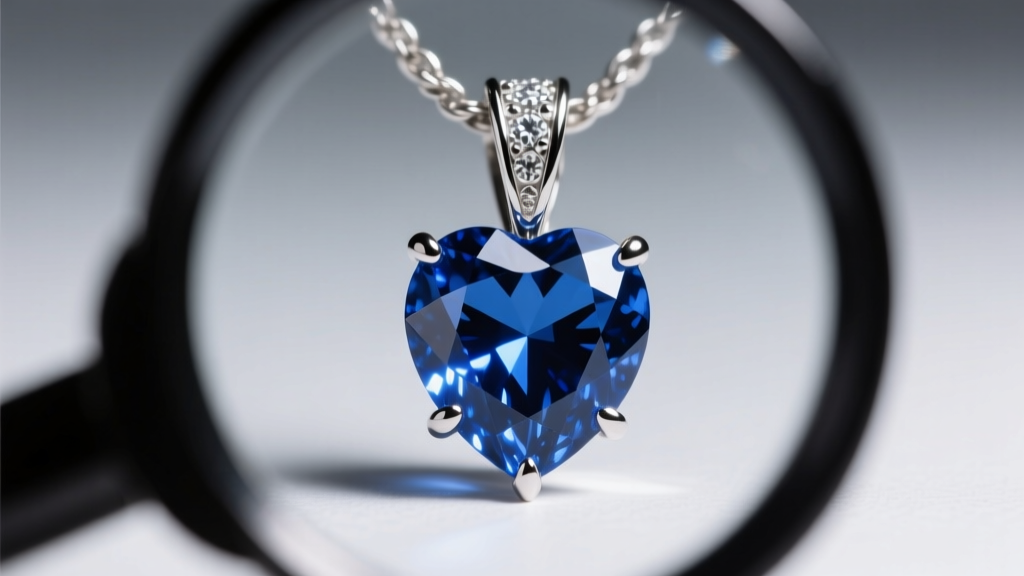
The Monthly Prong and Bail Check
Once a month, examine your necklace under bright light using a 10x jeweler's loupe. Look for the following warning signs:
- Prong Lift: Gently run a piece of silk fabric over the setting. If the silk snags, a prong has lifted and requires immediate professional burnishing.
- V-Prong Wear: The V-prong at the bottom point takes the brunt of impact wear. Ensure the metal fully encapsulates the sapphire's tip without thinning.
- Bail Friction: The bail is the loop connecting the pendant to the chain. Constant friction from the chain can wear a hole through the bail over time. Check the interior of the bail for deep grooves.
Expert Insight: If your sapphire heart pendant rattles even slightly when tapped, the stone is loose in its setting. Remove the necklace immediately and store it flat until a master jeweler can tighten the prongs. Continuing to wear a loose gemstone risks the stone popping out and being lost.
Strategic Storage and Daily Wear Rules
Because sapphire is a 9 on the Mohs scale, it is hard enough to scratch almost any other material in your jewelry box. Storing your sapphire heart necklace loosely in a communal jewelry box will result in severe scratching to your gold chains, platinum bands, and softer gemstones like emeralds, opals, and pearls.
Always store the necklace individually in a soft, acid-free flannel pouch or a dedicated fabric-lined compartment. Before storing, ensure the chain is fully extended and clasped to prevent micro-kinks, particularly if you own a delicate box or snake chain. Furthermore, adhere to the 'last on, first off' rule: put your necklace on only after applying perfumes, hairsprays, and lotions, and remove it before showering or swimming. Chlorine in pools and hot tubs can aggressively degrade the copper and zinc alloys in 14k and 18k gold settings, leading to microscopic stress fractures in the prongs holding your sapphire.
When to Seek Professional Maintenance
While at-home care maintains brilliance, it cannot replace professional servicing. The American Gem Society (AGS) recommends having fine jewelry professionally inspected and cleaned every six to twelve months. A professional jeweler will use specialized tools to check the structural integrity of the solder joints on the chain, tighten the prongs securing the heart-cut sapphire, and perform a gentle, controlled steam clean if the stone's treatment profile allows it. By combining meticulous at-home care with routine professional oversight, your sapphire heart necklace will retain its romantic brilliance and structural security for a lifetime.


