Yellow Flower Necklace Construction: Enamel vs Gemstone Tech
Explore the technical construction of a yellow flower necklace. Compare vitreous enamel, cold resin, and gemstone inlay for lasting botanical jewelry.

The Engineering of Botanical Jewelry
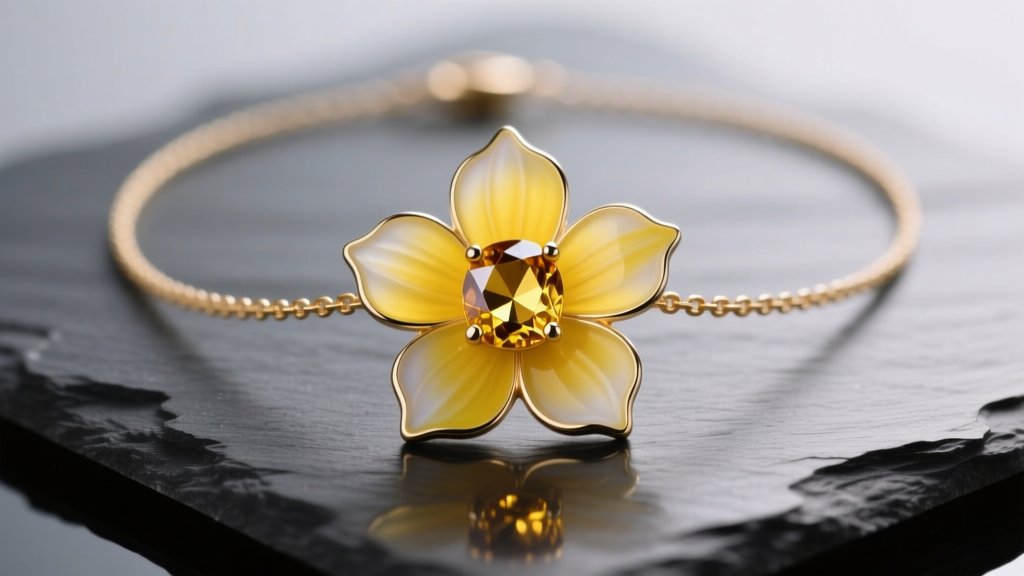
When evaluating a high-end yellow flower necklace, the untrained eye focuses solely on the aesthetic appeal of the floral motif. However, from a master jeweler's perspective, the true value lies in the technical execution of the materials. Botanical jewelry requires a delicate balance between organic, asymmetrical design and rigid structural integrity. In 2026, the market has seen a massive shift away from mass-produced, stamped metal florals toward artisanal techniques that prioritize material longevity and optical brilliance. Whether the yellow hue is achieved through vitreous enamel, advanced cold resins, or precision-carved gemstones, each method dictates specific requirements for the metal substrate, chain pairing, and long-term wearability.
This deep dive explores the metallurgical and lapidary sciences behind the yellow flower necklace, providing a technical framework for collectors, designers, and informed buyers to assess quality and durability.
Material Matrix: Vitreous Enamel vs. Cold Enamel vs. Gemstone
The yellow spectrum in jewelry can be rendered through three primary mediums, each with distinct physical properties, failure modes, and pricing structures. Understanding these differences is critical when investing in botanical pendants.
| Material | Mohs Hardness | UV Stability | Firing / Setting Temp | Avg. Price Range (Pendant) |
|---|---|---|---|---|
| Vitreous Enamel (Glass) | 5.5 - 6.5 | Excellent | 780°C - 850°C | $800 - $4,500+ |
| Cold Enamel (Epoxy Resin) | 2.0 - 3.0 | Poor to Fair | Room Temp (Cures 24h) | $150 - $600 |
| Carved Yellow Sapphire | 9.0 | Excellent | N/A (Lapidary carving) | $1,200 - $10,000+ |
| Carved Citrine | 7.0 | Good | N/A (Lapidary carving) | $300 - $1,500 |
Deep Dive: Vitreous Enamel (Plique-à-jour and Champlevé)
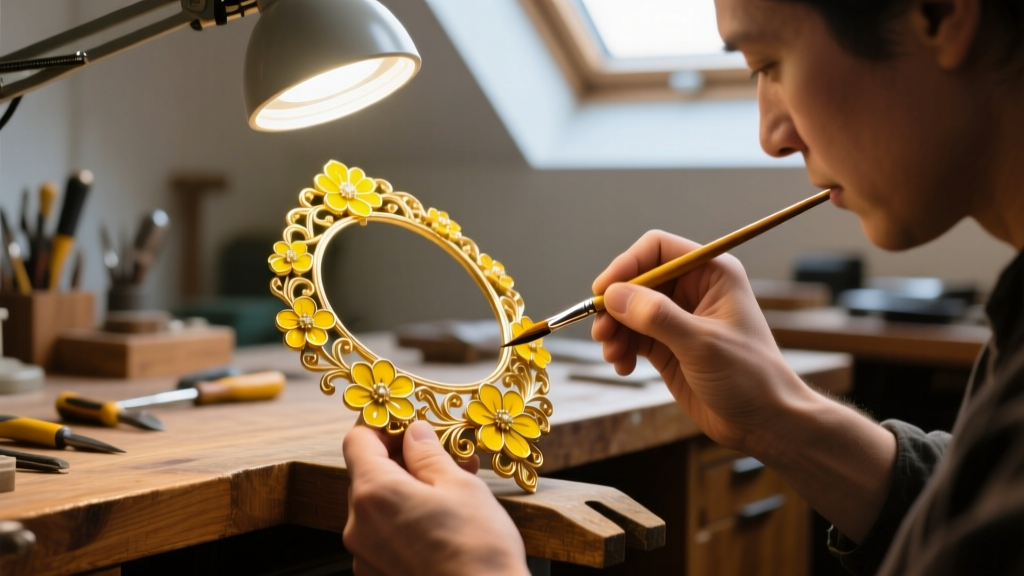
Vitreous enamel is essentially fused glass. To create a yellow flower necklace using this technique, finely ground glass frit is packed into metal cells (champlevé) or suspended within a backless metal framework (plique-à-jour). The piece is then fired in a kiln, melting the glass into a translucent, jewel-toned finish.
Firing Temperatures and Metal Substrates
Achieving a vibrant, stable yellow in vitreous enamel is notoriously difficult. Historically, cadmium sulfoselenide was used to produce bright yellows, but due to strict 2026 RoHS compliance and health standards, modern master enamelists rely on lead-free, cadmium-free frits based on iron oxide and titanium dioxide suspensions. These modern frits require precise firing at 780°C to 820°C. If the kiln temperature is too low, the yellow appears muddy or brownish; if too high, the flux burns out, leaving a pitted, devitrified surface.
Furthermore, the metal substrate is critical. Sterling silver (925) contains 7.5% copper, which oxidizes during the high-heat firing process, creating black firescale that bleeds through transparent yellow enamel, ruining the optical clarity. Therefore, high-end yellow enamel florals must be constructed on fine silver (999) or high-karat gold (18k or 22k), which resist oxidation at these temperatures. According to the Victoria and Albert Museum's archives on enamelling, the historical mastery of substrate preparation is what separates museum-quality botanical pieces from commercial costume jewelry.
Carved Gemstones: Citrine, Yellow Sapphire, and Amber
For those seeking a yellow flower necklace with superior scratch resistance, carved gemstones offer a permanent, crystalline alternative to enamel. The lapidary process of carving a floral motif requires a deep understanding of the stone's crystal habit and cleavage planes.
Refractive Index and Light Return in Floral Faceting
Yellow sapphire (corundum) boasts a Mohs hardness of 9 and a refractive index (RI) of 1.76-1.77, making it the premier choice for heirloom botanical jewelry. When carving a sapphire into a flower, lapidaries often utilize a 'fantasy cut' or apply a matte frosting to the petals to diffuse light, creating a soft, organic glow that contrasts sharply with a brilliant-cut center stone. Citrine (quartz), with a Mohs of 7 and an RI of 1.54-1.55, is more accessible but requires thicker petal carvings to prevent chipping, as quartz lacks the structural toughness of corundum. The Gemological Institute of America (GIA) frequently notes that the interplay of light in carved gemstones relies heavily on the precision of the pavilion angles, even in non-traditional floral shapes.
Chain Pairing and Bail Mechanics for Asymmetrical Florals
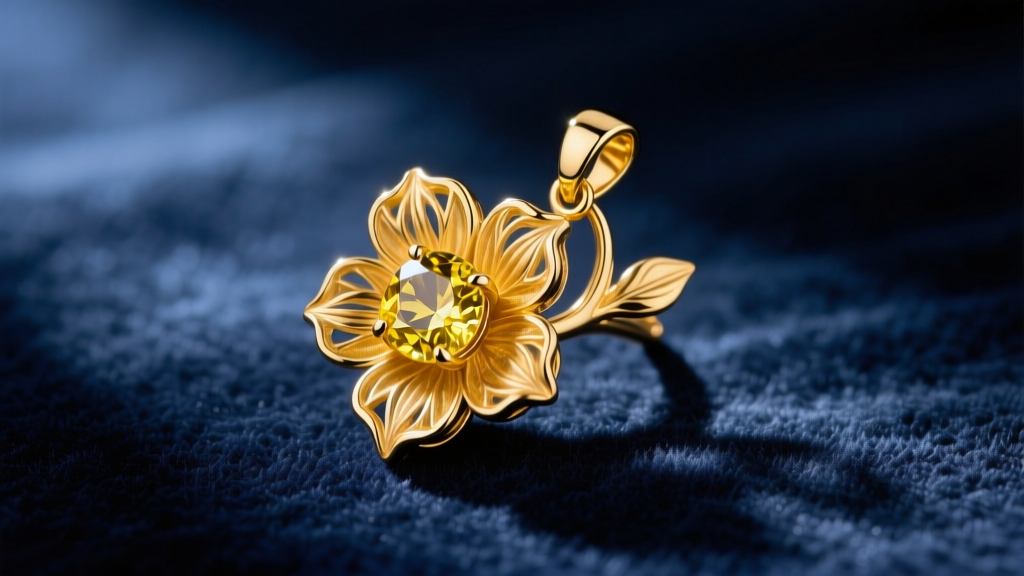
A common failure point in botanical jewelry is the bail—the loop that connects the pendant to the chain. Floral pendants are inherently asymmetrical and top-heavy, which can cause them to flip upside down or slide off-center if the bail mechanics are poorly engineered.
Weight Distribution and Bail Sizing
A standard 12-gram carved sapphire or heavy enamel flower requires a custom-fabricated hidden bail. Standard 5mm x 3mm oval bails are insufficient for these pieces. A properly engineered bail for a heavy yellow flower necklace will feature a 4mm inner diameter to accommodate a sturdy 2.5mm wheat or box chain. The bail must be soldered precisely at the pendant's calculated center of gravity, often requiring a reinforced 14k or 18k gold backing plate to distribute the sheer stress away from the delicate enamel or gemstone petals. Using a delicate 1mm cable chain with a heavy floral pendant will inevitably lead to chain kinking and bail wear.
Maintenance and Failure Modes
Even the most meticulously crafted yellow flower necklace requires specific maintenance protocols to prevent catastrophic failure. Below are the primary failure modes and their technical solutions:
- Thermal Shock in Enamel: Vitreous enamel can crack if exposed to sudden temperature changes. Never wear enamel botanical jewelry in saunas or while washing hands in ice-cold water immediately after being in a heated environment.
- UV Degradation in Cold Enamel: Epoxy-based cold enamels will yellow and become brittle over time when exposed to ultraviolet light. If your pendant uses cold enamel, store it in an opaque, UV-blocking jewelry box when not in use.
- Prong Fatigue in Carved Stones: The intricate petal veining on carved gemstones creates micro-fissures where dirt accumulates. Ultrasonic cleaners can vibrate these fissures, leading to stone fracture. Clean carved floral pendants only with a soft brush and mild, non-ammoniated soap.
- Galvanic Corrosion: If a pendant features mixed metals (e.g., a silver floral base with gold stamens), exposure to saltwater or heavy perspiration can cause galvanic corrosion, degrading the less noble metal.
Expert Insight: When purchasing a vintage or antique yellow enamel flower necklace, always inspect the reverse side of the pendant. High-end historical pieces will feature a 'counter-enamel' layer—a clear or translucent coat of enamel on the back of the metal substrate. This counter-enamel equalizes the surface tension of the glass, preventing the metal from warping and the front enamel from crazing over decades of wear.
By understanding the metallurgical constraints, lapidary techniques, and mechanical engineering required to produce a premium yellow flower necklace, collectors can make informed decisions that prioritize both artistic beauty and generational durability.