Restoring Heidi Daus Necklaces: Fix Cloudy Crystals & Clasps
Learn how to clean, repair, and restore Heidi Daus necklaces. Expert troubleshooting for cloudy crystals, failing clasps, and loose enamel.

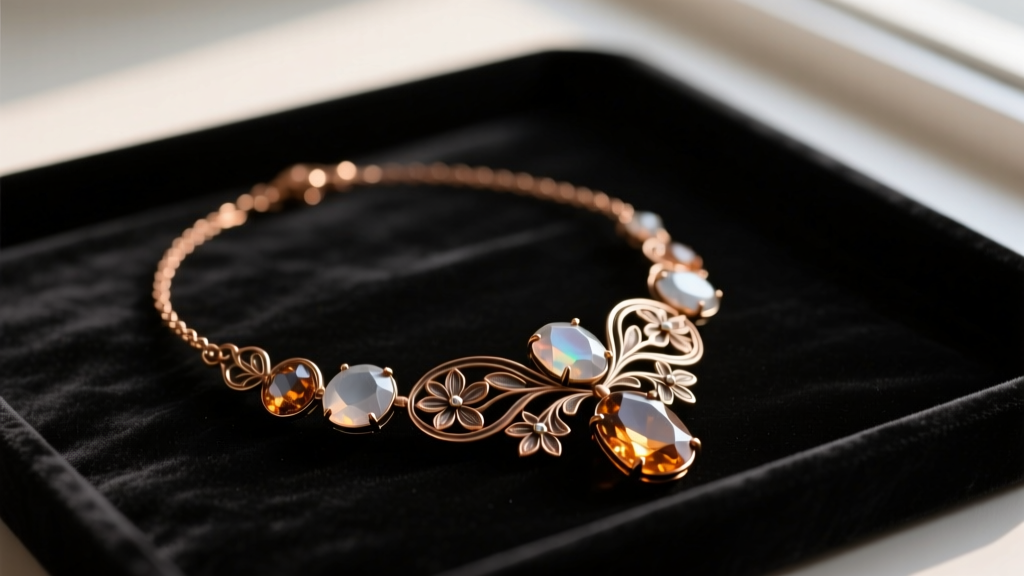
Heidi Daus necklaces are celebrated investment pieces in the realm of high-end fashion jewelry, renowned for their whimsical motifs, intricate hand-painted enamel work, and heavy crystal embellishments. However, the very materials that give these pieces their vintage-inspired glamour—bronze-tone alloys, hand-set faceted crystals, and painted epoxies—are highly susceptible to environmental wear and mechanical stress. When your favorite statement piece develops cloudy stones, a weak magnetic clasp, or chipped enamel, it requires specialized troubleshooting rather than standard jewelry care. This guide provides master-level repair and maintenance protocols for restoring Heidi Daus necklaces to their original brilliance, ensuring they remain a staple in your collection for decades.
The Metallurgy and Material Science of Heidi Daus Pieces
To effectively troubleshoot any jewelry issue, you must first understand its material composition. Heidi Daus necklaces typically feature a proprietary bronze-tone alloy base. This is usually a zinc or brass alloy flash-plated with a bronze-colored finish. While visually stunning, this plating is microns thin and highly reactive to the acidic pH of human sweat (which typically ranges from 4.5 to 7.0). Over time, this reaction breaks down the plating, leading to the green or black tarnish that transfers to the skin and creates a metallic dust that clouds adjacent crystals.
The crystals themselves are precision-cut, high-grade lead-free glass or historical Swarovski elements. Many of these stones are foil-backed to maximize light refraction and sparkle. According to the Gemological Institute of America (GIA), foil-backed crystals are exceptionally vulnerable to moisture ingress, which can cause the foil to oxidize and create permanent black spots behind the stone. Consequently, traditional liquid soaking and ultrasonic cleaning methods are strictly prohibited for these pieces.
Troubleshooting Cloudy and Tarnished Crystals
Cloudiness in Heidi Daus crystals is rarely a defect in the glass itself; it is almost always a surface-level accumulation of skin oils, lotion residue, and oxidized metal dust trapped within the intricate prong settings. Because the crystals are often set in dense, pavé-style clusters, standard polishing cloths cannot reach the crevices.
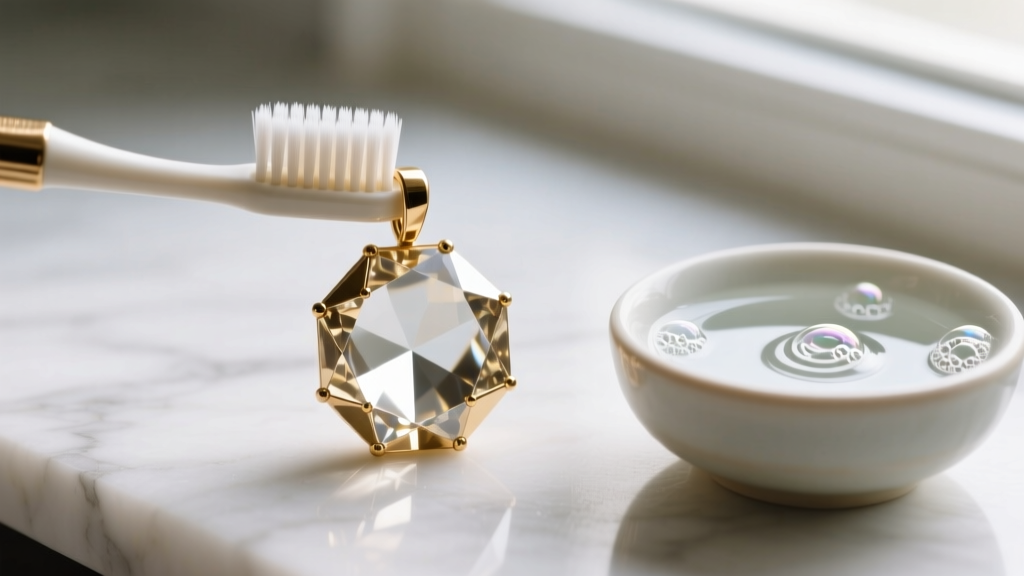
The Expert Cleaning Protocol:
- Solution Preparation: Mix three drops of pH-neutral dish soap (such as original blue Dawn) into a small bowl of distilled water. Avoid tap water, as dissolved minerals can leave microscopic water spots on the faceted glass.
- Agitation: Dip an extra-soft baby toothbrush into the solution. Gently tap the bristles on a towel to remove excess moisture—the brush should be damp, not dripping.
- Technique: Use light, circular motions over the surface of the crystals. Do not scrub aggressively at the base of the prongs, as this can bend the soft alloy and loosen the stone.
- Drying: Immediately dry the piece using a clean, lint-free microfiber cloth. Follow up with a cool-setting hair dryer held at least six inches away to blow out any trapped moisture from beneath the settings.
Rescuing Failing Magnetic and Lobster Clasps
Due to the substantial weight of Heidi Daus statement necklaces—often exceeding 100 to 150 grams—the clasps endure immense mechanical tension. The brand frequently utilizes custom magnetic clasps and oversized lobster claws, both of which present unique failure modes.
Magnetic Clasp Weakness: If your magnetic clasp is slipping open, the issue is rarely a loss of magnetism in the neodymium core. Instead, it is usually a buildup of microscopic ferrous dust (from keys, zippers, or environmental debris) on the contact plates, or a slight shifting of the internal magnet. Clean the flat contact surfaces with a cotton swab dipped in 90% isopropyl alcohol. If the magnet has shifted inside its housing, a master jeweler can carefully pry open the bezel, reseat the magnet, and secure it with a micro-drop of flexible adhesive.
Lobster Clasp Spring Fatigue: Heavy pendants cause the internal spring mechanism of standard lobster clasps to stretch and fail over time. If the trigger becomes stiff or fails to snap shut, do not attempt to oil it; oils attract grit and worsen the problem. The most reliable troubleshooting step is to replace the failing clasp with a heavy-duty, 15mm stainless steel trigger clasp. Ensure you use 16-gauge or 18-gauge stainless steel jump rings to attach it, as softer metals like silver or gold-filled wire will pull open under the necklace's dead weight.
Re-Setting Loose Stones and Repairing Chipped Enamel
Thermal expansion from body heat, combined with the physical impacts of daily wear, can cause the factory adhesives to degrade, leading to loose crystals or chipped cold enamel. When addressing these issues at home, selecting the correct chemical bonding agent is critical to avoiding irreversible damage to the piece.
| Material / Issue | Recommended Product | Product to Avoid | Technical Reason |
|---|---|---|---|
| Loose Foil-Backed Crystals | E6000 Jewelry & Bead | Cyanoacrylate (Super Glue) | Super glue off-gasses during curing, creating a permanent, cloudy white fog on the crystal facets and destroying the reflective foil backing. |
| Chipped Cold Enamel | Enamel Touch-Up Pens / Model Paint | Nail Polish / Acrylics | Nail polish contains harsh solvents (like acetone and toluene) that will dissolve the surrounding factory enamel and yellow over time. |
| Tarnished Bronze-Tone Alloy | Micro-Mesh Pads (8000 grit) | Silver Polish / Tarn-X | Chemical silver dips contain thiourea, which will strip the bronze-tone flash plating entirely, exposing the raw, reactive zinc base metal. |
When re-setting a loose stone, apply a microscopic dot of E6000 Jewelry and Bead adhesive to the base of the setting using a toothpick. Allow the adhesive to become tacky for exactly 10 minutes before pressing the crystal into place. This 'tack time' prevents the glue from oozing up the sides of the stone and ensures a flexible bond that can withstand temperature fluctuations. Allow it to cure undisturbed in a well-ventilated area for 24 hours.
Mitigating Neck Strain from Heavy Statement Pieces
A common physiological complaint regarding elaborate Heidi Daus bib and collar necklaces is cervical strain and the stretching of delicate garment necklines. A 150-gram necklace concentrates all its downward force on the C4 and C5 vertebrae at the back of the neck.
To troubleshoot this ergonomic flaw without compromising the aesthetic, utilize a silicone necklace grip pad. These discreet, skin-safe silicone sleeves slide over the back of the necklace chain or cord, increasing the surface area of friction against your skin and clothing. This prevents the necklace from sliding forward (which exacerbates the choking sensation and front-heavy pulling) and distributes the weight more evenly across the trapezius muscles. For silk or satin blouses, applying a small piece of moleskin padding to the inside of the clasp area will prevent the metal from abrading the delicate textile fibers.
Storage Protocols and Professional Restoration
Proper storage is the ultimate preventative troubleshooting measure. Never store Heidi Daus necklaces in PVC plastic bags or standard cardboard boxes. PVC off-gasses hydrogen chloride, which rapidly pits and corrodes zinc alloys, while acidic cardboard accelerates tarnishing. Instead, store each piece individually in an acid-free, unbleached cotton muslin pouch alongside a 3M anti-tarnish strip and a small silica gel desiccant packet to control ambient humidity.
While DIY maintenance can resolve surface cloudiness and minor clasp issues, severe structural failures require professional intervention. As noted by industry experts at Rio Grande, repairing complex costume jewelry requires specialized conservation techniques distinct from fine jewelry metallurgy. If your necklace suffers from deep base metal corrosion, widespread prong failure, or missing proprietary crystals, seek out a master jeweler who explicitly advertises 'fashion jewelry conservation' or 'costume jewelry restoration.' They possess the specialized epoxies, custom color-matching enamels, and micro-welding tools necessary to salvage these intricate works of wearable art without compromising their structural integrity.
Expert Takeaway: The longevity of your Heidi Daus necklaces relies entirely on moisture control and mechanical support. By eliminating ultrasonic cleaners, upgrading failing clasps to 16-gauge stainless steel, and utilizing flexible E6000 adhesives for stone resets, you can effectively troubleshoot the most common failure modes and preserve the whimsical brilliance of your collection for years to come.


