Adele Bloch-Bauer Necklace Goering: History & Choker Guide
Explore the history of the Adele Bloch-Bauer necklace, Goering's WWII looting, and how to identify and style Edwardian chokers today.

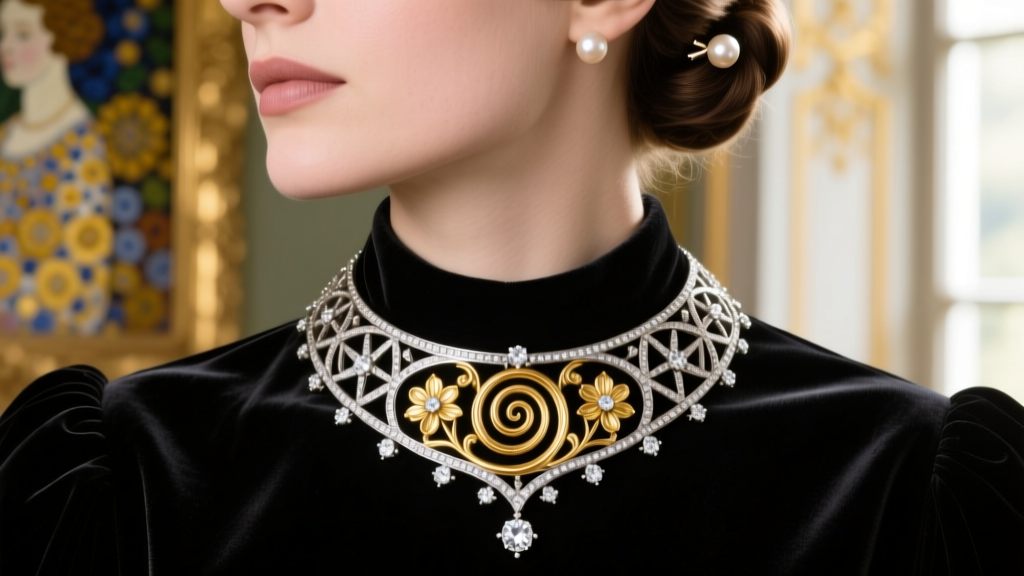
The Legend of the Adele Bloch-Bauer Necklace
Gustav Klimt’s 1907 masterpiece, Portrait of Adele Bloch-Bauer I, famously depicts the Viennese socialite draped in gold and wearing a heavy, ornate choker. Often referred to as the "Woman in Gold," Adele was a prominent patron of the arts and a trendsetter in Edwardian high society. The necklace depicted in the painting—a thick, jewel-encrusted collar—has become an iconic symbol of early 20th-century opulence. However, the true history of her jewelry collection is intertwined with one of the darkest chapters of World War II.
For modern jewelry collectors and historians, the search surrounding the Adele Bloch-Bauer necklace Goering connection reveals a harrowing tale of art theft, Nazi plunder, and the ongoing fight for restitution. Today, the "plaque de cou" (French for "plate of the neck") or dog collar choker remains a highly coveted silhouette in antique jewelry markets. Understanding its origins, its tragic mid-century history, and how to authenticate Edwardian pieces is essential for any serious collector.
The Portrait vs. Historical Reality
While Klimt’s painting stylizes Adele’s jewelry into a mosaic of golden geometric shapes, the real Adele Bloch-Bauer wore some of the finest examples of Edwardian and early Art Nouveau jewelry available in Vienna. During the early 1900s, the plaque de cou was the ultimate status symbol. Unlike the delicate, dangling necklaces of the Victorian era, the Edwardian choker was designed to sit flush against the throat, emphasizing the wearer's posture and neckline.
Adele’s actual collection included pieces from premier houses like Boucheron, Cartier, and the Wiener Werkstätte. These pieces were characterized by their use of newly accessible platinum, which allowed jewelers to create incredibly fine, lace-like filigree settings that could support heavy carat weights without appearing bulky. The real necklaces she wore were often multi-strand pearl and diamond dog collars, backed by black velvet or silk ribbons to protect the skin and enhance the brilliance of the stones.
The Dark History: Goering and the Looting of Viennese Jewelry
The intersection of high jewelry and the Holocaust is a somber field of study. Following the 1938 Anschluss (the annexation of Austria into Nazi Germany), the Bloch-Bauer family’s immense wealth was targeted. Hermann Goering, a leading member of the Nazi Party and Hitler’s second-in-command, was notoriously obsessed with looting art and jewelry to furnish his lavish Carinhall estate and fund the Reich.
"The systematic plunder of Jewish assets, including fine jewelry, was executed by organizations like the Einsatzstab Reichsleiter Rosenberg (ERR) and the Gestapo, who seized, melted down, or sold precious metals and gems to finance the war effort."
According to records from the United States Holocaust Memorial Museum, the Bloch-Bauer estate was stripped of its assets. Adele’s famous jewelry collection was confiscated, with many pieces dispersed through illicit auctions in Vienna or melted down for their raw platinum and diamond value. The legal battles fought by her niece, Maria Altmann, to recover Klimt's paintings are well-documented, but the recovery of the actual physical jewelry remains largely impossible, as most pieces were destroyed or lost to private, undocumented collections.
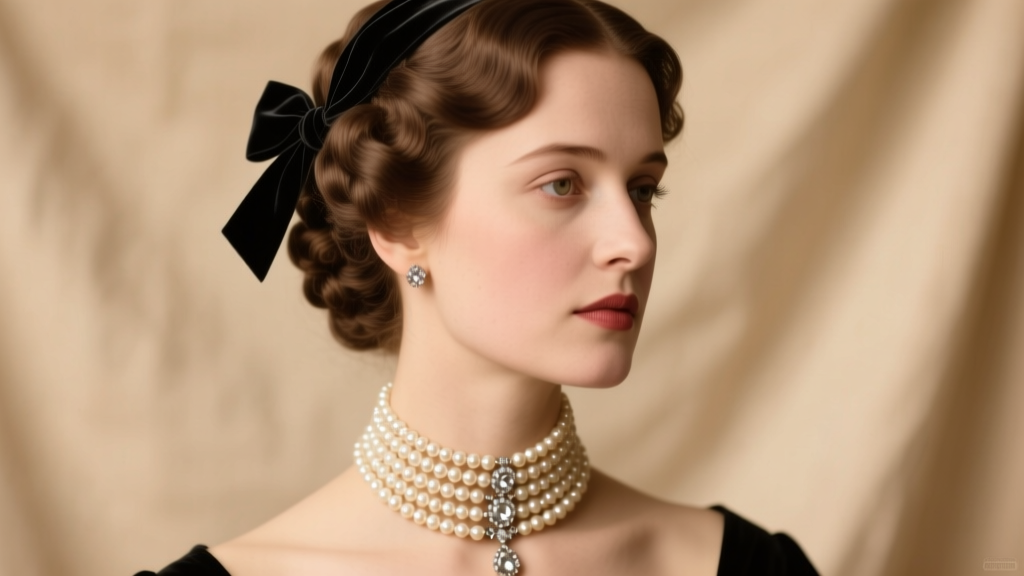
Anatomy of an Edwardian Plaque de Cou
If you are looking to acquire a choker in the style of Adele Bloch-Bauer, you must understand the specific anatomical markers of authentic Edwardian jewelry (circa 1901–1910). The transition from the heavy yellow gold of the Victorian era to the ethereal, white-on-white aesthetic of the Edwardian era was made possible by the oxyhydrogen torch, which allowed jewelers to work with platinum.
| Feature | Edwardian Choker (1901–1910) | Art Deco Choker (1920–1935) |
|---|---|---|
| Primary Metal | Platinum (often backed with 18k yellow gold) | Platinum, White Gold, Chrome |
| Diamond Cut | Old European Cut (OEC), Mine Cut, Rose Cut | Transitional Cut, Early Round Brilliant, Baguette |
| Design Motif | Garlands, lace-like filigree, bows, nature | Geometric, stepped, sunbursts, abstract |
| Structural Wire | Extremely fine 28-gauge to 30-gauge platinum wire | Thicker, architectural, solid geometric panels |
Authentic Edwardian chokers rely heavily on milgrain detailing—tiny beads of metal applied to the edges of the setting to create a soft, textured border. The openwork filigree, known as à jour setting, allowed light to pass through the diamonds, maximizing their fire even in the dim, candlelit ballrooms of early 1900s Vienna.
Sourcing and Authenticating Antique Chokers Today
Because of the high value of platinum and diamonds, many original Edwardian chokers were dismantled in the 1970s and 1980s to sell the stones separately. Finding an intact plaque de cou today requires diligence, a trusted dealer, and a solid understanding of antique hallmarks.
What to Look For:
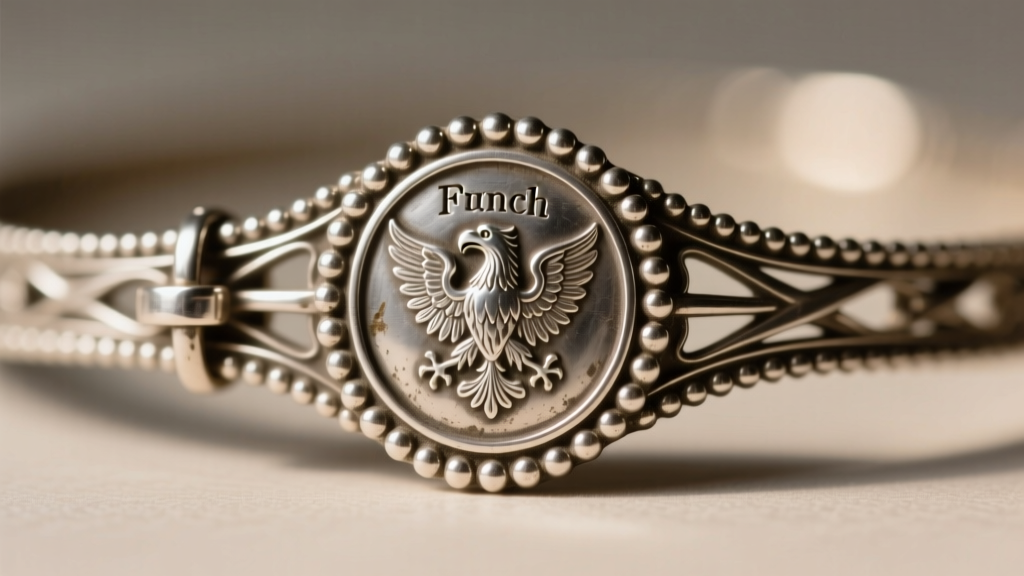
- Hallmarks: Look for the French eagle head (indicating 18k gold) or the French dog head (indicating platinum). British pieces will feature a platinum mark (introduced in 1973, so earlier pieces may only have a maker's mark or be stamped "PLAT").
- Stone Verification: According to the Gemological Institute of America (GIA), Old European Cut diamonds feature a high crown, small table, and a large, open culet. If a choker features modern Round Brilliant cuts with laser-inscribed girdles, it is a modern reproduction.
- Clasp Construction: Antique chokers feature sturdy, often double-barrel push clasps with figure-eight safety catches. Modern reproductions often use flimsy lobster clasps or modern spring rings.
Pricing and Market Value
Authentic antique Edwardian diamond and platinum chokers are investment-grade assets. Based on current market data from heritage dealers like Lang Antiques and major auction houses, pricing generally falls into these tiers:
- Entry-Level (Seed pearls, minimal diamonds, silver-topped gold): $4,000 – $9,000
- Mid-Tier (Intricate platinum filigree, 3 to 5 carats total weight of OEC diamonds): $12,000 – $28,000
- Museum/Provenance Quality (Heavy carat weight, natural saltwater pearls, documented provenance): $45,000 – $150,000+
Modern Styling: Wearing the "Woman in Gold" Aesthetic
Styling a heavy, antique plaque de cou requires a careful balance. Because the piece is visually dominant and sits high on the collarbone, it demands the right neckline to prevent the look from becoming overwhelming or historically costumey.
Best Necklines for Chokers
The ideal canvas for an Edwardian choker is a sweetheart neckline or a deep V-neck. These shapes elongate the neck and provide a bare frame that allows the platinum filigree and diamond fire to stand out. Off-the-shoulder gowns or tops also work beautifully, echoing the formal evening wear of the 1900s.
What to Avoid
Never pair a wide plaque de cou with high collars, turtlenecks, or ruffled blouses. The visual competition will hide the intricate milgrain work and cause the metal to snag on delicate fabrics. Additionally, avoid layering an antique Edwardian choker with long, heavy pendant necklaces; the friction between the pieces can damage the fragile 28-gauge platinum wire of the antique filigree.
While the original Adele Bloch-Bauer necklace Goering lootings represent a tragic loss of cultural heritage, the surviving Edwardian chokers of the era remain a testament to the unparalleled craftsmanship of early 20th-century Vienna. By understanding the anatomy, history, and proper styling of the plaque de cou, modern collectors can wear these surviving pieces of history with the reverence and elegance they deserve.


