The 2026 Trend Guide to the Perfect Personalized Necklace for Women
Discover 2026 trends for the personalized necklace for women. Expert analysis on materials, chain gauges, pricing tiers, and custom engraving styles.

The Evolution of the Personalized Necklace for Women in 2026
The landscape of custom jewelry has undergone a radical transformation. While the early 2010s were dominated by the ubiquitous cursive nameplate, the modern personalized necklace for women has evolved into a sophisticated medium for hyper-specific, data-driven storytelling. In 2026, consumers are no longer satisfied with generic monograms; they are demanding bespoke pieces that encode intimate memories, biometric data, and precise geographical coordinates. According to recent market analyses by JCK Online, the custom fine jewelry sector has seen a 22% year-over-year growth, driven largely by millennials and Gen Z buyers seeking emotional resonance over traditional brand prestige.
This shift has forced jewelers to adopt advanced manufacturing techniques, including 3D resin printing for lost-wax casting and high-frequency fiber laser engraving. The result is a new tier of custom necklaces that are not only deeply meaningful but also engineered for daily durability. However, navigating the custom jewelry market requires a keen understanding of metallurgy, chain mechanics, and engraving limitations. This guide breaks down the technical specifications and trending styles you need to know before commissioning or purchasing a custom piece this year.
Material Grades and Durability: What to Actually Buy
When investing in a custom pendant, the base metal dictates both the longevity of the engraving and the structural integrity of the piece. Many mass-market custom jewelers rely on flash-plated brass, which degrades within months. For a piece meant to last a lifetime, you must look at specific industry standards.
Gold Vermeil vs. Standard Plating: The Federal Trade Commission (FTC) strictly regulates the term "vermeil." To qualify, a piece must have a sterling silver base and a gold plating of at least 2.5 microns thick. In 2026, premium bespoke jewelers are pushing this to 3.0 or even 4.0 microns to withstand the friction of daily wear. Standard gold-plated jewelry, often applied over brass or copper, features a mere 0.5 microns of gold and will tarnish rapidly when exposed to skin oils and perfume.
Solid 14k vs. 18k Gold: For heirloom-quality personalization, solid gold is mandatory. 14k gold (58.5% pure gold) is alloyed with copper, silver, and zinc, giving it a higher tensile strength and scratch resistance than 18k gold (75% pure gold). For intricate laser-engraved soundwaves or micro-pave coordinate maps, 14k gold provides a more stable canvas that resists warping during the intense heat of the laser etching process.
| Material Grade | Composition / Plating Thickness | Engraving Suitability | Estimated Price Range (USD) |
|---|---|---|---|
| 316L Surgical Steel | Iron, Chromium, Nickel, Molybdenum | Excellent (High contrast laser etch) | $45 - $120 |
| Heavy Gold Vermeil | 925 Silver base, 3.0+ microns 14k/18k gold | Good (Shallow laser etch only) | $110 - $250 |
| Solid 14k Gold | 58.5% Gold, Copper/Silver alloys | Superior (Deep engraving, diamond cutting) | $350 - $850 |
| 950 Platinum | 95% Platinum, 5% Ruthenium/Iridium | Superior (Requires 1064nm fiber laser) | $1,200 - $2,500+ |
Top 3 Trending Personalization Styles This Year
The aesthetic of personalization has moved away from overt typography toward subtle, abstract representations of data. Here are the dominant styles defining the 2026 custom jewelry market.
1. The Micro-Pave Coordinate Pendant
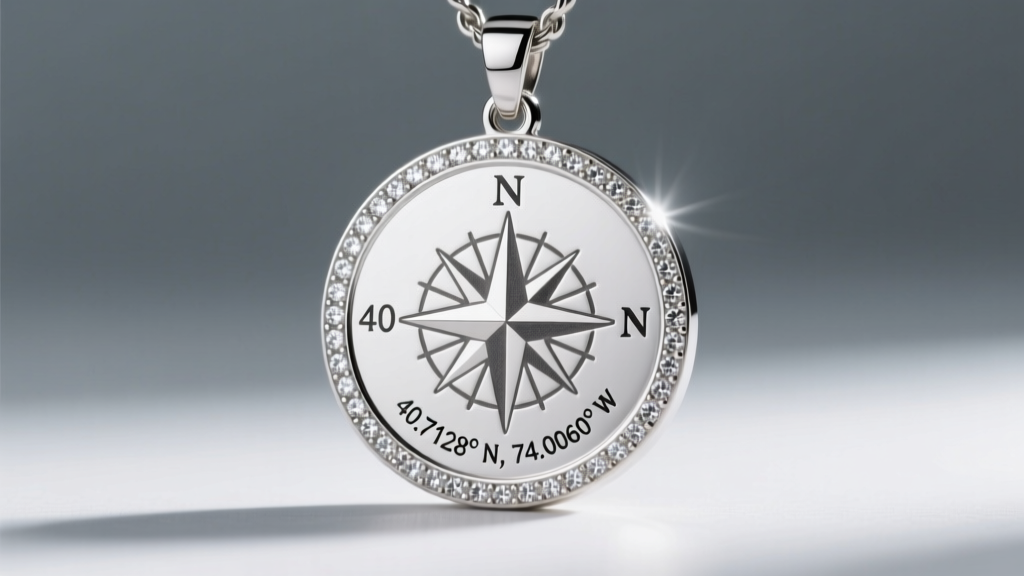
Geographical coordinates remain a powerful way to commemorate a proposal, a birthplace, or a significant milestone. However, the 2026 iteration abandons standard block text in favor of minimalist vertical bar pendants. Jewelers are now utilizing the Degrees, Minutes, and Seconds (DMS) format for exactitude, often flanking the laser-etched text with a single row of micro-pave lab-grown diamonds (typically 1.0mm to 1.2mm in diameter, VS clarity). The contrast between the matte-finished engraved groove and the brilliant-cut stones creates a striking visual depth.
2. Soundwave and Biometric Engravings
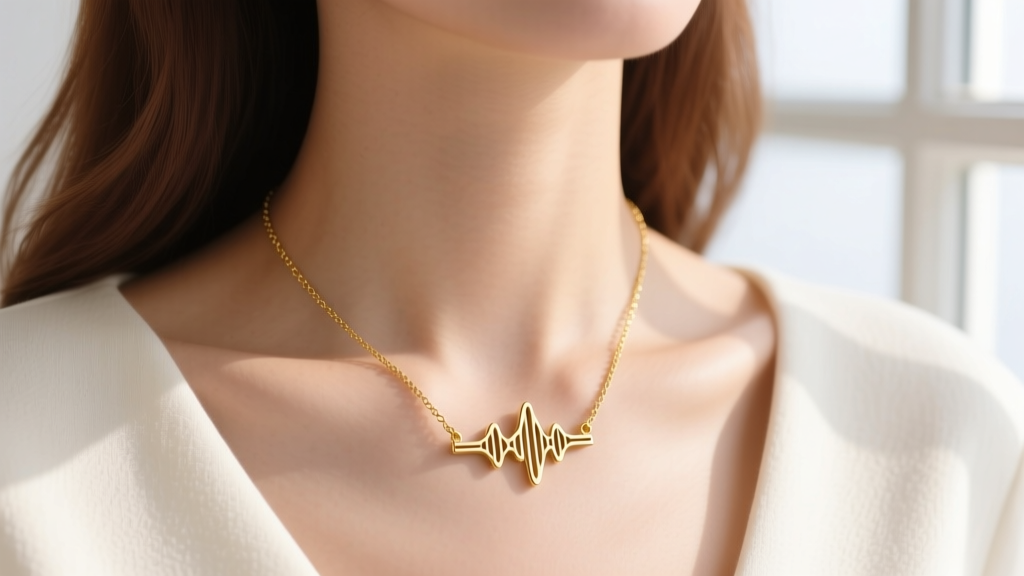
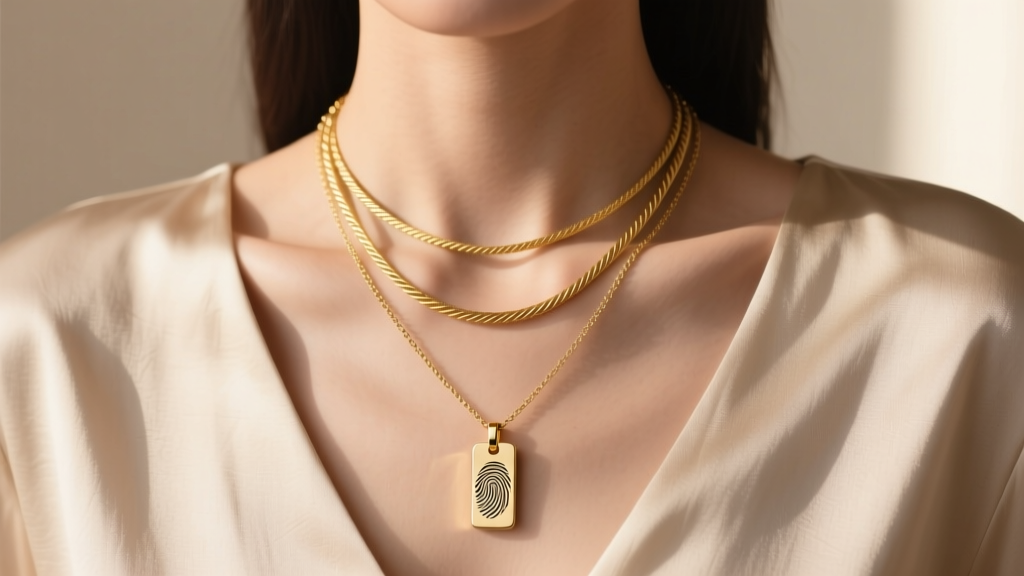
Advancements in 5-axis CNC milling and fiber laser technology have made it possible to etch complex biometric data onto metal surfaces as small as 15mm by 8mm. Soundwave pendants—encoding a spoken phrase or a baby's heartbeat—are created by converting an audio file into a high-resolution vector graphic. The laser then removes microscopic layers of metal to create varying depths, producing a 3D topographical effect. Similarly, fingerprint engraving requires a high-contrast digital scan, which is then mapped to the pendant's surface. The Gemological Institute of America (GIA) notes that precision laser etching on precious metals does not compromise the structural integrity of the piece, provided the metal is at least 1.2mm thick.
3. Modular Charm Layering
Rather than a single, heavy pendant, the modern personalized necklace for women often features a modular system. A single, robust chain acts as a host for multiple detachable charms, each representing a different milestone. These charms utilize specialized spring-loaded bales or hidden lobster clasps, allowing the wearer to reconfigure their necklace daily. This trend aligns with the broader consumer desire for versatile, multi-functional luxury.
Chain Gauges and Lengths for Optimal Layering
A custom pendant is only as good as the chain that supports it. The most common failure point in custom jewelry is a mismatched chain gauge, leading to broken links or a clasp that cannot support the pendant's weight.
- 0.8mm - 1.0mm Box or Cable Chains: Ideal for lightweight, minimalist pendants (under 3 grams). These chains offer a delicate, barely-there aesthetic but possess a low tensile strength. They should always be paired with a 5mm spring ring or a small lobster clasp.
- 1.2mm - 1.5mm Wheat or Rope Chains: The gold standard for medium-weight custom pieces (3 to 8 grams). The interlocking links of a wheat chain distribute tension evenly, making it highly resistant to snapping. This is the recommended gauge for solid 14k gold coordinate bars and fingerprint pendants.
- 2.0mm+ Figaro or Cuban Links: Necessary for heavy modular charm setups or oversized signet pendants exceeding 10 grams. These chains require a sturdy lobster clasp with a reinforced soldered jump ring.
When layering, adhere to the 2-inch rule. A standard personalized choker sits at 14 inches, the primary custom pendant at 16 or 18 inches, and a longer, un-pendanted chain (like a 20-inch lariat) at the bottom. This prevents the clasps and pendants from tangling and scratching one another.
How to Spot Low-Quality Custom Jewelry Online
The barrier to entry for selling custom jewelry online is incredibly low, which has flooded the market with subpar products. When commissioning a personalized necklace for women, watch out for these critical red flags:
Hollow-Cast Pendants: Some manufacturers use 3D printing to create hollow molds, resulting in pendants that feel substantial in size but are dangerously light and prone to denting. Always check the gram weight in the product specifications. A solid 14k gold bar pendant measuring 20mm x 10mm x 1.5mm should weigh approximately 3.5 to 4.5 grams. If it weighs under 2 grams, it is likely hollow or heavily alloyed with lighter, cheaper metals.
Surface-Level Plating on Engravings: If you are buying a gold-plated or vermeil personalized necklace, ensure the engraving is done *after* the plating process. If the jeweler engraves the base silver first and then plates over it, the gold will pool in the engraved grooves, making the text or soundwave blurry and illegible. High-end jewelers plate the piece first, then use a laser to burn through the gold layer, revealing the bright sterling silver beneath for sharp, high-contrast readability.
Final Verdict: Investing in Meaningful Metals
The personalized necklace for women in 2026 is a triumph of modern jewelry engineering, blending deep emotional significance with advanced metallurgical techniques. By prioritizing solid 14k gold or heavy vermeil, understanding the tensile limits of chain gauges, and opting for abstract, data-driven engravings like soundwaves and micro-pave coordinates, you can secure a piece that transcends fleeting trends. Whether you are commemorating a milestone or treating yourself to a wearable piece of personal history, demanding transparency in material grading and manufacturing processes will ensure your custom jewelry remains a timeless staple in your collection for decades to come.


