Advanced Necklace Organizer Ideas for Fine Jewelry Preservation
Discover expert necklace organizer ideas focused on material preservation, anti-tarnish tech, and archival storage for fine chains and heavy pendants.

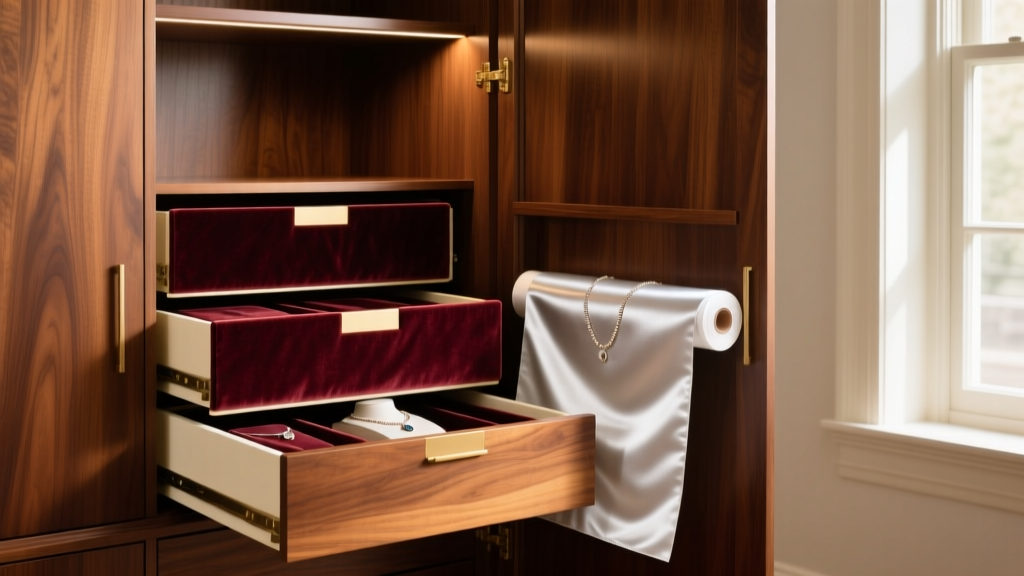
When researching necklace organizer ideas, most mainstream advice focuses purely on aesthetics and space-saving hacks. However, for collectors of fine jewelry, archival preservation is paramount. Standard commercial organizers often utilize materials that actively degrade precious metals and delicate gemstones over time. As a jewelry preservation specialist, I approach storage not merely as organization, but as an ongoing chemical and mechanical intervention. This deep dive explores the technical specifications, material sciences, and structural mechanics required to build an archival-grade necklace storage system.
The Hidden Dangers of Standard Jewelry Storage
Before implementing advanced necklace organizer ideas, it is critical to understand the failure modes inherent in mass-produced jewelry boxes. The primary culprit is off-gassing from cheap manufacturing materials. Many affordable organizers use polyvinyl chloride (PVC) plastics and synthetic rubbers. Over time, PVC degrades and releases hydrochloric acid and plasticizers into the enclosed microenvironment. This accelerates the corrosion of silver and can cause 'bronze disease' in copper-alloy clasps.
Furthermore, raw wood interiors—particularly oak and cedar—emit acetic acid and formaldehyde vapors. While cedar is often marketed as a 'natural' jewelry box material, its acidic off-gassing will rapidly tarnish sterling silver and degrade the silk threads used in pearl knotting. To mitigate this, any wooden organizer must be sealed with a water-based polyurethane or lined with an archival barrier film, such as Marvelseal 360, which provides a complete vapor and gas barrier.
Material-Specific Necklace Organizer Ideas
Different alloys and organic gems require drastically different microclimates. A one-size-fits-all organizer will inevitably compromise the most sensitive pieces in your collection.
Sterling Silver and Sulfur Mitigation
Sterling silver (92.5% silver, 7.5% copper) tarnishes when it reacts with hydrogen sulfide (H2S) in the air, forming silver sulfide. Archival necklace organizer ideas for silver must incorporate active sulfur-scavenging materials. Pacific Silvercloth is the industry standard; this cotton fabric is embedded with microscopic silver particles that intercept and react with H2S gas before it reaches your jewelry. Lining drawers or creating custom rolls from this material effectively halts the tarnishing process.
Pearls and Organic Gemstones
Unlike metals, pearls are hygroscopic and require ambient moisture to prevent their nacre from drying out, cracking, or crazing. Storing pearl necklaces in airtight plastic bags or safety deposit boxes is a catastrophic error. According to the Gemological Institute of America (GIA), pearls should be stored in a soft, breathable, pH-neutral cotton or linen pouch. They must never be hung, as gravity will permanently stretch the silk thread over time, leading to structural failure.
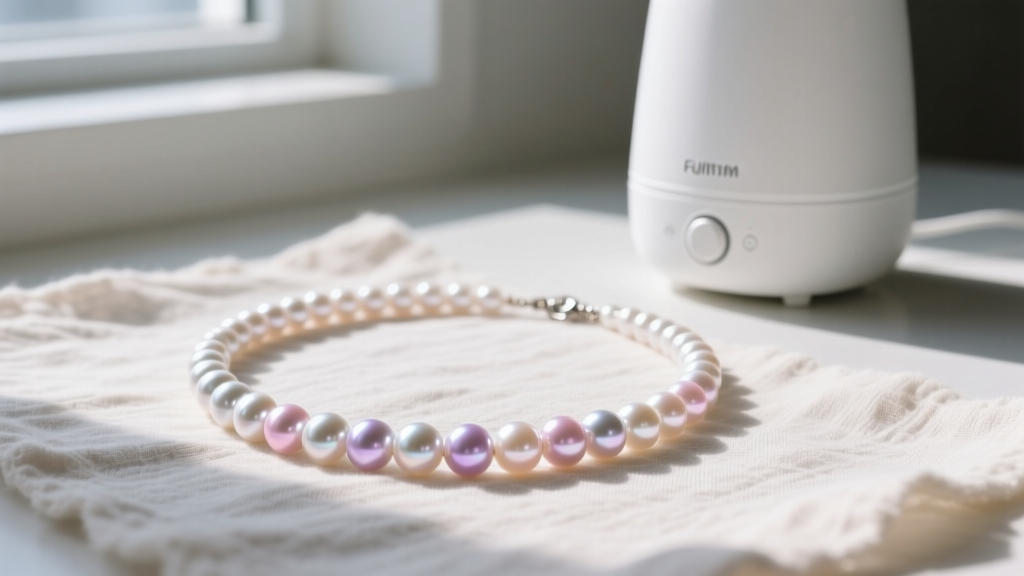
High-Karat Gold and Platinum
While 18k gold and platinum are highly resistant to chemical tarnish, they are exceptionally soft and prone to micro-scratching. Organizer compartments for these pieces must be lined with acid-free, unbleached cotton velvet or tarnish-preventive flannel. Avoid standard synthetic felts, which often contain glued fibers that can trap dust and act as an abrasive polishing compound against soft gold surfaces.
Technical Specifications for Archival Storage
To build a truly protective environment, your storage materials must meet specific archival standards. Below is a technical breakdown of material requirements and their associated failure modes.
| Material Type | Ideal Storage Medium | Primary Failure Mode | Archival Solution |
|---|---|---|---|
| Sterling Silver | Pacific Silvercloth, Anti-tarnish strips | Silver sulfide formation via H2S exposure | Airtight sealing with 3M anti-tarnish tabs |
| Akoya/South Sea Pearls | Unbleached cotton muslin, flat trays | Nacre dehydration, silk thread stretching | Flat storage, 40-50% ambient humidity |
| Heavy Gold Chains | Padded horizontal dowels | Link warping, solder point stress-fracture | Serpentine flat-laying or thick dowel support |
| Platinum/Diamond | Acid-free tissue, individual compartments | Diamond abrasion against adjacent metal | Individual polyethylene (PE) zip bags |
When sourcing plastic organizers or dividers, always verify the resin identification code. Polyethylene (PE, Code 2) and Polypropylene (PP, Code 5) are chemically stable and safe for jewelry. Avoid Code 3 (PVC) and Code 6 (Polystyrene) entirely.
Weight Distribution and Chain Mechanics
One of the most overlooked aspects of necklace organization is the mechanical stress placed on chain links. Many commercial displays utilize vertical hooks. While this works for lightweight chains, it is mechanically destructive for heavy pendants and specific link styles.
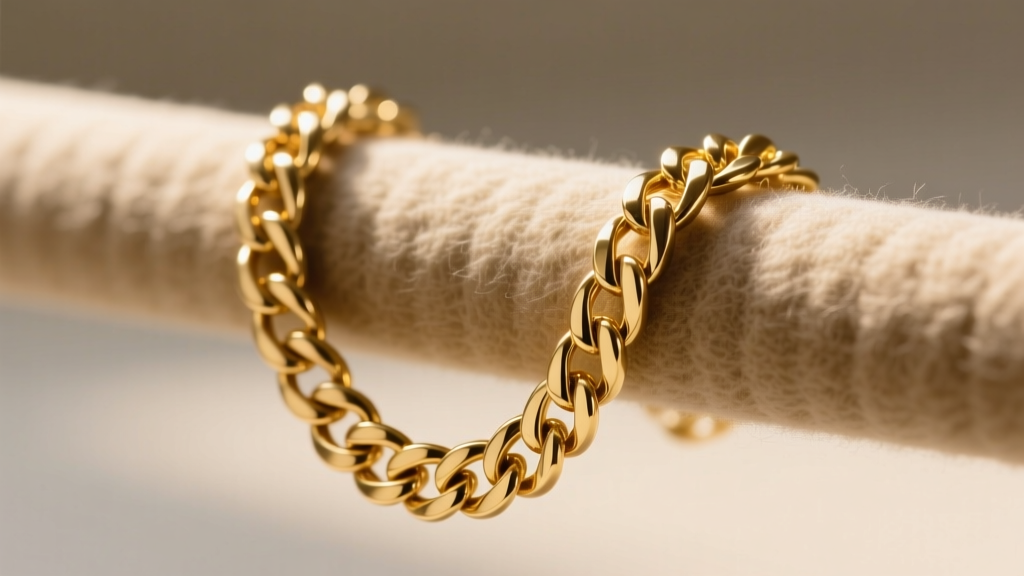
Consider a heavy 20-gram gold pendant suspended on a 1.5mm cable chain. The constant downward vector of gravity pulls the oval links into a rigid, straight line. Over months, this continuous tension causes work-hardening at the solder points of the links, eventually leading to micro-fractures and chain snapping. Similarly, box chains and herringbone chains are highly susceptible to permanent kinking when hung vertically under their own weight.
The Expert Fix: For chains exceeding 15 grams, or any herringbone/snake chains, abandon vertical hooks. Instead, utilize padded, felt-covered horizontal dowels (minimum 2 inches in diameter) to distribute the weight across multiple links, or lay the necklace flat in a serpentine 'S' pattern within a shallow, velvet-lined drawer. If a pendant is exceptionally heavy, detach it from the chain during storage to eliminate mechanical tension entirely.
Integrating Anti-Tarnish Technology
Even the best physical organizers cannot stop airborne pollutants. Integrating active chemical scavengers is mandatory for enclosed storage spaces. The Smithsonian Museum Conservation Institute notes that controlling the microenvironment is the most effective way to preserve silver artifacts.
- 3M Anti-Tarnish Strips: These utilize a copper-based technology that chemically binds with sulfur gases. They are highly effective in enclosed drawers but must be replaced every 6 months, as the copper particles become saturated and lose efficacy.
- Silica Gel vs. Activated Carbon: Silica gel controls moisture but does not stop chemical tarnishing. For comprehensive protection, use activated carbon packets (often sold as charcoal absorbers), which physically trap volatile organic compounds (VOCs) and sulfur molecules via adsorption.
- Chalk and Calcium Carbonate: A traditional, low-cost desiccant. Placing a few pieces of standard calcium carbonate chalk in a drawer helps buffer humidity spikes, though it must be kept in a breathable muslin bag to prevent alkaline dust from settling on the jewelry.
Conclusion: Building Your Archival System
Upgrading your storage is an investment in the metallurgical and structural longevity of your collection. By discarding PVC-lined commercial boxes and adopting material-specific, chemically neutral, and mechanically sound necklace organizer ideas, you transition from merely storing your jewelry to actively preserving it. Always prioritize acid-free textiles, structural weight distribution, and active gas-scavenging technologies to ensure your fine necklaces remain pristine for generations.
For further reading on the conservation of precious metals, consult the American Institute for Conservation (AIC) guidelines on silver care and environmental monitoring.


